Spaghetti alle vongole
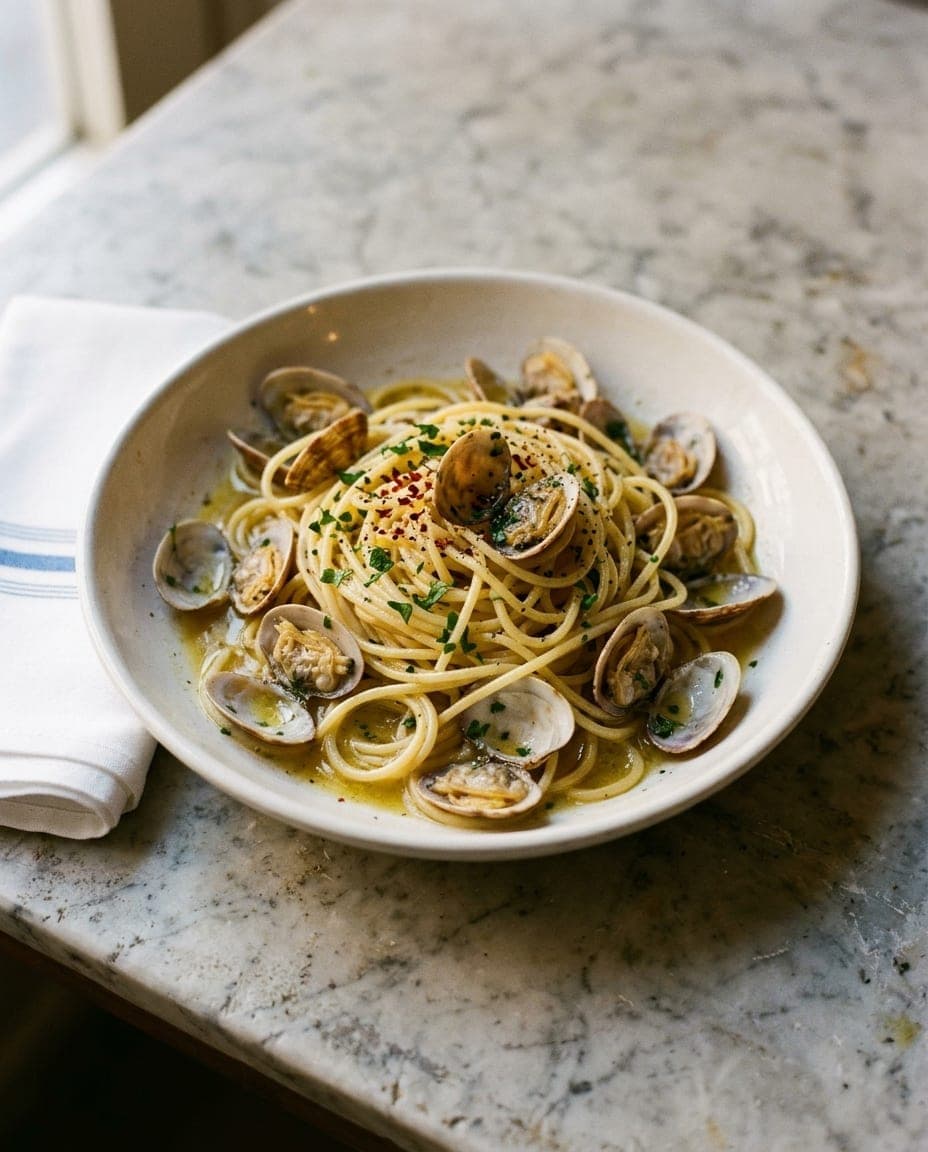
Spaghetti with clams, garlic, olive oil and parsley from Naples
- Local name
- Spaghetti alle vongole
- Best eaten at
- A Neapolitan seaside trattoria
- Pairs with
- Falanghina or Fiano
What it is
Spaghetti alle vongole is the definitive seafood pasta of Naples and the wider Campania region. It is a simple preparation where long strands of dried spaghetti are tossed in a sauce made from the liquor of clams, garlic, extra virgin olive oil and fresh parsley, often with a touch of chilli or white wine. The dish exists in two forms that are both widely accepted: in bianco, which relies on the natural sweetness of the shellfish and oil, and in rosso, where a handful of cherry tomatoes is added to the pan to give the sauce a light red tint.
Despite its humble appearance, the dish carries the weight of tradition in Naples. It is a fixture of the Christmas Eve dinner, the cenone della Vigilia, a meal built around fish and seafood. Yet it is equally at home on a hot summer day along the coast, served in a seaside trattoria.
The most striking rule of this pasta is also its most famous restriction: no cheese is added to it. In Naples, grating Parmigiano or Pecorino over clams is considered a culinary error that masks the delicate flavour of the shellfish.
The history of the Neapolitan table
Clams were cooked in soups and broths for the Campanian nobility long before pasta became everyday food in the region. A recipe for vermicelli with clams appears in the 19th century in the Neapolitan-dialect cookbook of Ippolito Cavalcanti, Duke of Buonvicino, often cited as the first formal written version of the dish. Tomatoes were not part of that early recipe; the in rosso version came later and is now about as common as the white one.
The dish became a cornerstone of the Neapolitan Christmas Eve tradition. On this night, many families avoid meat, following the old Catholic custom of abstinence on the Vigil, and the table is set with a series of seafood courses, often including fried eel (capitone), fried salt cod and octopus salad. Spaghetti alle vongole is the pasta course most closely associated with the meal.
Over time, the dish spread beyond the holiday table to become a year-round favourite for locals and visitors alike. Its presence on menus throughout Campania is so consistent that it has become a benchmark for any kitchen claiming to serve authentic Neapolitan cuisine.
What goes into it
There is no single official recipe, but the building blocks remain consistent across traditional kitchens in Naples and the surrounding coast.
- Spaghetti: Long, thin dried pasta, cooked until just short of tender so it can finish cooking briefly in the pan with the clams.
- Vongole veraci: Carpet-shell clams, bivalves of sandy Mediterranean shallows, prized for their sweet, briny flavour. Cheaper clams such as lupini or farmed Manila clams are increasingly used, to the regret of purists.
- Garlic: Fresh cloves, usually sliced or crushed lightly, cooked gently to infuse the oil without burning, which would introduce a bitter note.
- Extra virgin olive oil: The primary cooking medium and, with the clam liquor and pasta water, the basis of the emulsified sauce.
- White wine: A dry local white, such as Falanghina, is often used to deglaze the pan and add acidity.
- Fresh parsley: Chopped flat-leaf parsley is added at the end for colour and a fresh herbal finish.
- Chilli: A pinch of dried red chilli is common, adding a subtle warmth that does not overpower the clams.
- Cherry tomatoes: For the in rosso variation, a small amount of ripe cherry tomatoes is added to the pan without turning the dish into a heavy red sauce.
The most critical step is the cleaning of the clams. Before they can be cooked, they are purged in salted water for several hours so that they release any sand from their shells; if this is done badly, the grit ruins the dish. Once cleaned, the clams are placed in a hot pan with oil and garlic. The heat forces them to open, releasing their liquor, which becomes the foundation of the sauce. Any clams that remain closed after heating are discarded.
How it is eaten
Spaghetti alle vongole is typically served as a primo at lunch or dinner, in shallow bowls or wide plates. The clams are usually left in their shells, though some kitchens remove part of the shells before serving.
The dish is meant to be eaten quickly while hot, as the pasta continues to absorb the liquid and can become dry if left to sit. Diners twirl the spaghetti on a fork, and the clams are scooped up with the pasta or picked out individually.
It pairs naturally with a crisp white wine from Campania, such as Falanghina or Fiano, which complements the brininess of the shellfish without overwhelming it. At a seaside trattoria, it is often part of a longer meal of other seafood specialities from the Gulf of Naples.
Curious facts
- The purging ritual. Cleaning the clams properly is considered the step on which the whole dish succeeds or fails.
- Two versions, one origin. Both the in bianco and in rosso versions are accepted in Naples, with the choice often depending on personal preference or the season.
- Clams that ran away. Actor Eduardo De Filippo is credited with spaghetti alle vongole fujute, "clams that escaped": the same sauce made with garlic, oil and tomatoes but no clams at all, a joke recorded in his wife's cookbook.
- The sauce emulsion. The sauce relies on the starchy pasta water and the clam liquor to create a creamy texture without cream or butter.
Where to try it
The best place to eat spaghetti alle vongole is in a traditional trattoria along the Neapolitan coast or within the city itself. In the weeks leading up to Christmas, many restaurants feature the dish prominently on their menus. Whether in the city or on the coast, the key is to find a kitchen that respects the rule against cheese and uses fresh clams.
Where to try it
1 region
 Wine Tasting3 destinations
Campania
Campania, a coastal region in southern Italy, is renowned for its rich history and diverse landscapes. It is home to Naples, the largest city, famous for its historic center, a UNESCO World Heritage site. The region boasts the stunning Amalfi Coast, characterized by picturesque cliffs and traditional fishing villages. Historic sites like Pompeii and Herculaneum provide a glimpse into ancient Roman life, while the islands of Capri and Ischia offer natural beauty and thermal springs. Campania is also known for its culinary treasures, including authentic Neapolitan pizza and local wines such as Aglianico. Explore lesser-known towns like Caserta, with its grand Royal Palace, or the charming village of Ravello, known for its gardens and music festival. This region blends cultural heritage with breathtaking scenery, making it a unique destination for those who wish to travel at a leisurely pace.
Wine TastingHiking





