Spaghetti alla carbonara
Roman pasta with guanciale, eggs, pecorino and black pepper
- Local name
- Spaghetti alla carbonara
- Best eaten at
- A Roman trattoria
- Pairs with
- Frascati or Cesanese
What it is
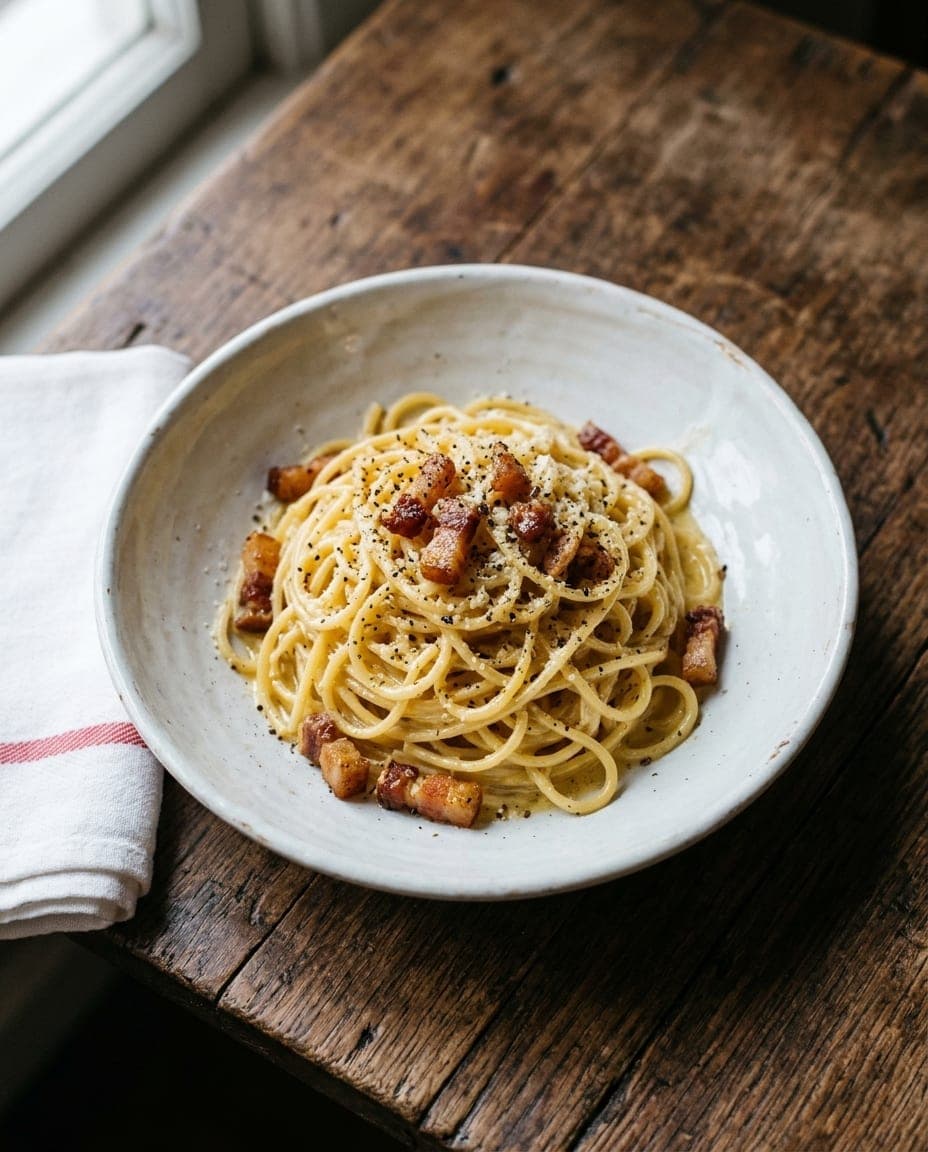
Spaghetti alla carbonara is one of the most distinctive dishes of Rome, a simple yet exacting combination of pasta, cured pork jowl, eggs, Pecorino Romano cheese and a heavy hand of black pepper. It is a dish of the Lazio region, and while it has become a global symbol of Italian cooking, its true home is the city of Rome itself. The texture is the defining feature: the sauce should be glossy and creamy, created not by adding cream but by emulsifying the fat from the pork with the starchy pasta water and the beaten eggs.
The ingredients are few, but the technique requires precision. When prepared correctly, there is no visible curd of scrambled egg in the dish. Instead, the heat of the pasta gently thickens the egg-and-cheese mixture into a smooth coating that clings to every strand. In a traditional Roman trattoria it is served as a primo that easily stands in for a full meal.
The mystery of its name
The origin of the name carbonara remains one of the great culinary debates of Italy. The most common theory links the dish to the carbonari, charcoal burners who worked in the Apennine hills, and who supposedly cooked a quick meal of cheese, eggs and cured pork during their breaks. The name would simply mean "in the style of the charcoal burners".
However, there is no contemporary recipe or written record that confirms this story. Some accounts suggest the name is a reference to the black specks of pepper that resemble coal dust; others link it to the 19th-century secret society, the Carboneria.
Another persistent theory suggests an American influence. During the Second World War, Allied troops stationed in Italy are said to have supplied local cooks with bacon and powdered egg, and one cook, Renato Gualandi, later claimed to have made such a dish for Allied officers in 1944. While this story is popular, it remains a claim rather than documented fact. The reality may be more mundane: a Roman cook adapted existing techniques using available ingredients, and the name stuck to the final result.
A modern classic from the mid-20th century
Unlike many traditional Italian dishes that trace their roots back centuries, carbonara is a relatively recent invention. It does not appear in the great cookbooks of the 19th century. The first printed recipes emerge only in the 1950s; the Italian magazine La Cucina Italiana published one in 1954, made with pancetta, garlic and Gruyère.
The dish kept evolving for decades. Cookbooks of the 1960s still added cream, and the strict modern Roman version, without garlic, onion or cream, settled only towards the end of the 20th century.
What goes into it
The authenticity of carbonara is defined by what is missing as much as by what is present. In Rome, the rules are strict: there is no cream, no garlic, no onion, no pancetta and no parmesan. The accepted cheese is Pecorino Romano, a sharp, salty sheep's milk cheese that stands up to the fat of the pork. The accepted cured meat is guanciale, the cured jowl of the pig, which provides a specific texture and flavour that other cuts do not quite replicate.
The four essential components are:
- Guanciale: Cured pork jowl, sliced into cubes or strips, which renders its fat to coat the pasta.
- Eggs: The base of the sauce, usually just the yolks or yolks with some whole egg, beaten with grated cheese to create a creamy emulsion without scrambling.
- Pecorino Romano: A hard, aged sheep's milk cheese that adds salt and depth.
- Black pepper: Freshly ground in large quantities, providing a distinct spicy aroma and heat.
The liquid that binds these ingredients is not stock but the starchy cooking water from the pasta, which helps the sauce cling to the strands and creates the glossy finish characteristic of the dish. The technique relies on the residual heat of the pasta to cook the egg gently, ensuring a smooth texture rather than a curdled mess.
How it is eaten
In Rome, carbonara is typically eaten at lunch or dinner, and a generous portion is expected. The pasta should be hot, with the sauce coating every strand evenly.
The dish pairs well with the wines of the region. A crisp Frascati from the nearby Castelli Romani hills cuts the richness of the egg and cheese, while a light red Cesanese can complement the savoury notes of the guanciale.
If the dish arrives dry or with visible clumps of egg, it has not been prepared correctly. The ideal carbonara is velvety, with a sheen of fat on the surface and a warm, peppery aroma.
Curious facts
- No cream allowed. The absence of cream is the most common point of confusion for visitors. Adding cream to carbonara is considered a serious error in Rome, although Italian cookbooks of the 1960s did use it.
- A modern invention. Despite its ageless appearance, the dish has no recorded history before the mid-20th century, making it one of Italy's newest classics.
- Carbonara Day. Every year on 6 April, Carbonara Day, launched in 2017 by Italian pasta makers' associations, encourages people to cook and share the dish online and in restaurants.
- The cheese is specific. Using Parmigiano Reggiano instead of Pecorino Romano changes the taste noticeably and is frowned upon in traditional Roman kitchens, though some cooks use a mix of the two.
Where to try it
The best place to eat spaghetti alla carbonara is a traditional Roman trattoria, where the kitchen follows the old rules.
Trattorias in neighbourhoods like Testaccio, Trastevere or Monti are good places to look, where local cooks still value tradition over convenience. A common rule of thumb among Romans is to avoid places with large picture menus on the door, which tend to cater to tourists rather than locals. The perfect carbonara is a sign of Roman culinary discipline, and finding it takes a little patience.
Where to try it
1 destination
 Camper Van Rentals
Rome
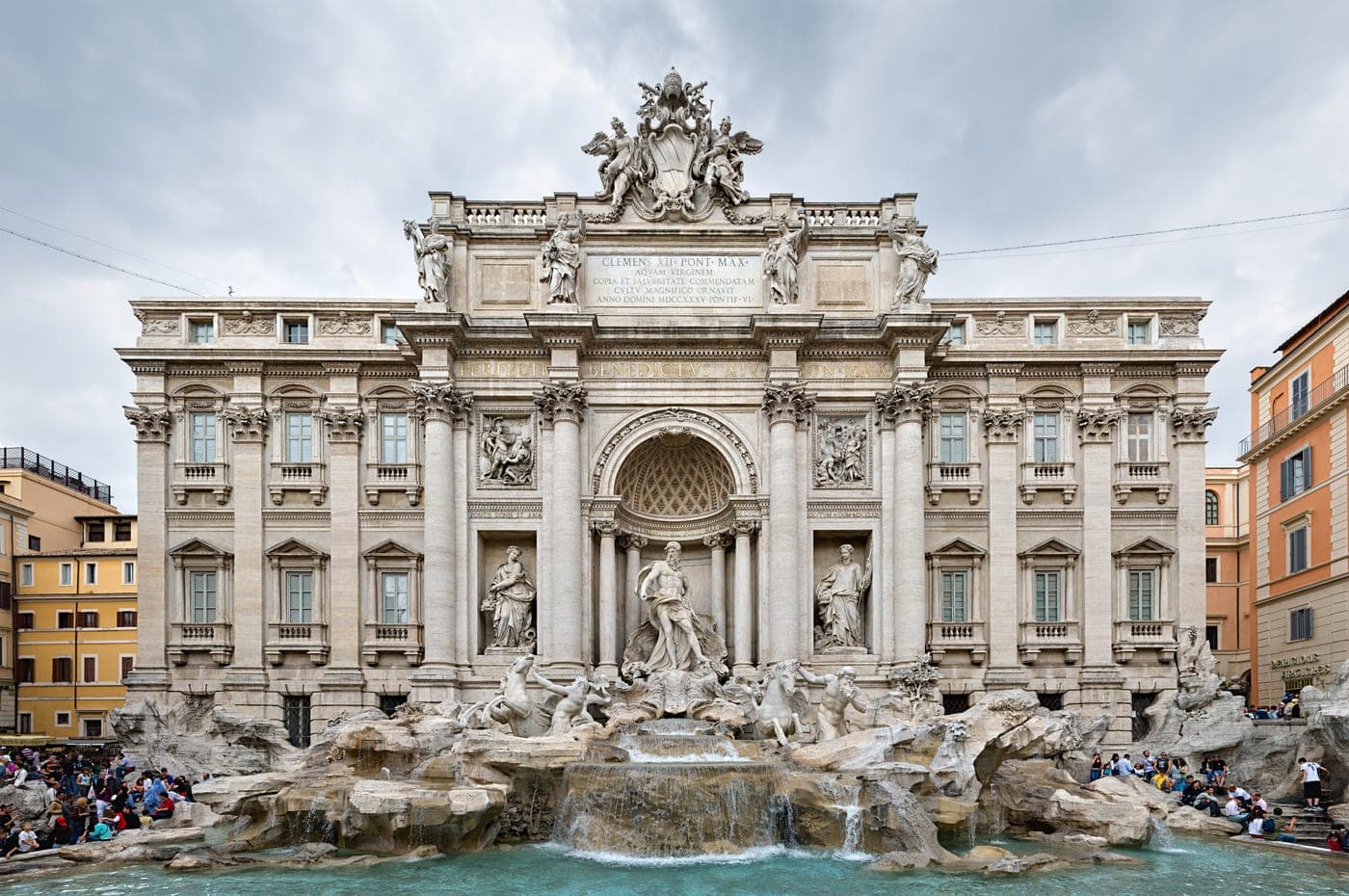
Historic capital featuring ancient ruins, Renaissance art, and vibrant piazzas.
Camper Van RentalsHiking
1 region
- Camper Van Rentals2 destinations
Lazio
Lazio is Italy's second-largest region, renowned for its rich history and diverse landscapes. The capital, Rome, boasts ancient ruins and vibrant street life, but the surrounding areas are equally captivating. Explore the hill towns like Viterbo, known for its thermal springs and medieval architecture. The region also features the stunning coastline of the Tyrrhenian Sea, offering hidden beaches and charming fishing villages. Lazio is famous for its culinary traditions, including artichokes from Rome and wines from Frascati. The region is home to the beautiful countryside of the Castelli Romani, dotted with vineyards and historic castles, providing a glimpse into local life away from the tourist crowds.
Camper Van RentalsHikingWine Tasting





