Scamorza molisana
Pear-shaped stretched-curd cheese from Molise, often grilled or smoked
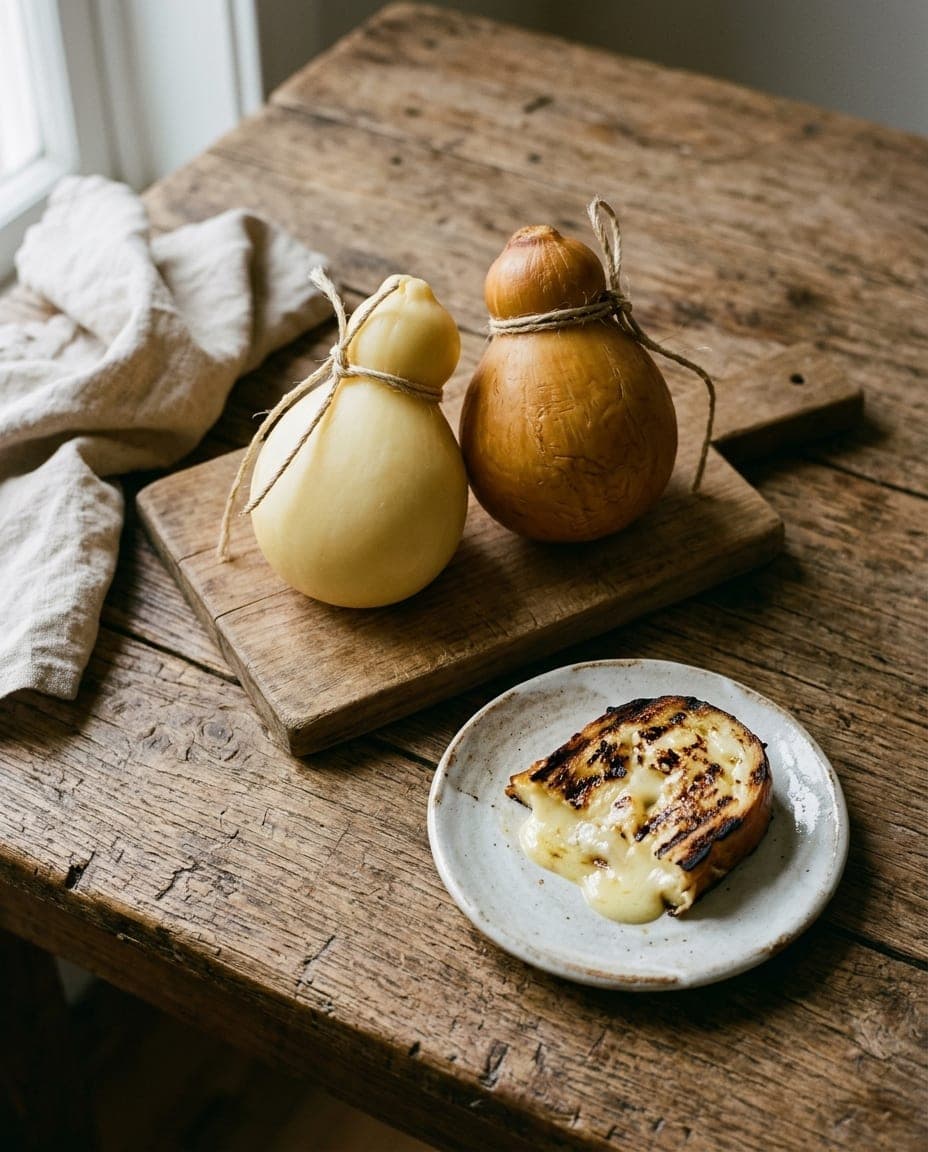
- Local name
- Scamorza molisana
- Served with
- Grilled, with bread
- Best eaten at
- A Molise caseificio
- Pairs with
- Tintilia del Molise
What it is
Scamorza molisana is a traditional cheese from the small Italian region of Molise, where dairying remains largely small-scale. It is a stretched-curd cow's-milk cheese, listed among Molise's traditional food products, whose distinctive shape suits the way it is hung to dry. The curd is pulled and shaped into a pear form with a small head and pinched neck, then tied in pairs by a cord to hang. The name scamorza is often said to derive from a word meaning "beheaded", a reference to the way the neck is pinched off or tied.
The cheese is made with the same stretched-curd technique as mozzarella, but it is briefly dried, either eaten after a short rest or left to wilt for two or three days so it loses some of its water. The result is firmer and slightly salty, with a texture that is less milky than its fresh cousin. This drying process turns the cheese into a cooking ingredient: when heated, it melts smoothly without flooding the pan with liquid.
How it is made
The making of scamorza molisana follows the traditional stretched-curd method common to southern Italy, but with a specific focus on drying rather than immediate consumption. Fresh curd is pulled and shaped by hand into the characteristic pear form. The neck is pinched to create a point where a cord can be tied, allowing the cheese to hang in pairs during the curing phase.
In many dairies across Molise, the cheese is hung for a few days until it firms up. Some producers take the process further by smoking the cheese. This creates scamorza affumicata, which takes on a tan colour on the outside and a subtle smoky aroma.
What goes into it
Scamorza molisana is made from cow's milk, typically from local herds in the Molise hills, with those from Alto Molise especially prized. The ingredients are minimal: milk, animal rennet, a natural whey starter and salt. The distinctive character comes not from added flavourings but from the brief drying and, when used, smoking.
- Cow's milk: The base of the cheese, often raw and from small-scale farms in the region.
- Calf or kid rennet: Used to curdle the milk, so the cheese is not vegetarian.
- Salt: The shaped cheeses are briefly brined.
- Smoke: Used only for the affumicata version, giving it its tan colour and gentle smokiness.
The final product is firm enough to be sliced whole or cut into chunks, yet it melts with a creamy consistency when heated. It does not release excessive water, making it ideal for grilling or melting over other ingredients.
How to eat it
In Molise, scamorza is eaten fresh as a table cheese, but a favourite way to enjoy it is grilled. Slices of the cheese are placed on a hot plate or in a pan until the outside develops a golden crust while the inside becomes soft and molten. It is often eaten with fresh bread from the local bakery, which soaks up the melted cheese.
The smoked version pairs well with Tintilia del Molise, a red wine made from the Tintilia grape grown in the same region. The wine's dark fruit notes complement the smokiness of the cheese without overwhelming it. Grilled scamorza is also served warm alongside grilled vegetables or roasted meat, where its melting quality shines.
Curious facts
- The shape is functional. The pear form and pinched neck are designed specifically for hanging in pairs, allowing air to circulate around each cheese during drying.
- Made for melting. Unlike fresh mozzarella, scamorza's lower moisture makes it especially suited to being heated, melted, or grilled.
- Regional identity. Scamorza is made across southern Italy, but the Molise version, especially from Alto Molise, is recognised as a regional traditional product.
- The smoking is optional. Not all scamorza is smoked; the unsmoked version retains a milder, creamier flavour, while the affumicata gains a distinct smoky note.
Where to try it
The best place to taste scamorza molisana is at a caseificio, a small dairy or farm shop in Molise. These establishments often sell the cheese fresh from the drying room. Molise is Italy's second-smallest region, and the cheese remains tied to local producers who understand its specific drying and smoking needs. The best versions come from upland areas such as Alto Molise.
Where to try it
1 region

Molise
Nestled between Abruzzo and Campania, this is Italy's second smallest region, known for its rugged mountains and rolling hills. Termoli, the only coastal city, offers a blend of medieval architecture and beautiful beaches. The region is rich in history, with ancient villages like Campobasso, famous for its castle and local crafts. Molise is also notable for its traditional cuisine, including handmade pasta and local wines such as Trebbiano and Sangiovese. The countryside is dotted with olive groves and vineyards, making it ideal for food and wine enthusiasts. Festivals celebrating local culture, such as the 'Festa di San Basso,' highlight the region's vibrant traditions.





