Rocciata di Assisi
A rolled pastry of apples, walnuts and raisins from Assisi
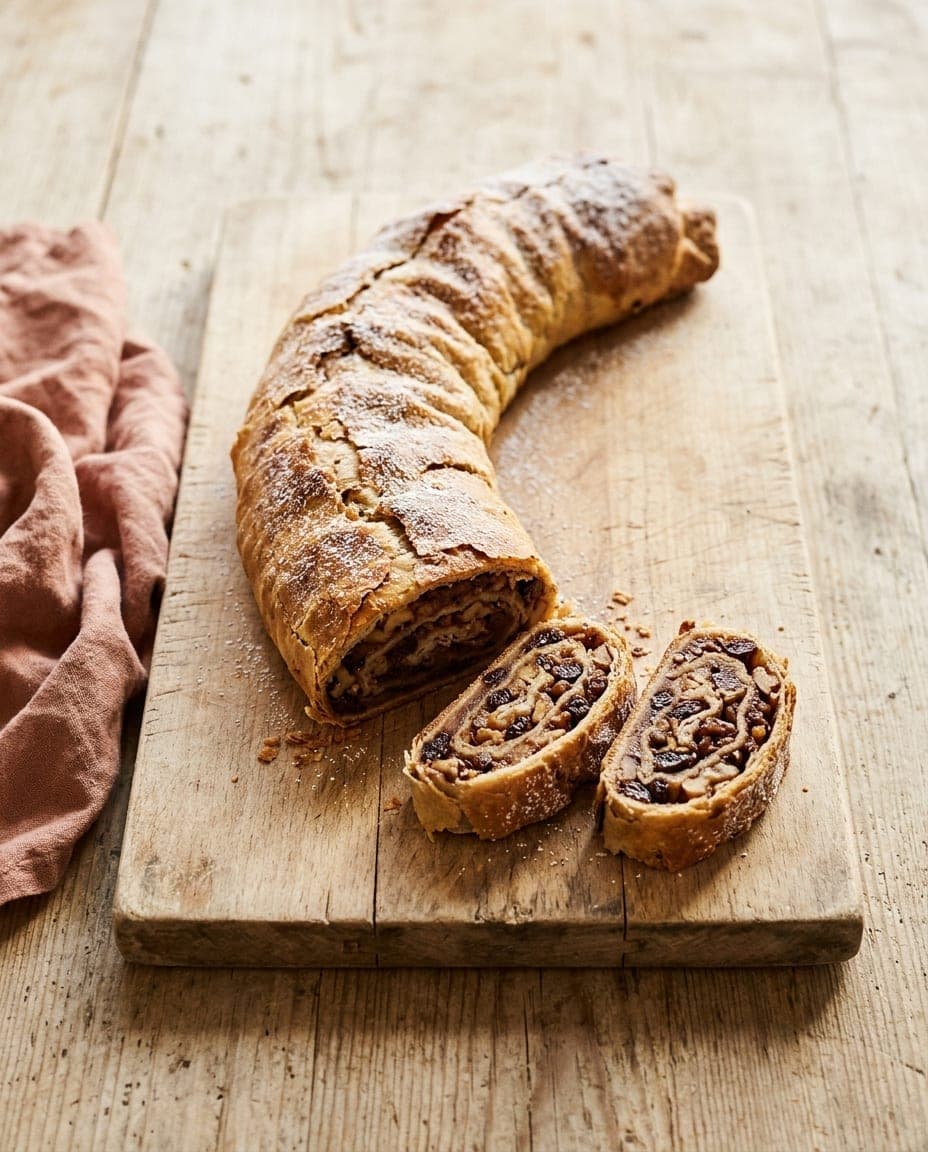
- Local name
- Rocciata
- Best eaten at
- Assisi bakeries
- Pairs with
- Sagrantino passito or Vin Santo
What it is
The rocciata, sometimes called rocciata di Assisi, is a rolled sweet pastry from the hill towns of Umbria, most closely associated with the city of Assisi. It resembles a strudel, but its character is defined by the specific ingredients and the method of rolling. The dough is stretched until it is almost translucent, spread with a filling of chopped apples, walnuts, pine nuts, raisins and sometimes dried figs, then rolled into a long cylinder and coiled. It is often brushed with alchermes, the red Florentine liqueur, which gives the crust its typical pink-red tint over a soft, spiced interior.
Unlike many Italian pastries that rely on butter for richness, the traditional rocciata is made with a simple dough of flour, water, olive oil and wine, giving it a leaner texture that suits the region's agricultural history. The classic shape is a spiral, though some bakers make a horseshoe. It is not a dish found in every corner of Italy; it remains a regional speciality, bound up with the traditions of Umbria and particularly the area around Assisi and Foligno. In the mountain villages a similar sweet is called attorta.
The story behind the roll
The rocciata is an arrotolata, a term that simply describes a rolled pastry. Its exact birth is undocumented; local tradition traces it back to the Lombard presence in Umbria in the early Middle Ages, and its dough and filling are strikingly close to those of the Austrian Strudel. The thinness of the dough requires skill to achieve without tearing, a technique passed down through generations of bakers in the hill towns.
The pastry belongs to the cold months. It is traditionally made from All Saints' and All Souls' Days at the start of November, when the walnut harvest is in and apples are at their peak, and it stays in season through Christmas until the end of Lent. The timing is practical: the nuts and fruits are fresh from the local trees, and the pastry is a substantial treat for the winter months.
What goes into it
The filling changes slightly from one kitchen to another, but the core elements remain consistent. There is no single official recipe, yet a clear pattern emerges in every authentic version found in the region:
- Apples: Usually tart local varieties that hold their shape when baked, cut into small cubes or thin slices.
- Walnuts and pine nuts: Chopped roughly to provide texture and a nutty flavour that balances the sweetness of the fruit.
- Dried fruits: Raisins are standard, though some bakers add figs or other dried produce available in the harvest.
- Flavourings: Sugar, lemon zest and cinnamon are common; around Foligno some add almonds or a touch of cocoa, depending on the family tradition.
- The dough: A simple pasta matta of flour, water, olive oil and wine, rolled out until thin enough to see light through it.
The pastry is brushed with oil and sprinkled with sugar, and often with alchermes, which creates a subtle glaze rather than a heavy icing. The result is a sweet that is fragrant, textured and satisfying without being cloying.
How it is eaten
In Assisi, the rocciata is found in local bakeries and pastry shops and is also widely made at home. It is typically sold warm or at room temperature, often sliced into thick rounds to show off the spiral of filling inside. The texture should be tender with a slight chew from the nuts and fruit.
It pairs naturally with the region's wines. A glass of Sagrantino passito, a sweet red wine from Montefalco nearby, complements the spices and dried fruit. Vin Santo from Tuscany or Umbria also works well, offering a nutty sweetness that mirrors the pastry. It is eaten with afternoon coffee or as a dessert after a meal during the autumn and winter feast days.
Curious facts
- A shape with many names. While rocciata is the common term in Assisi, similar rolled pastries appear under different names across Umbria and central Italy, often linked to specific local harvests.
- Lean baking tradition. The use of olive oil rather than butter reflects the ingredients long available in the Umbrian countryside.
- A pink crust. Many bakers brush the finished roll with alchermes, which colours it a distinctive pinkish red.
- Seasonal timing. The pastry is closely tied to the All Saints' season, appearing when the walnut and apple harvests are in and staying until Lent.
- The thin dough test. A skilled baker can stretch the dough so thinly that it becomes almost transparent before adding the filling, a skill that distinguishes local experts from casual bakers.
Where to try it
The natural place to taste an authentic rocciata is Assisi or nearby Foligno, where traditional bakeries prepare it during the cold months. While it appears year-round in some places, its true season runs from early November until the end of Lent.
Where to try it
1 destination
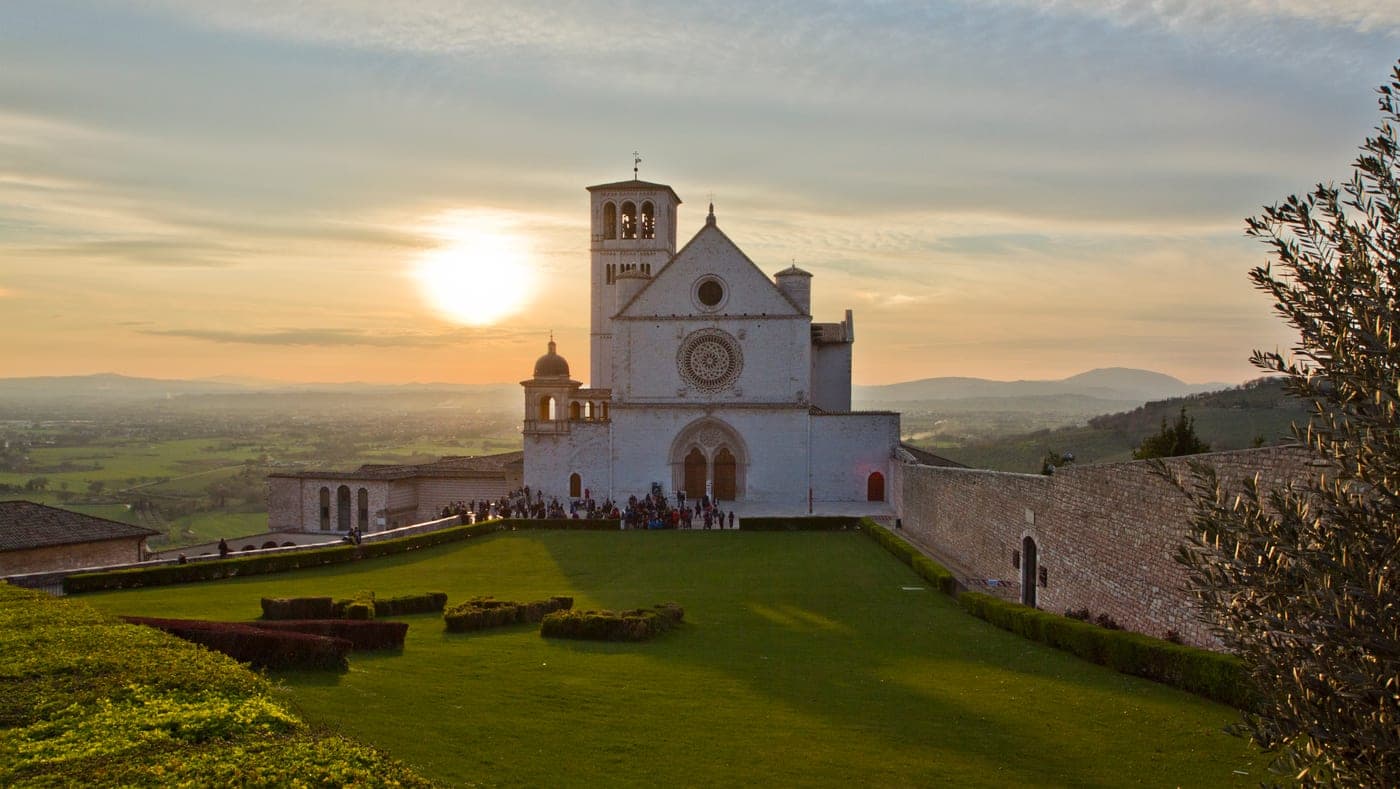 Wine Tasting
Assisi
UNESCO World Heritage city of St. Francis with wine estates and spiritual heritage.
Wine TastingHiking





