Prosciutto di San Daniele
Air-cured ham from Friuli's moraine hills, served with melon and figs
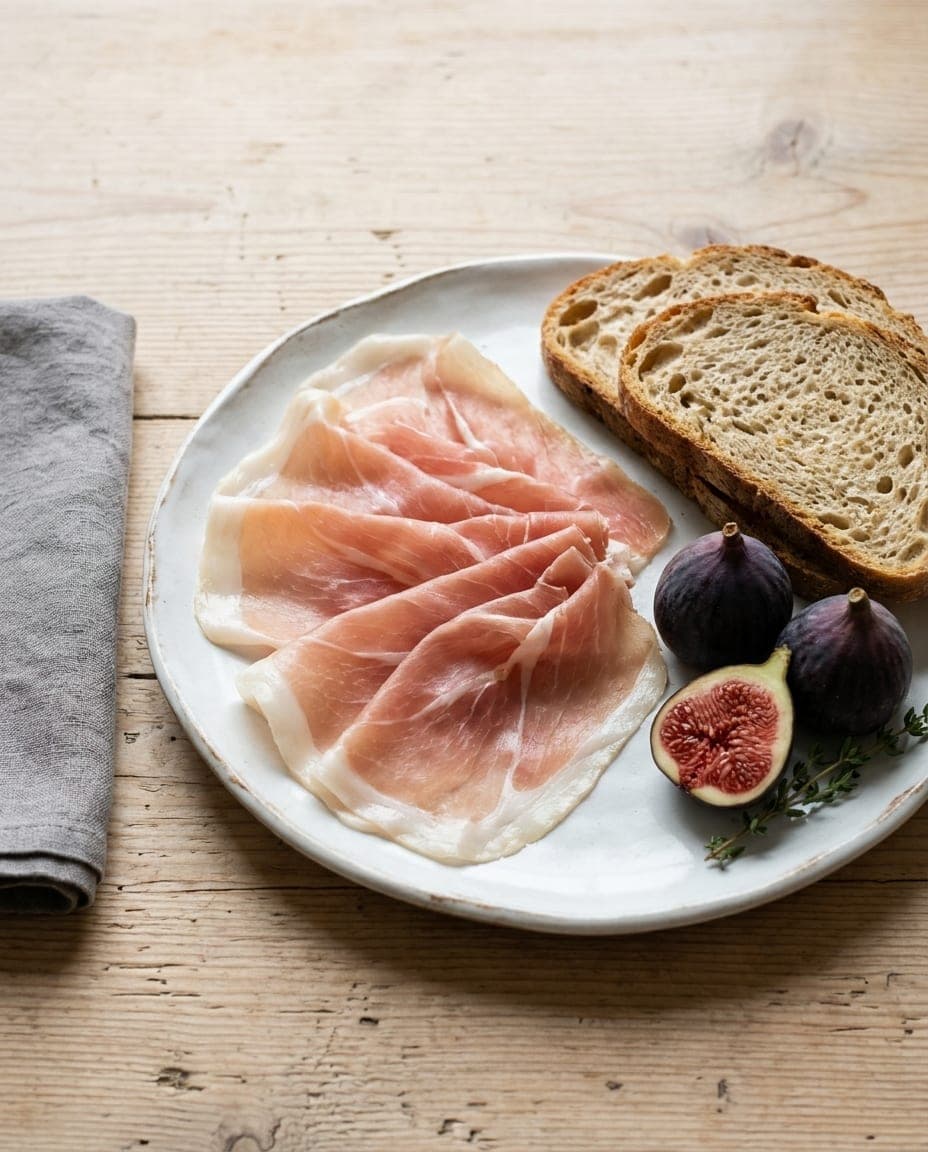
- Local name
- Prosciutto di San Daniele
- Served with
- Bread, melon, figs
- Best eaten at
- A San Daniele prosciutteria
- Pairs with
- Friulano white
What it is
Prosciutto di San Daniele is a dry-cured raw ham from the small town of San Daniele del Friuli in the far north-east of Italy. The meat is pale, delicate and sweet, with a texture that melts on the tongue rather than resisting it. Unlike many other cured meats, it is never cooked; the salt and time do all the work.
The ham arrives at the table in paper-thin slices, often translucent enough to see the shadow of the plate beneath. The flesh is a deep rose colour, contrasting with a layer of fat that remains soft even after months of drying. A defining visual feature sets it apart from its rival Parma: the trotter, or hoof, is left attached to the end of the leg. This small detail is a quick way to identify an authentic piece on the counter. The ham is also pressed during curing into a flattened shape often compared to a guitar.
The town of San Daniele del Friuli sits on a moraine hill formed by ancient glacial deposits. This geography creates a microclimate where cold air from the Carnic Alps meets warm, damp air rising from the Adriatic Sea. The Tagliamento river, which runs past the hill, helps moderate the temperature. Local tradition holds that this constant movement of air is essential for the slow cure, allowing the salt to penetrate evenly while keeping the meat from drying out too quickly or spoiling. Production is confined strictly to the commune itself.
The origins of a protected name
The history of Prosciutto di San Daniele stretches back several centuries, though the exact moment it began as a distinct commercial product cannot be pinned to a single documented date. Pork curing in the area is old, and over time the town's hams gained a reputation that extended well beyond the region. The modern era of protection began in the mid-20th century, when producers founded their consortium in 1961 to safeguard their methods and name from imitation.
In 1970 an Italian law (no. 507) recognised the designation of origin, and in 1996 it was registered as a Protected Designation of Origin (PDO) under European Union law. This designation means that the curing must take place within the municipality of San Daniele del Friuli, using only Italian pork from approved farms and sea salt.
The regulations also govern the curing period. The minimum time for the cure is thirteen months from the start of processing. During this time, the hams hang in ventilated curing rooms where they are exposed to the breezes of the hill. The flavour comes entirely from the meat, the salt, the air and the passage of time.
What goes into it
The ingredients list for Prosciutto di San Daniele is as simple as its reputation suggests. It contains only two things: pork and sea salt. No other spices, preservatives or smoking agents enter the process.
The hams come from heavy pigs raised on approved farms in ten regions of northern and central Italy, from Friuli Venezia Giulia and Veneto down to Lazio and Abruzzo. The animals are fed a cereal-based diet, which contributes to the quality of the fat and the delicate flavour of the muscle. Once the pigs reach the appropriate weight, they are slaughtered, and the legs are trimmed with care. The trotter remains attached: the consortium explains that this respects tradition, keeps the leg intact and helps moisture drain during curing.
The sea salt is applied in the first weeks, in moderate amounts, to draw out moisture and begin the preservation process. The hams are then pressed into their flattened shape, which according to the consortium helps the salt penetrate and improves the texture, before the long, slow drying.
How it is eaten
Prosciutto di San Daniele is always served raw. It arrives in thin, almost transparent slices, fanned out on a wooden board or a ceramic plate. The texture is so delicate that it requires no knife at the table; the slices are already cut thin. The flavour is not salty in an aggressive way but rather sweet and savoury, with a subtle nuttiness that lingers.
The traditional accompaniments reflect the local landscape and the seasons. Slices are often paired with slices of ripe melon, particularly the Cantalupo variety, which adds a burst of sweetness and water to contrast the salt. Figs, either fresh in summer or dried in winter, are another classic pairing, offering a chewy texture and honeyed flavour that complements the ham. A slice of plain bread provides a neutral base for the meat.
In San Daniele itself, the ham is served in prosciutterie, small shops or tasting rooms where the ham is sliced to order and some producers offer guided tastings.
A glass of Friulano white wine is a classic local companion for Prosciutto di San Daniele. This regional white, grown across Friuli's hills and plains, has a fresh acidity and floral, almond notes that cut through the fat without overpowering the delicate flavour of the meat.
Curious facts
- The trotter tells the truth. Together with the consortium's brand on the skin, the hoof left on the leg is the quickest visual clue to a whole San Daniele ham.
- A town-sized industry. Production is confined to the commune of San Daniele del Friuli, a town of around 8,000 people. The consortium counts 31 producers, all operating within the same municipality.
- Three ingredients. The consortium likes to say the ham has three ingredients: pork, sea salt and the microclimate of San Daniele.
Where to try it
The most authentic experience of Prosciutto di San Daniele occurs in the town itself. A visit to a prosciutteria in San Daniele del Friuli is the chance to smell the air of the hill and taste the ham close to the producers who made it.
Outside the town, the ham is sold in delicatessens across Italy and Europe; a shop that slices whole hams to order gives the best result. The ham is available year-round, with melon in summer and dried figs in winter.
Where to try it
1 region
 Wine Tasting1 destination
Friuli Venezia Giulia
This northeastern Italian region is known for its diverse landscapes, from the Alps to the Adriatic Sea. It is the only region in Italy with a coastline, featuring beautiful beaches along the Gulf of Trieste. The capital city, Trieste, boasts a rich history as a former Habsburg port, showcasing architecture that reflects its imperial past. The region is famous for its vineyards, producing unique wines like Friulano and Refosco. Notable towns include Cividale del Friuli, a UNESCO site with Lombard heritage, and Gorizia, known for its historic castle. The scenic Collio wine region invites exploration of charming wineries and local cuisine, emphasizing fresh ingredients and traditional recipes.
Wine TastingHikingLocal Cuisine





