Prosciutto di Norcia
Peppery Umbrian ham cured at altitude in Norcia's mountain air
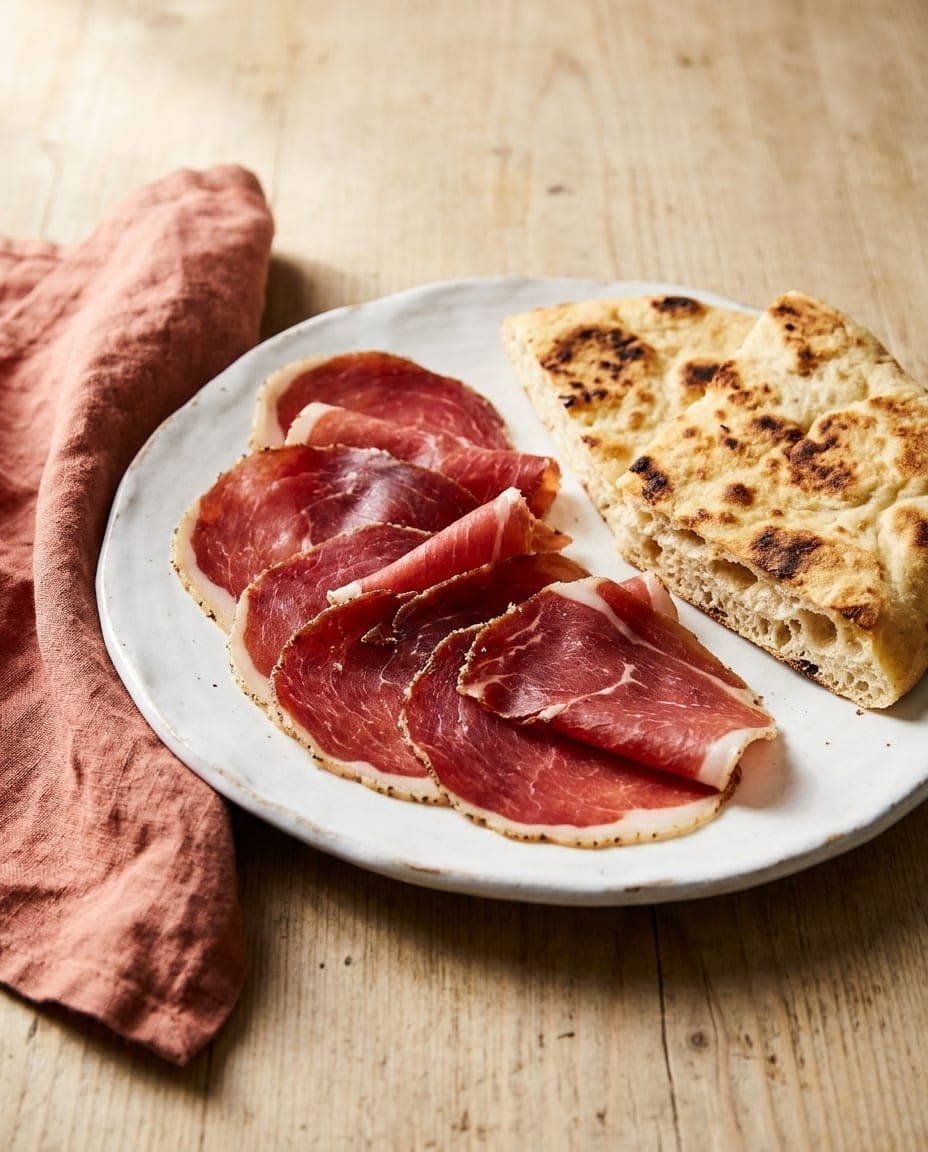
- Local name
- Prosciutto di Norcia
- Served with
- Bread, torta al testo
- Best eaten at
- A Norcia norcineria
- Pairs with
- Montefalco Rosso
What it is
Prosciutto di Norcia is a dry-cured raw ham from Norcia and four neighbouring comuni – Preci, Cascia, Monteleone di Spoleto and Poggiodomo – in the Umbrian Apennines, where it must be made above 500 metres. It belongs to the large family of Italian cured hams but stands apart through its origin and character. It is defined by the climate of the high valleys and by the long tradition of the norcini, the pork butchers of Norcia who gave their name to pork specialists across Italy.
The ham has a deep, savoury flavour with a slightly spiced aroma from the pepper used in the cure. It is not as delicate or mild as some lowland hams; the cold, dry mountain air gives it a robust intensity. The leg has a characteristic pear shape, tapering towards the bone end, and a finished ham weighs at least 8.5 kilograms.
Prosciutto di Norcia has held protected geographical indication (PGI) status since 1997, meaning only hams produced within the defined area and following the agreed rules can bear the name. The air in the high valleys remains cool and dry for much of the year, allowing the meat to cure slowly without the risk of spoilage that warmer climates bring.
The norcini and their legacy
Norcia holds a unique place in the history of Italian food. It gave its name to the norcino, a pork butcher, and to the norcineria, the pork butcher's shop – words still used across much of central Italy. For centuries, men from this area travelled across Italy as seasonal butchers, taking their skills to distant towns. Their reputation was built on precision and an intimate knowledge of the pig, particularly in the art of curing meat.
These travelling butchers moved from village to village during the pig-slaughtering season, transforming raw pork into preserved goods that could last through the year. The tradition is so bound up with the town's identity that the town is still known for its norcinerie hung with hams and sausages.
The legacy of these men is visible in the methods still used today, and many hams are handled by families who have worked with pork for generations.
How it is made and matured
The legs are salted with sea salt in two stages, first moist and then dry, with a modest amount of pepper added during salting. After the second salting the hams are washed of excess salt and rest for at least two and a half months, before being moved to the curing rooms. The exposed meat is sealed with a paste of lard, often seasoned with pepper, and the hams mature for at least 12 months from salting before they can be sold.
The climate plays a critical role in this process. The air above 500 metres is colder and drier than on the lowlands, allowing the meat to lose moisture slowly while developing its flavour, and helping a protective crust form on the surface.
The result is a firm, compact ham. Sliced, it reveals a pink to deep red interior marbled with white fat. The flavour is savoury without being too salty, with the pepper adding a sharp, earthy edge that does not overwhelm the natural taste of the pork.
What goes into it
The ingredients are simple but essential to the character of the ham:
- Pig legs, from heavy pigs of traditional breeds such as Large White and Landrace.
- Sea salt, applied in two stages to draw out moisture and preserve the meat.
- Black pepper, added in modest amounts during salting and in the sealing lard, giving the ham its peppery note.
The flavour comes from the quality of the pork, the climate and the time allowed for maturation. The final product is a raw ham that is eaten without cooking.
How it is eaten
Prosciutto di Norcia is at its best in Norcia itself, bought from a local norcineria. The ham is typically served thinly sliced, so the texture and the interplay of fat and meat can be appreciated.
It pairs naturally with the unsalted bread of Umbria, which does not compete with the savoury ham. In the local tradition, it is often served with torta al testo, a flatbread cooked on a hot griddle called a testo. A glass of Montefalco Rosso, a red wine from the nearby hills, is also a common companion, its dark fruit balancing the spice of the meat.
The ham is often eaten as part of an antipasto with cheese and other cured meats. Its intensity means a few slices go a long way.
Curious facts
- The name travels. The word norcino for a pork butcher spread so widely that it became a general Italian term for a specialist in cured pork products.
- Altitude matters. Prosciutto di Norcia must be produced above 500 metres, in the cold, dry air of the Umbrian Apennines.
- A peppery edge. Pepper added during salting gives it a spicier aroma than many other Italian dry-cured hams.
- Earthquake resilience. Norcia was badly damaged by the earthquake of 30 October 2016; producers carried on, and for a time damaged firms were allowed to cure their hams outside the zone.
- A pear-shaped ham. The specification describes the leg's typical "pear" shape, a quick way to recognise it on the counter.
Where to try it
The most authentic experience of Prosciutto di Norcia is in the town itself, where it is produced and sold by local norcinerie. These shops are the heart of the town's food culture.
Outside Norcia, the ham can be found in specialist delicatessens across Umbria and Italy, but the taste is most complete in its place of origin. A visit to a norcineria allows a direct conversation with the producers about the curing process and the history of the trade, and it combines well with a walk in the surrounding mountains, including the nearby Piano Grande of Castelluccio.
Where to try it
1 region
 Wine Tasting14 destinations
Umbria
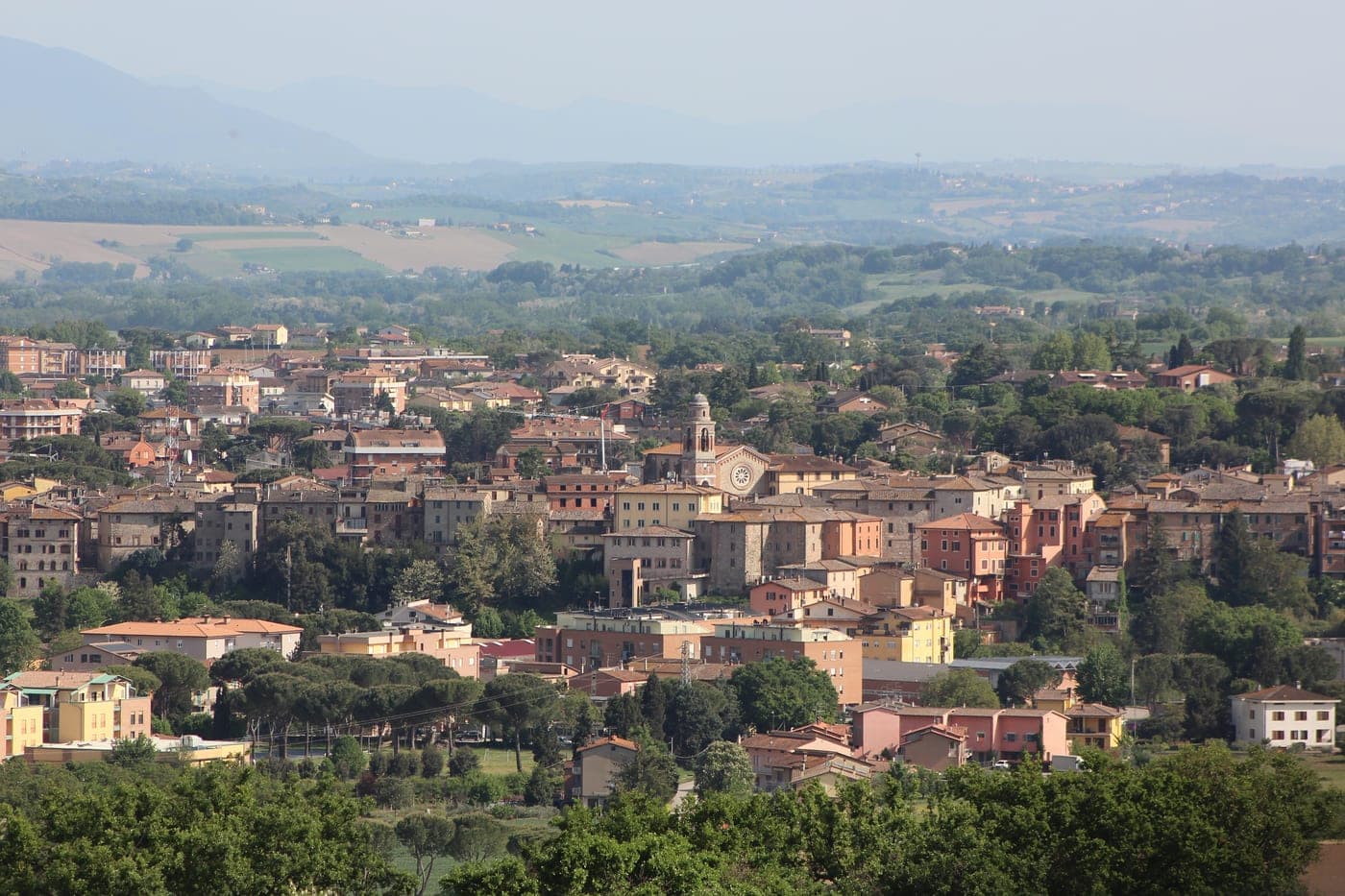
Umbria, Italy's only landlocked region, is known for its rolling hills and rich history. Spoleto, famous for its ancient Roman theater and the Festival dei Due Mondi, offers a glimpse into the region's cultural depth. Assisi, the birthplace of St. Francis, features remarkable frescoes by Giotto in the Basilica and is a UNESCO World Heritage site. The region is renowned for its Sagrantino wine, olive oil production, and traditional cuisine, including truffles and porchetta. With picturesque towns like Todi and Gubbio, travelers can explore narrow streets, local artisans, and regional festivals that celebrate Umbrian traditions throughout the year.
Wine TastingHikingLocal CuisineAgritourism





