Porchetta
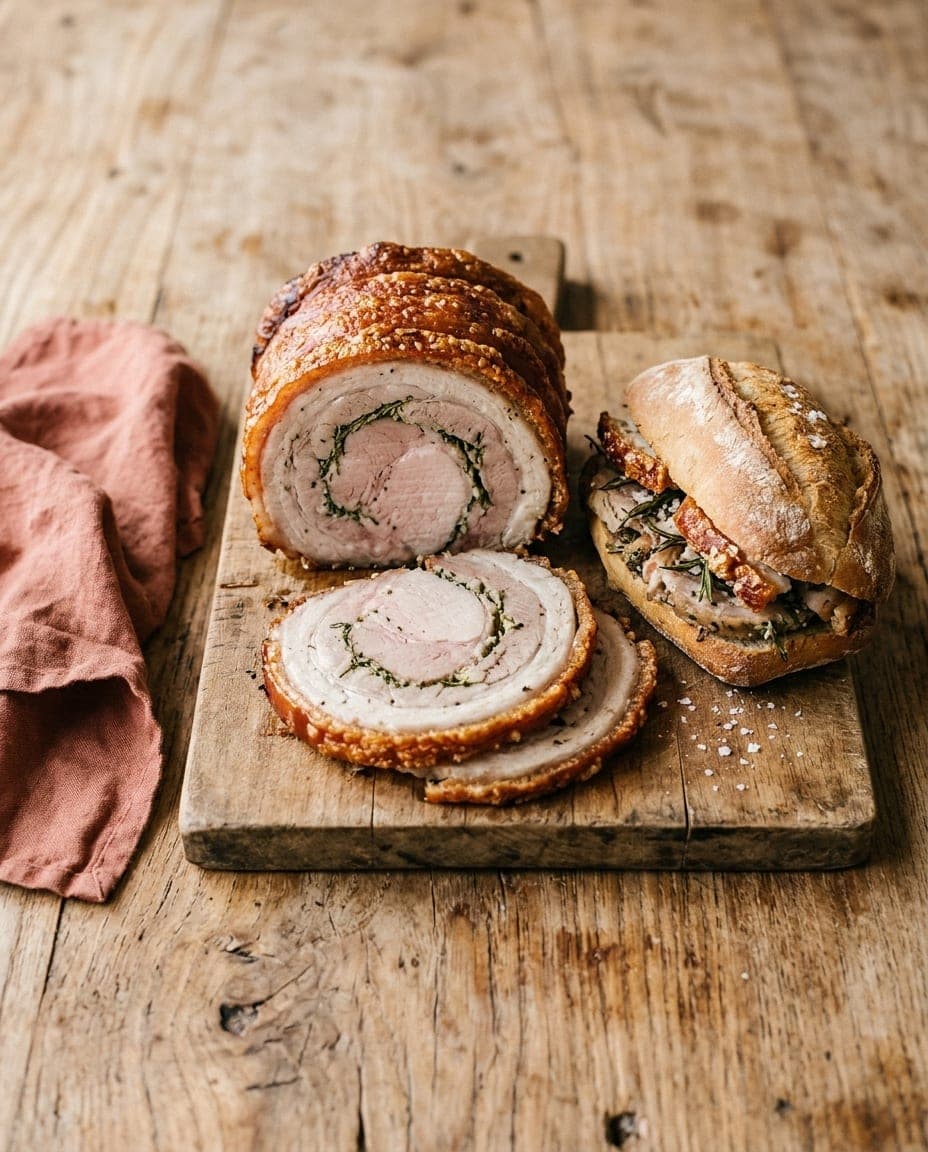
Boned pig slow-roasted with garlic, rosemary or wild fennel
- Local name
- Porchetta
- Served with
- In a crusty roll
- Best eaten at
- An Ariccia fraschetta
- Pairs with
- Castelli Romani white
What it is
Porchetta is a dish of substantial presence and simple origins, born from the desire to feed many people with a single animal. It consists of a whole pig, or a large section combining belly and loin, which has been deboned, seasoned, rolled into a tight cylinder, tied with string and roasted slowly for hours. The result is a roast where the meat remains soft and moist while the skin turns into a hard, golden shell of crackling that shatters when bitten.
The dish is most strongly associated with central Italy, particularly Lazio, Tuscany and Umbria, as well as the Marche. In these areas a whole roasted pig is a familiar sight at village festivals, markets and in the windows of specialist shops. The version known as Porchetta di Ariccia has a protected geographical indication (PGI) that recognises its link to the town of Ariccia in the Castelli Romani hills south-east of Rome.
Despite its size and the effort required to prepare it, porchetta is fundamentally a food of the street. It is rarely served as a formal plated course. Instead, it moves from the oven to a slicing station, where a vendor cuts generous slices to order. These are stuffed into a plain, crusty roll, often with a piece of crackling for texture. This panino con la porchetta is the form most travellers encounter, eaten standing up or while walking through a market.
The roots in Ariccia and Monte San Savino
Two towns are especially associated with porchetta: Ariccia in Lazio and Monte San Savino in Tuscany. Both have long traditions of roasting pork for local fairs and religious celebrations that draw crowds from the surrounding countryside.
Ariccia calls itself the capital of porchetta and has held its Sagra della Porchetta every year since 1950. The PGI rules for Porchetta di Ariccia are precise: the roast is made in the town from female pigs, seasoned only with sea salt, black pepper, garlic and rosemary, and baked in the oven for three to five hours or more, either as a whole boned carcass or as a smaller rolled section.
Monte San Savino, in the province of Arezzo, holds a similar claim to fame, and the town celebrates its porchetta with its own sagra. Its version shares the same core technique of deboning, seasoning, rolling and slow roasting. Ariccia has gained wider recognition through its protected status, but the two towns remain the twin poles of the tradition.
The ingredients that define it
Outside Ariccia there is no single official recipe, and each butcher guards their own balance of salt and herbs. The essential components are nonetheless consistent. The base is a whole pig or a large cut combining belly and loin, which provides the necessary layers of fat and meat. The deboning leaves the skin intact, creating a natural casing for the roll.
The seasoning is what distinguishes porchetta from other roasted pork dishes. Salt and black pepper form the foundation, and garlic is used generously. The herbs vary by place: in Ariccia the defining herb is rosemary, while in much of Umbria, Tuscany and the Marche wild fennel is the signature, giving a distinct aniseed note. Some cooks add sage or other herbs, but garlic with rosemary or fennel remains the standard.
The meat is rolled tightly around these seasonings and tied to keep its shape during the long cooking. This ensures that the fat renders evenly and the herbs flavour the meat throughout, so every slice combines soft, juicy pork with sharp, aromatic notes.
How it is cooked
The roasting is traditionally done in a large wood-fired oven, allowing the heat to circulate slowly around the meat. The goal is a specific contrast: the skin must become a hard, golden shell while the interior remains soft and moist. If the heat is too fierce, the outside burns before the inside cooks; if it is too gentle, the skin stays leathery.
Once cooked, the roast is left to rest before slicing. It is served at room temperature as often as hot, which makes it equally suited to a quick street snack and to a shared meal at a gathering.
Where to eat it
In Ariccia, porchetta is sold from shops and stalls around the town centre, and above all in the fraschette, rustic taverns of the Castelli Romani where locals and travellers gather for simple food and local wine. Here porchetta is served by the slice or in a roll, alongside bread, cheese, cured meats and salad. Street vendors at fairs and markets across central Italy also slice the meat to order and pack it into crusty rolls, to be eaten standing up or walking through the crowd.
A classic pairing is a glass of white wine from the Castelli Romani. The crisp acidity of these wines cuts the fat of the pork and complements the herbs. A cold beer is also common, especially in summer, but the local white remains the traditional companion.
Curious facts
- A whole pig. The classic porchetta is a whole deboned pig, rolled and roasted as one piece; smaller rolled cuts are now common too.
- The crackling is key. The texture of the skin is the main measure of quality; a soft or chewy shell signals a flaw in the roasting.
- Room temperature welcome. Unlike many roasts served piping hot, porchetta is often eaten at room temperature, when the flavours have settled.
- Street food heritage. The dish grew up as a way to feed large crowds at festivals and fairs, a true food of the people rather than a courtly delicacy.
- Rosemary, not fennel. In Ariccia the PGI rules name rosemary, garlic and pepper; the wild-fennel porchetta belongs to Umbria, Tuscany and the Marche.
Where it comes from
The origins of porchetta lie in the rural traditions of central Italy, where the pig was a valuable resource and roasting a whole animal was an efficient way to feed families and neighbours during celebrations. The use of wild fennel, rosemary and garlic reflects the herbs that grow freely in the surrounding hills. Whether eaten in a fraschetta in Ariccia or at a market stall in Monte San Savino, porchetta still carries the story of the slow, careful work of turning a whole animal into something that feeds many.
Where to try it
2 destinations
 Wine Tasting
Montegabbione
Medieval village in western Umbria with local wine traditions.
Wine TastingHiking Wine Tasting
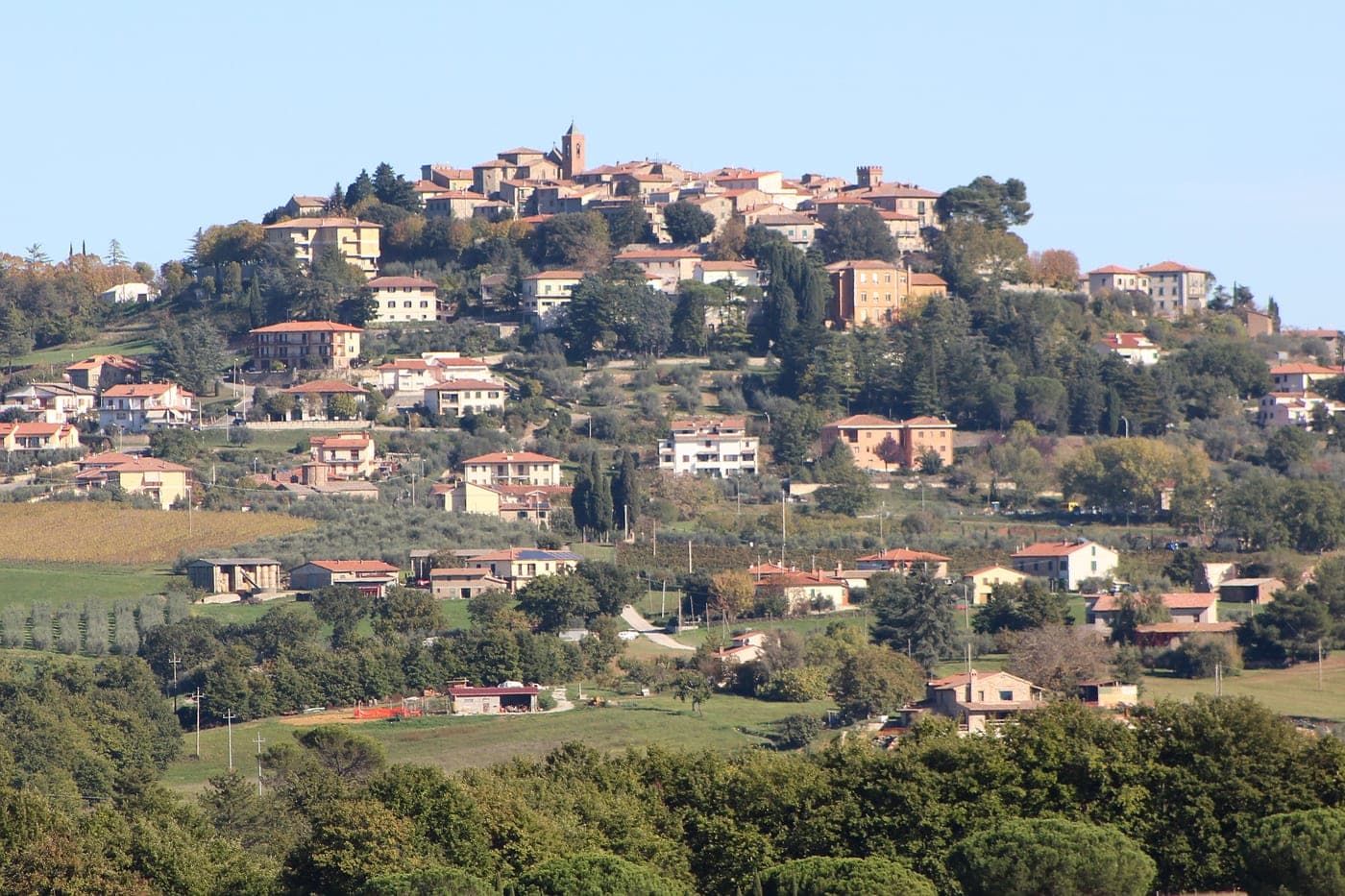
Monte San Savino
Renaissance hilltop town in the Val di Chiana, famous for ceramics and the sculptor Andrea Sansovino.
Wine TastingCastles
2 regions
 Wine Tasting14 destinations
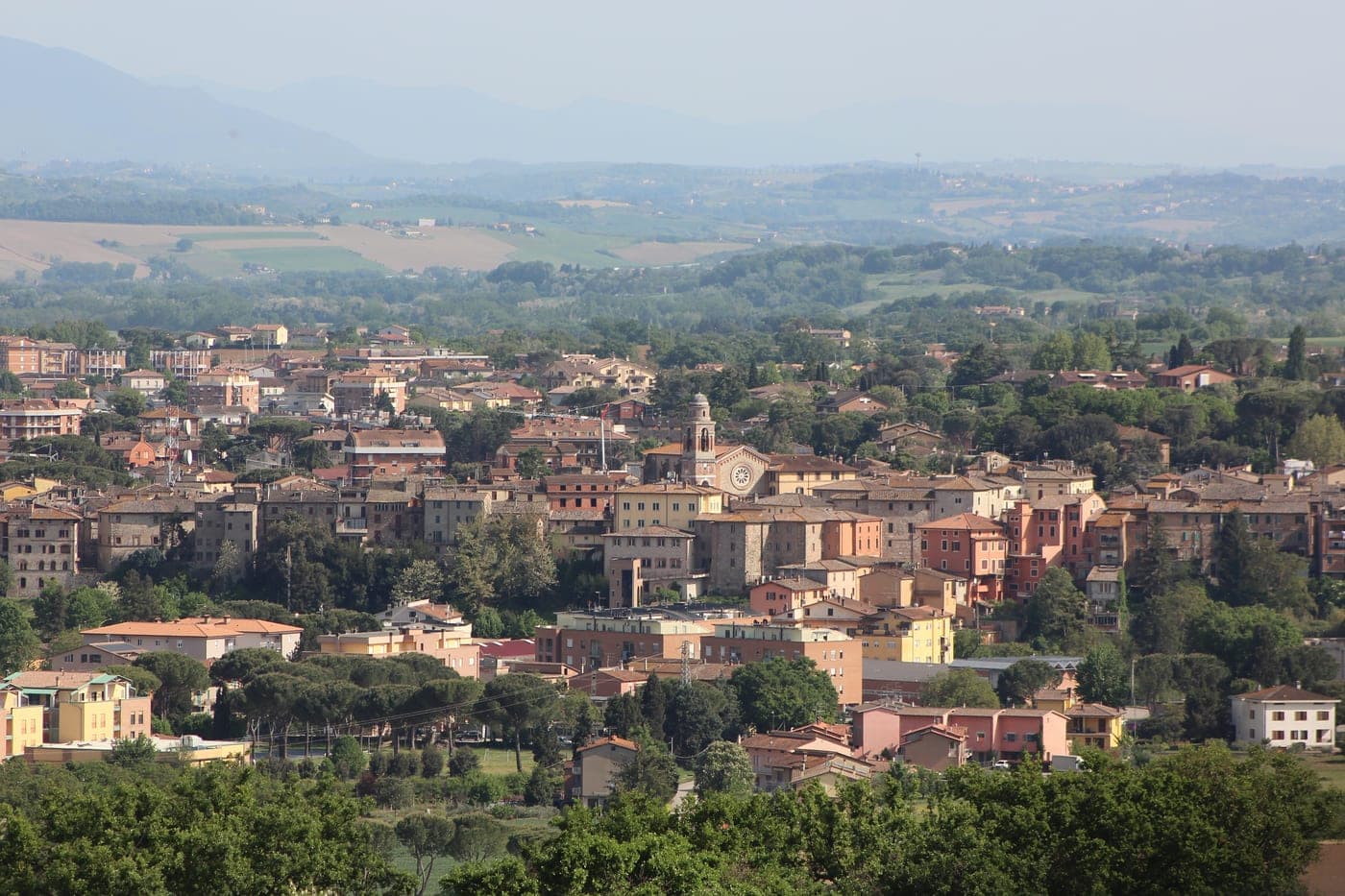
Umbria
Umbria, Italy's only landlocked region, is known for its rolling hills and rich history. Spoleto, famous for its ancient Roman theater and the Festival dei Due Mondi, offers a glimpse into the region's cultural depth. Assisi, the birthplace of St. Francis, features remarkable frescoes by Giotto in the Basilica and is a UNESCO World Heritage site. The region is renowned for its Sagrantino wine, olive oil production, and traditional cuisine, including truffles and porchetta. With picturesque towns like Todi and Gubbio, travelers can explore narrow streets, local artisans, and regional festivals that celebrate Umbrian traditions throughout the year.
Wine TastingHikingLocal CuisineAgritourism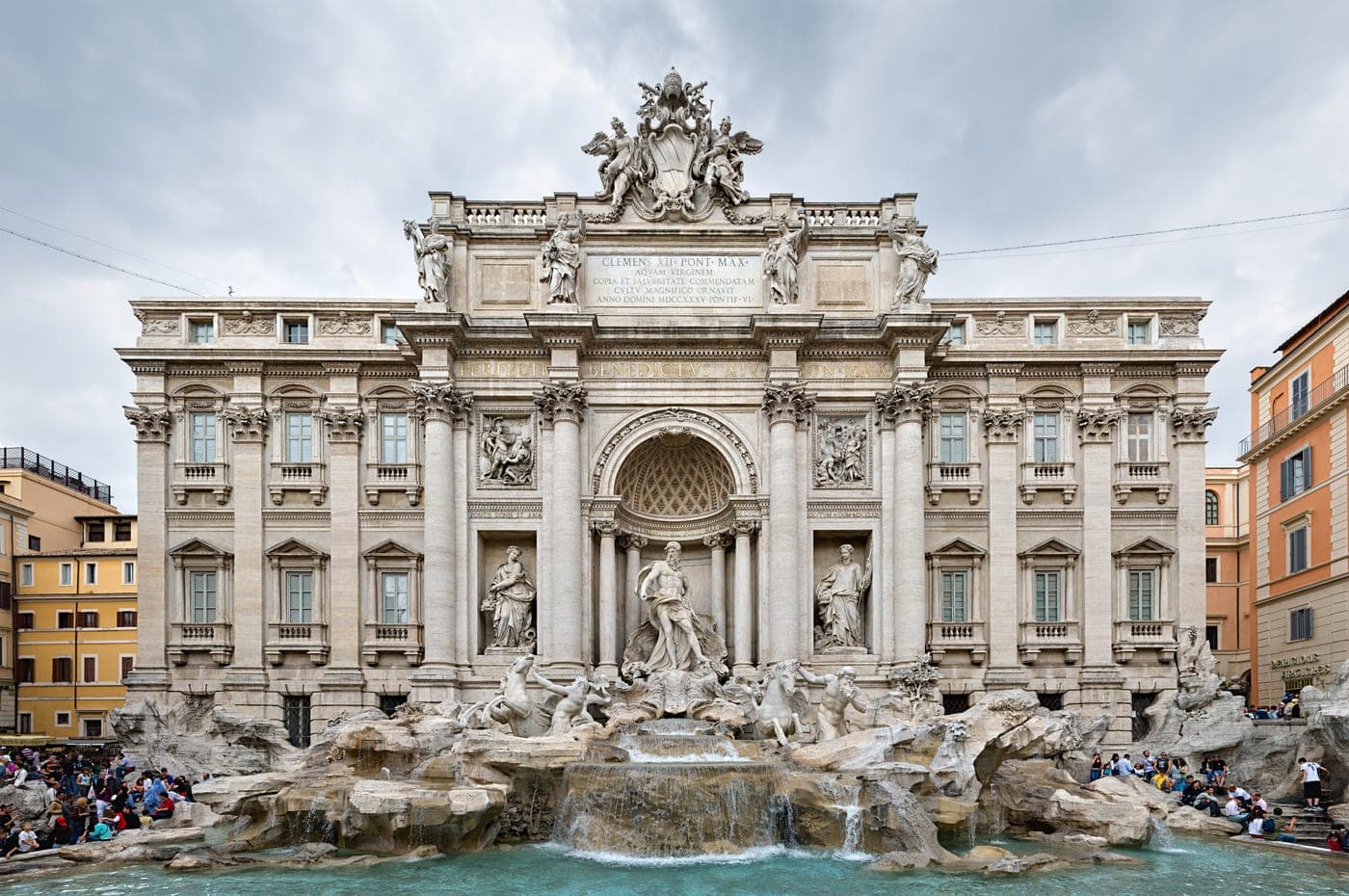 Camper Van Rentals2 destinations
Lazio
Lazio is Italy's second-largest region, renowned for its rich history and diverse landscapes. The capital, Rome, boasts ancient ruins and vibrant street life, but the surrounding areas are equally captivating. Explore the hill towns like Viterbo, known for its thermal springs and medieval architecture. The region also features the stunning coastline of the Tyrrhenian Sea, offering hidden beaches and charming fishing villages. Lazio is famous for its culinary traditions, including artichokes from Rome and wines from Frascati. The region is home to the beautiful countryside of the Castelli Romani, dotted with vineyards and historic castles, providing a glimpse into local life away from the tourist crowds.
Camper Van RentalsHikingWine Tasting





