Polenta taragna
A dark, buttery mountain dish of buckwheat, maize, cheese and woodsmoke
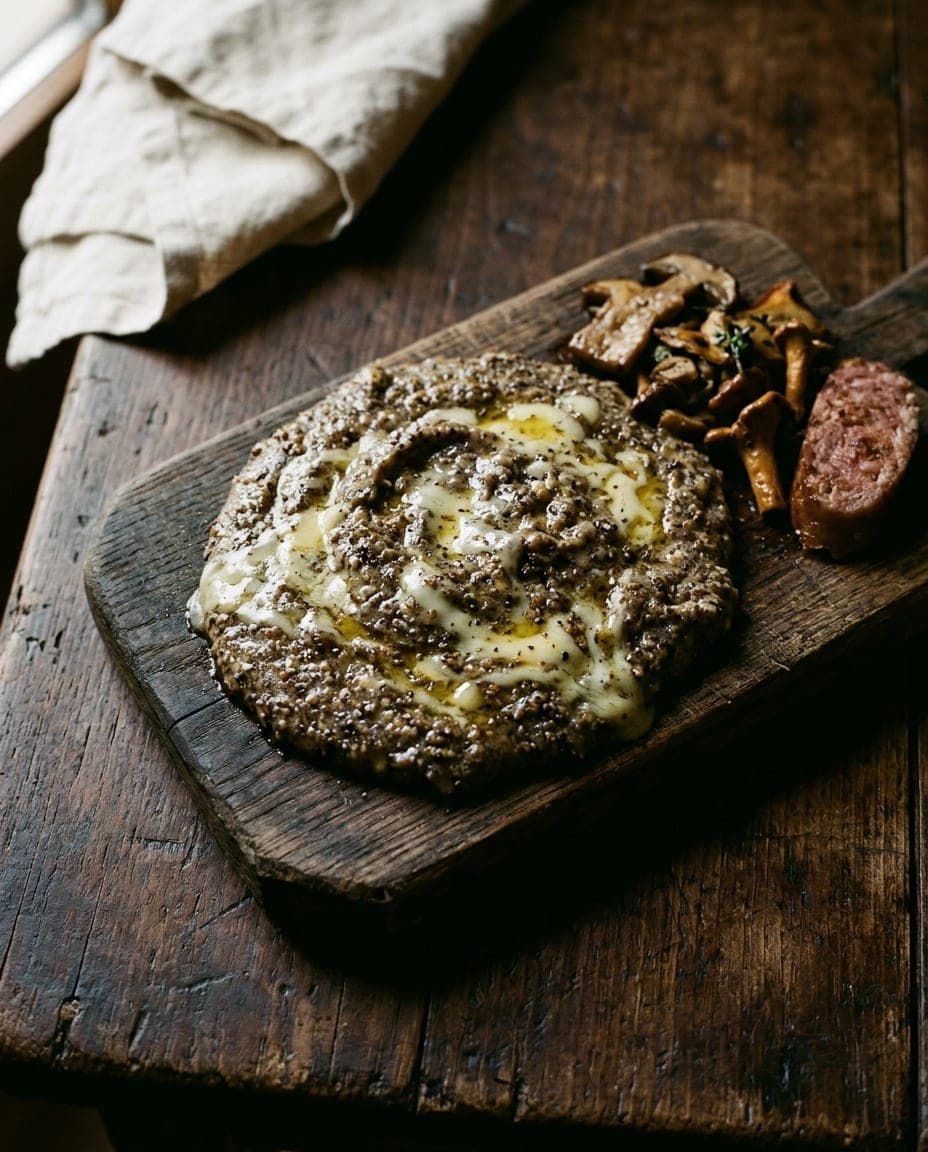
- Local name
- Polenta taragna
- Served with
- Braised meat, sausages, mushrooms
- Best eaten at
- A Valtellina trattoria
- Pairs with
- Valtellina Superiore (Nebbiolo)
What it is
Polenta taragna is the signature dish of Lombardy's northern valleys, above all the Valtellina, in the province of Sondrio along the Swiss border, and the Bergamo valleys such as Val Brembana. It is a dark, glossy mound of cornmeal and buckwheat flour, enriched with generous amounts of butter and mountain cheese until the texture becomes almost elastic. Unlike the pale, soft polenta found in many parts of Italy, this version has a deep grey-brown hue and a distinct nutty bitterness from the buckwheat.
The dish can stand as a complete meal, often served on a wooden board or plate, or come with braised meats, sausages or wild mushrooms. The name is usually linked to the local dialect for stirring and to the long wooden stick, the tarello, used to work the mixture over the fire.
The history of the dish is tied to the mountain landscape itself. In the high valleys where wheat was scarce, farmers relied on buckwheat, a hardy crop that coped with the cool air and poor soil. Over time it was combined with maize flour, creating a blend that balanced the earthy flavour of the buckwheat with the sweetness of the corn. The result is hearty, warming and deeply satisfying.
The tarello and the copper pot
Making polenta taragna is a physical act as much as a culinary one. Traditional cooks still use a long wooden stick to stir the mixture in a large copper pot called a paiolo. The copper conducts heat evenly, which is vital when cooking a thick, heavy batter that can easily catch on the bottom if not constantly moved.
The process requires patience and strength. The mixture is stirred almost continuously for around 45 minutes to an hour, until the flour is fully cooked; then the butter and cheese are worked in. This constant agitation turns the grain into a smooth, cohesive mass. The sound of the wooden stick against the copper pot is a familiar noise in mountain kitchens during the winter months.
It is a reminder that the texture is not achieved by adding thickeners, but through the physical effort of the cook. The tradition has survived in many households, even as modern stoves have replaced open fires.
What goes into it
The ingredients are simple, yet each plays a specific role:
- Buckwheat flour, which provides the dark colour and the nutty bitterness that defines the taste.
- Maize flour, usually a coarse grind, adding body and a subtle sweetness to balance the buckwheat.
- Butter, often in large quantities, melted into the hot mixture to create a glossy sheen and a smooth mouthfeel.
- Local mountain cheese, such as Valtellina Casera or Bitto in the Valtellina, or Branzi in the Bergamo valleys, which melts into the polenta and adds savoury depth.
- Salt, used sparingly.
Once the cheese has melted in, the polenta holds its shape when served but yields easily to the spoon. It is neither a stiff, dry mound nor a loose porridge; it sits somewhere between the two, dense yet soft.
How it is eaten
Polenta taragna is typically served as a main course, especially in winter or after a day in the mountains. It often comes with stewed or braised beef, game stews, sausages, or wild mushrooms cooked in butter and herbs, which add salt and savoury depth to the rich, nutty base.
In mountain huts and traditional taverns, a simple salad is often served alongside to cut the fat. A glass of Valtellina Superiore, a red wine made from Nebbiolo grown on the steep terraces above the valley, is the traditional companion; its tannins and fruit balance the heavy, buttery texture of the polenta.
The dish is best eaten while still hot, as it firms up quickly once it cools. The experience is one of comfort and warmth, with the nutty flavour of the buckwheat lingering after each bite.
Curious facts
- A name from the stirring. Taragna is usually traced to the dialect words for stirring and for the long wooden stick used to do it.
- A dark colour. Unlike standard yellow polenta, this dish is grey-brown because of the buckwheat flour.
- Stirred, not left alone. The texture comes from almost constant stirring in the paiolo, which creates an elastic, glossy consistency.
- A mountain staple. It is traditionally eaten in winter or after hiking, when a hot, filling meal is most welcome.
- Cheese country. The cheeses melted into it, such as Valtellina Casera and Bitto, are themselves protected products of the same valleys.
Where to try it
Polenta taragna is on the menu of almost every traditional trattoria and mountain refuge in the Valtellina, and in the villages of Val Brembana above Bergamo. Another characteristic setting is the crotto, a rustic eatery built around a cool natural cellar in the mountainside, found in the Valtellina and especially in the neighbouring Valchiavenna.
The Valtellina is known for its dairy production, so the cheese in the polenta can vary from one cook to the next. Kitchens that still use a copper paiolo offer the most rustic experience; such details reflect a commitment to traditional methods that preserve the dish's texture and flavour.
Where to try it
1 destination
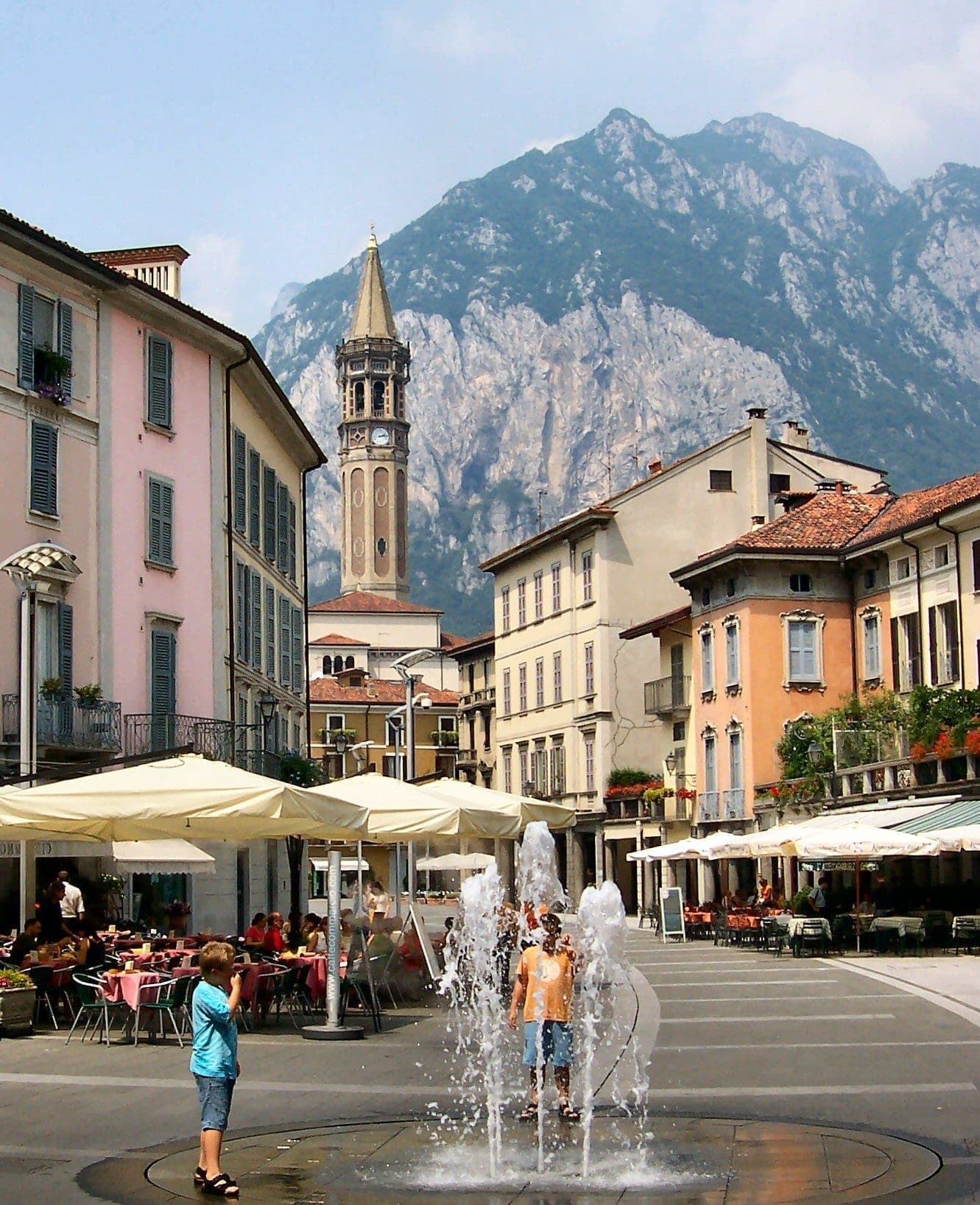 Boat Rentals
Lecco
City on Lake Como's eastern branch with marina facilities and dramatic mountain backdrop.
Boat RentalsHiking





