Piadina romagnola
Thin, soft flatbread from Romagna, cooked on a teggia and folded with squacquerone cheese
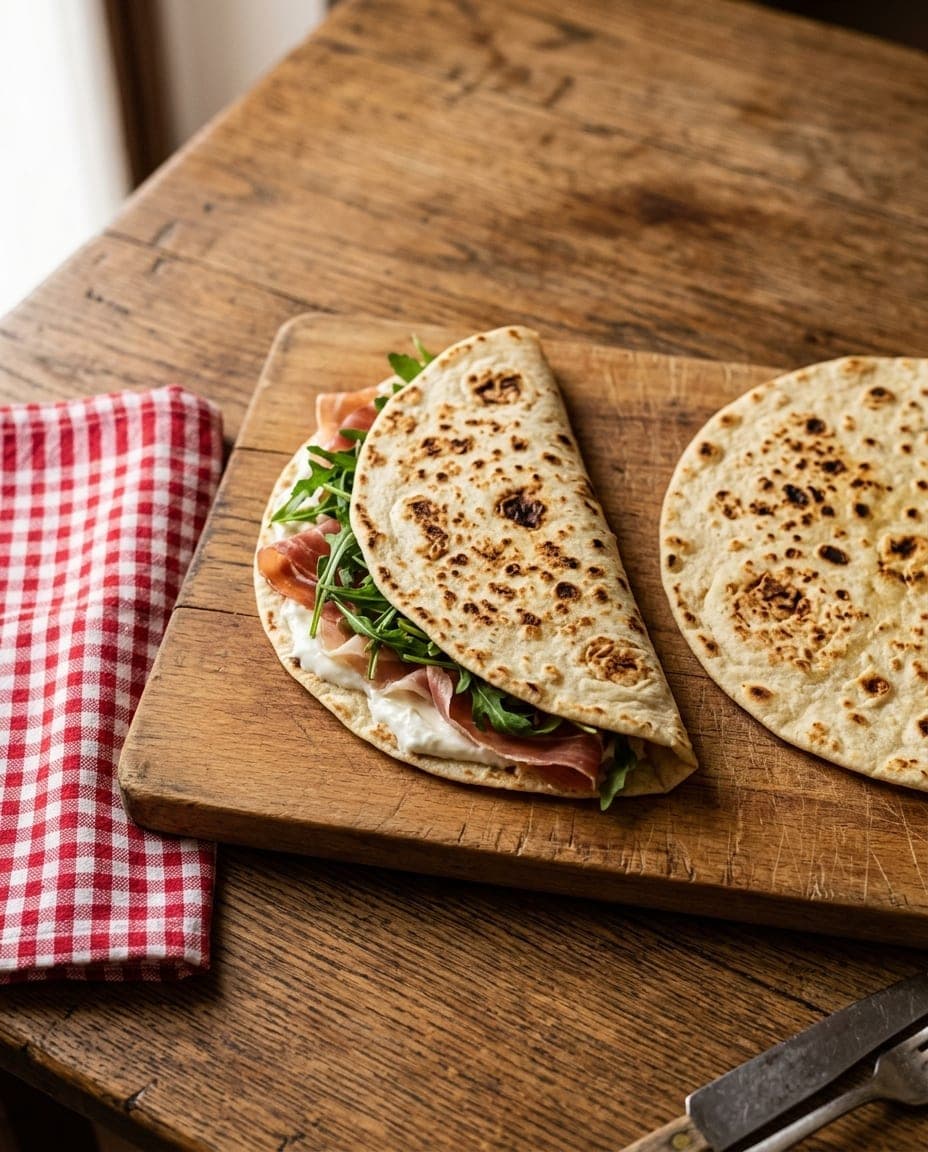
- Local name
- Piadina romagnola
- Served with
- Squacquerone, rocket, prosciutto
- Best eaten at
- A Romagna piadina kiosk
- Pairs with
- Sangiovese or Albana
What it is
The piadina romagnola is a thin, unleavened flatbread from Romagna, the eastern half of the Emilia-Romagna region in northern Italy. It is not a pizza, nor does it resemble a cracker or a crisp bread. Instead, it is a warm, pliable disc, cooked quickly on a hot griddle and folded around a simple filling before being eaten by hand.
The texture is distinct from most other Italian breads. Because it contains no yeast, it puffs only in the heat of the cooking surface, creating a soft interior with lightly browned spots and blisters on the outside. The taste is mild and slightly nutty, relying on the quality of the flour and the fat used in the dough.
In the local dialect, it is simply called piada. The poet Giovanni Pascoli helped make the word piada familiar in Italian, and it became the standard term for the bread. Traditionally it was cooked on stone slabs or on terracotta griddles called teggie or testi; today most is cooked on a metal plate kept hot over gas or electricity. The entire process, from mixing the dough to serving the folded bread, takes only a few minutes.
How it came to be
The history of the piadina is rooted in the daily life of the Romagna countryside rather than in royal courts. It was the bread of the working class, made for farmers and labourers without requiring expensive ingredients or long rising times. The dough required only flour, water, salt and fat, all readily available on a farm.
Traditionally, the fat used was lard, known as strutto. This rendered pork fat gives the bread its characteristic softness. Olive oil versions also exist today and are permitted under the protected recipe, but lard remains the classic choice. Without yeast, the bread could be made quickly whenever it was needed, making it a staple that appeared on tables from morning to night.
The bread is so bound up with its place of origin that it has been granted a Protected Geographical Indication (PGI). The protected name covers piadina made in the provinces of Rimini, Forlì-Cesena and Ravenna and in the eastern part of the province of Bologna, up to the river Sillaro. The PGI rules recognise two versions: the standard Piadina Romagnola and the thinner Piadina Romagnola alla Riminese.
Pascoli famously called it "il pane nazionale dei Romagnoli", the national bread of the people of Romagna. The phrase captures its status not just as food, but as a symbol of local identity.
The regional divide
While the piadina is found across Romagna, the shape and thickness vary significantly depending on the town, and locals take the differences seriously. Around Rimini and along the southern coast, the bread is rolled thin and wide, up to about 30 centimetres in diameter and no more than about 3 millimetres thick. These versions are soft and flexible, folding easily around a filling.
Moving north and inland towards Ravenna, Forlì and Cesena, the piadina becomes thicker and smaller, typically 15 to 25 centimetres across and several millimetres thick. It holds its shape better and has a more crumbly texture. A diner from Rimini might find the inland version too heavy, just as a local from Ravenna might consider the Rimini version too thin.
What goes into it
The dough is simple, yet the choice of fat defines its character. The basic mixture is soft wheat flour, water, salt and lard or olive oil. There is no yeast, though the protected recipe allows a small amount of raising agent such as bicarbonate of soda, and many cooks add a pinch.
The filling is where the piadina becomes a meal. The classic combination consists of three elements: a soft fresh cheese called squacquerone, peppery rocket leaves (rucola) and cured ham, usually prosciutto crudo. Squacquerone, itself a protected cheese of Romagna, is very soft and creamy with a mild, slightly tangy flavour that softens further in the warmth of the bread.
Other variations stay within the same spirit of simplicity. Some replace the ham with grilled sausage, or add grilled vegetables such as courgettes or aubergines. Versions with mozzarella are common in tourist areas.
How it is eaten
The piadina romagnola is best eaten immediately after it comes off the griddle, while still warm and pliable. Folded over the filling, it needs no knife or fork; it is meant to be held in one hand, perhaps with a napkin to catch any drips.
The traditional setting is informal. Piadina is sold at small kiosks known as chioschi, which serve little else but the bread and its fillings. They are scattered along the roads and seafronts of Romagna, serving as gathering points for locals and travellers alike.
A glass of local wine pairs naturally with it. A dry red Sangiovese or a white Albana from the same region complements the salty and creamy elements without overwhelming them.
Curious facts
- Kiosk culture. The roadside chioschi selling piadina are an institution of the Romagna landscape.
- A PGI protected name. Piadina romagnola is protected by EU law and can only be made within the designated part of Romagna.
- A poet's phrase. Giovanni Pascoli called the piadina "the national bread of the Romagnoli".
- Clay griddles. Terracotta teggie for cooking piadina were traditionally made in Montetiffi, a hill village in Romagna, where they are still produced.
Where to try it
The most authentic experience is found at a chiosco, a small stand that sells little but piadine. These kiosks are scattered throughout Romagna, particularly along the roads connecting Rimini, Cesena, Forlì and Ravenna. They offer the traditional version of the bread, cooked fresh and filled with squacquerone, rocket and prosciutto.
For a more seated experience, traditional restaurants in the region also serve piadine alongside other regional dishes. However, the kiosk remains the ideal place to see the bread being made and eaten in its natural setting, a social hub where locals gather, chat and share a quick meal.
Where to try it
1 destination
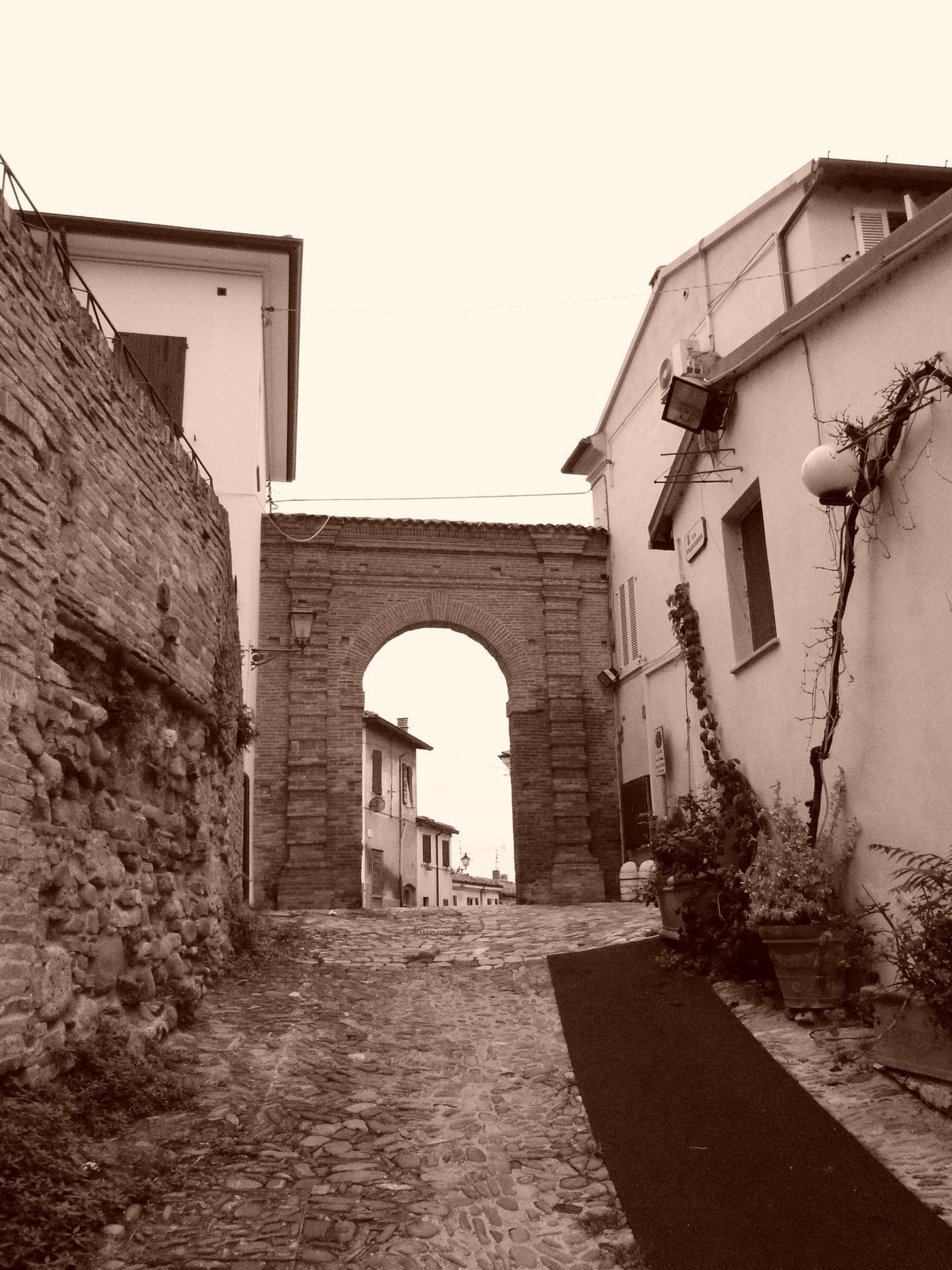 Agritourism
Montiano
Romagna hills village with family farms producing Sangiovese wine and traditional piadina.
AgritourismHiking
1 region
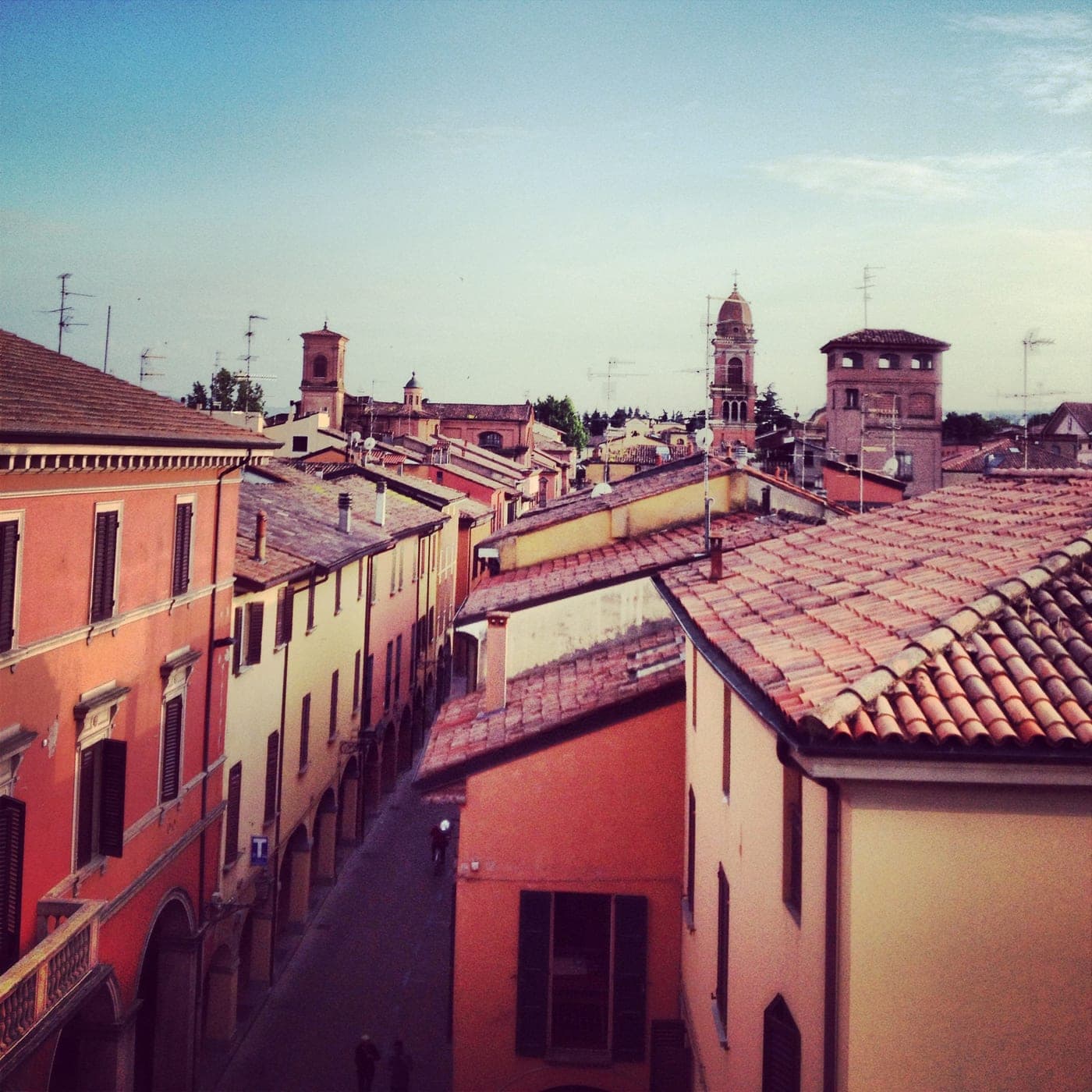 Wine Tasting9 destinations
Emilia-Romagna
This region in Italy is renowned for its diverse landscapes, ranging from the Apennine Mountains to the Adriatic coastline. It is the only Italian region with a significant stretch of coastline, featuring vibrant seaside towns like Rimini. Bologna, the capital, is famous for its medieval architecture and culinary heritage, being the birthplace of tagliatelle al ragù. The region is also known for its rich history, with towns like Modena showcasing UNESCO-listed sites such as its cathedral and the renowned balsamic vinegar. Slow travelers can explore hidden gems like the medieval village of Dozza, known for its painted walls, or the thermal baths in Salsomaggiore Terme. Emilia-Romagna is the largest region in northern Italy, offering a blend of art, culture, and gastronomy that invites deeper exploration.
Wine TastingHikingCamper Van RentalsLocal Cuisine





