Peperoni cruschi (crispy dried peppers)
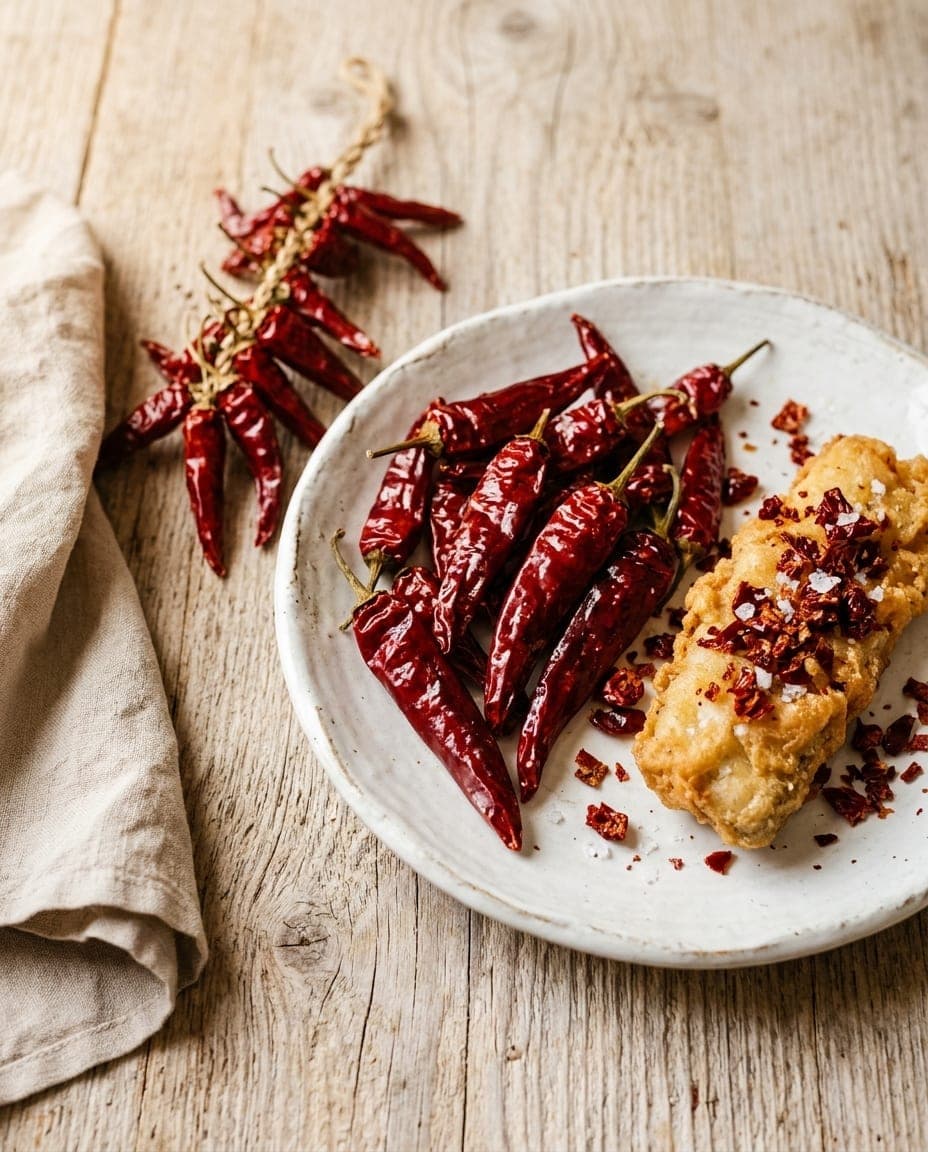
Sun-dried Senise peppers flash-fried until shatteringly crisp
- Vegetarian
- Local name
- Peperoni cruschi
- Served with
- Baccalà, crumbled over pasta
- Best eaten at
- A Basilicata trattoria
- Pairs with
- Aglianico del Vulture
What it is
Peperoni cruschi, literally "crispy peppers", are among the most distinctive ingredients to come out of Basilicata in southern Italy. They begin as sweet red peppers of the Senise type, whose flesh is so thin and low in water that they dry whole without rotting. Once harvested, the peppers are strung together and hung on balconies, house walls or racks in the open air until they lose their moisture and become brittle.
The final step transforms them completely. The dried peppers are dipped into hot oil for just a few seconds, turning glossy and bright before they are lifted out. As they cool, they become shatteringly crisp. Crusco means crisp in the local dialect, and the name describes the sensation of eating one: a sudden crackle followed by a burst of concentrated sweet pepper flavour.
These are not hot peppers. They lack the heat found in chillies. Instead, they offer a deep, toasty sweetness from drying and frying. The oil used for frying is often kept as a seasoned condiment, carrying the flavour of the pepper into whatever it touches.
The landscape of Senise
The story of peperoni cruschi centres on the town of Senise, in the Sinni valley in the south of the province of Potenza. The surrounding area has the hot, dry summers needed to cure the peppers without them spoiling. The sight that defines the harvest season is unmistakable: strings of red peppers, called nzerte, hanging from balconies and railings across the villages of the valley.
The Peperone di Senise has held a Protected Geographical Indication (PGI) since 1996. The designated area covers Senise and neighbouring towns in the Sinni and Agri valleys, across the provinces of Potenza and Matera. The thin walls of the fruit allow moisture to escape quickly, making them ideal for drying whole. This tradition has long been part of rural life, turning a simple vegetable into a durable ingredient that could be stored through the winter months.
How they are made
The process relies on two natural elements: the sun and the air. After picking, the peppers are threaded onto strings by their stems, which stay firmly attached as they dry. They are then hung in places where air can circulate freely, often against sunny walls. Over several weeks, the peppers shrink, darken and lose weight until they feel like light, hollow shells.
Once dried, the peppers move to the kitchen for the final transformation. Oil is heated until very hot, then the dried peppers, usually stemmed and seeded, go in briefly. The frying takes only a few seconds; if they stay in the oil too long, they burn and turn bitter. The timing requires constant attention from the cook.
When removed, the peppers are drained on paper or cloth. Some are eaten whole as a snack, others are crumbled over dishes to add texture and flavour. Dried peppers are also ground into a sweet red powder, known locally as zafaran p'sat ("ground saffron"), used as a seasoning. The frying oil is not discarded; it is often poured over the finished dish.
Where they go on the plate
Peperoni cruschi act as a finishing touch rather than a main ingredient. They are usually added at the very end to provide a contrast in texture and a burst of flavour. A common pairing is with pasta, including handmade strascinati, where the crisp pieces are crumbled over the top just before serving, often with grated ricotta salata.
They also appear with baccalà, the salted cod that is a staple of the region. The dried pepper contrasts with the fish, while the oil from the frying blends with the dish. They are also served with fried eggs and sausage, or crumbled over simple bean dishes.
Eaten on their own, they are a snack. A few pieces are often served alongside local cheeses or cured meats in a small bowl at a trattoria, and the crunch becomes a focal point of the meal.
How to eat them
A Basilicata trattoria is the classic place to taste peperoni cruschi, particularly in Senise and the surrounding valley, where the tradition is very much alive. A plate of pasta will often arrive with the peppers already crumbled over the top.
A red Aglianico del Vulture, Basilicata's best-known wine, is the usual companion; its structure stands up well to the intense flavour of the pepper. A cold beer can also work in hot weather.
As a snack, the pieces are brittle and crumble easily, so they are best handled with care. Served with pasta or fish, they are mixed in gently, so the heat of the dish softens them just enough without losing their crunch.
Curious facts
- The pepper is sweet. Despite being a capsicum, the Senise pepper has no significant heat. It is valued for its flavour and texture, not for spiciness.
- A visual landmark. In late summer, the red strings of peppers hanging from balconies around Senise are a striking sight.
- The oil is part of the dish. The frying oil absorbs the pepper's flavour and is often drizzled over the final plate.
- PGI since 1996. Only peppers from the designated area in Basilicata can be sold as Peperone di Senise.
- Preservation without salt. The drying process relies on sun and air, with no salt or additives needed to prevent rotting.
- A winter staple. Historically, these peppers were dried to provide flavour during the colder months when fresh vegetables were scarce.
Where to try it
1 destination
 Wine Tasting
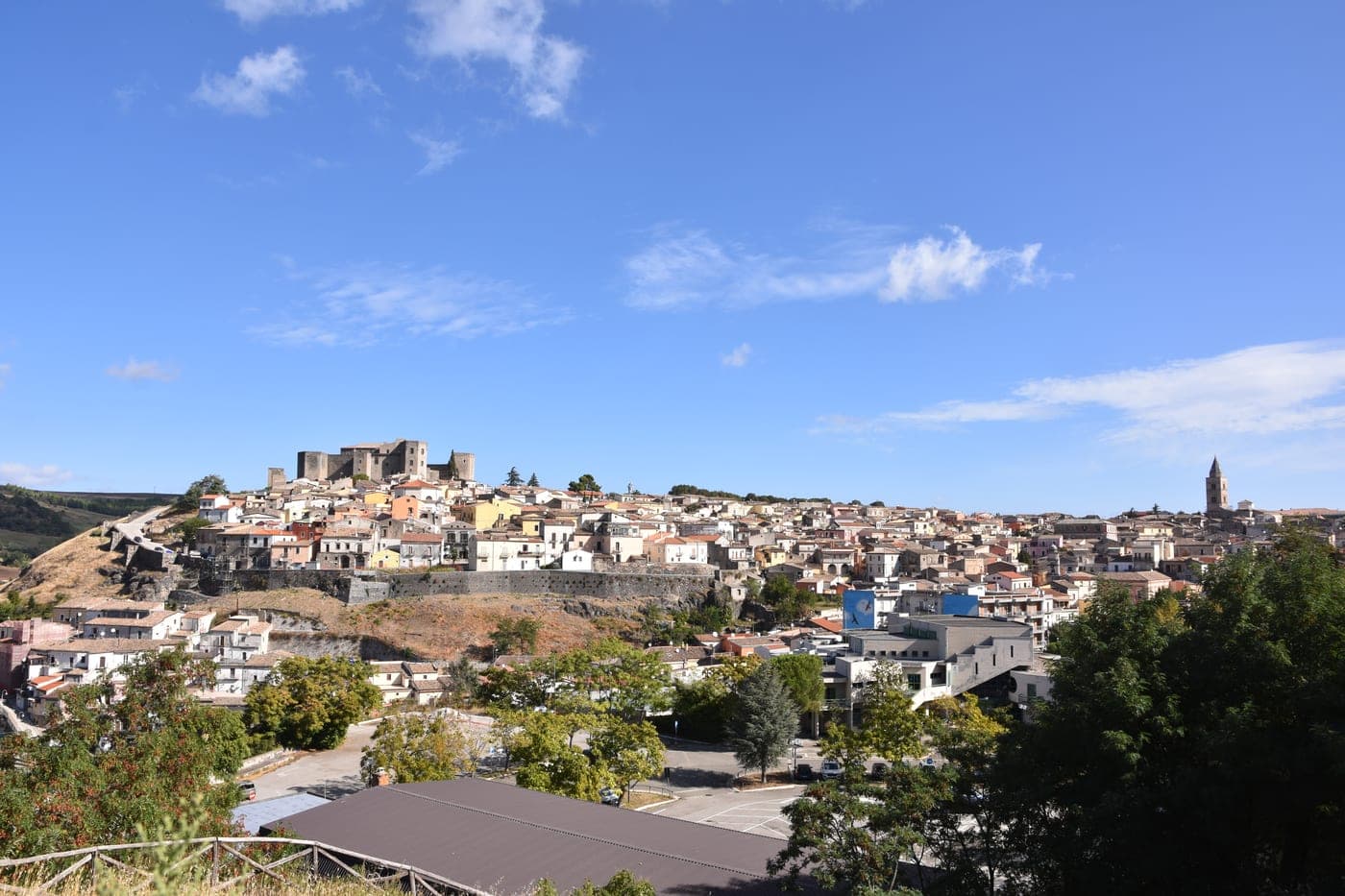
Melfi
Historic town near Mount Vulture with renowned Aglianico del Vulture wine production.
Wine TastingHiking
1 region
- Wine Tasting3 destinations
Basilicata
Basilicata is Italy's second-smallest region, rich in ancient history and natural beauty. Matera, a UNESCO World Heritage site, is renowned for its Sassi, ancient cave dwellings carved into limestone. The region boasts a rugged landscape, featuring the Pollino National Park with its diverse flora and fauna. Potenza, the capital, offers a glimpse into local life with its medieval architecture and vibrant markets. Basilicata is also known for its unique cuisine, including hearty dishes like pasta with wild boar and spicy peppers. The region's coastline along the Tyrrhenian Sea is less frequented, providing secluded beaches and authentic coastal villages, ideal for a slower pace of travel. Discover the ancient ruins of Grumentum and the beautiful hilltop towns of Montalbano Jonico and Tursi, which showcase the region's cultural heritage away from the crowds.
Wine TastingHiking





