Parmigiano Reggiano
The king of cheeses from Emilia-Romagna, aged in huge wheels for years
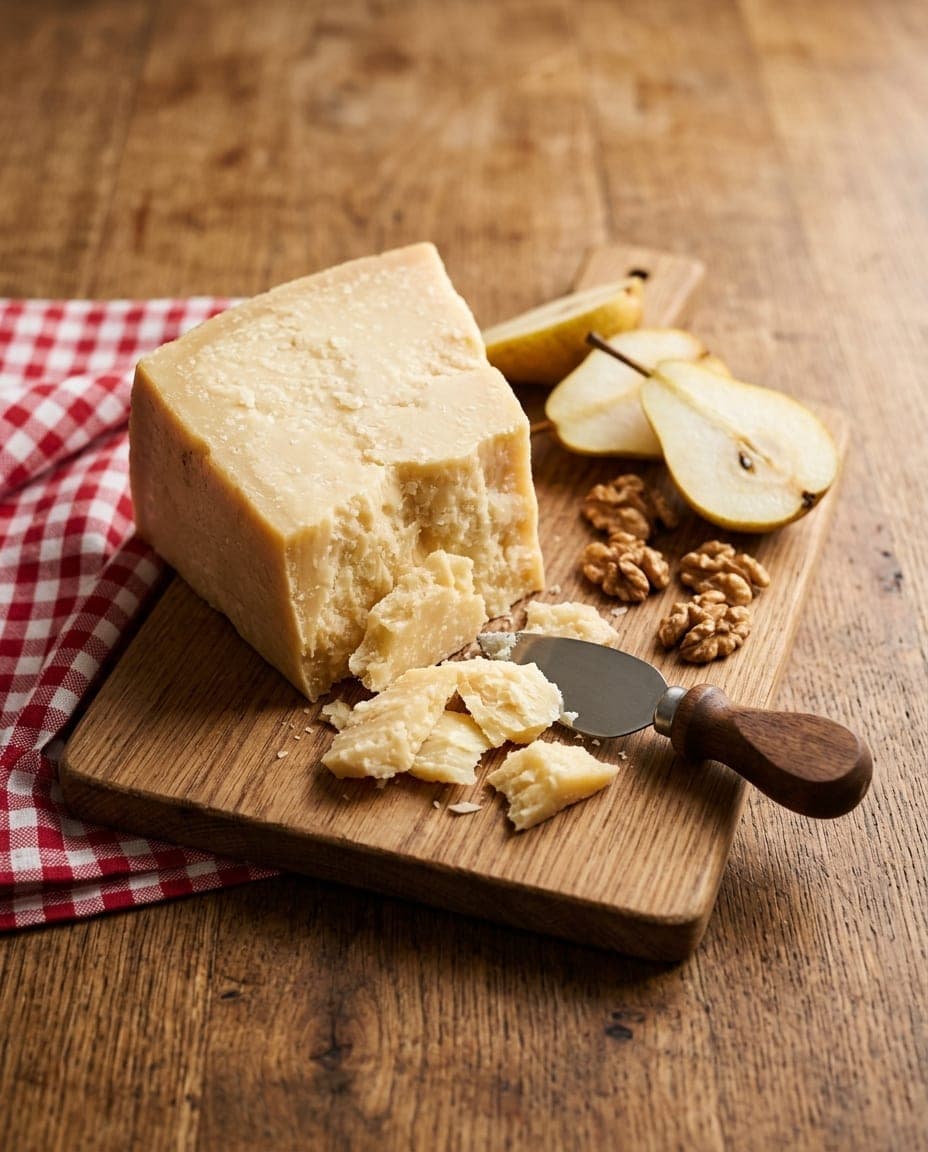
- Local name
- Parmigiano Reggiano
- Served with
- Balsamic vinegar, pears, walnuts
- Best eaten at
- A Parma salumeria aperitivo
- Pairs with
- Lambrusco
What it is
Parmigiano Reggiano, the king of cheeses, is a hard, granular cow's-milk cheese that comes from a small part of northern Italy. It is not a nationwide product but a regional speciality tied strictly to the provinces of Parma, Reggio Emilia and Modena, the part of the province of Bologna west of the river Reno, and the part of the province of Mantua (in Lombardy) south of the Po. The name itself is a promise: it must come from this specific territory, made with only three ingredients, and aged for at least a year before it can bear the mark.
The cheese has a pale yellow colour and a firm texture that breaks rather than slices cleanly. It is dense and dry, developing a complex flavour over time. The wheels are enormous, usually weighing around 40 kilos each, and they are matured in large warehouses where the temperature and humidity are carefully controlled. This long maturation creates a savoury, nutty taste that deepens with every passing month.
The story of the three ingredients
The production of Parmigiano Reggiano is governed by strict rules that allow only three ingredients: raw cow's milk, salt and calf rennet. No additives or preservatives are permitted, and even selected starter cultures are banned; instead, a natural whey starter from the previous day's work is used. This simplicity is what gives the cheese its identity and protects it from becoming a generic product. The cows are fed mainly on forage from the production area, and silage of any kind is forbidden because it would alter the milk.
This reliance on local feed means that the taste of the cheese can change slightly with the season, though the core character remains constant. The rennet is added to the raw milk to make it coagulate, forming the curds that will become the wheels. The salt comes later, when the wheels are floated in saturated brine, which draws out moisture and helps preserve the cheese during its long maturation.
How the wheels are made
Making Parmigiano Reggiano is a labour-intensive process that begins early in the morning, when the milk arrives at the dairy from the surrounding farms. It is poured into large copper vats and heated, then the rennet is added to start the coagulation. Once the curd has formed, it is broken into tiny granules and cooked to release more whey. The curd mass settles at the bottom of the vat, is lifted out in a cloth, cut in two and placed in cylindrical moulds.
The moulds give the cheese its final shape and imprint the dotted lettering on the rind. A few days later the wheels go into brine for just under a month. They are then moved to large maturation rooms, where they spend at least 12 months on tall wooden shelves and are turned and brushed regularly.
At 12 months every wheel is inspected by experts from the Consortium. They tap each wheel with a small hammer, listening for the sound it makes: a clear, even tone indicates a sound cheese, while a dull or hollow note can betray cracks or holes inside. Wheels that pass are fire-branded with the oval mark of Parmigiano Reggiano; those with defects are downgraded and cannot be sold under the name.
How it is eaten
Parmigiano Reggiano is rarely eaten in neat slices. Instead, it is broken into chunks using a small, almond-shaped knife designed for this purpose, which lets the eater break off rough, crunchy pieces. This method highlights the cheese's texture and the crystals that form in older wheels.
The cheese is often served with balsamic vinegar, pears or walnuts, which complement its nutty and savoury notes. At a Parma salumeria aperitivo, it might be presented as part of a small plate alongside other local delicacies. It pairs naturally with Lambrusco, a sparkling red wine from the region whose acidity and bubbles cut the richness of the cheese.
When used in cooking, the cheese is grated over pasta or added to soups, where it adds depth and a salty kick.
Where the story begins
The cheese's roots are usually traced to the Middle Ages, when Benedictine and Cistercian monks reclaimed land in the plain between Parma and Reggio, raised cattle and developed a hard cheese that kept well. Over time, these techniques spread from the abbeys to farms and were passed down through generations of cheesemakers.
Today, the method remains largely unchanged, with a few hundred dairies still making the cheese by hand in copper vats. The result is a cheese that tells the story of the land, the cows and the people who have cared for it for generations.
Curious facts
- The hammer test. Every wheel is tapped with a small hammer at 12 months to check for cracks or defects before it can be branded.
- Crystals in the cheese. The crunchy white specks found in aged wheels are mostly crystals of tyrosine, an amino acid released during the long maturation.
- No silage rule. Cows whose milk goes into Parmigiano Reggiano cannot be fed silage of any kind.
- Useful rind. The hard outer rind is not discarded; it is often added to soups or stews to enhance flavour.
- A protected name. The cheese is a Protected Designation of Origin (PDO), so the name may only be used for wheels made in the designated area under the production rules.
Where to try it
The best place to taste Parmigiano Reggiano is in the heart of its production zone, in the countryside of the provinces of Parma, Reggio Emilia and Modena, where many dairies still work in the traditional way. Visiting a local dairy or a small shop in these areas offers a chance to see the process firsthand and taste the cheese at different ages.
In Parma itself, the city's salumerie are the ideal setting for an aperitivo with the cheese, served alongside other regional specialities. For those interested in how it is made, many dairies offer early-morning guided visits that explain the steps involved in making the wheels and the importance of the inspection process.
Where to try it
3 destinations
 Wine Tasting
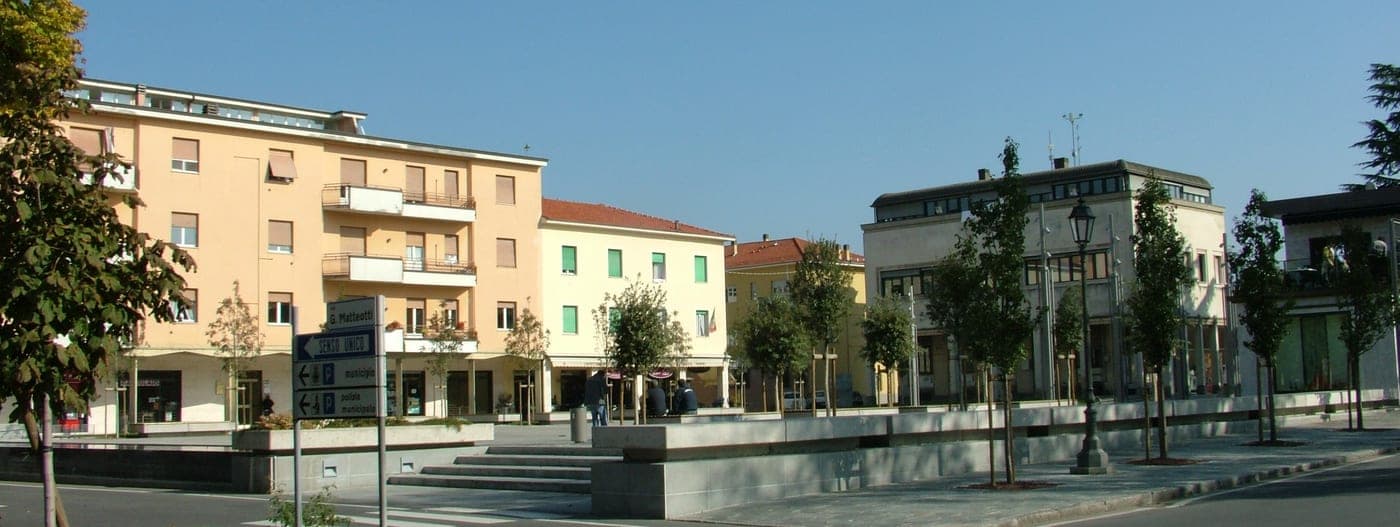
Collecchio
Town near Parma with Colli di Parma wine production and prosciutto heritage.
Wine TastingHiking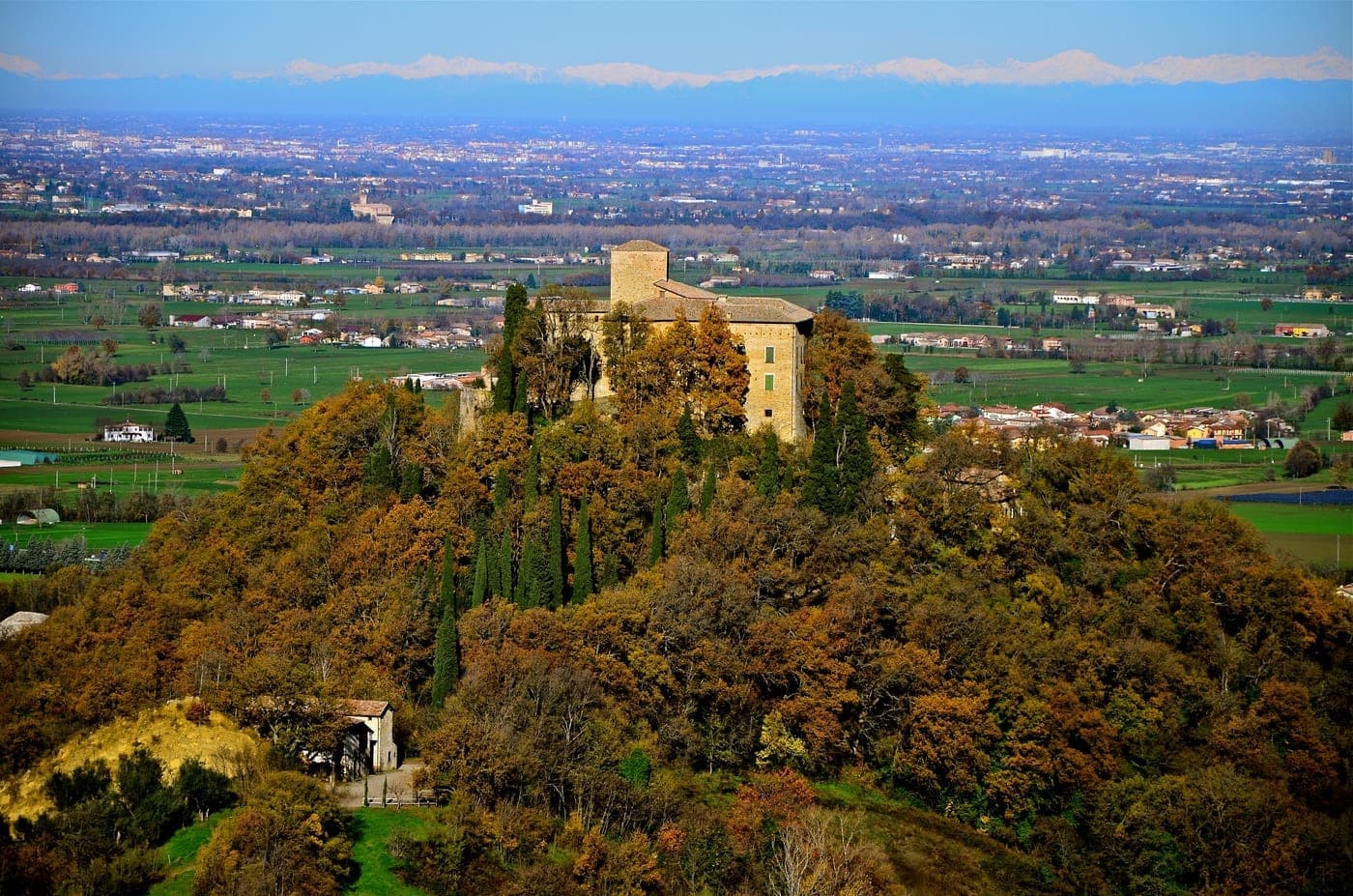 Wine Tasting
Quattro Castella
Town near Reggio Emilia with Lambrusco wine production and historic castles.
Wine TastingHiking Wine Tasting
Traversetolo
Hilltop village in Parma countryside with wine and food traditions.
Wine Tasting
1 region
 Wine Tasting9 destinations
Emilia-Romagna
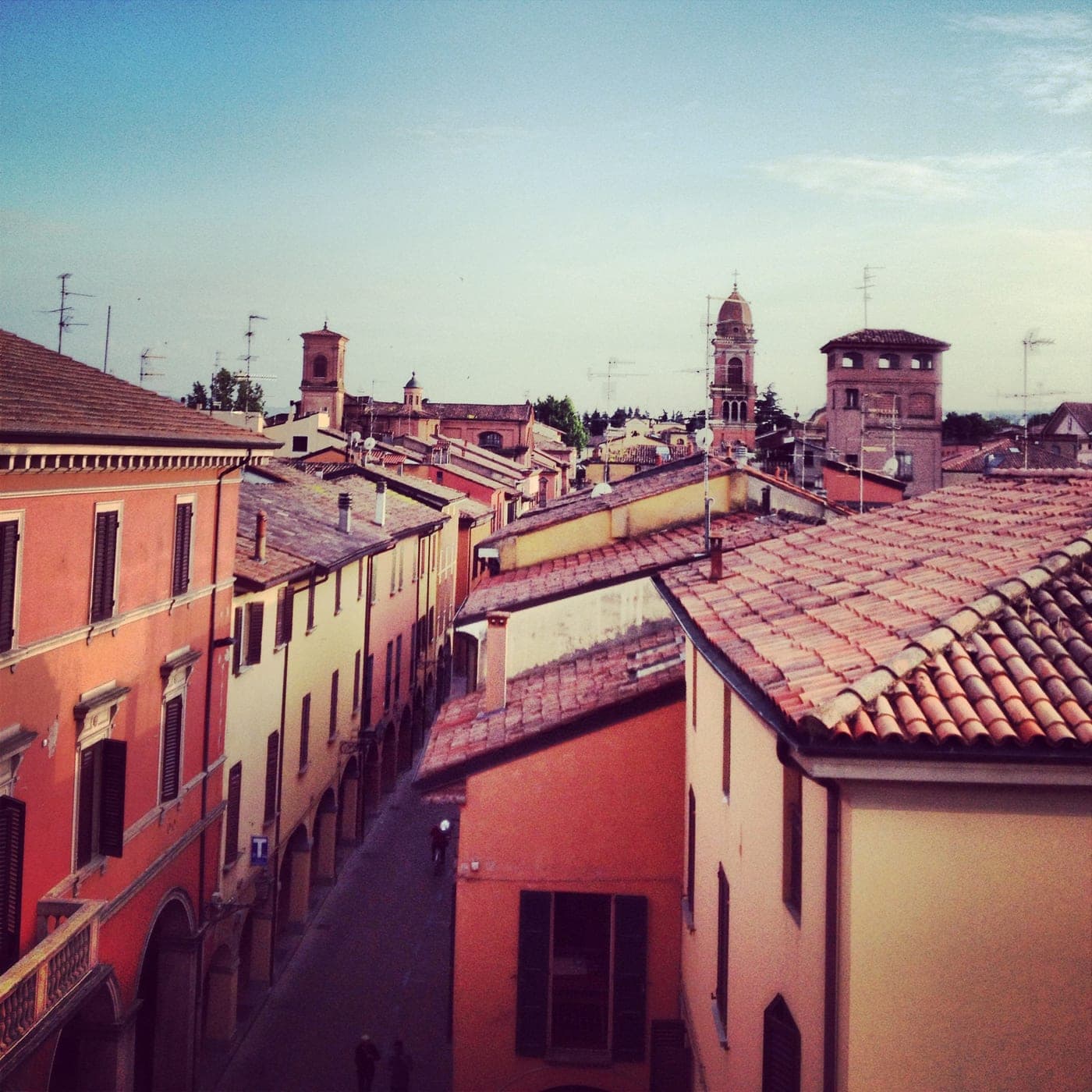
This region in Italy is renowned for its diverse landscapes, ranging from the Apennine Mountains to the Adriatic coastline. It is the only Italian region with a significant stretch of coastline, featuring vibrant seaside towns like Rimini. Bologna, the capital, is famous for its medieval architecture and culinary heritage, being the birthplace of tagliatelle al ragù. The region is also known for its rich history, with towns like Modena showcasing UNESCO-listed sites such as its cathedral and the renowned balsamic vinegar. Slow travelers can explore hidden gems like the medieval village of Dozza, known for its painted walls, or the thermal baths in Salsomaggiore Terme. Emilia-Romagna is the largest region in northern Italy, offering a blend of art, culture, and gastronomy that invites deeper exploration.
Wine TastingHikingCamper Van RentalsLocal Cuisine





