Panigacci
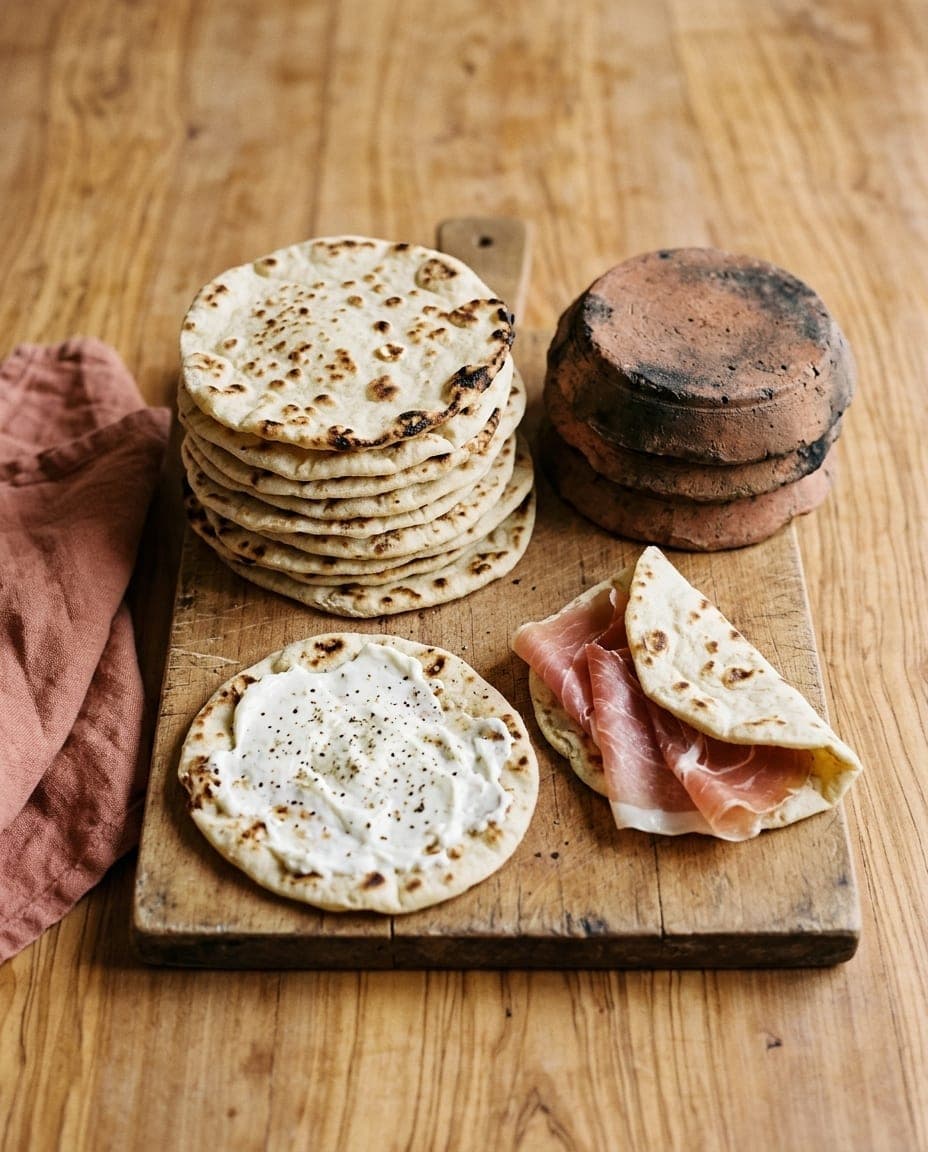
Thin flatbreads from Podenzana cooked between heated terracotta discs
- Vegetarian
- Local name
- Panigacci
- Served with
- Salumi, stracchino, pesto
- Best eaten at
- A Lunigiana trattoria (Podenzana)
- Pairs with
- Vermentino dei Colli di Luni
What it is
Panigacci are thin, unleavened flatbreads from Lunigiana, the valley of the river Magra in northern Tuscany, and are especially tied to the small town of Podenzana. They are not baked in a conventional oven, nor cooked on an open griddle like many other regional breads. Instead, they are prepared using a stack of flat terracotta discs known as testi, which are heated over a wood fire until they hold plenty of stored heat.
The batter, a simple mixture of flour, water and salt, is poured between the hot discs. The clay retains the heat from the fire long enough to cook the thin layers in a few minutes without any direct flame or metal pan. The result is a round bread about 15 cm across, soft, pale golden and delicate, usually eaten while still warm. The name is sometimes linked to panìco, foxtail millet, an ancient cereal once grown in the Magra valley.
How the terracotta stack works
The method defines the dish as much as the ingredients do. A household or a kitchen keeps a set of testi, clay discs designed to be stacked one on top of another. These discs are heated in a wood fire until they become very hot, then arranged in a pile. The batter is poured onto each disc and covered by the next, so that every layer cooks between two hot surfaces.
The clay acts as both the cooking surface and the oven. Once the batter has set and turned pale golden, the discs are separated and the bread is removed. The process requires a steady hand and a well-judged fire, for the temperature of the clay determines how the bread turns out. Cooking in testi is a hallmark of Lunigiana, where the same kind of vessel is used for the neighbouring testaroli, and it is rare elsewhere in Italy, where most flatbreads rely on ovens or metal pans.
What goes into it
The batter is minimal: flour, water and salt. No yeast or leavening agents are used, which keeps the texture thin and the flavour neutral, allowing the bread to carry the taste of whatever accompanies it. The testi themselves are made from terracotta, and a family will typically own several depending on how many people they need to feed at once.
Panigacci are traditionally served hot, folded or torn by hand and filled or topped with a variety of savoury accompaniments. The most common pairings include stracchino, a soft fresh cheese, and the salumi that define the region's charcuterie tradition, including lardo di Colonnata from the nearby Apuan Alps. They are also served as a first course, briefly dipped in boiling water and dressed with pesto, a meat ragù or a mushroom sauce, and a sweet version spread with hazelnut cream has become common.
Where to try them
Podenzana remains the home of panigacci, and the town's local association works to keep the tradition alive. Each autumn the Panigalonga, a walk of about 12 km through the countryside of the comune, celebrates cooking in testi, with stops serving panigacci in several versions.
Similar flatbreads are served in trattorias across the surrounding Lunigiana countryside. A glass of Vermentino dei Colli di Luni, a crisp white wine from the nearby hills, is a fitting drink with the meal; its acidity cuts the richness of the cured meats or cheese without overpowering the delicate taste of the bread.
Curious facts
- The clay does the cooking. Unlike most breads that rely on an oven's air, panigacci are cooked by the stored heat in the terracotta discs, a method characteristic of Lunigiana.
- No yeast is used. The flatbreads are unleavened, which keeps them thin and allows them to be made quickly with just flour, water and salt.
- The stack height varies. The number of discs in the pile depends on how many people are being fed, and there is no fixed rule for the number of layers.
- A walk in their honour. Podenzana's autumn Panigalonga combines a country walk with tastings of panigacci cooked in testi.
- Bread or pasta. Eaten warm with cold cuts they are bread; dipped in boiling water and dressed with pesto they become a first course.
Where to try it
1 destination
 Agritourism
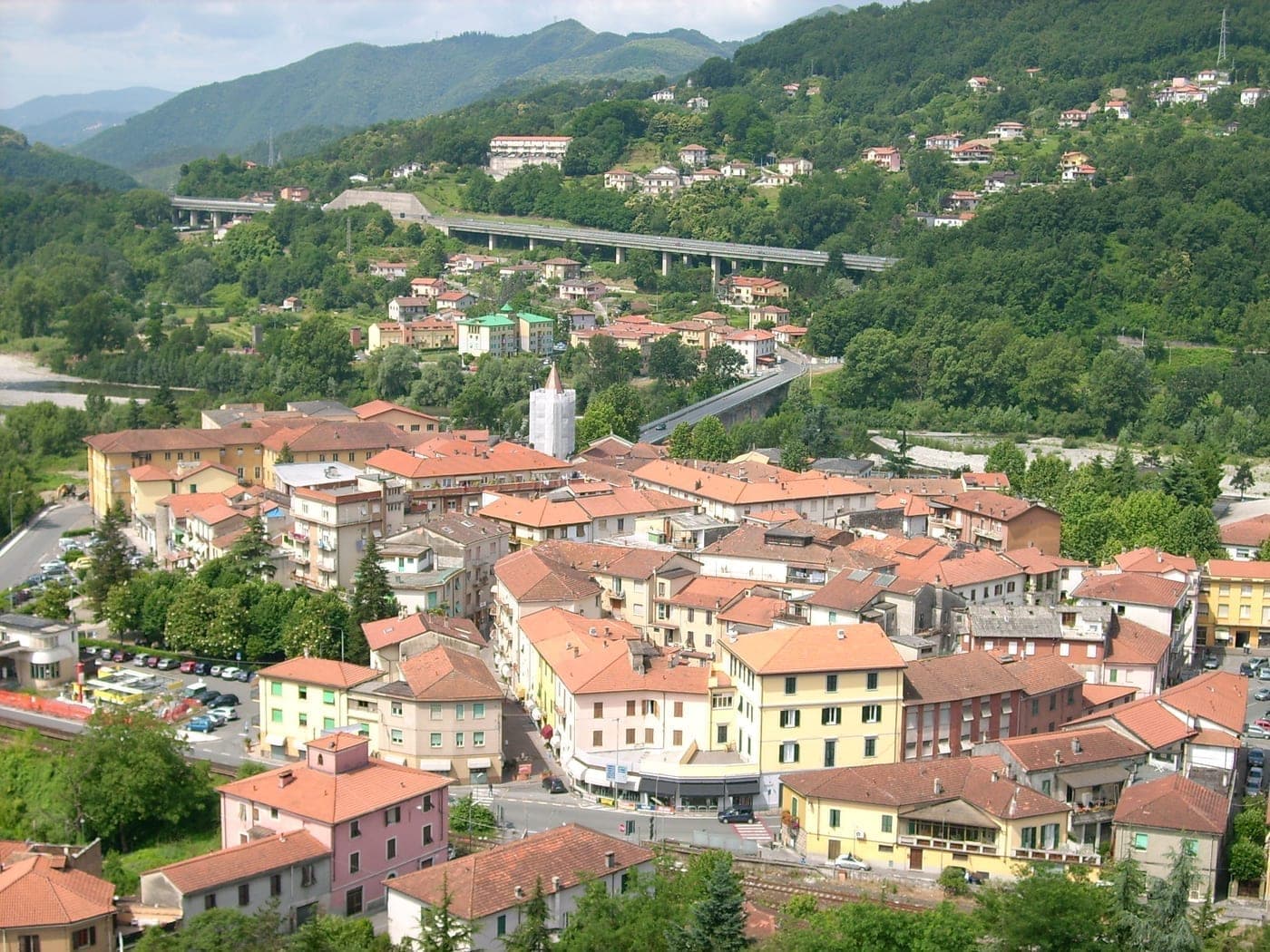
Aulla
Lunigiana valley town with agriturismo offering chestnut cultivation, honey production, and hiking.
AgritourismHiking





