Pane di Matera
A thick-crusted durum wheat loaf from Matera, the city of the Sassi
- Vegetarian
- Local name
- Pane di Matera
- Best eaten at
- A Matera bakery (forno)
What it is
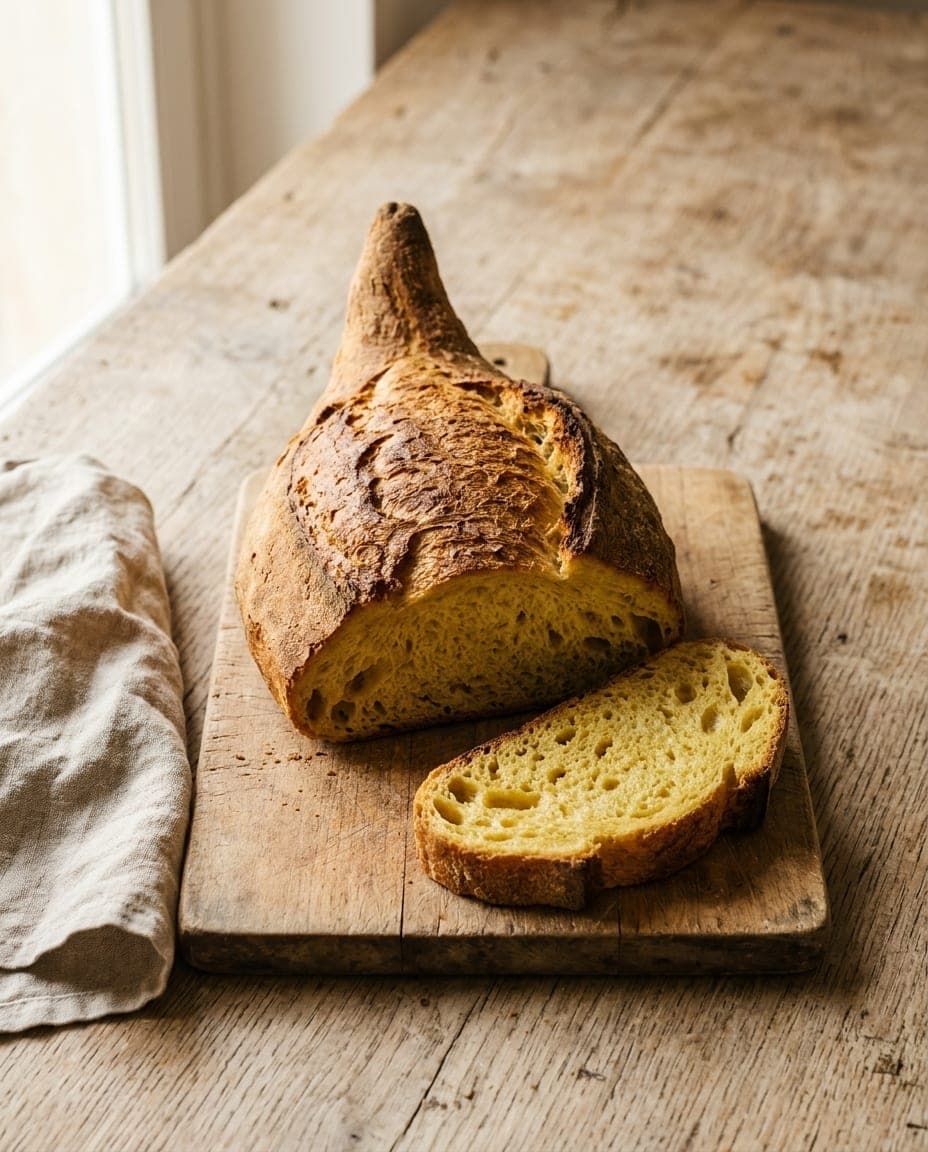
Pane di Matera is a large sourdough loaf from the town of Matera and its province in the southern region of Basilicata. Made from remilled durum wheat semolina, it is recognised by its thick, dark crust and a crumb that ranges from straw yellow to deep gold, with irregular air pockets rather than a tight texture.
The loaf is traditionally shaped either as a high, curved horn known locally as a cornetto or as a tall round loaf. The horn shape is often said to recall the hills of the Murgia around Matera. Loaves are made in a wide range of sizes, from half a kilo to very large breads, the bigger ones intended to feed a family for several days. The bread was designed to be durable, keeping its quality for a week or more.
The bread holds a Protected Geographical Indication (PGI), which limits its production to the province of Matera and requires the use of a mother dough and a share of local durum wheat. Alongside the cave dwellings of the Sassi, it is one of the town's best-known symbols.
The history of the stone oven
The tradition of baking this bread is bound up with daily life in the Sassi, the historic cave quarter of Matera that is now a UNESCO World Heritage site. Many households had no oven of their own. Instead, families prepared their dough at home and took it to public wood-fired ovens to be baked.
These communal ovens were often carved directly into the rock. Before the loaves went in, each was marked with a wooden stamp bearing the initials of the head of the household, so that every family could recognise its bread when it came out. Many of these carved stamps survive today as treasured objects, and the PGI loaf is still stamped on top before baking.
The method required skill and patience. The dough rose slowly with a natural starter, often kept alive for years within the household, and the intense heat of the wood-fired oven created the distinctive thick crust that protects the soft interior from drying out too quickly.
What goes into it
The ingredients are simple and strictly defined by the PGI rules and local tradition:
- Remilled durum wheat semolina: The only flour used, at least part of it from old local varieties such as Senatore Cappelli grown in the province of Matera. It gives the bread its yellow colour and firm texture.
- Mother dough: A live culture of wild yeasts and bacteria that ferments the dough over a long period, with only a little added baker's yeast permitted.
- Water: Added generously, giving a moist crumb.
- Salt: Added in small quantities to regulate fermentation and enhance flavour.
The result is a loaf with a crust at least 3 mm thick, hard and dark, yet offering a sweet, nutty taste when broken open. The crumb inside stays moist, with holes that make it lighter than its size suggests.
How it is eaten
Pane di Matera is excellent fresh from a local forno, a traditional bakery, when the crust is still warm and crackling. Yet its true character emerges as it dries over the following days.
The bread is the foundation of several local dishes that turn the hardening loaf into something new. A well-known example is cialledda, in which stale bread is dressed with tomatoes, onion and other vegetables, a dish born of necessity that has become a summer staple.
Slices are also served with local cheeses or cured meats, the firm crust providing a satisfying chew.
Why it keeps so long
The durability of Pane di Matera suited a region where baking was not a daily affair. The thick crust acts as a barrier against the air, while the slow natural fermentation helps the bread resist mould and staling. Under the PGI rules, the bread keeps for up to about a week for a one-kilo loaf and up to two weeks for the largest sizes.
In the past, families baked large loaves only once or twice a week. Rather than turning stale in the way commercial bread does, the loaf would simply harden, becoming ideal for the soups and salads described above. This longevity made it a reliable food for farmers and shepherds working long days on the Murgia.
Curious facts
- A shape from the landscape. The cornetto form is often said to echo the hills of the Murgia around Matera.
- Wooden stamps survive. Many families still keep the carved wooden seals once used to mark their loaves for the public ovens.
- A PGI requirement. The protected loaf must be made with durum wheat semolina and mother dough, partly from old local wheat varieties.
- Built to last. The thick crust and slow fermentation let the loaf keep for a week or more.
- The Sassi connection. The bread is closely tied to the cave quarter, where families shared communal ovens.
Where to try it
The best place to taste Pane di Matera is in Matera itself, where bakeries in and around the Sassi turn out the loaves daily and the smell of baking durum wheat drifts through the narrow streets.
Elsewhere in Basilicata similar breads are common, but only loaves made in the province of Matera under the PGI rules carry the protected name. Rustic trattorias in the town often use the bread in cialledda or soups, showing its full range of textures.
Where to try it
1 region
 Wine Tasting3 destinations
Basilicata
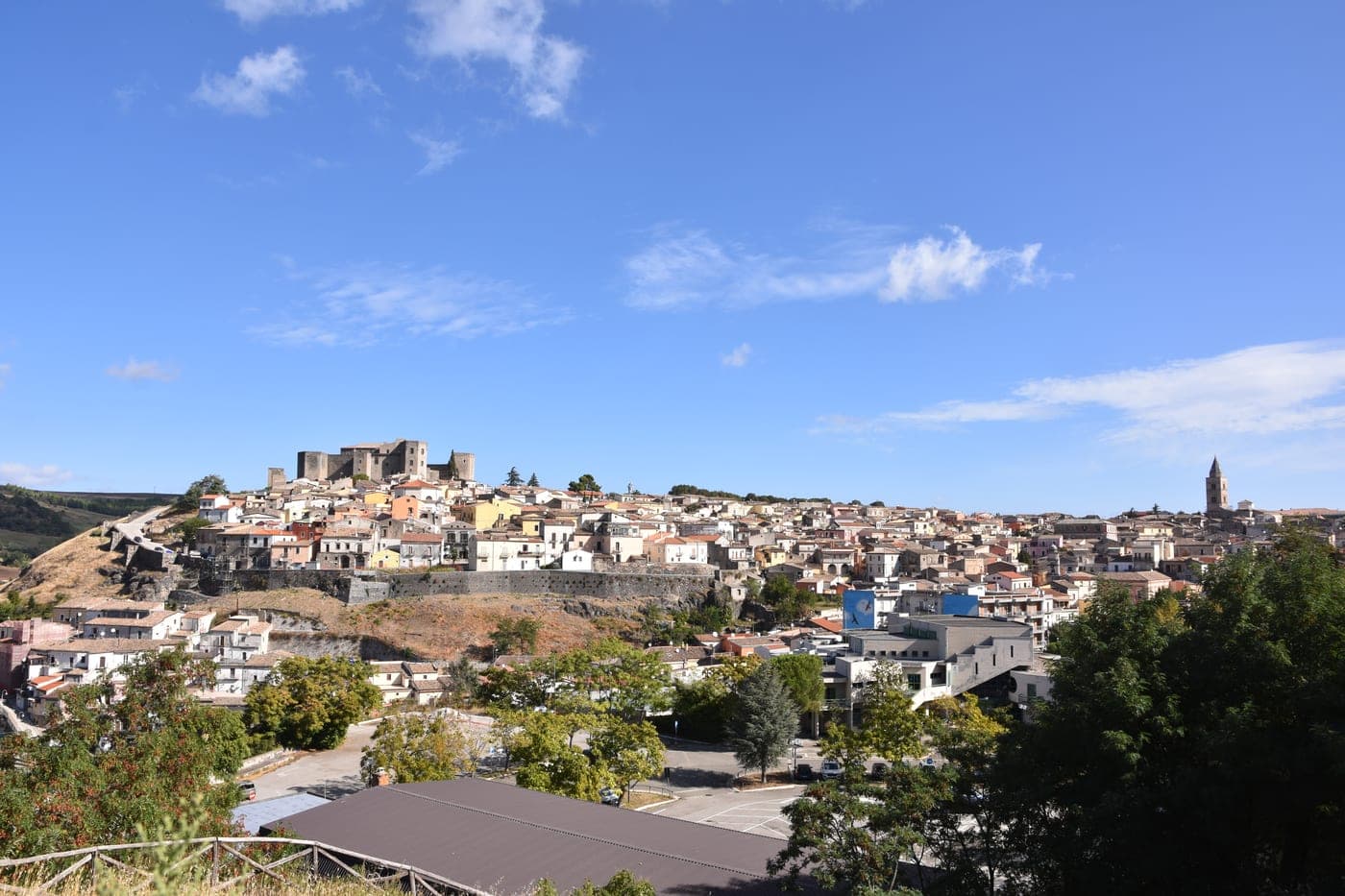
Basilicata is Italy's second-smallest region, rich in ancient history and natural beauty. Matera, a UNESCO World Heritage site, is renowned for its Sassi, ancient cave dwellings carved into limestone. The region boasts a rugged landscape, featuring the Pollino National Park with its diverse flora and fauna. Potenza, the capital, offers a glimpse into local life with its medieval architecture and vibrant markets. Basilicata is also known for its unique cuisine, including hearty dishes like pasta with wild boar and spicy peppers. The region's coastline along the Tyrrhenian Sea is less frequented, providing secluded beaches and authentic coastal villages, ideal for a slower pace of travel. Discover the ancient ruins of Grumentum and the beautiful hilltop towns of Montalbano Jonico and Tursi, which showcase the region's cultural heritage away from the crowds.
Wine TastingHiking





