Pampanella
Pork baked under a crust of paprika, chilli and vinegar from San Martino in Pensilis
- Local name
- Pampanella
- Served with
- Bread
- Best eaten at
- A Molise butcher or sagra
- Pairs with
- Tintilia del Molise
What it is
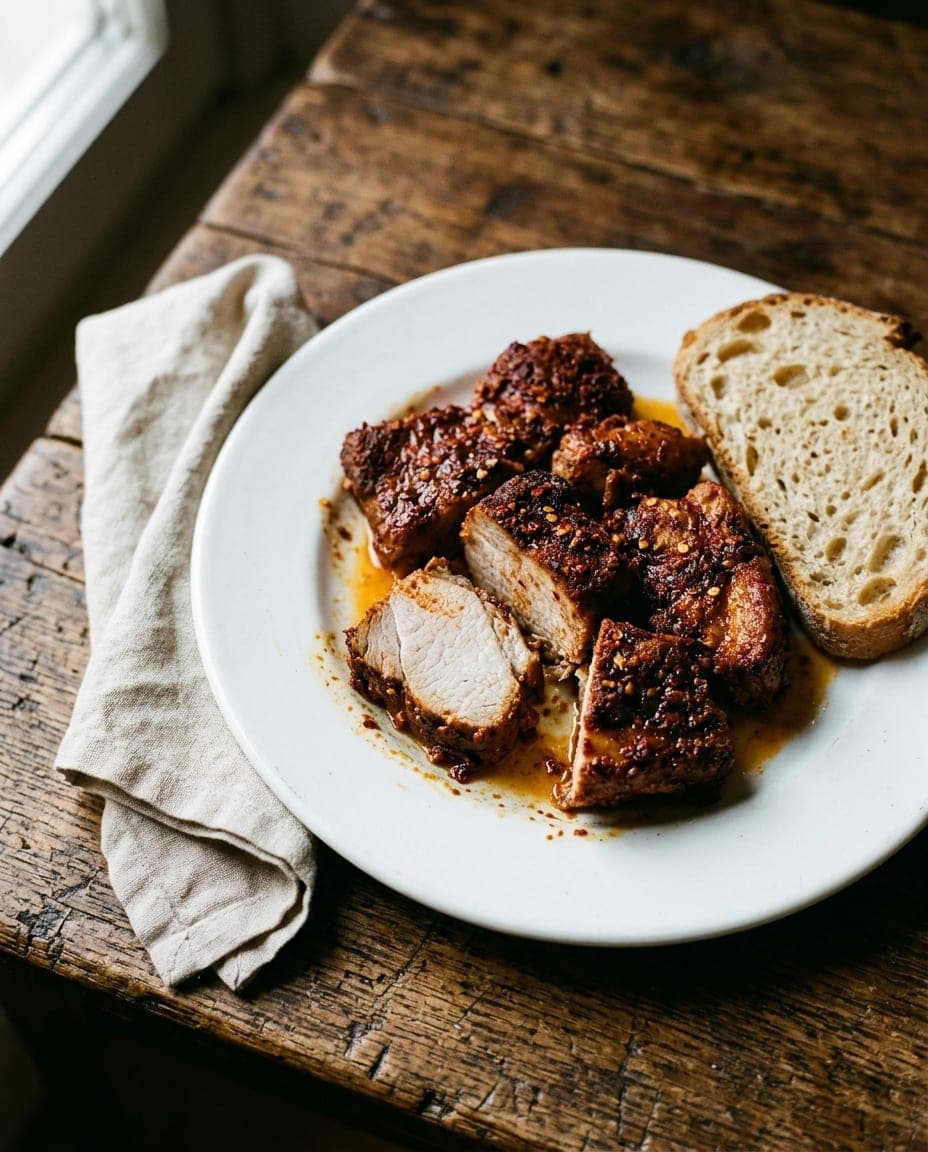
Pampanella is a rustic pork dish from the village of San Martino in Pensilis, in the province of Campobasso in the Italian region of Molise. It consists of cuts of pork, usually ribs, loin or chops with a good layer of fat, which are coated in a thick, dark red layer of ground dried sweet pepper, chilli, garlic and salt, then baked slowly until tender and finished with vinegar. The result is a savoury, spicy, slightly sticky preparation that can be eaten warm or cold.
The dish is rarely found on restaurant menus outside the area. It is a local speciality tied to San Martino in Pensilis and its surroundings, though it is now popular across Molise. It is sold by weight, wrapped in paper, and turns up at village festivals. The pepper crust is the defining feature: it gives the meat a deep colour and a warming heat that lingers on the palate.
A festival food
Vendors from San Martino in Pensilis take pampanella to summer festivals across the region, where it is sold from stalls and eaten with bread. The village itself is also known for the Carrese, a traditional ox-cart race held every spring, one of the best-known folk events in Molise.
Pampanella is often thought of as a food for gatherings rather than everyday fare, though families in the area also make it at home. Its link with outdoor festivals and shared tables means that eating it feels like part of a wider local ritual.
What goes into it
The ingredients are simple and reflect the farming heritage of Molise:
- Pork cuts: Ribs, loin or chops, chosen with some fat so they stay soft in the oven.
- Ground dried sweet pepper: The paprika-like base of the crust, giving it a rich colour.
- Chilli: Added to provide a sharper, more immediate heat.
- Garlic: Rubbed or crushed into the coating for depth and aroma.
- Vinegar: Splashed over the meat towards the end of cooking for a sharp contrast to the sweetness of the peppers.
- Salt: Used to season the meat before it goes into the oven.
The coating is applied thickly to the pork, which is packed into a tray and covered, traditionally with vine leaves and today usually with paper, before baking at a low temperature for a couple of hours. The slow cooking renders the fat and softens the meat, while the crust darkens and becomes sticky. Vinegar is added near the end to give the final dish a bright, acidic edge rather than just a heavy spiciness.
How it is eaten
Pampanella is sold by weight in San Martino in Pensilis and the surrounding area, wrapped in paper and often still warm from the oven.
At festivals and sagre, the meat is carved into smaller pieces and served with bread or tucked into a roll. It can also be eaten cold as a snack or as part of a picnic. A glass of Tintilia del Molise, the region's own red wine with dark fruit notes, is a natural pairing, though a simple beer works well too.
Curious facts
- A regional secret. Outside Molise, few people know the name pampanella.
- The vinegar trick. The sharpness of the dish comes from vinegar added near the end of cooking, not from the peppers themselves.
- Wrapped in leaves. The meat was traditionally covered with vine leaves while baking; paper is the usual modern substitute.
- Sold by weight. It is typically bought by the weight from a vendor rather than ordered from a menu.
- Slow and low. The meat is baked gently for a long time, which softens it and develops the crust.
Where to try it
The most authentic place to eat pampanella is San Martino in Pensilis or one of its neighbouring towns in Molise, or at the summer festivals where its producers set up stalls. Elsewhere, small regional producers specialising in Molise pork sometimes offer it, though the experience differs from the village tradition.
Where to try it
1 region

Molise
Nestled between Abruzzo and Campania, this is Italy's second smallest region, known for its rugged mountains and rolling hills. Termoli, the only coastal city, offers a blend of medieval architecture and beautiful beaches. The region is rich in history, with ancient villages like Campobasso, famous for its castle and local crafts. Molise is also notable for its traditional cuisine, including handmade pasta and local wines such as Trebbiano and Sangiovese. The countryside is dotted with olive groves and vineyards, making it ideal for food and wine enthusiasts. Festivals celebrating local culture, such as the 'Festa di San Basso,' highlight the region's vibrant traditions.





