Olive all'ascolana
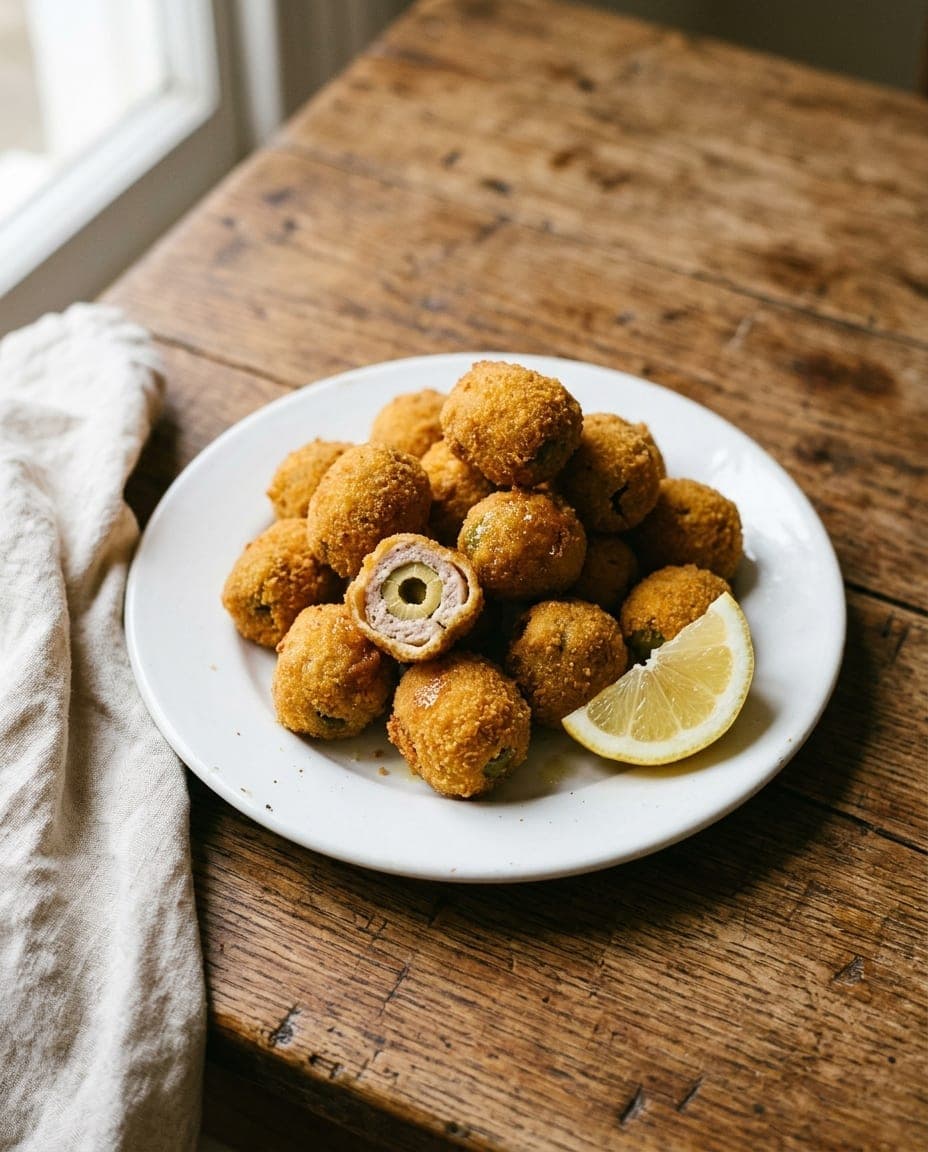
Large green olives from Ascoli Piceno, stoned by hand, stuffed with meat and fried
- Local name
- Olive all'ascolana
- Served with
- Fried cremini (custard) and lamb chops
- Best eaten at
- Ascoli Piceno friggitorie
- Pairs with
- Passerina or Pecorino white
What it is
Olive all'ascolana are a distinctive speciality of the Marche region, specifically tied to the town of Ascoli Piceno. They are not merely olives that have been cooked; they are a complete dish built around a single, large green olive. The olive comes from the Ascolana tenera cultivar, grown in this area and known for its size, firm texture and mild flavour. It is cured in brine, which keeps it crisp enough to hold a substantial filling.
The stone is removed while keeping the flesh intact, and the flesh is then wrapped around a cooked mixture of meat bound with egg and cheese, before being breaded and deep-fried. The result is a golden, crunchy sphere that reveals a savoury, spiced core when bitten into. They are substantial enough to serve as a starter or a snack, often eaten warm from a paper cone in the street or at a table in a traditional tavern.
The craft of stoning the olive
The defining characteristic of this dish is the skill required to prepare the olive. Oliva Ascolana del Piceno is a Protected Designation of Origin (PDO) that covers the olives both in brine and stuffed, with a production area spanning the provinces of Ascoli Piceno and neighbouring Teramo. The fruit must be large and firm enough to withstand the process without becoming mushy.
Traditionally, the stoning is a manual craft. Using a small knife, the cook cuts the flesh away from the stone in one continuous spiral, so that it can later be wrapped back around the filling to re-form the olive. This step requires patience and steady hands: the strip of flesh must stay whole to hold the meat mixture without leaking during frying. Commercial producers today also use machines for pitting.
The filling and the coating
The heart of the dish lies in the filling, which is a cooked mixture rather than raw meat. The PDO specification calls for beef and pork, with chicken or turkey allowed in small amounts. The meat is browned, often with a little onion, carrot and celery, and cooked with dry white wine before being minced finely. It is then bound with egg and plenty of aged grated cheese, typically Parmigiano Reggiano or Grana Padano.
Nutmeg is a standard seasoning, and a little grated lemon zest is often added for brightness. Once the filling has cooled, it is packed into the prepared olives. These are then dipped in flour, followed by beaten egg and breadcrumbs. The coating must be even and thick enough to protect the olive during frying, creating a golden crust that contrasts with the soft interior.
How they are eaten
Olive all'ascolana are best hot, fresh from the fryer. In Ascoli Piceno, they are commonly served as a starter in traditional restaurants or sold from friggitorie, small shops dedicated to fried goods. As street food they are often placed in a paper cone, so they can be eaten while walking or standing near the counter.
They frequently appear in a fritto misto all'ascolana alongside lamb chops, vegetables and cremini, small cubes of fried custard. This combination offers a variety of textures and flavours in a single serving.
A local white such as Passerina or Pecorino is a natural accompaniment, with the acidity to balance the richness of the fried olive. The dish is rarely eaten cold; the warmth and the crispness of the breadcrumb are central to the experience.
Why Ascoli Piceno claims this dish
The connection between the olive and the town of Ascoli Piceno is bound up with local history. The cultivar thrives in the soil and climate of this area, and the method of stoning, stuffing and frying has been refined over generations. While similar fried olives exist in other parts of Italy, the version from Ascoli is distinguished by the size and quality of the olive and the specific seasoning of the filling.
The dish is a point of pride for the town. Visitors seek out the friggitorie where the olives are made by hand, and the reputation of the dish has spread well beyond the Marche. Even so, the town's identity remains closely linked to this culinary tradition, celebrated both in local food events and in everyday life.
Curious facts
- The olive is a specific cultivar. The protected product must be made with the Ascolana tenera olive; many other green olives are too small or too soft to hold the filling.
- A spiral cut. In the traditional method the flesh is pared from the stone in a single spiral and then wrapped back around the meat.
- The filling is pre-cooked. The meat is cooked with wine before being minced and stuffed, so the brief frying only needs to crisp the coating and heat the centre.
- Protected stuffed or plain. The PDO covers both the brined olives and the stuffed version.
- Part of a larger fried feast. Olive all'ascolana are a fixture of the local fritto misto, alongside fried custard cubes, lamb chops and vegetables.
Where to try it
The most authentic experience of olive all'ascolana is found in the friggitorie of Ascoli Piceno itself. These small shops, often family-run, specialise in fried foods and are the natural home for this dish.
Beyond Ascoli Piceno, the wider Marche region also produces versions of the dish, though quality varies with the olive and the care taken in preparation. A meal here often includes other regional specialities, such as fried lamb chops and cremini, creating a complete journey through the area's cooking traditions.
Where to try it
1 region
 Agritourism4 destinations
Marche
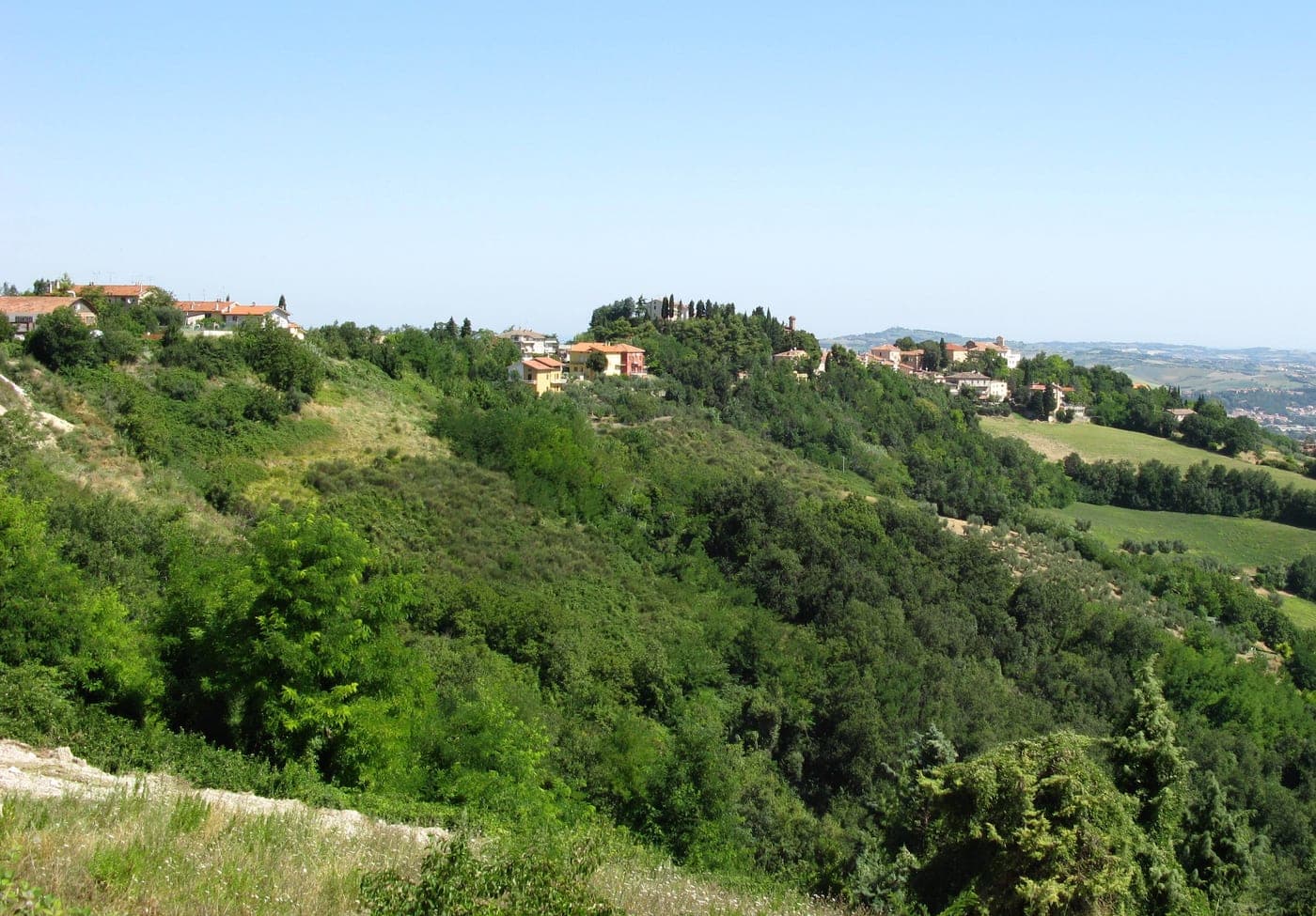
Nestled along the Adriatic Sea, this region boasts a mix of mountains and coastline, making it the only Italian region with a significant maritime presence. As Italy's fourth smallest region, it features historical towns like Urbino, known for its Renaissance heritage and UNESCO status, and Ascoli Piceno, famous for its travertine architecture. The landscape is dotted with rolling hills, vineyards, and olive groves, producing notable wines such as Verdicchio and Rosso Piceno. Culture thrives here through local festivals celebrating traditional crafts and cuisine, particularly the renowned olive all'ascolana. Rich in history, the region invites exploration beyond the typical tourist paths, showcasing authentic village life and regional gastronomy.
AgritourismWine TastingBoat RentalsHiking





