Lucanica
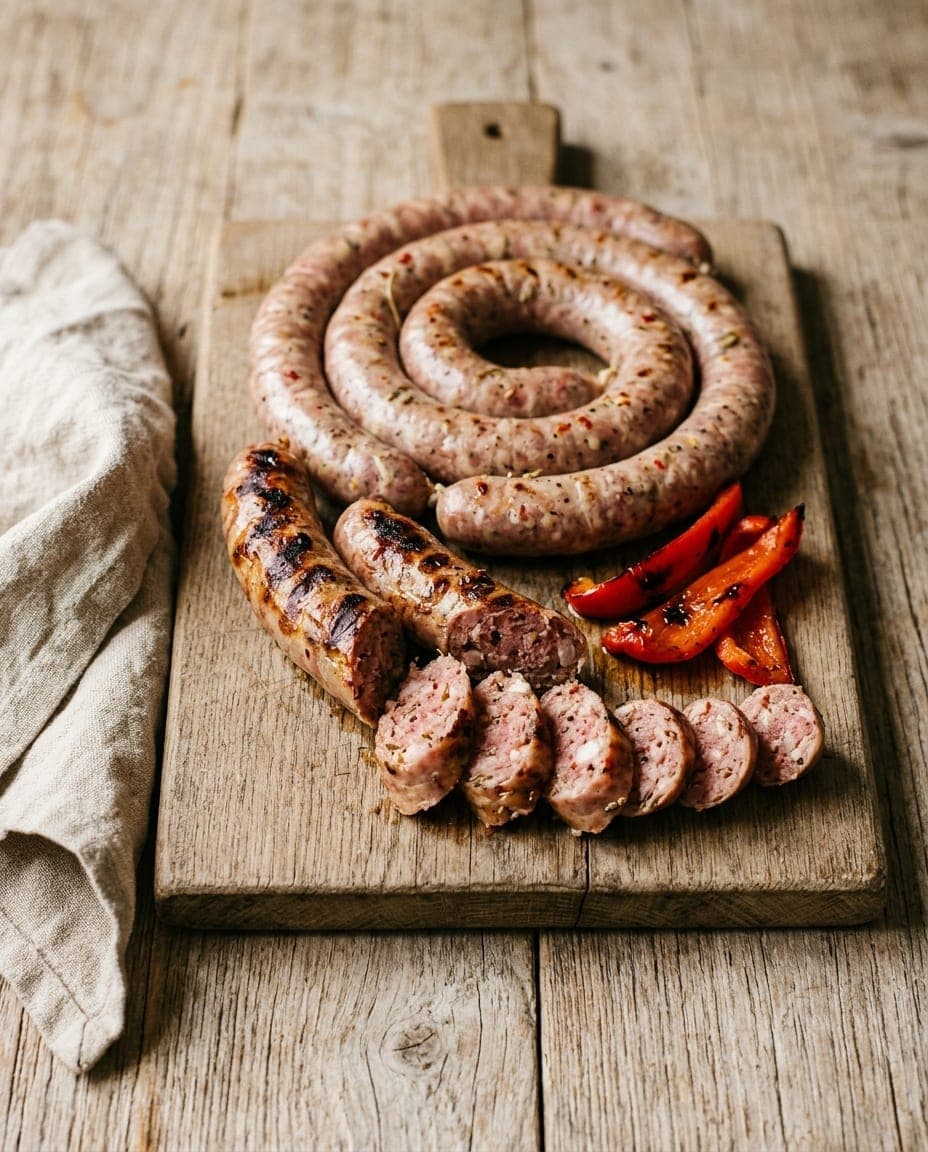
Pork sausage of Basilicata, spiced with fennel and Senise pepper
- Local name
- Lucanica
- Served with
- Peppers, potatoes, bread
- Best eaten at
- A Basilicata agriturismo
- Pairs with
- Aglianico del Vulture
What it is
Lucanica is a pork sausage that defines the culinary landscape of Basilicata, the southern Italian region once known as Lucania. It is not merely a meat product but a continuation of a tradition that stretches back to Roman times. The name itself serves as proof of its age: the word lucanica appears in Latin writers such as Varro and Martial, and Varro explains that Roman soldiers learned to make it from the Lucanians. From this single term, names spread across Europe and beyond, giving rise to the northern Italian luganega, the Greek loukaniko, the Portuguese linguiça and the Spanish longaniza.
In Basilicata today, the sausage retains its old character. It is stuffed into thin natural casings and shaped into long links. The meat is not ground to a fine paste but left coarse, with visible pieces of fat and lean creating a textured bite. The seasoning is straightforward yet bold: salt, fennel seed and the region's dried peppers. Some versions are eaten fresh, while others are dried until firm or preserved in jars under lard or oil. It appears on tables as a starter, a main course or an ingredient that deepens the flavour of pasta sauces and bean stews.
The Roman connection
The history of this sausage begins with the Lucanians, the people who lived in what is now Basilicata before and during Roman expansion. Roman writers treated lucanica as a distinct speciality: Varro, the 1st-century BC scholar, recorded that soldiers had learned it from the Lucanians, Martial mentions it in his epigrams, and the cookbook attributed to Apicius gives a recipe for it.
The word itself is the most enduring evidence of this connection. It passed from Latin into many languages around the Mediterranean. In Italy it became luganega, still the name of a long, thin sausage in Lombardy, Veneto and Trentino, while in Greece it became loukaniko.
This lineage does not imply a single fixed recipe. In the two thousand years since, methods have adapted to local ingredients and techniques. What remains constant is the identity of the sausage as a product of Basilicata. One version, the Lucanica di Picerno from the province of Potenza, now holds EU Protected Geographical Indication (PGI) status.
How it is made
A traditional lucanica relies on three elements: the cut of the meat, the local spices and the method of preservation. The pork is coarsely chopped rather than finely ground, ensuring a rustic texture that holds up to grilling or frying. Fennel seed provides the main aromatic note, balancing the richness of the fat with a subtle anise-like warmth.
The defining seasoning is pepper from Basilicata. The peperone di Senise, a PGI sweet pepper grown in the valleys around the town of Senise, is dried in the sun until deep red and leathery, then crushed or ground into a powder that is mixed into the meat. It gives the sausage its colour and a sweet, gently smoky flavour, while hot chilli is added in spicier versions.
Salt draws out moisture and preserves the meat, while the natural casing allows the sausage to breathe as it cures. Some producers sell it fresh, ready for immediate cooking, while others offer versions air-dried for weeks until firm and sliceable. In rural areas, lucanica is also preserved in jars, submerged in lard or olive oil, which extends its shelf life.
What goes into it
The ingredients of a traditional lucanica are few but deliberate:
- Pork: A mix of lean meat and fat, coarsely chopped.
- Fennel seed: The primary spice, providing a sweet, herbal note.
- Dried pepper: Sweet peperone di Senise powder, with hot chilli in some versions.
- Salt: Essential for curing and preserving the meat.
- Natural casings: Thin animal intestine that holds the shape and allows for drying.
The balance between fennel and pepper varies by producer, but the coarse cut of the meat remains a constant feature, giving a satisfying chew rather than a soft paste.
How it is eaten
Fresh lucanica is often grilled over wood embers until the casing is crisp and the interior hot and juicy, then served with peppers and potatoes and a slice of rustic bread to soak up the juices.
When dried, it is sliced thinly and eaten as part of an antipasto platter with local cheeses and olives. In the kitchen, it is crumbled into a pot of beans or stirred into pasta sauces, giving a deep, savoury flavour to humble ingredients.
A glass of Aglianico del Vulture is a natural companion. This robust red from the slopes of Monte Vulture, an extinct volcano in the north of the region, has enough tannin and fruit to stand up to the spice and fat of the sausage. At a Basilicata agriturismo, the sausage often arrives on a wooden board, shared among diners.
Curious facts
- A Roman legacy. The name lucanica comes from the Lucanians, and Varro wrote that Roman soldiers learned the sausage from them.
- A family of names. Luganega, loukaniko, linguiça and longaniza all descend from the Latin lucanica.
- Sweet, not hot. The Senise pepper that colours the sausage is a sweet variety; heat comes only from added chilli.
- Multiple forms. It exists fresh, dried or preserved in lard or oil, each suited to different uses.
- A protected version. The Lucanica di Picerno holds EU PGI status.
Where to try it
The best place to taste lucanica is in Basilicata itself, at an agriturismo or a village trattoria where producers still follow traditional methods. Around Picerno, in the Senise area and near Monte Vulture, local versions show off the peppers and pork of the area.
Where to try it
1 region
 Wine Tasting3 destinations
Basilicata
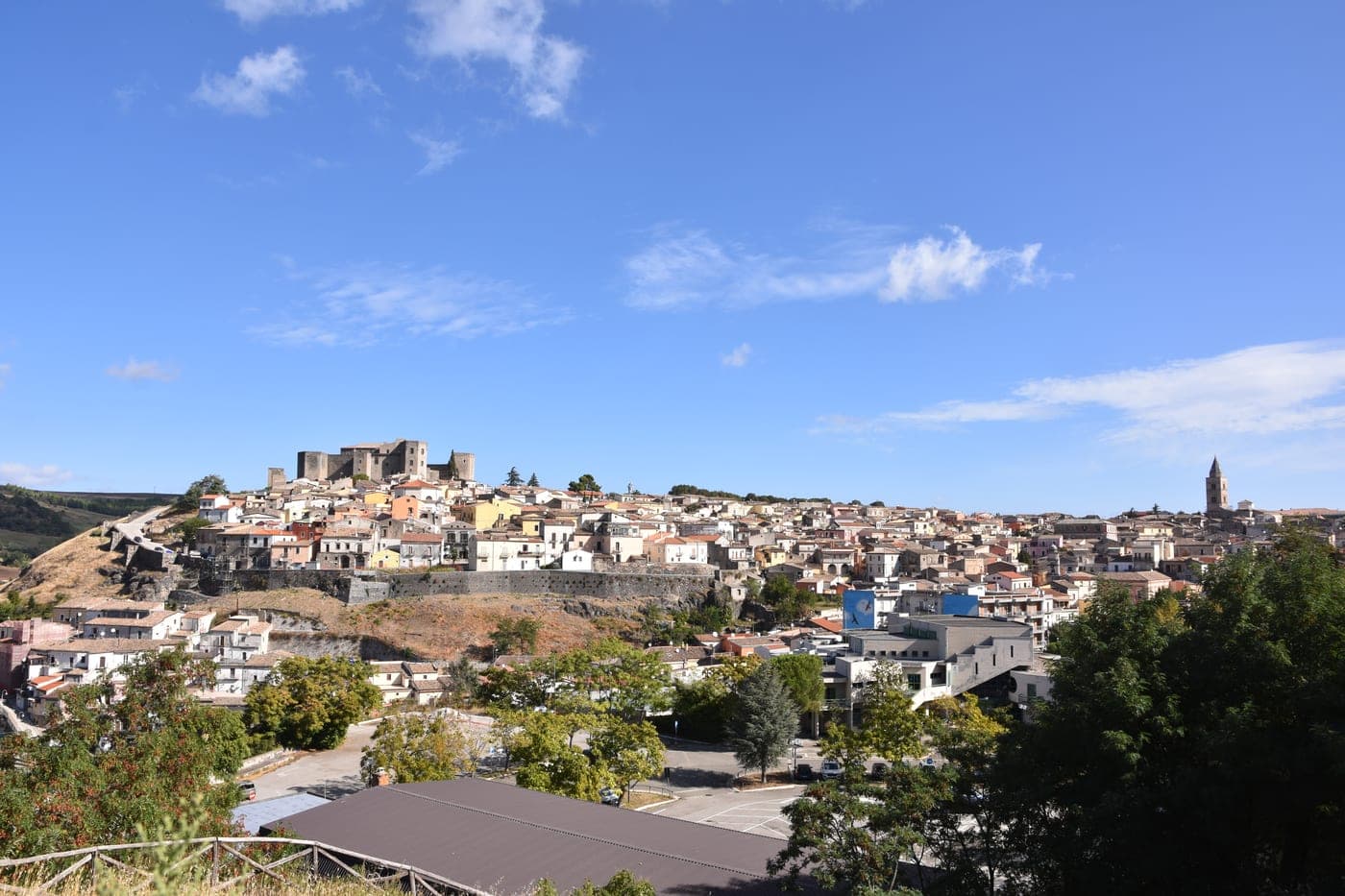
Basilicata is Italy's second-smallest region, rich in ancient history and natural beauty. Matera, a UNESCO World Heritage site, is renowned for its Sassi, ancient cave dwellings carved into limestone. The region boasts a rugged landscape, featuring the Pollino National Park with its diverse flora and fauna. Potenza, the capital, offers a glimpse into local life with its medieval architecture and vibrant markets. Basilicata is also known for its unique cuisine, including hearty dishes like pasta with wild boar and spicy peppers. The region's coastline along the Tyrrhenian Sea is less frequented, providing secluded beaches and authentic coastal villages, ideal for a slower pace of travel. Discover the ancient ruins of Grumentum and the beautiful hilltop towns of Montalbano Jonico and Tursi, which showcase the region's cultural heritage away from the crowds.
Wine TastingHiking





