Liquirizia di Calabria (licorice)
Liquirizia di Calabria is pure root extract from southern Italy
- Vegetarian
- Local name
- Liquirizia di Calabria
- Best eaten at
- Rossano's licorice museum
What it is
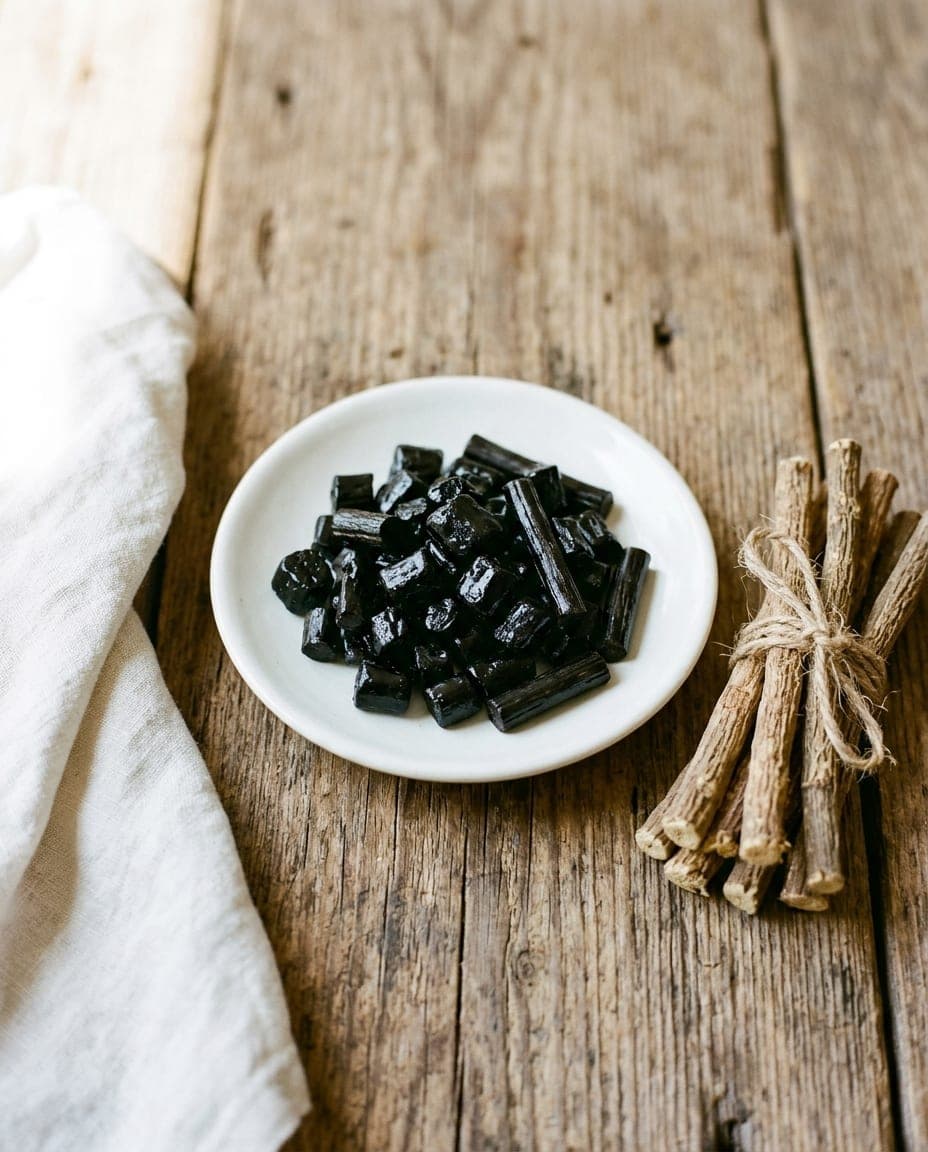
Liquirizia di Calabria is the licorice of Calabria, the toe of Italy's boot: the root of Glycyrrhiza glabra, sold fresh or dried, and above all the dark extract made from it. In its best-known form it is a dense confection of pure extract. Unlike most sweets that rely on sugar or flour as a base, the pure version contains nothing but the root's extract. The result is a hard, black piece with a smooth surface and an intensely bitter-sweet flavour that lingers long after it is finished.
Since 2011 the name has been a Protected Designation of Origin (PDO) in the EU, covering the fresh root, the dried root and the extract. The root comes from a local variety known as Cordara, gathered from both cultivated fields and registered wild stands in a defined area of Calabria. Calabrian licorice is widely prized for its sweetness and depth of flavour, which allow the pure extract to stand alone without added sugar or fillers.
The texture is distinctively hard. The extract is concentrated into a thick paste, which sets into a firm, brittle solid before being cut into small pieces. Because the flavour is so powerful, it is not eaten in large quantities. Instead, it is taken slowly, often by sucking on a small fragment that dissolves over time. It is a taste that demands attention and patience.
The history of the Sibari plain
The production of licorice in Calabria stretches back centuries, deeply woven into the agricultural and economic life of the region. The plant was well known here by the 17th century, and in the 1700s its cultivation spread along the Ionian coast and across the Sibari plain, north of Rossano. The fertile soil and warm climate of this coastal strip suit the plant well.
One family firm in Rossano has been processing the root in its concio, or extraction works, since 1731. While many producers have come and gone over the centuries, this enduring presence highlights the stability of the trade in the area. The knowledge required to harvest, process and dry the root has been passed down through generations.
The area around Rossano remains the best-known centre of Calabrian licorice, though the PDO zone covers communes across several Calabrian provinces. The roots are dug from the fields and from wild stands, washed and then dried or sent for extraction.
What goes into it
Pure Liquirizia di Calabria is defined by what it does not contain. There is no flour, no sugar and no artificial colouring in the pure extract; the entire composition comes from the root of Glycyrrhiza glabra. The process begins with the harvesting of the roots, which are washed with water to remove soil and debris.
Once cleaned, the roots are cut and boiled in water for an extended period. This extraction draws out the flavour compounds, leaving behind a dark liquid. The liquid is then reduced until it thickens into a dense, black paste, which is allowed to cool and harden from a sticky substance into a firm solid.
The final product is cut into small pieces, often little cylinders, lozenges or irregular chunks. The taste is a complex balance: an initial sharp bitterness gives way to a deep, lingering sweetness that coats the mouth. Flavoured versions, for example with mint or anise, are also sold, but the pura variety contains nothing but the root itself.
How it is eaten
The pieces are hard and dense, so they are not chewed like a typical candy. Instead, they are sucked slowly, allowing the saliva to dissolve the surface and release the flavour gradually, so that the intense taste does not overwhelm the palate all at once.
Because the flavour is so concentrated, the sweet is consumed in very small quantities. A single piece can last for several minutes. It is often enjoyed after a meal, as a moment of quiet reflection rather than a sugary dessert. The dried root is also sold in sticks, which are chewed slowly to release their sweetness.
A visit to the licorice museum in Rossano is the classic way to discover it. Here, visitors can see the raw roots, old tools and production equipment, and taste the finished sweet, a direct connection to the land and the people who have tended it for generations.
Curious facts
- Wild and cultivated. The PDO allows roots from both cultivated fields and registered wild stands along the Calabrian coast.
- No sugar needed. In the pure version the sweetness comes entirely from the root, making it one of the few sweets without added sugar.
- Fresh, dried or extract. The PDO covers three forms: the fresh root, the dried root and the extract.
- A PDO since 2011. Liquirizia di Calabria was registered as a Protected Designation of Origin by the EU in October 2011.
- The Rossano connection. Rossano is the best-known centre of production, where one family's extraction works dates back to 1731.
Where to try it
The most authentic place to taste Liquirizia di Calabria is Rossano, in the province of Cosenza, the historic heart of the industry. While the sweet can be found in shops across Italy and abroad, the experience is most complete in its place of origin.
The museum explains the process from root to sweet, and samples are available for tasting. Outside the museum, shops in Rossano sell the black pieces in small tins and packets. A trip across the nearby Sibari plain shows the coastal landscape where the plant grows, before it is transformed into the sweet.
Where to try it
1 region
 Boat Rentals3 destinations
Calabria
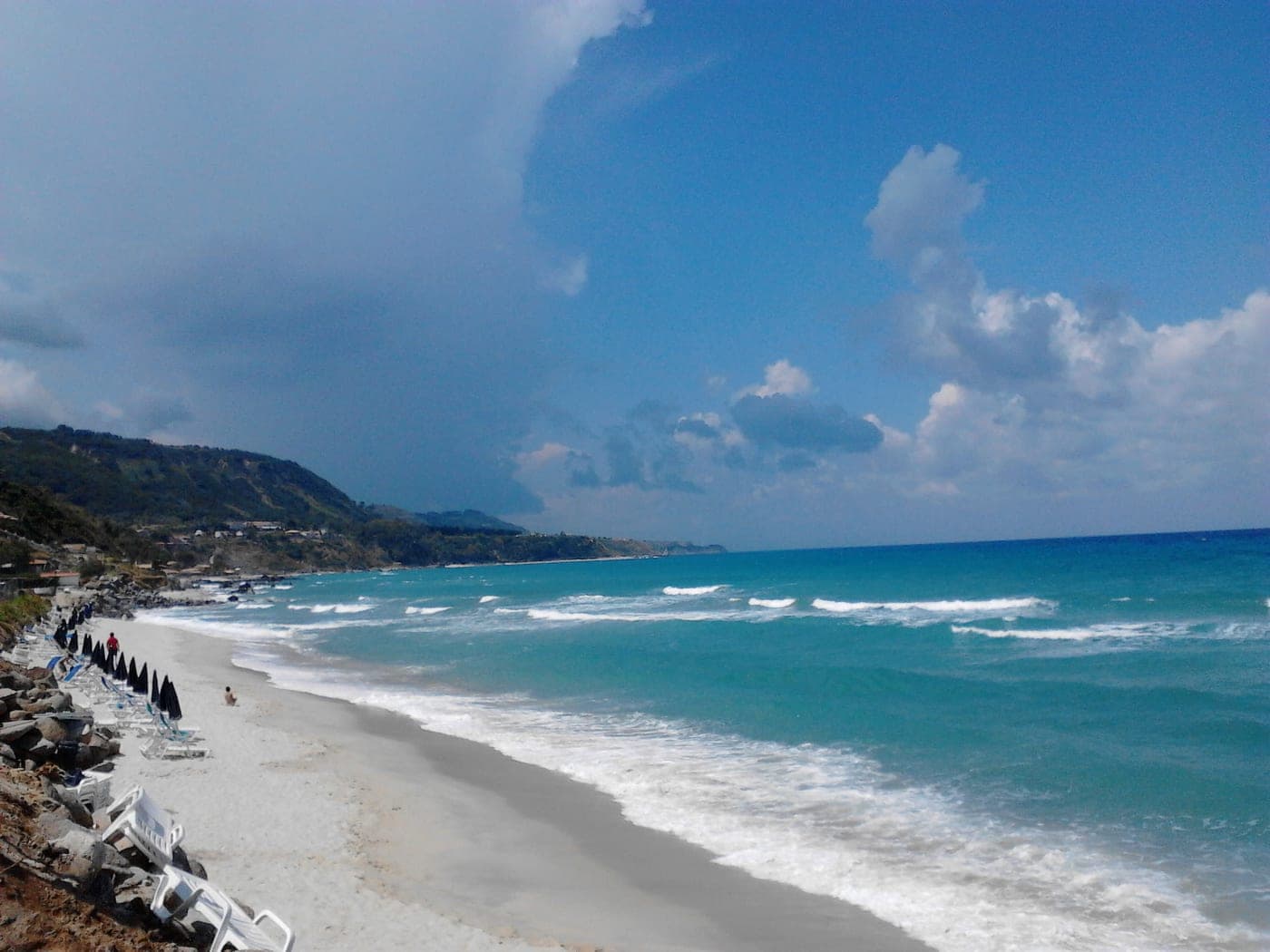
Calabria forms the toe of Italy, a narrow strip of land pinched between two seas and lifted into three mountain ranges. This shape is what makes it a region built for slow travel: an hour's drive from a fishing harbour on the Tyrrhenian coast leads into chestnut forests and mountain pastures; another hour reaches olive terraces above the Ionian Sea. Nothing here rewards rushing. A Calabria itinerary works best as a loop through a handful of towns, with two or three nights in each, rather than a checklist of day trips. Food sets the pace as much as geography does. Calabria is one of Italy's strongholds of Slow Food, the movement that began by defending exactly this kind of small-scale, tied-to-the-land cooking. 'Nduja, the spreadable spicy salami, and the sweet red onion of Tropea are both eaten the way they always have been — with bread, in a kitchen, at a pace nobody is timing. The region's wine road runs through the hills around Cirò, where Gaglioppo grapes have long been grown. Agriturismo stays are the natural base for exploring it: working farms with rooms attached, where dinner is whatever came out of the garden or off the hillside that day. The hill towns are where Calabria's unhurried character is easiest to feel. Gerace sits on a limestone outcrop above the Ionian coast, its medieval streets largely unbothered by modern building. Stilo, tucked into the Serre mountains, is known for the Cattolica, a small Byzantine church that has watched over the town for centuries. Bova, high in the Aspromonte massif, is one of the last places where Greko, an ancient Greek dialect, is still spoken by older residents — a reminder that Calabria was part of Magna Graecia long before it was part of Italy. Pentedattilo, built into a rock formation shaped like a hand, was largely abandoned and is now slowly being resettled by artists and craftspeople. The coast has its own rhythm. Tropea, perched on a cliff above the Tyrrhenian, is Calabria's best-known seaside town, its old centre a tangle of stone alleys leading to a clifftop view over the water and, on clear days, the Aeolian Islands. Scilla, further south, is a fishing village split between a castle-topped headland and a beach lined with pastel houses. On the Ionian side, the Aragonese castle at Le Castella stands on its own small island, connected to shore by a narrow strip of sand. History here goes back further than most of Italy. The Riace Bronzes, two full-size Greek statues pulled from the sea off the Ionian coast, are held in Reggio Calabria's archaeological museum and remain among the finest survivals of classical bronze casting. Locri, nearby, preserves the ruins of an ancient Greek city, its temple foundations and theatre still visible among the olive groves. Inland, three national parks give Calabria a green, cool counterpoint to its coastline. The Sila plateau, with its pine and beech forests and glacial lakes, is grazing land for the black pigs that go into the region's cured meats. Aspromonte, the mountain massif at the very tip of the peninsula, holds waterfalls, chestnut woods and the Greek-speaking villages of the Bovesìa. Pollino, shared with neighbouring Basilicata, is wilder still, home to some of the oldest pine trees in Europe. A week to ten days is enough to move through Calabria properly: a few days on one coast, a few in the hills, a few on the other coast, without ever needing to rush the return. Longer stays simply mean slower mornings and more time in each village square.
Boat RentalsWine Tasting





