Lasagne alla bolognese
Green spinach pasta layered with slow-cooked meat ragù and béchamel in Emilia-Romagna
- Local name
- Lasagne alla bolognese
- Best eaten at
- A Bologna trattoria on Sunday
- Pairs with
- Lambrusco or Sangiovese
What it is
Lasagne alla bolognese is the classic Sunday lunch of Bologna and the wider Emilia-Romagna region. It is not merely pasta with sauce, but a baked dish built from three distinct elements: sheets of fresh green egg pasta, a rich meat ragù cooked for hours, and a smooth béchamel sauce. The result is a layered construction where every bite contains all three components in harmony.
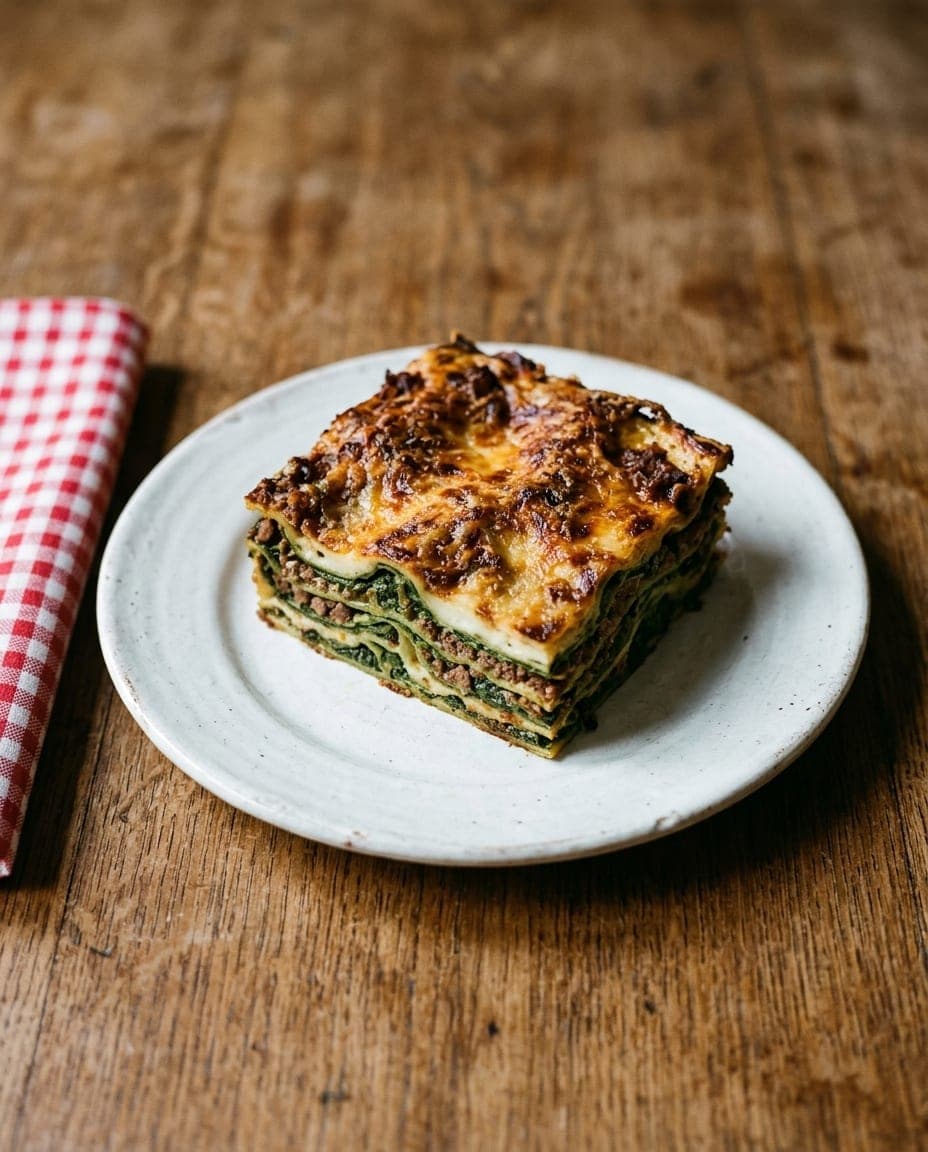
The most striking feature of the Bolognese version is the colour of the pasta. While white pasta sheets appear in recipes across Italy, the local tradition calls for green spinach lasagne. The dough incorporates cooked spinach, giving the sheets a deep green hue that contrasts with the creamy white béchamel and the dark, reddish-brown meat sauce.
In Bologna, the layers are stacked with care. Each sheet of pasta is covered with a thin layer of béchamel, a generous layer of ragù, flakes of butter and plenty of grated Parmigiano Reggiano, repeated for at least six layers. This creates a moist, cohesive structure that holds together when sliced. The top is finished with ragù, béchamel, butter and cheese, which form a golden, browned crust during baking. There is no room for ricotta or mozzarella in this equation; those cheeses belong to lasagne variants from elsewhere in Italy and are not part of the Bolognese recipe.
The history of the green sheets
The identity of the dish has deep roots in the culinary culture of the Po Valley. Emilia-Romagna has long been known as one of the food baskets of Italy, a region where fresh pasta making is an essential domestic skill. In Bologna specifically, the art of rolling pasta was elevated to a high craft. The sfogline, the women who rolled the dough, were proud of sheets so thin that one could almost read through them, a standard that remains the benchmark for quality today.
Adding spinach to the dough likely made use of the greens grown in the surrounding countryside, and over time the green sheets became a hallmark of the city's identity. The tradition was so firmly established that the Bologna delegation of the Accademia Italiana della Cucina recognised an official recipe for lasagne verdi alla bolognese in May 2003, and it was deposited with the Bologna chamber of commerce on 4 July 2003. This act formalised what was already common practice: green pasta, meat ragù, béchamel, and no cheese other than Parmigiano Reggiano.
While lasagne with tomato sauce and mozzarella appear on menus across the world, the combination of green spinach sheets and long-cooked meat ragù is a signature that claims Bologna as its home, and it remains a point of pride for the Bolognese.
What goes into it
The components of lasagne alla bolognese are simple in name but demanding in execution:
- Fresh green pasta: Made from flour, eggs and boiled, well-squeezed spinach. The dough is rolled by hand or machine into wide, flat sheets that are boiled briefly before assembly.
- Ragù alla bolognese: A slow-cooked meat sauce, not a tomato sauce. It relies on beef, often with a portion of pork, cooked slowly with a little onion, carrot and celery. The tomato is used sparingly, balancing the meat rather than dominating it.
- Béchamel: A white sauce made from butter, flour and milk, seasoned lightly with nutmeg.
- Parmigiano Reggiano: A hard, aged cheese grated between the layers and over the top.
The absence of other ingredients is as notable as their presence. There are no vegetables in the meat sauce other than the base of onion, carrot and celery, and no ricotta, mozzarella or fresh herbs mixed into the layers. The flavour comes from the long simmering of the meat and the creamy béchamel binding it all together.
How it is eaten
Lasagne alla bolognese is traditionally a dish for special occasions, above all Sunday lunch. It is often prepared in the morning to be ready by midday, and it is heavy and sustaining, designed to feed a family gathered around the table.
In a traditional trattoria in Bologna, it arrives as a large rectangular portion that holds its shape well. The layers are clearly visible on the plate, with the green pasta, dark meat sauce and white béchamel forming a striped pattern. Extra grated Parmigiano Reggiano is often offered at the table.
The texture should be soft but not mushy. The pasta sheets must be tender, absorbing the flavours of the ragù without falling apart, while the béchamel keeps each bite moist and creamy rather than dry.
A common pairing is a glass of Lambrusco, a slightly sparkling red wine from Emilia-Romagna, or a Sangiovese from the Romagna hills. The acidity and slight fizz of the Lambrusco help balance the richness of the meat and cheese.
Curious facts
- The official recipe. A recipe for lasagne verdi alla bolognese endorsed by the Accademia Italiana della Cucina was deposited with the Bologna chamber of commerce in 2003, alongside earlier deposits such as the ragù recipe of 1982.
- No ricotta. Unlike many lasagne variations found globally, the Bolognese version uses no ricotta or mozzarella, relying on béchamel for creaminess.
- The colour matters. The green hue comes from spinach worked into the dough, which distinguishes it from the white pasta sheets used elsewhere in Italy.
- A Sunday ritual. The dish is traditionally associated with Sunday lunch and festive occasions rather than quick weeknight meals.
- At least six layers. The deposited recipe calls for a minimum of six layers of pasta, finished with ragù, béchamel, butter and Parmigiano for a browned top.
Where to try it
The most faithful versions of this dish are found in Bologna and its surroundings in Emilia-Romagna. A proper experience takes place in a traditional trattoria in the city centre or a rustic osteria just outside the old walls, places where the focus remains on the food rather than white tablecloths.
A menu mentioning ricotta, mozzarella or white pasta is likely not following the local tradition. A Sunday lunch in Bologna offers the best opportunity to taste the dish as intended, with a glass of regional wine and a relaxed pace of eating.
Where to try it
1 destination
 Camper Van Rentals
Bologna
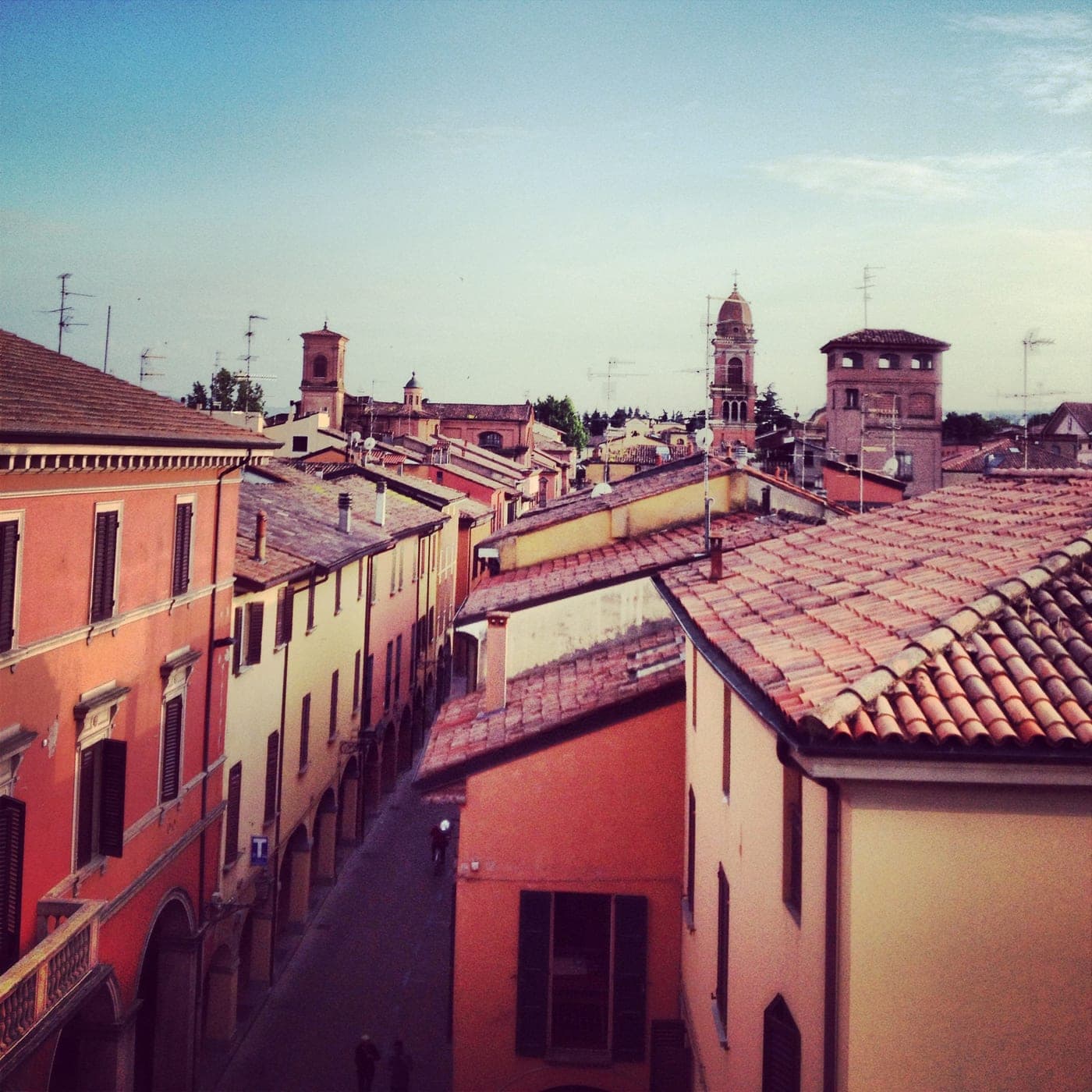
Medieval city known for its towers, vibrant cuisine, and rich history.
Camper Van RentalsLocal Cuisine
1 region
 Wine Tasting9 destinations
Emilia-Romagna
This region in Italy is renowned for its diverse landscapes, ranging from the Apennine Mountains to the Adriatic coastline. It is the only Italian region with a significant stretch of coastline, featuring vibrant seaside towns like Rimini. Bologna, the capital, is famous for its medieval architecture and culinary heritage, being the birthplace of tagliatelle al ragù. The region is also known for its rich history, with towns like Modena showcasing UNESCO-listed sites such as its cathedral and the renowned balsamic vinegar. Slow travelers can explore hidden gems like the medieval village of Dozza, known for its painted walls, or the thermal baths in Salsomaggiore Terme. Emilia-Romagna is the largest region in northern Italy, offering a blend of art, culture, and gastronomy that invites deeper exploration.
Wine TastingHikingCamper Van RentalsLocal Cuisine





