Jota
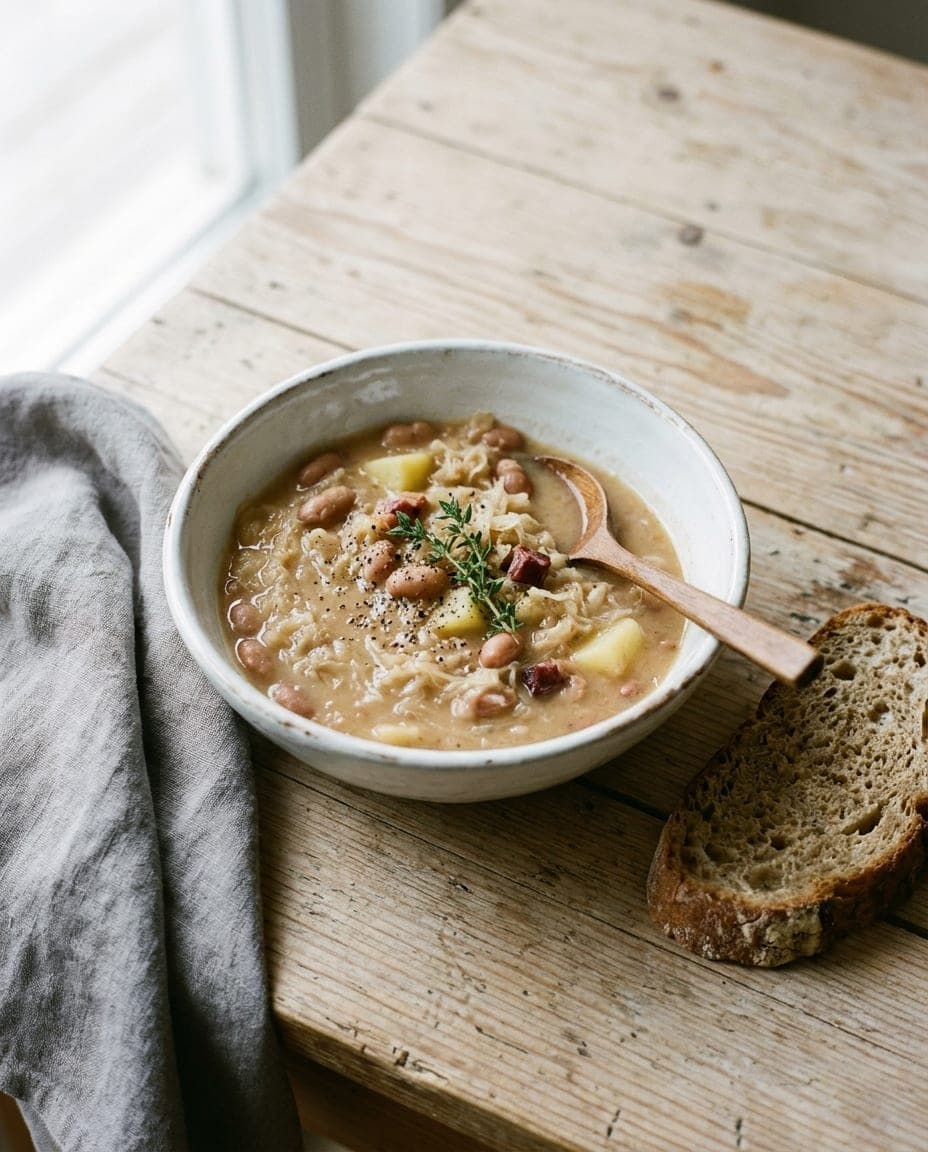
A winter soup of beans, sauerkraut and smoked pork from Trieste
- Local name
- Jota
- Served with
- Bread
- Best eaten at
- A Trieste buffet
- Pairs with
- Terrano
What it is
Jota is the winter soup of Trieste and the wider Friuli Venezia Giulia region. It is a thick, rustic stew that sits somewhere between a soup and a meal, made from beans, sauerkraut or pickled turnip, potatoes and smoked pork. The same name is used for similar soups across the border in Slovenia.
The character of jota comes from its sourness. This sharp note is provided by fermented cabbage or turnips, which are cooked together with the beans until they soften into the broth. Part of the beans and potatoes is often mashed or blended back into the pot, thickening the liquid so that the soup becomes dense. The result is filling, designed to warm the body during the long cold months when fresh vegetables were scarce.
Trieste sits on a border where cultures meet. The food of the city reflects this history: the smoked pork, sauerkraut and caraway point to Central European traditions, while the beans and the use of oil belong to the Italian side. Jota is one of the dishes that most clearly shows how these worlds merged in the local kitchen.
How it came to be
The origins of jota are tied to the need for food that could last through winter. On the Karst plateau behind Trieste, families kept sauerkraut in barrels to eat when the ground was frozen, and dried beans could be stored for months. The addition of smoked pork provided salt and fat, while the potatoes added bulk. There is no single recipe or inventor to name; instead, the dish evolved over generations as a way to use what was available in the larder.
Because Trieste was part of the Habsburg Empire for centuries, the culinary habits of the area absorbed influences from Vienna and the rest of Central Europe. Yet the beans remained an Italian staple. The result is a soup that feels at home in both an Austrian-style buffet and an Italian osteria. It is not a dish found on menus across all of Italy; it belongs to the north-east corner, particularly around Trieste and the Karst.
In the past, jota was food for the working day. It was heavy enough to sustain labourers through long hours in the fields or on the docks. Today it remains a winter speciality, appearing most often when the weather turns cold.
What goes into it
The ingredients are simple and few, but they must be of good quality to make a soup that tastes right:
- Beans, usually borlotti, which provide the main body of the dish.
- Sauerkraut or pickled turnip, giving the soup its distinctive sour flavour and tangy aroma.
- Potatoes, often partly mashed into the broth to thicken it and add a creamy texture.
- Smoked pork, such as pancetta, ribs or rind, which adds salt and smokiness.
- Garlic, caraway and lard in some versions, with a little fat and garlic fried or pounded and stirred in to finish the dish.
The final consistency depends on how long it cooks. A well-made jota is thick rather than brothy; it is a meal in a bowl.
How to eat it
Jota is served as a main course, usually at lunch or dinner. In Trieste it is a fixture of the city's traditional buffet, informal eateries serving hot pork dishes and soups, many of which have kept their recipes unchanged for decades.
It is eaten with a slice of coarse bread to soak up the broth. The sourness of the soup pairs naturally with the local red wine, particularly Terrano, a dry, mineral-tasting wine from the Karst. Some cooks finish the pot with a mixture of lard, garlic and parsley stirred in just before serving to add a fresh, sharp note.
Curious facts
- A border dish. Jota exists in similar forms across the border in Slovenia, where it goes by the same name.
- A winter dish. The soup is mostly eaten in the colder months, when the weather calls for heavy food.
- Turnip or cabbage. Versions made with fermented turnip instead of sauerkraut are also found in the region.
- Not a starter. It is too substantial to be an appetiser; it is usually served as the main event of the meal.
- The garlic finish. Some kitchens add a garlic and lard mixture at the end, which adds aroma and body.
Where to try it
Trieste is the place for the most traditional version. Its old buffet eateries and osterie serve the soup in winter with a glass of Terrano and a slice of local bread.
Where to try it
1 region
 Wine Tasting1 destination
Friuli Venezia Giulia
This northeastern Italian region is known for its diverse landscapes, from the Alps to the Adriatic Sea. It is the only region in Italy with a coastline, featuring beautiful beaches along the Gulf of Trieste. The capital city, Trieste, boasts a rich history as a former Habsburg port, showcasing architecture that reflects its imperial past. The region is famous for its vineyards, producing unique wines like Friulano and Refosco. Notable towns include Cividale del Friuli, a UNESCO site with Lombard heritage, and Gorizia, known for its historic castle. The scenic Collio wine region invites exploration of charming wineries and local cuisine, emphasizing fresh ingredients and traditional recipes.
Wine TastingHikingLocal Cuisine





