Grissini
Thin, brittle breadsticks from Turin, said to have been made for a young duke who could not digest ordinary bread
- Vegetarian
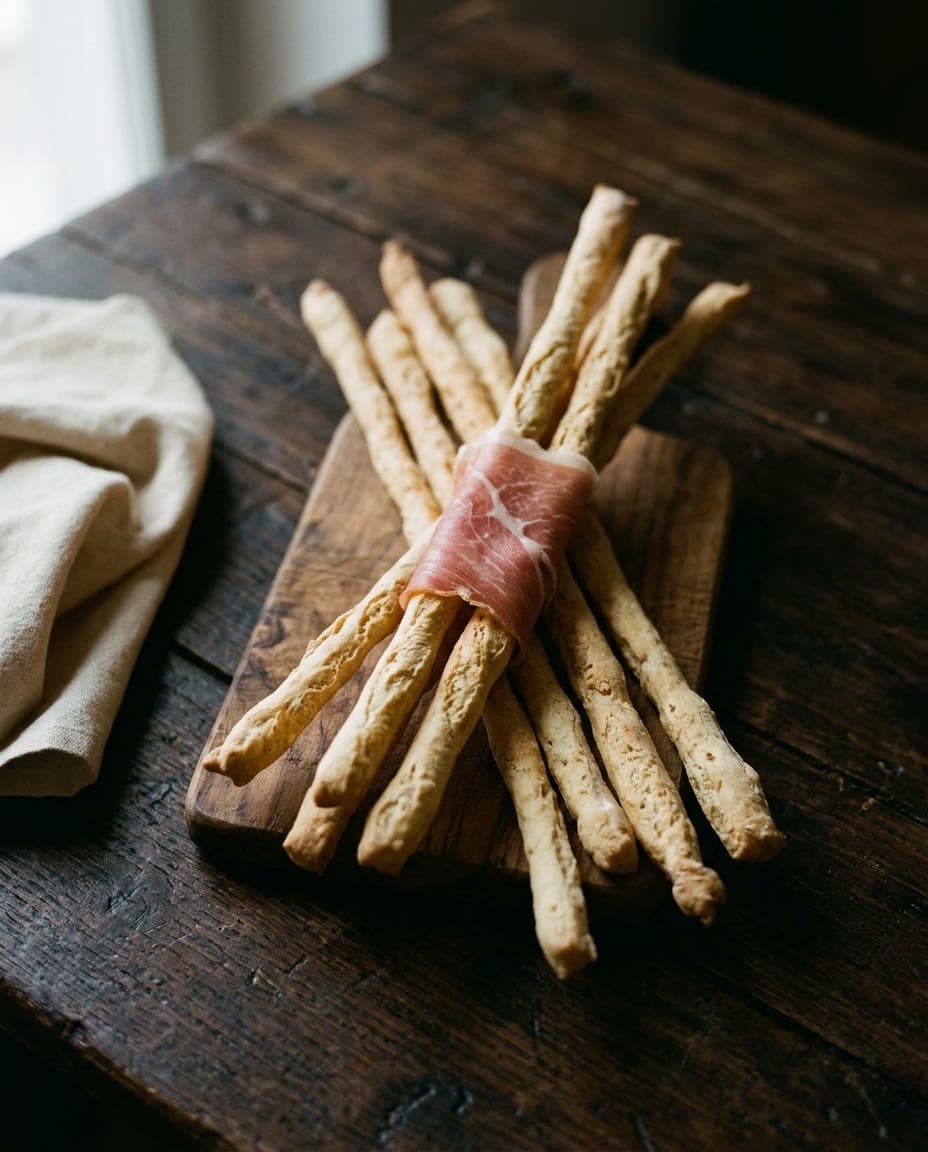
- Local name
- Grissini (rubatà, stirati)
- Served with
- Wrapped in prosciutto
- Pairs with
- Vermouth di Torino
What they are
Grissini are thin, crisp breadsticks from Turin, the capital of Italy's Piedmont region. They are not merely an accompaniment to wine; they are a distinct form of bread with a history that tradition dates back over three centuries. Supermarkets sell uniform, machine-made versions in sealed packets, but the traditional hand-made kind remains something else entirely.
The oldest style is the rubatà, a Piedmontese word meaning "rolled", as the sticks are rolled by hand. They are irregular, knobbly and slightly curved, and can be anything from about 40 to 80 centimetres long. A more recent style, the grissino stirato, is stretched rather than rolled, giving a more crumbly stick. Both are baked until almost all moisture is driven out, so they shatter at the slightest pressure and keep far longer than ordinary bread.
Grissini belong firmly to Turin and the Piedmontese countryside, though they are now eaten all over Italy. In Turin, they are often on the table before a meal begins, placed in a basket for guests to break and eat while waiting for the first course.
The legend of the duke and the doctor
The story most commonly told about grissini is tied to Turin's ruling House of Savoy. According to tradition, in 1679 the young Vittorio Amedeo II, then Duke of Savoy and later the first king of the house, was in such frail health that he could not digest the soft crumb of ordinary bread. The court physician advised a bread without crumb, and the court baker, Antonio Brunero, responded with thin sticks of dough baked until completely dry.
The name is usually traced to the ghërsa, the classic long loaf of Piedmontese tradition, of which the grissino is the slender diminutive. The exact details of the story cannot be verified from contemporary records, but the key detail is the purpose: a dietary remedy that turned into a culinary icon.
How they are made
Traditional grissini rely on simplicity. The dough is lean: flour, water, salt and yeast, often with a little olive oil or malt. After rising, it is cut into strips that are rolled (rubatà) or stretched (stirati) by hand into long, thin sticks.
This hand-shaping creates the irregular surface that distinguishes artisan grissini from machine-made sticks. Once shaped, they are baked in a hot oven until dry throughout, which gives them their snap. If they absorb humidity from the air, they lose their crunch, which is why they are kept in dry places or wrapped in paper. This durability made them ideal for travel and storage, a quality that helped spread them beyond Turin.
How to eat them
In Piedmont, grissini are first and foremost table bread: a basket arrives while guests settle in, and diners break off pieces and nibble while they wait.
A popular way to enjoy them is wrapped in a slice of raw ham, the salty richness of the meat contrasting with the dry, neutral breadstick. They are also served with local cured meats and cheeses, or dipped into bagna càuda.
They pair naturally with vermouth. Turin is the historic home of Vermouth di Torino, an aromatised wine flavoured with herbs and spices. In a Turin café or bar, a few grissini often appear alongside an aperitif, together with olives or nuts.
Napoleon is said to have been so fond of them that he arranged for regular deliveries of what he called les petits bâtons de Turin to Paris, though this belongs to the realm of anecdote rather than documented fact.
Where they come from
Grissini are a regional speciality of Piedmont, and Turin is their undisputed home. Other parts of Italy produce breadsticks, but none claims the same historical depth. Grissini rubatà and stirati are both listed among Piedmont's traditional food products.
The tradition is strongest in the city itself and the surrounding towns of Piedmont, where local bakeries (panetterie) and traditional restaurants still offer hand-made versions alongside industrial packets.
Curious facts
- The hand-rolled variety. Traditional grissini are irregular and knobbly because they are rolled or stretched by hand, unlike the uniform sticks sold in packets.
- A dietary remedy turned delicacy. The origin story links them to a young duke who could not digest the crumb of ordinary bread.
- Long keeping. Because they are baked until dry, grissini keep far longer than ordinary bread if protected from humidity.
- The ham ritual. Wrapping a grissino in raw ham is one of the most familiar ways to eat it.
- Vermouth's match. Turin's Vermouth di Torino is a classic aperitif partner, its herbal notes complementing the dry breadstick.
Where to try them
Many traditional restaurants in Turin serve hand-made grissini as part of the pre-meal ritual, and the city's bakeries sell them by the bundle.
Outside the city, grissini appear on tables throughout Piedmont, from the Langhe to the valleys leading towards the Alps. The key is to seek out places that value the hand-rolled method over mass production. A café in the centre of Turin at aperitif time, with a glass of vermouth and a few grissini, is the simplest way to taste the history of the city.
Where to try it
1 destination
 Camper Van Rentals
Turin
Architectural gem with historic cafes, elegant squares, and rich chocolate tradition.
Camper Van RentalsThermal Spas
1 region
 Agritourism31 destinations
Piedmont
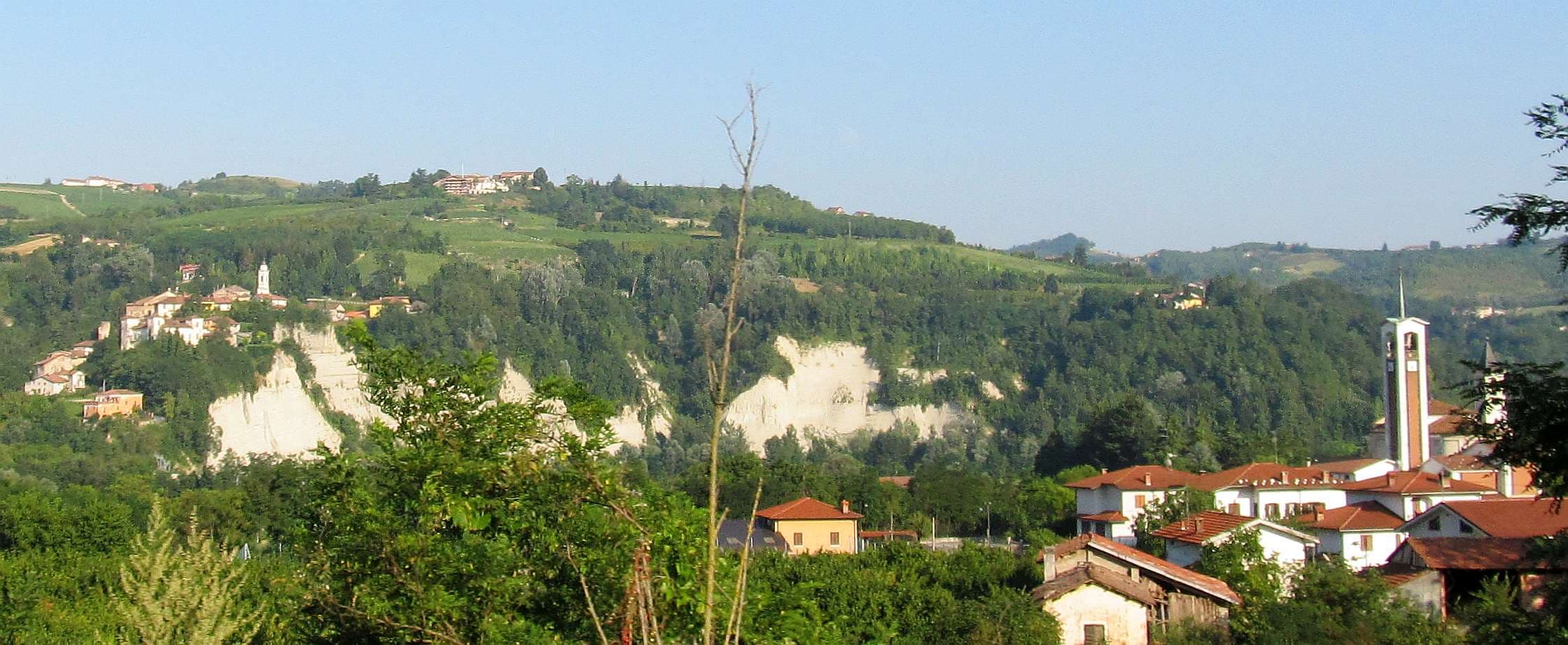
Piedmont is the second-largest region in Italy, bordered by the Alps to the north and characterized by its rich culinary and viticultural heritage. The region is famous for Barolo and Barbaresco wines, produced in the rolling hills of Langhe, a UNESCO World Heritage site. Turin, the capital, is known for its elegant architecture and historical cafes, while smaller towns like Alba and Asti offer vibrant local markets and truffle festivals. The region also boasts stunning landscapes, from the serene lakes of Orta and Maggiore to the majestic mountains. Its historical significance includes being the birthplace of the Italian unification. Authentic experiences can be found in local agriturismos and family-run osterias, away from typical tourist paths.
AgritourismWine TastingCastlesHiking





