Friselle
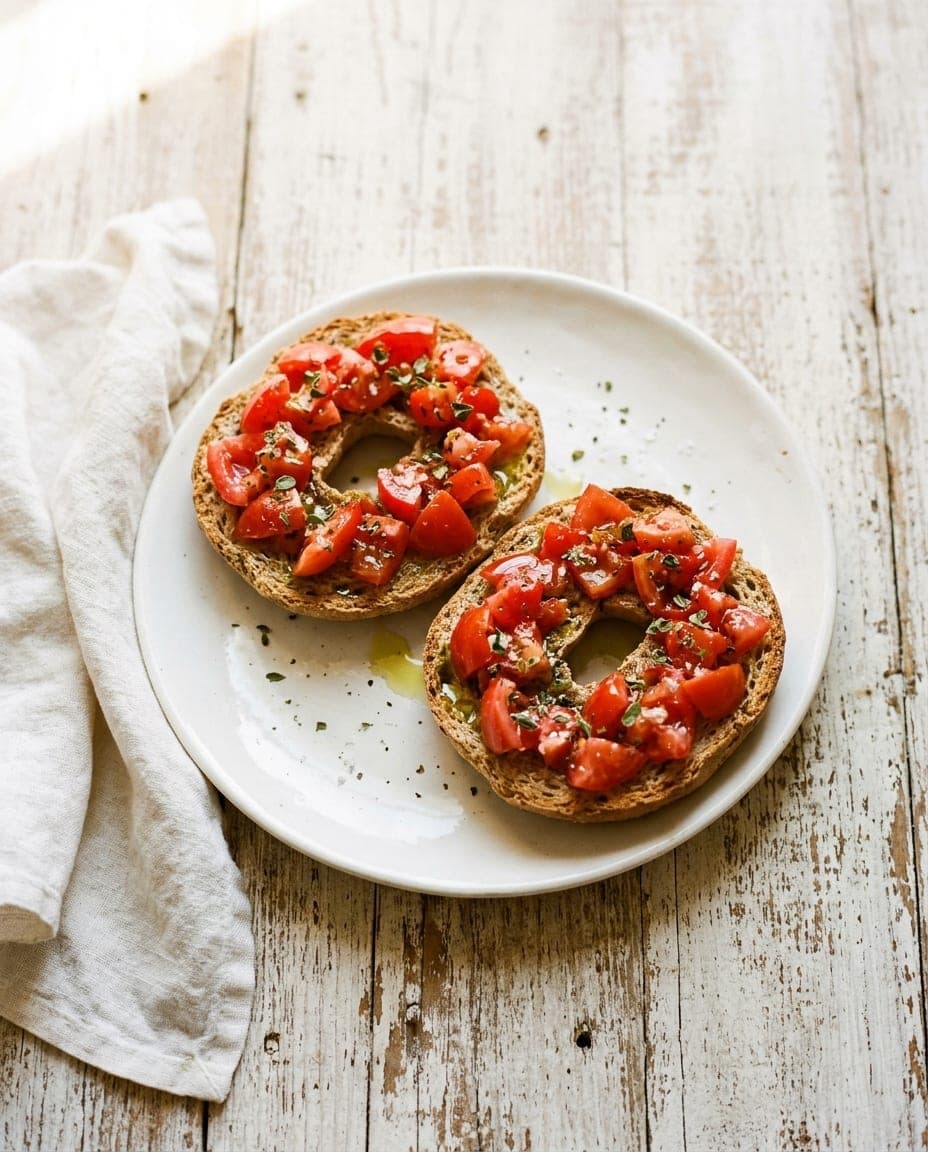
Twice-baked rings from Puglia, softened in water and topped with tomato
- Vegetarian
- Local name
- Frise / friseddhe
- Served with
- Tomato, olive oil, oregano
- Best eaten at
- A Salento beach lunch
- Pairs with
- Salento rosé
What it is
Friselle are the dry, ring-shaped breads that define the summer table across Puglia, and above all the Salento peninsula. They are not a soft loaf meant for immediate consumption but a hard rusk that keeps for months in a jar or on a shelf. The origin of the name is uncertain; one suggestion links it to the Latin frendere, "to grind" or "to crumble". The form itself is a flat ring with a hole in the centre.
A whole frisella is too hard to bite into directly, so it must first be softened. It is dipped briefly into water, by tradition sometimes seawater, and then topped with chopped ripe tomatoes, extra virgin olive oil, oregano and salt. The result balances the crunch of the dried bread with the soft, juicy collapse of the tomato topping. It is a meal born of necessity in a land where fresh bread was once a luxury and the sun was relentless.
After the dip, the rough, open crumb on top absorbs the liquid while the smooth, baked bottom stays firm. This duality lets the bread hold its toppings without turning soggy, provided the soak is brief.
The history of the dry loaf
The story of friselle begins with the practical need to preserve bread in a hot climate. Bakers shaped rings of dough, baked them, split them horizontally and returned the halves to the oven. This second baking drove out the moisture, creating a bread that could be stored for months. Tradition links these rusks to sailors and travellers, and they are sometimes called the "bread of the Crusaders", since they kept well on long journeys; the hole is said to have let sailors string them on a rope.
Similar twice-baked breads exist across the Mediterranean, from the Greek paximadi to Italian rusks elsewhere, and friselle are also common in Campania and Calabria. In Puglia they became the backbone of rural meals. Barley friselle, once the bread of the poor, were long more common than the wheat ones, which were seen as a luxury before the Second World War.
The tradition remains strong in Salento, where bakeries still bake the rings, split them and dry them until they reach the right hardness. The skill lies in controlling the drying so that the bread becomes brittle enough to store but porous enough to absorb water when needed.
How it is made
There is no single official recipe for friselle, as every baker adjusts the dough to the flour and the desired texture. The fundamental process, however, is consistent:
- The dough: Durum wheat flour or semolina, water, salt and yeast or sourdough starter. Barley flour, alone or mixed with wheat, makes a darker, more rustic version known as friselle d'orzo; wholemeal versions are also common.
- The baking: The dough is formed into rings with a hole in the centre and baked until firm but not fully dried.
- The splitting: While still warm, each ring is split horizontally into two thinner halves, often with a string, which leaves a rough, porous face.
- The second bake: The halves go back into a cooler oven and dry out completely until they are hard and golden.
The final product has a smooth outer crust from the first bake and a rough, open interior that absorbs liquid readily. Wheat friselle are pale gold, while barley ones have a darker, earthy tone. Both keep for months in a dry place.
How it is eaten
The ritual of eating friselle is simple but demands attention to detail. Each half is quickly dipped into a bowl of cold water, a step known locally as sponzare. The soak lasts only a few seconds, just long enough for the rough face to soften while the base stays crisp. Over-soaking turns the bread into a mushy paste, which is considered a failure.
Once softened, the frisella is topped with chopped ripe tomatoes, seasoned with salt and oregano, and finished with a drizzle of good extra virgin olive oil. In some places capers, olives, rocket or a splash of vinegar are added; in Calabria, red Tropea onion is a common addition. It is traditionally eaten by hand.
This is a dish made for the outdoors and for hot days when heavy meals feel unwelcome, and it is a classic of the Salento beach lunch. It pairs naturally with a glass of cool Salento rosé, while a cold beer is just as common under the midday sun.
Curious facts
- A traveller's provision. Tradition holds that the long keeping qualities of friselle made them ideal for sea voyages and long journeys.
- Two textures in one bite. The dish relies on the contrast between the crisp base and the soft, soaked top: too dry and it cannot be eaten, too wet and it loses its character.
- Barley and wheat. Durum wheat friselle are the most common today, but barley friselle, once the everyday bread of the poor, remain popular for their deeper flavour.
- The seawater tradition. Dipping friselle in seawater is part of local lore, though today fresh water is the norm.
- A summer staple. Friselle are eaten all year but are most popular in summer, when tomatoes are at their best and the heat makes heavy meals less appealing.
Where to try it
The best place to experience friselle is in Salento, the southern tip of Puglia, whether on the Ionian coast around Porto Cesareo or the Adriatic side towards Otranto. In summer they are a fixture of beach bars, bakeries and family-run trattorias, served with tomatoes from nearby fields.
Lecce and the inland towns of Salento also offer excellent versions, and bakeries across Puglia sell the dry rings loose from large baskets or in bags to take home.
Where to try it
1 destination
 Boat Rentals
Porto Cesareo
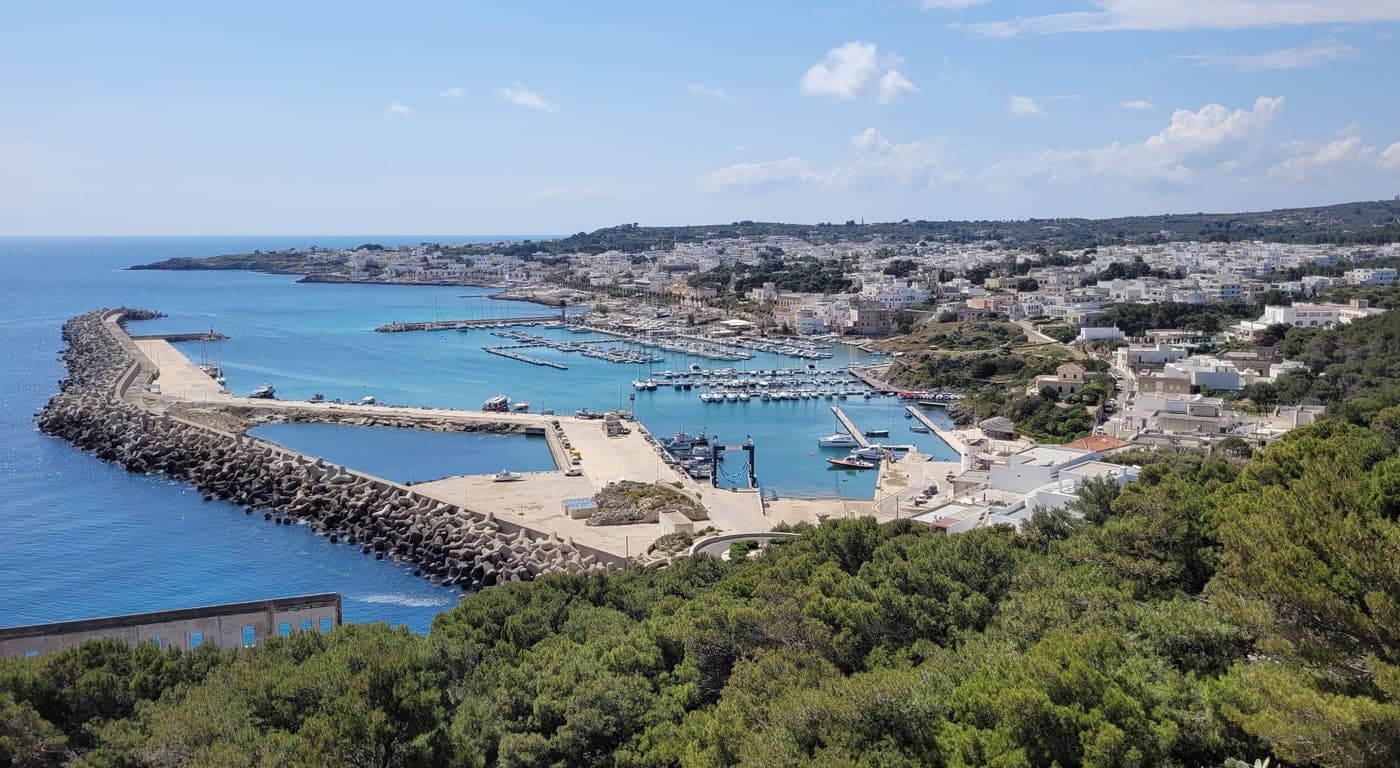
Coastal town famous for pristine beaches and traditional seafood cuisine.
Boat Rentals
1 region
 Boat Rentals20 destinations
Puglia
Apulia, the heel of Italy, is known for its unique trulli houses, especially in Alberobello, a UNESCO World Heritage site. The region features beautiful coastlines along the Adriatic and Ionian Seas, with picturesque towns like Polignano a Mare and Otranto offering stunning sea views and fresh seafood. Notably, Apulia is the largest wine-producing region in Italy, famous for robust Primitivo and fruity Negroamaro wines. History aficionados can explore ancient sites like the Romanesque cathedral in Bari and the medieval castles of Castel del Monte. With its rich culinary traditions, highlighted by orecchiette pasta and olive oil, Apulia offers a deep dive into Italy's cultural heritage.
Boat RentalsWine TastingHikingAgritourism





