Finocchiona
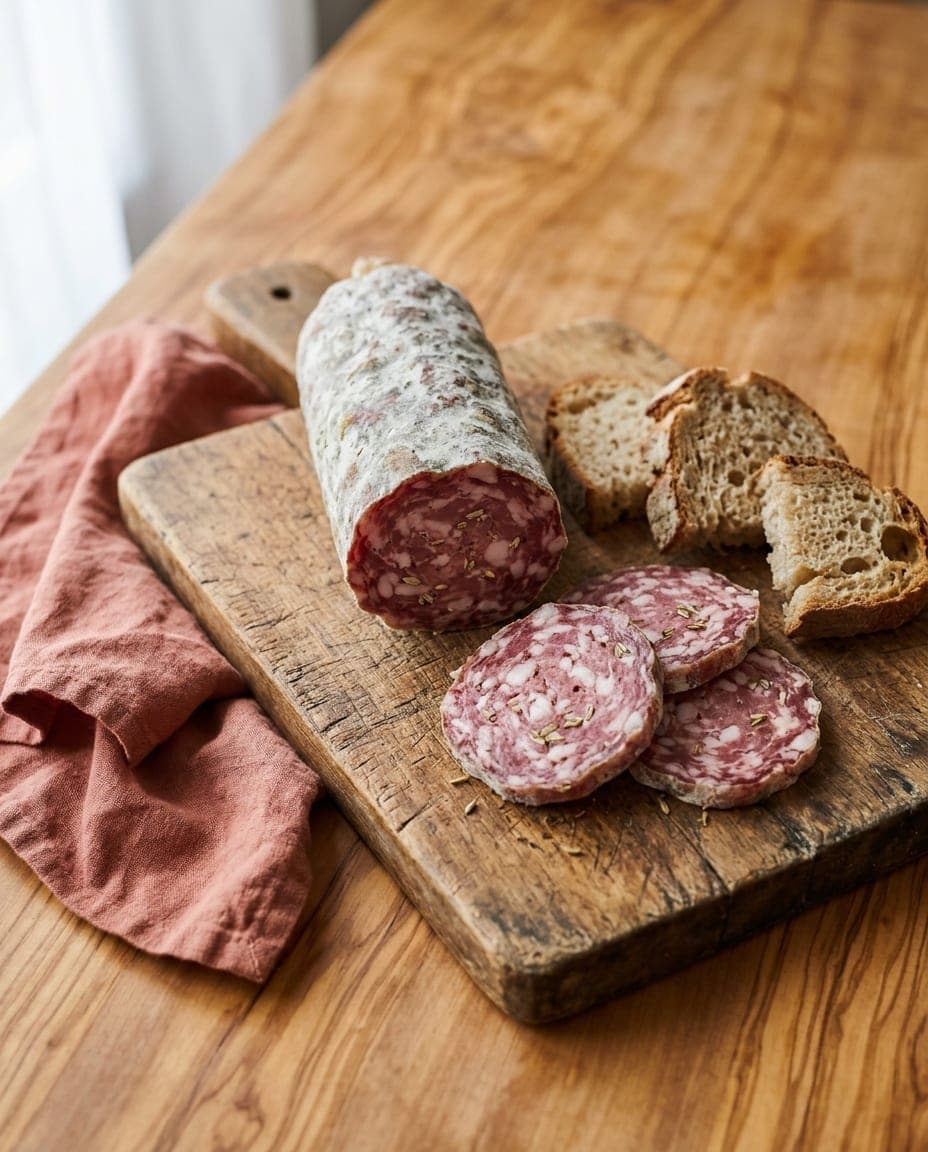
Soft Tuscan salami flavoured with wild fennel seed
- Local name
- Finocchiona IGP
- Served with
- Unsalted Tuscan bread
- Best eaten at
- A Florentine enoteca
- Pairs with
- Chianti
What it is
Finocchiona is a soft, coarse-textured salami from Tuscany, most closely associated with the countryside around Florence and the Chianti hills towards Siena. It stands apart from the firmer, drier salamis found elsewhere in Italy because of its generous use of fennel seed and its tendency to crumble when sliced. The name comes from finocchio, the Italian word for fennel, which is the dominant taste rather than a subtle background note.
This is not a hard stick of meat. Finocchiona is soft to the touch, often yielding under the knife and breaking into coarse flakes. This texture is not a defect but part of its character, the result of the balance of fat and lean meat and a relatively short cure. A coarser-ground, even more crumbly version is known as sbriciolona.
The salami is typically served as part of an antipasto board, a starter course designed to open the appetite. It arrives in slices, often alongside other cured meats, cheeses and olives, and the experience is defined by the contrast between the soft, spicy meat and the plain, unsalted bread that accompanies it.
The story of fennel and thrift
The prominence of fennel in finocchiona is usually explained by a practical history rather than pure culinary preference. The traditional account holds that black pepper was an expensive import, while fennel grew abundantly in the fields and along the roadsides of Tuscany. It was cheap, accessible and provided a robust flavour that could stand up to the fat of the pork, and it was also believed to help the salami keep.
Over time, this economic necessity became a culinary signature. The production rules trace the salami back to the 15th century, and later Tuscan dictionaries list it as a typical local product. Popular lore links it to the Italian verb infinocchiare, "to fool": wine merchants touring Chianti farms were supposedly served bread and finocchiona, whose fennel flattered the wine. It is a good story, but no more than that.
The flavour is distinct: anise-like and sweet, yet sharp enough to cut through the fat of the pork. Many makers favour the seeds of wild fennel, though the rules allow fennel seeds and flowers more generally.
How it is made
Finocchiona IGP is made from medium-ground pork, including shoulder, belly, jowl and other trimmings, mixed with fennel seeds and/or flowers, salt, black pepper, garlic and, optionally, red wine. The mixture is stuffed into natural or collagen casings, tied with string and left to dry and cure. The minimum curing time depends on size, from about two weeks for the smallest pieces to six weeks or more for the largest.
During curing the salami loses moisture and concentrates its flavours while keeping its characteristic soft texture. The wine, where used, adds a subtle acidity and depth, helping to balance the sweetness of the fennel.
The texture is key to the experience. When sliced, finocchiona falls apart easily, releasing its oils and spices onto the plate. The coarseness ensures that every bite contains a mix of fat, lean meat and spice seeds, a mouthfeel quite different from finer-textured salamis.
How it is eaten
Finocchiona is traditionally served as part of an antipasto board at lunch or dinner. It is rarely eaten alone; instead it is paired with unsalted Tuscan bread, pane sciocco (today protected as Pane Toscano DOP). The absence of salt in Tuscan bread is often explained by the historical cost of salt, though the exact origin is debated. Either way, the plain bread lets the bold flavours of the fennel salami shine.
A slice of finocchiona laid on a piece of bread is the standard way to eat it, and the softest versions can almost be spread. The bread absorbs the fats and spices from the meat.
A glass of Chianti Classico is the traditional companion. The dry, earthy notes of the wine complement the aniseed and cut the fat of the pork. In a Florentine enoteca or a small tavern in the countryside, finocchiona is often served alongside other regional cheeses and cured meats, forming a board meant to be shared slowly over conversation.
Where it comes from
Finocchiona is a product of Tuscany, and the Chianti area between Florence and Siena, with towns such as Greve in Chianti and Castellina in Chianti, is one of its heartlands. The area is known for its vineyards, olive groves and traditional farming practices.
The salami has been a Protected Geographical Indication (PGI) since 2015. To bear the name Finocchiona, it must be produced, and if pre-sliced also sliced and packed, within mainland Tuscany, following the rules of the production specification. Many makers are small butchers and salumifici who have made it for generations.
In Greve, Castellina and Florence, finocchiona appears on the menus of traditional restaurants and in the displays of local salumerie, a bridge between the rural past and the modern table.
Curious facts
- The crumble is a feature. A finocchiona that falls apart when sliced is behaving as it should; the softness comes from the balance of fat and lean.
- Unsalted bread is the partner. The pane sciocco of Tuscany lets the strong fennel flavour dominate.
- PGI status. The name Finocchiona has been protected in the EU since 2015, covering production across mainland Tuscany.
- Seeds or flowers. The rules allow both fennel seeds and fennel flowers, and many makers prize wild fennel for its stronger aroma.
- A quick cure. Unlike long-aged salami, the smallest finocchiona can be ready after a couple of weeks of curing.
Where to try it
The best place to taste finocchiona is in Tuscany itself, in the towns of the Chianti such as Greve in Chianti and Castellina in Chianti, where it features on the boards of traditional enoteche and family-run taverns. A Florentine wine bar is an equally good place to try it with a glass of local Chianti.
The combination of the soft, fennel-spiced meat and the neutral bread is a small summary of the Tuscan way of eating.
Where to try it
2 destinations
 Wine Tasting
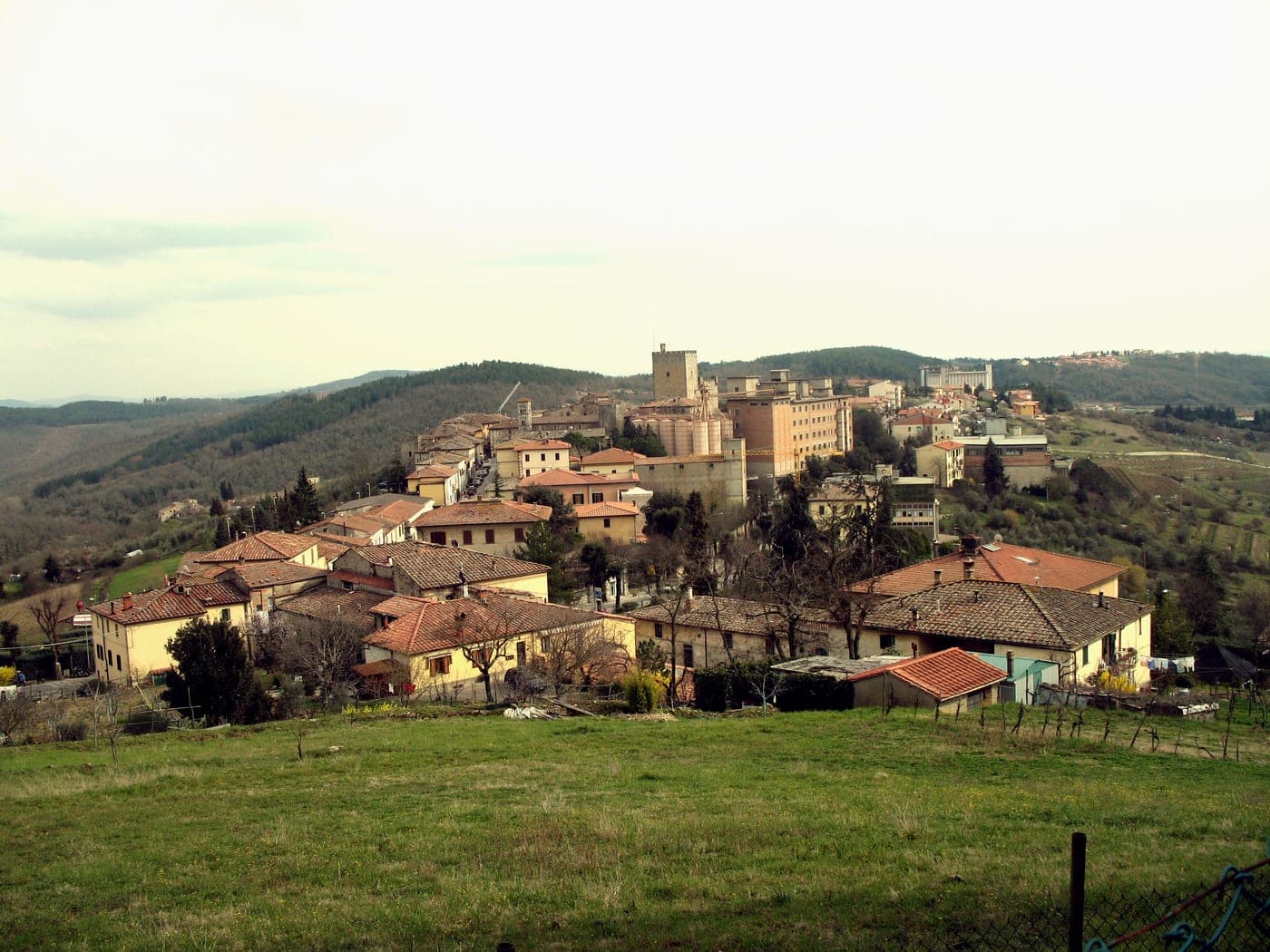
Castellina in Chianti
Historic Chianti Classico village with Etruscan heritage and prestigious wineries.
Wine TastingCastlesAgritourismHiking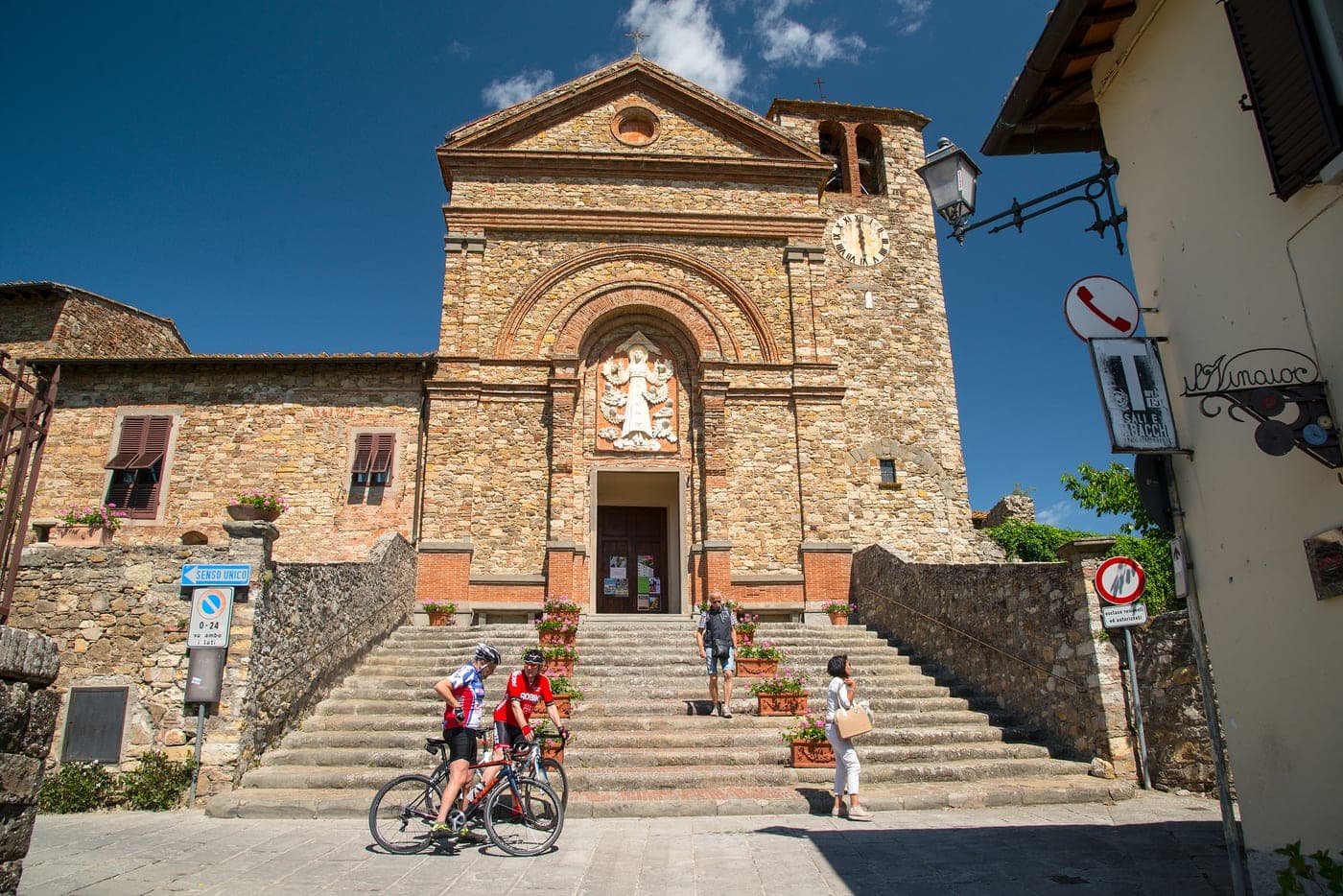 Wine Tasting
Greve in Chianti
Capital of Chianti Classico wine region with market square and numerous wine cellars.
Wine TastingHiking
1 region
 Wine Tasting38 destinations
Tuscany
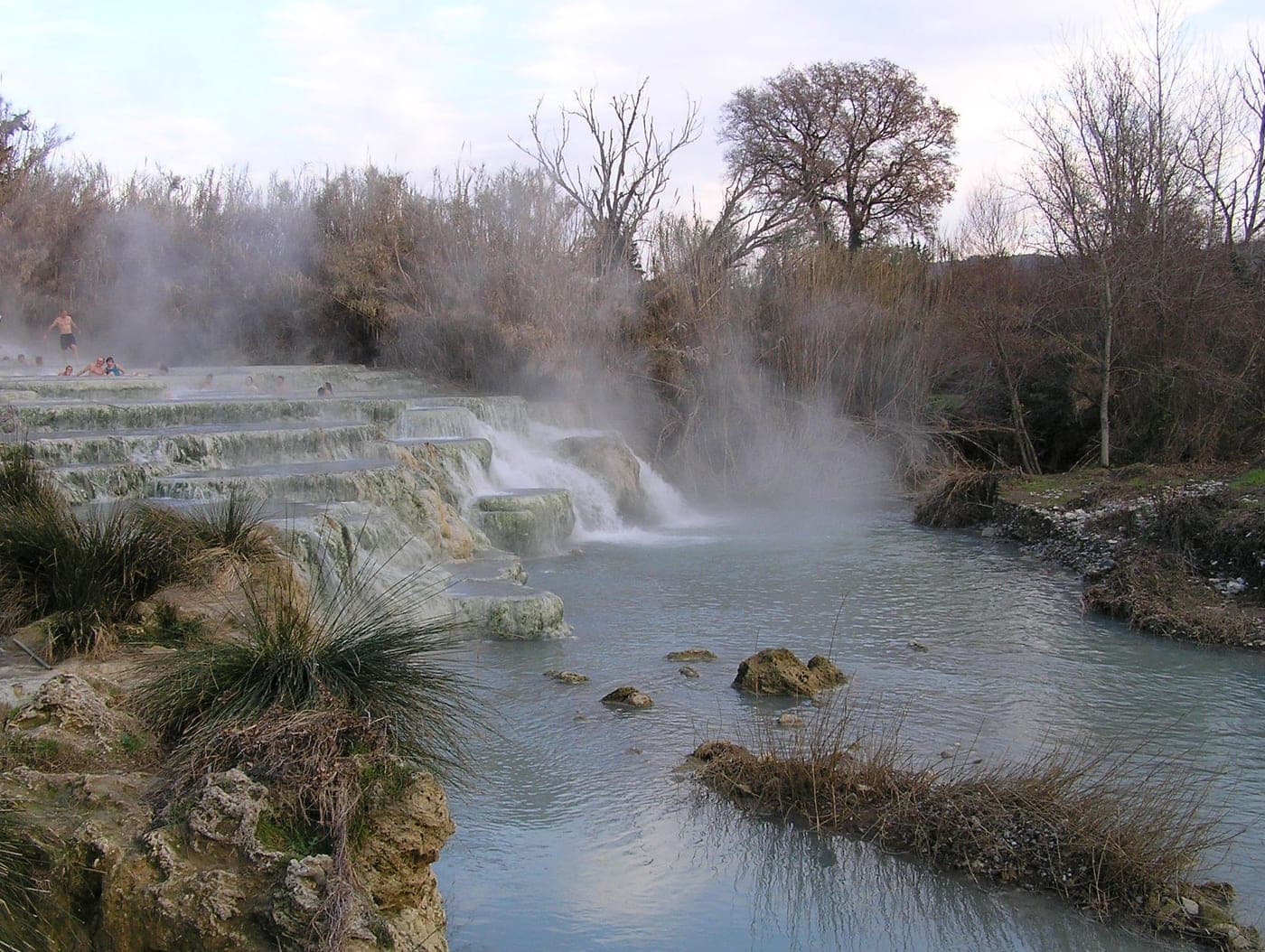
Tuscany, known for its rolling hills and rich history, is the second-largest region in Italy. Florence, its capital, is renowned for Renaissance art and architecture, but also worth exploring are smaller towns like Pienza, famous for pecorino cheese, and San Gimignano, known for its medieval towers. The region boasts diverse landscapes from the Chianti vineyards to the coastal Maremma. Tuscany is also celebrated for its local festivals, such as the Palio di Siena, and its traditional cuisine that emphasizes fresh, local ingredients. This area offers a glimpse into Italy's agrarian past with its rustic farms and olive groves, making it a unique place to slow down and connect with the local culture.
Wine TastingThermal SpasHikingAgritourism





