Fichi secchi di Cosenza
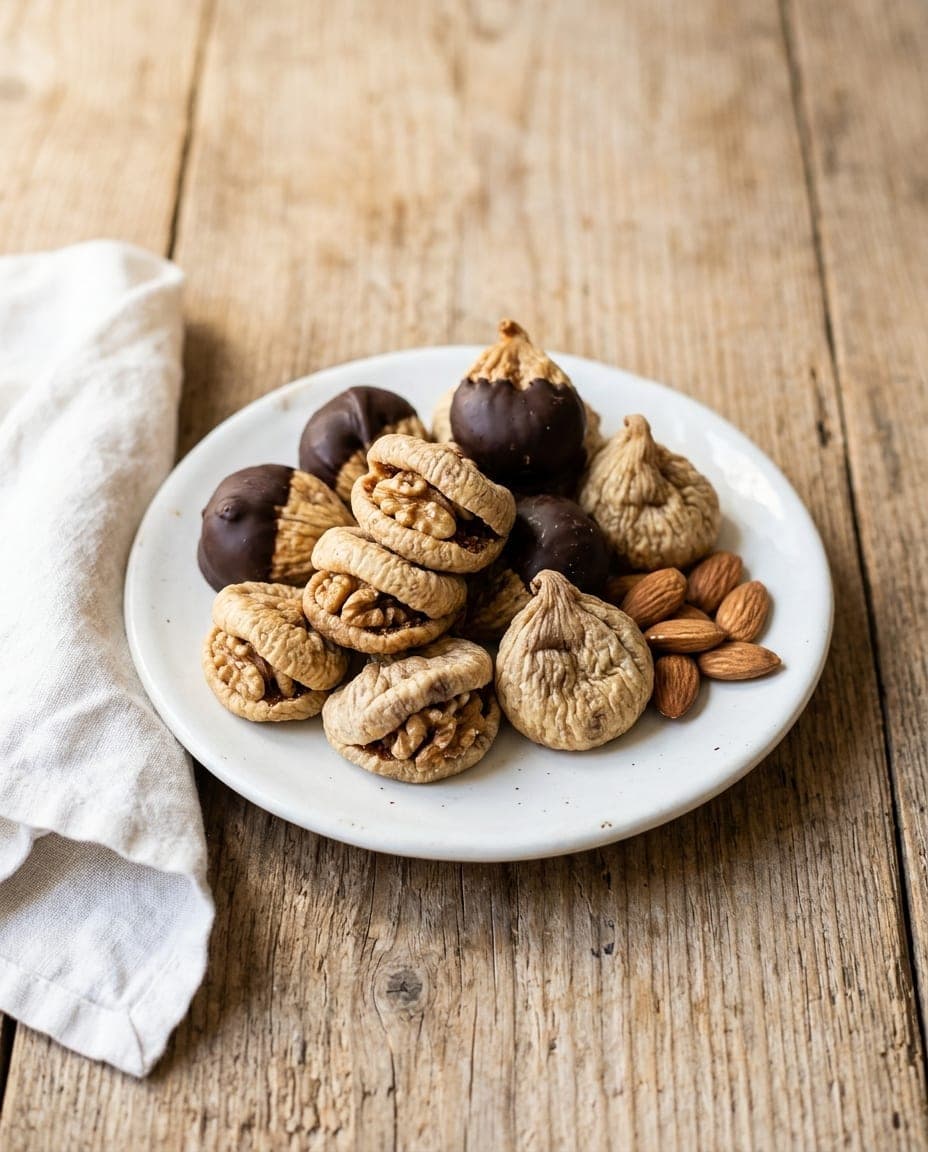
Dried Cosenza figs shaped into crosses, often stuffed with nuts
- Vegetarian
- Local name
- Fichi di Cosenza DOP
- Served with
- Walnuts, almonds
- Best eaten at
- A Calabrian Christmas table
- Pairs with
- Calabrian passito
What they are
Fichi secchi di Cosenza are dried white figs from the province of Cosenza in Calabria, a regional speciality that turns a humble fruit into a lasting sweet. Protected since 2011 as the DOP Fichi di Cosenza, they come from the Dottato variety, grown mainly in the Crati valley and the surrounding hills, where the figs ripen fully on the tree before they are picked. The fruit is then laid out on racks or mats to dry under the late-summer sun. This concentrates its sugar until the flesh becomes sticky, honeyed and chewy, transforming a soft summer fruit into a durable winter treat.
The true art of these figs lies in what happens after drying. The dried fruit is pressed and shaped by hand into traditional forms that have been made for generations. The best known are the crocette, small crosses made by joining four figs together and stuffing them with walnuts or almonds, sometimes with a strip of citrus peel. Others become trecce (plaits), nocchette, coroncine or the round palloni alla cosentina. Some versions are baked briefly, and some are coated in dark chocolate for a glossy finish. Well kept, dried figs last for months, which made them a vital winter staple for a region where resources were often scarce.
The shape of the harvest
The way these figs are formed tells a story about the local landscape and the patience required to make them. Drying racks are a familiar sight in the Cosenza countryside in late summer, set out in rows where the sun is strong. The Dottato fig is prized for its sweet flesh and its suitability for drying. Once the fruit has lost most of its moisture, the hands of the maker take over.
The crocette are perhaps the most distinctive shape. Four dried figs are pressed together to form a cross, a form that echoes the religious traditions of the region. Inside, a walnut, an almond or a piece of citrus peel adds texture and contrast to the sticky flesh. Other shapes include plaits and strings of figs tied with natural fibre, or round palloni. These forms were not just for show; they made the fruit easier to store and transport. A string could be hung in a dry room, while the crocette were kept in boxes lined with paper to prevent sticking. The process required no machinery, only the sun, the racks and skilled hands.
How they are eaten
Fichi secchi di Cosenza are traditionally served at a Calabrian Christmas table, where they take their place alongside other festive sweets, though they are sold and eaten through much of the year. At Christmas they are part of a larger spread, often accompanied by walnuts or almonds, which provide a crunchy counterpoint to the soft, sticky fruit. A glass of Calabrian passito, a sweet wine made from dried grapes, such as Moscato di Saracena from the same province, is a classic companion. Its sweetness matches the honeyed intensity of the figs.
In many households, the figs are arranged on a platter in the centre of the table, ready to be shared. Some families still make their own crocette at home, pressing the dried figs together and filling them with nuts before serving. Others buy them from local markets or producers who have kept the tradition alive. The pairing is simple but deliberate: the wine and the nuts keep the richness of the figs in balance.
Curious facts
- A winter staple. Dried figs were an important food for poor families in Calabria, lasting through the cold months when fresh fruit was unavailable.
- The cross shape. The crocette form is a visual link to local religious customs, with four figs arranged to resemble a small cross.
- Sweetness from the sun. In the plain dried figs, the sweetness comes from the fruit itself, concentrated by drying.
- Protected name. Fichi di Cosenza was registered as an EU Protected Designation of Origin in 2011, covering the white Dottato figs of the province.
- The nut inside. Many crocette contain a walnut or almond, sometimes with a strip of citrus peel, adding texture and a subtle aromatic note.
Where to try them
Local markets in Cosenza and the surrounding towns display baskets and boxes of these dried figs in autumn and winter, and the coastal town of Amantea is known for its fig producers. During the Christmas season they appear on the tables of traditional restaurants and family homes across Calabria, usually served with nuts and a glass of passito.
Where to try it
1 destination
 Wine Tasting
Altomonte
Medieval hilltop town in Calabria with local wine production and historic center.
Wine Tasting





