Erbazzone
A savoury flat pie of greens, lard pastry and Parmigiano from Reggio Emilia
- Local name
- Erbazzone
- Served with
- Sliced, with salumi
- Best eaten at
- A Reggio Emilia bakery (forno)
- Pairs with
- Lambrusco
What it is
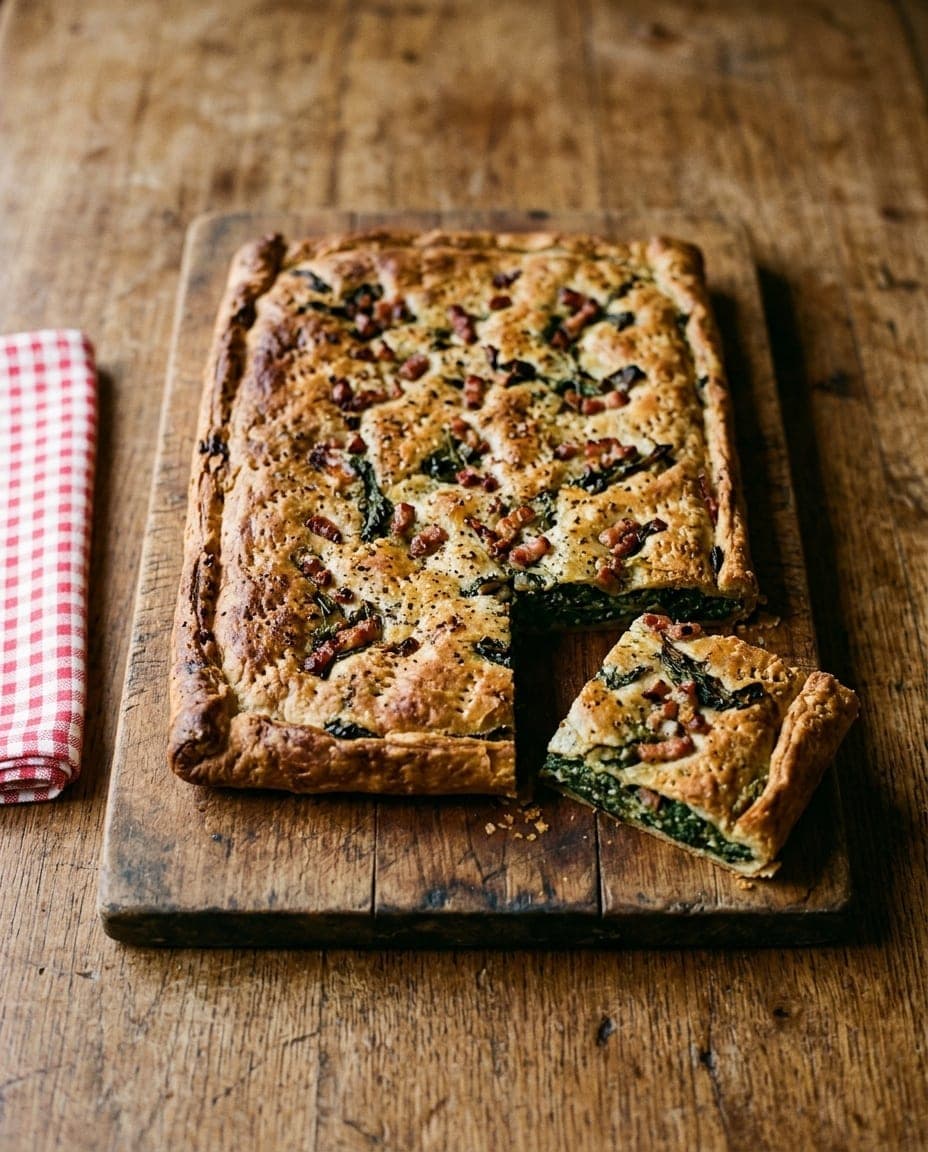
Erbazzone is a savoury flat pie from Reggio Emilia and its province in the Emilia-Romagna region of northern Italy. The name derives from erba, meaning grass or greens, pointing directly to the main filling: chard or spinach. It is not a festive cake for holidays but a staple of everyday life, designed to feed workers and families with simple, hearty ingredients.
The pie consists of two thin layers of pastry made with flour, water, salt and lard, enclosing a generous filling of cooked greens mixed with onion, often garlic, lardo or pancetta and a heavy hand of Parmigiano Reggiano. The top crust is pricked with a fork to allow steam to escape and is traditionally scattered with small pieces of lard before baking. This encourages the pastry to brown deeply and blister into a crisp, golden surface that contrasts with the soft, moist filling inside.
The pastry is short and crumbly rather than flaky, holding its shape even when the filling is moist. Erbazzone is baked in large trays, cut into squares or rectangles and sold by the piece or by weight from bakery counters across the city. It sits comfortably alongside gnocco fritto, another regional speciality built on a lard-enriched dough, though the methods of cooking differ.
The history of greens and lard
The roots of erbazzone lie in the peasant life of the Reggio countryside, and its origins are often traced back to medieval times. It was a practical way to use the abundant chard grown in kitchen gardens from early summer into autumn. The pastry turned the humble greens into a portable meal that could be carried to the fields.
The oldest form is often called scarpazzone (scarpasòun in dialect), made with both the leaves and the ribs of chard; the ribs, known as "shoes", are said to give it the name. The name erbazzone spread as cooks began to use spinach and other greens instead. The use of lard in the pastry and on top reflects a cuisine built on the pig, while Parmigiano Reggiano turns the greens into a deeply savoury dish that needs no garnish.
The dish remains a symbol of local identity. In 2026 Erbazzone Reggiano was registered as a Protected Geographical Indication (IGP), covering production across the whole province of Reggio Emilia.
What goes into it
The components of erbazzone are straightforward, relying on the quality of just a few ingredients:
- Chard or spinach, the leafy green base that gives the pie its name and bulk.
- Lard pastry, made with flour, water, salt and lard, creating a short, crumbly texture without egg.
- Parmigiano Reggiano, used in large quantities to season the filling and provide a salty depth.
- Lardo or pancetta, adding a savoury note that complements the greens.
- Onion, often with garlic and parsley, sautéed to form the aromatic base of the filling.
In the Apennine villages south of Reggio Emilia, the traditional version also includes rice cooked in milk, which absorbs the moisture from the greens and gives the filling body. This variation is cherished in the mountains but is not part of the IGP specification. Either way, the result is a dense, flavourful square that can be eaten warm or cold.
How it is eaten
Erbazzone is versatile enough to serve as a snack, a starter or part of a picnic. It is traditionally cut into squares and served at room temperature or slightly warmed. In Reggio Emilia, it is sold from the counter of the forno, the traditional bakery, to take home or eat on the spot, and locals happily eat it at any time of day, even at breakfast.
It is often eaten alongside cured meats (salumi) from the same region. A glass of Lambrusco, the slightly sparkling red wine of the area, is the traditional companion; its effervescence cuts through the richness of the dish and refreshes the palate between bites.
It keeps well for a day or two, making it a practical choice for travel or long walks. The square shape makes it easy to hold, and the sturdy pastry prevents the filling from leaking.
Curious facts
- The name means greens. Erbazzone comes from erba, highlighting the vegetable focus of the dish rather than the meat or cheese.
- Lard is essential. The pastry relies on pork lard for its texture; substituting butter or oil changes the character completely.
- Sold by the piece. Unlike many pies sold whole, erbazzone is typically cut at the bakery counter before purchase.
- A mountain variation. In the Apennines around Reggio Emilia, rice cooked in milk goes into the filling.
- A recent IGP. Erbazzone Reggiano became a Protected Geographical Indication in 2026.
Where to try it
The best place to find an authentic erbazzone is a traditional bakery (forno) in Reggio Emilia itself or in the towns and villages of its province, from the plain up into the Apennines, where the rice-filled mountain version can still be found.
Where to try it
1 destination
 Wine Tasting
Quattro Castella
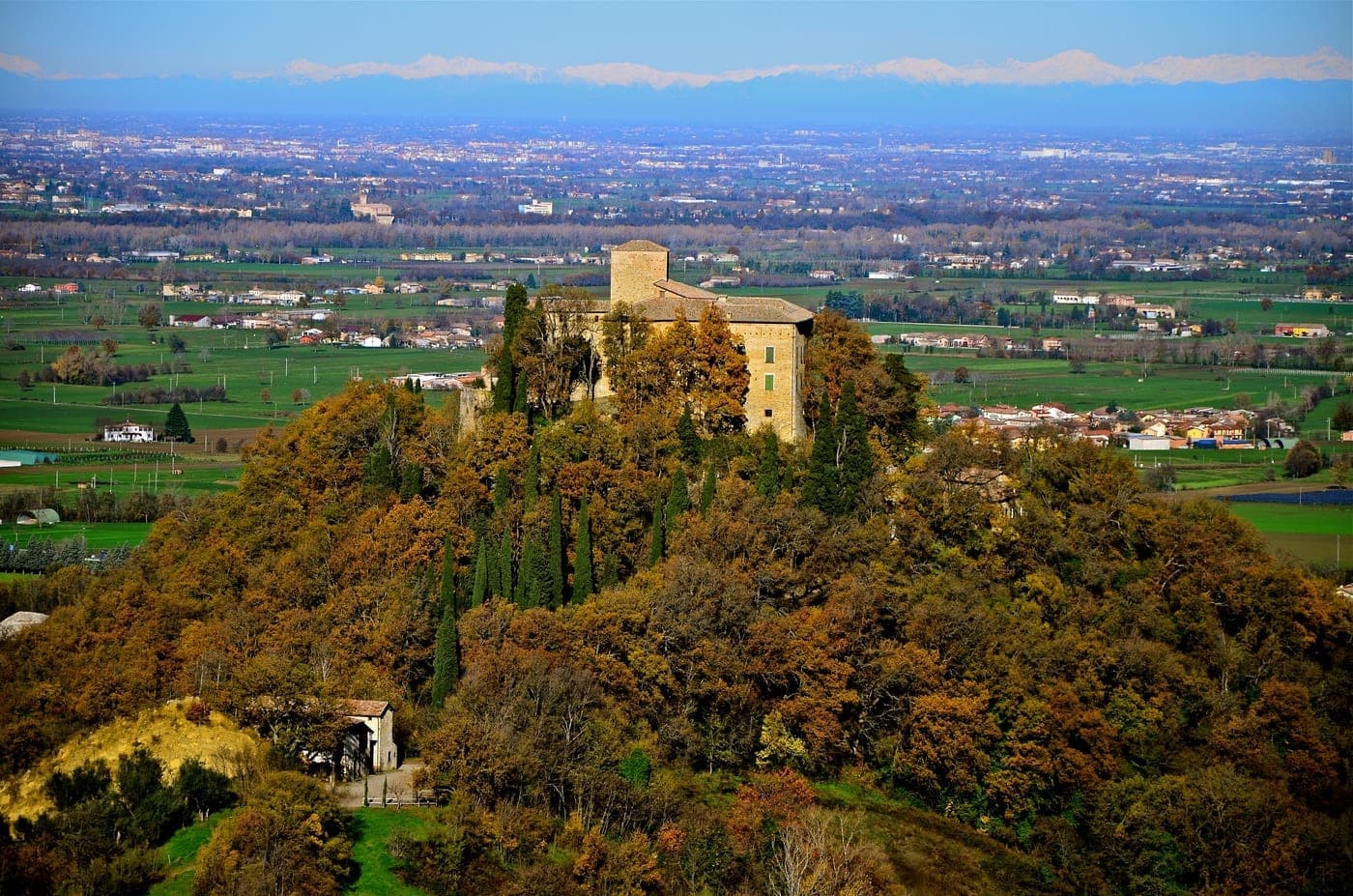
Town near Reggio Emilia with Lambrusco wine production and historic castles.
Wine TastingHiking





