Culatello di Zibello
Prized cured pork rump aged in the damp fogs of the Po lowlands
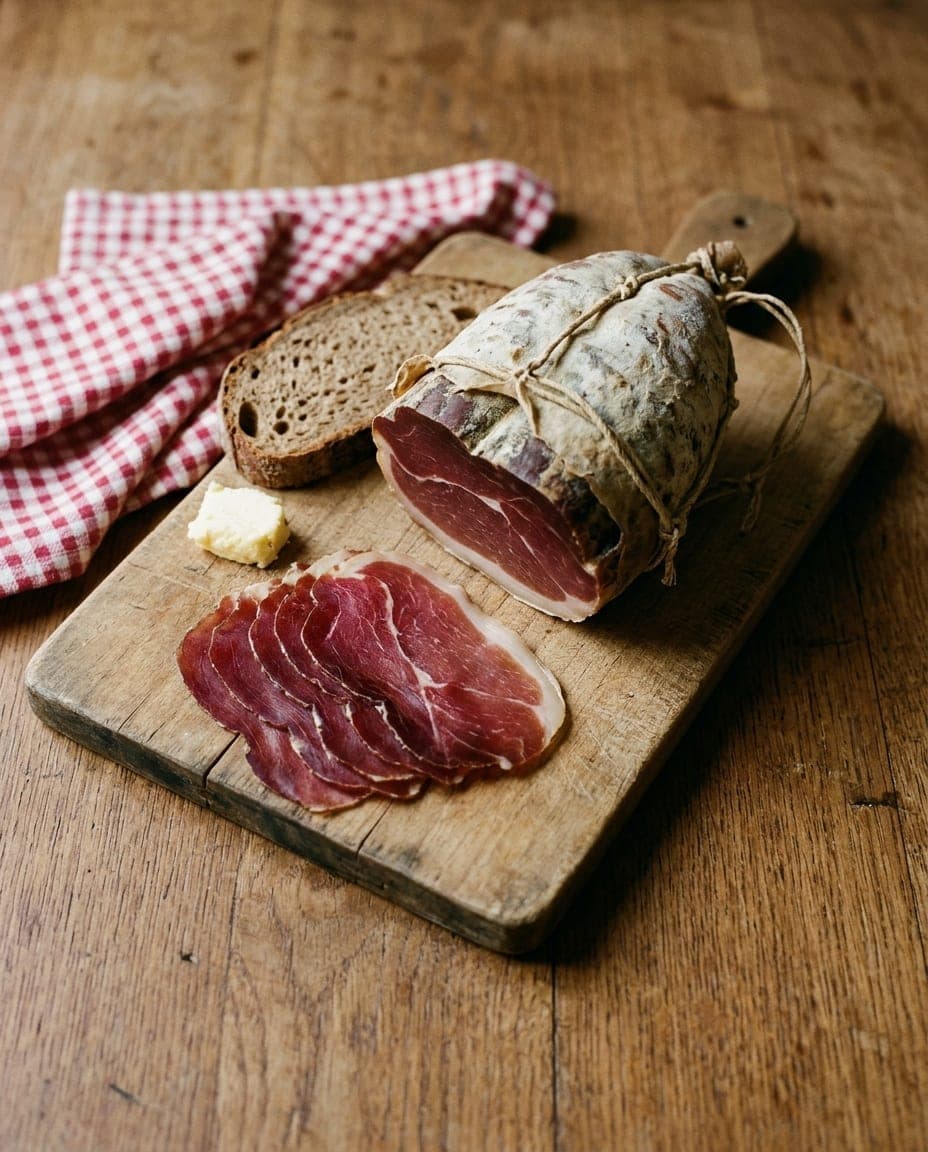
- Local name
- Culatello di Zibello
- Served with
- Bread, butter, torta fritta
- Best eaten at
- A Bassa Parmense trattoria
- Pairs with
- Fortana or Lambrusco
What it is
Culatello di Zibello is widely regarded as one of the most prized cured meats in Italy. It is not a ham made from the whole leg, but from the choicest muscles at the heart of the pig's hind thigh. This part is removed, skinned, boned and trimmed by hand before being salted, stuffed into a pig's bladder, tied with string into a distinct pear shape, and hung to mature. The result is a deep red, sweet slice of meat that melts on the tongue, requiring no cooking at all.
The distinction between this cut and the more famous Parma ham (prosciutto di Parma) lies partly in its environment. While Parma ham is cured in the drier hills south of the city, culatello is made down on the plain, where it demands moisture. It matures in cellars where the damp fogs of the Po River roll in from the water nearby. This humidity is not a problem to be solved but the very engine of the process, allowing the meat to develop its unique texture over many months.
The story of the foggy cellars
The production of this meat is tied to a specific geography known as the Bassa Parmense, a low-lying plain along the Po River in the province of Parma. Here, the climate creates a natural humidity that is difficult to replicate elsewhere. Culatello is made only from October to February, in the cold, foggy months, and is then aged in cellars that traditionally relied on the natural flow of air and the seasonal fog.
The protected product must mature for at least ten months from salting, and many producers allow it to age much longer, often well over a year. During this time, the meat slowly loses weight and concentrates its flavour, developing a texture that is soft and buttery in its finest examples.
This method requires a level of patience that industrial methods cannot match. It is a practice that has been passed down through generations in this stretch of the river valley, where the microclimate is considered essential to the final product.
What goes into it
The ingredients for culatello di Zibello are kept deliberately simple to let the quality of the meat and the environment speak for themselves. The meat comes from heavy adult pigs, and the cut is chosen for its tenderness and fine marbling, which are crucial for the final texture.
The trimmed meat is seasoned with salt, black pepper and garlic, and the specification also allows a little dry white wine. It is then placed inside a pig's bladder, which acts as a protective casing, and bound with string in a loose, irregular net to create the characteristic pear shape.
Before serving, the casing is removed and the culatello is cleaned. The meat is sliced into thin, translucent pieces that reveal a marbled interior. The fat is white and creamy, softening instantly in the warmth of the mouth. This simplicity keeps the taste focused on the natural sweetness of the pork and the influence of the river fog.
How it is eaten
Culatello di Zibello is best enjoyed as a starter or part of an antipasto plate, served at room temperature to allow the fat to soften fully. It is sliced very thinly and often accompanied by simple bread, which provides a neutral base for the intense flavour of the cured meat.
A little butter is frequently served alongside the bread, a local habit that softens the saltiness of the meat. In some traditional settings, culatello is also paired with torta fritta, a fried dough from the region that offers a contrasting texture and mild flavour.
The pairing extends to the drink as well. The sweetness and richness of the culatello find a natural match in local red wines, particularly Fortana or Lambrusco. These wines offer enough acidity and fruitiness to cut through the fat without overpowering the delicate taste of the meat.
Curious facts
- A protected name. Culatello di Zibello has been a Protected Designation of Origin (PDO) since 1996, limited to eight historic communes along the Po: Busseto, Polesine Parmense, Zibello, Soragna, Roccabianca, San Secondo, Sissa and Colorno.
- The fog is essential. Unlike cured meats that require dry air, culatello needs the humidity of the river plain to mature correctly without drying out or cracking.
- A winter product. Culatello may only be made between October and February.
- The best of the leg. The product comes exclusively from the heart of the hind thigh, so each leg yields only one culatello; the remaining muscles are used for other salumi.
- A Slow Food Presidium. Traditionally made culatello from the area is protected as a Slow Food Presidium.
Where to try it
The most authentic experience of culatello di Zibello is found in a traditional trattoria in the Bassa Parmense, around Zibello, Polesine and Busseto. These establishments often source their meat directly from local producers, so the product has matured in the right conditions. While culatello is available in speciality shops and restaurants across Emilia-Romagna, a local trattoria offers the truest context for it.
The area is within easy reach of the thermal town of Salsomaggiore Terme and of Busseto, the town of Giuseppe Verdi, and suits an unhurried food-focused trip. A plate of culatello di Zibello, paired with local bread and a glass of Fortana, remains one of the most memorable culinary encounters in the area.
Where to try it
1 destination
 Wine Tasting
Salsomaggiore Terme
Art Nouveau spa town famous for thermal baths and wellness.
Wine TastingHiking





