Coppa piacentina
Coppa piacentina, the spiced cured pork neck from Piacenza's cellars
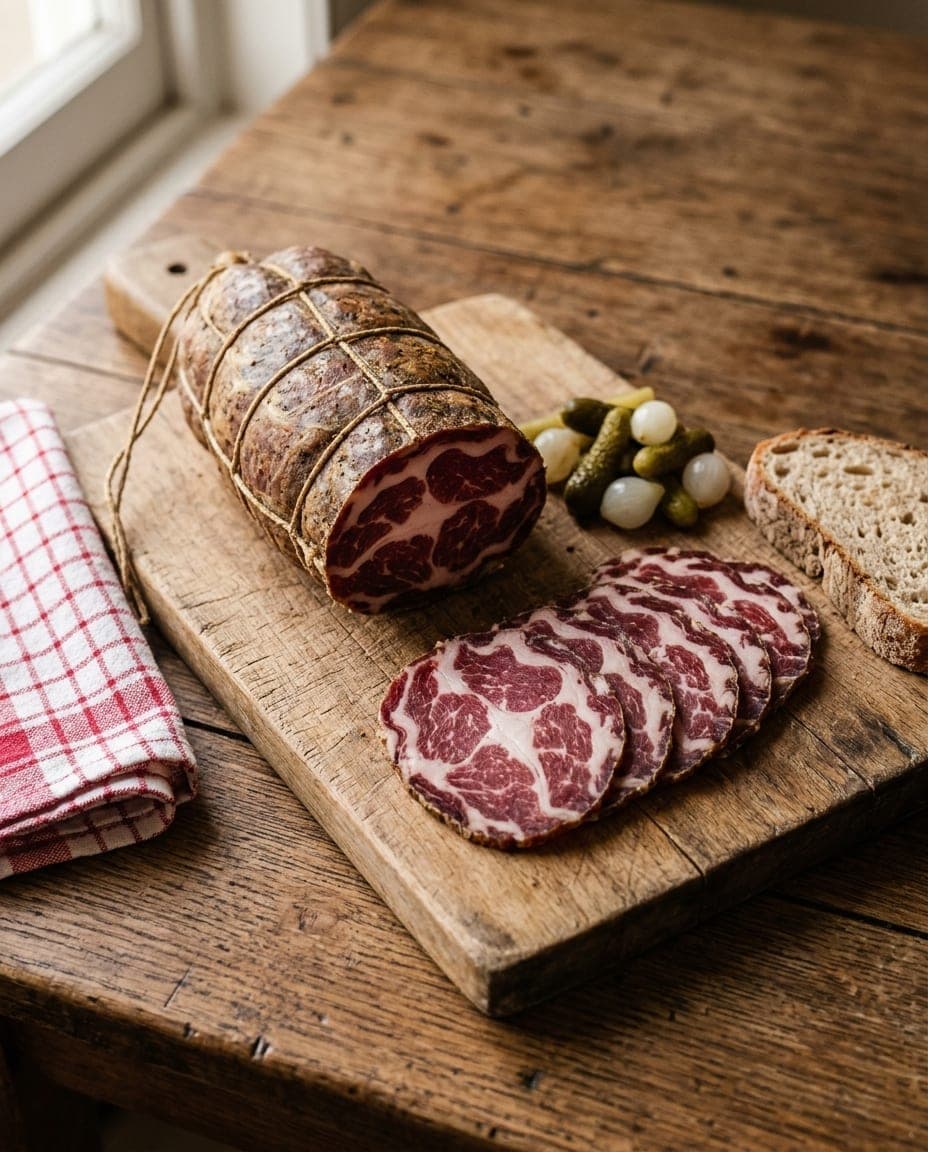
- Local name
- Coppa piacentina
- Served with
- Bread, pickled vegetables
- Best eaten at
- A Piacenza osteria
- Pairs with
- Gutturnio
The spiced heart of Piacenza
Coppa piacentina is a cured pork neck from the province of Piacenza in the Emilia-Romagna region of northern Italy. It has held a protected designation of origin, known as DOP, since 1996, which guarantees that the meat comes from heavy pigs born and raised in Emilia-Romagna or Lombardy and is processed in the province according to strict traditional rules. It is one of three DOP salumi that define the local palate, alongside pancetta piacentina and salame piacentino, forming what locals call the trinity of Piacenza.
The cut itself comes from the neck muscle of the pig. Unlike many cured meats where the fat sits around the outside, the coppa piacentina is prized for its natural marbling. The fat runs through the muscle fibres in a fine network, creating a soft texture that melts on the tongue. When sliced thinly, the meat reveals a mosaic of deep pink flesh and creamy white fat. The flavour is rich but not heavy, defined by a gentle warmth from the spices used during curing rather than a sharp saltiness.
How it is made
The process begins with the whole neck muscle, which must be free of bone and skin. It is dry-salted with a mixture of salt, black or white pepper and a measured blend of spices that may include cinnamon, cloves, bay leaf and nutmeg. This spice rub is what gives the coppa its character, distinguishing it from other Italian coppa varieties.
After salting, the meat rests in cold rooms for at least a week to draw out moisture. It is then wrapped in a natural pork casing, traditionally the parietal membrane of the pig, and tied tightly with string at regular intervals to give its characteristic cylindrical shape. The final step is hanging the coppa in cool, humid cellars for a minimum of six months from salting. This slow maturation allows the spices to penetrate the meat and the fat to soften without drying out completely. Production is limited to areas of the province below 900 metres, where the climate keeps the air damp enough to prevent the meat from cracking while allowing it to develop its complex flavour.
The local trinity
Piacenza is unusual in Italy for the way it treats its cured meats. Rather than one famous product, the province holds three DOP salumi of equal status: coppa, pancetta and salame. These are not just separate items on a menu; they are considered partners that define the local food culture, and they are often made side by side by the same producers.
This trinity is central to the identity of the province. The DOP rules cover every element, from the origin of the pigs to the method of curing. The result is a set of meats that are distinct yet harmonious, each offering a different texture and taste while sharing the same regional soul.
How it is eaten
Coppa piacentina is almost always served raw, sliced thin to appreciate its soft texture and marbling. The traditional way to enjoy it is with a slice of local bread, often a rustic loaf that can hold up to the fat of the cured meat.
A common accompaniment is fried dough, the pillowy pastry known around Emilia as gnocco fritto or torta fritta, which acts as a neutral base for the spicy, fatty meat. The cured meat is also frequently paired with pickled vegetables, which provide a sharp, acidic contrast to the fat of the pork.
The drink that completes the experience is Gutturnio, a red wine from the Colli Piacentini made from Barbera and Croatina, the latter known locally as Bonarda. This wine has enough body to stand up to the spices in the coppa without overwhelming them, and the pairing is a fixture of Piacenza osterias, where the atmosphere is relaxed and the focus is on simple, high-quality ingredients.
Where the tradition lives
The best place to taste authentic coppa piacentina is in the province of Piacenza itself, particularly in the small towns and hill villages around the city. Alseno and its hamlet of Castelnuovo Fogliani are among the places linked to the local salumi trade. In the osterias of these villages, the meat is often sliced fresh to order.
The province is also home to many cellars and producers who follow the DOP rules. The combination of the Po plain and the Apennine foothills provides the conditions for this production, with cool air and steady humidity allowing the meat to mature slowly over many months.
Curious facts
- A spiced cure. Cinnamon, cloves, bay and nutmeg are all permitted in the cure, giving the coppa a warmth unusual among Italian cured meats.
- The six-month minimum. The DOP rules require a maturation period of at least six months from salting, though many producers allow the meat to age longer for a deeper flavour.
- A shared trinity. Piacenza holds three DOP cured meats, coppa, pancetta and salame, all protected since 1996.
- Soft texture. The marbling of the fat through the muscle creates a soft, almost buttery texture when sliced thinly, unlike the firmer texture of many other Italian cured meats.
- Local pairing. Gutturnio, made in the hills of the same province, is the traditional wine for this meat.
Where to try it
2 destinations

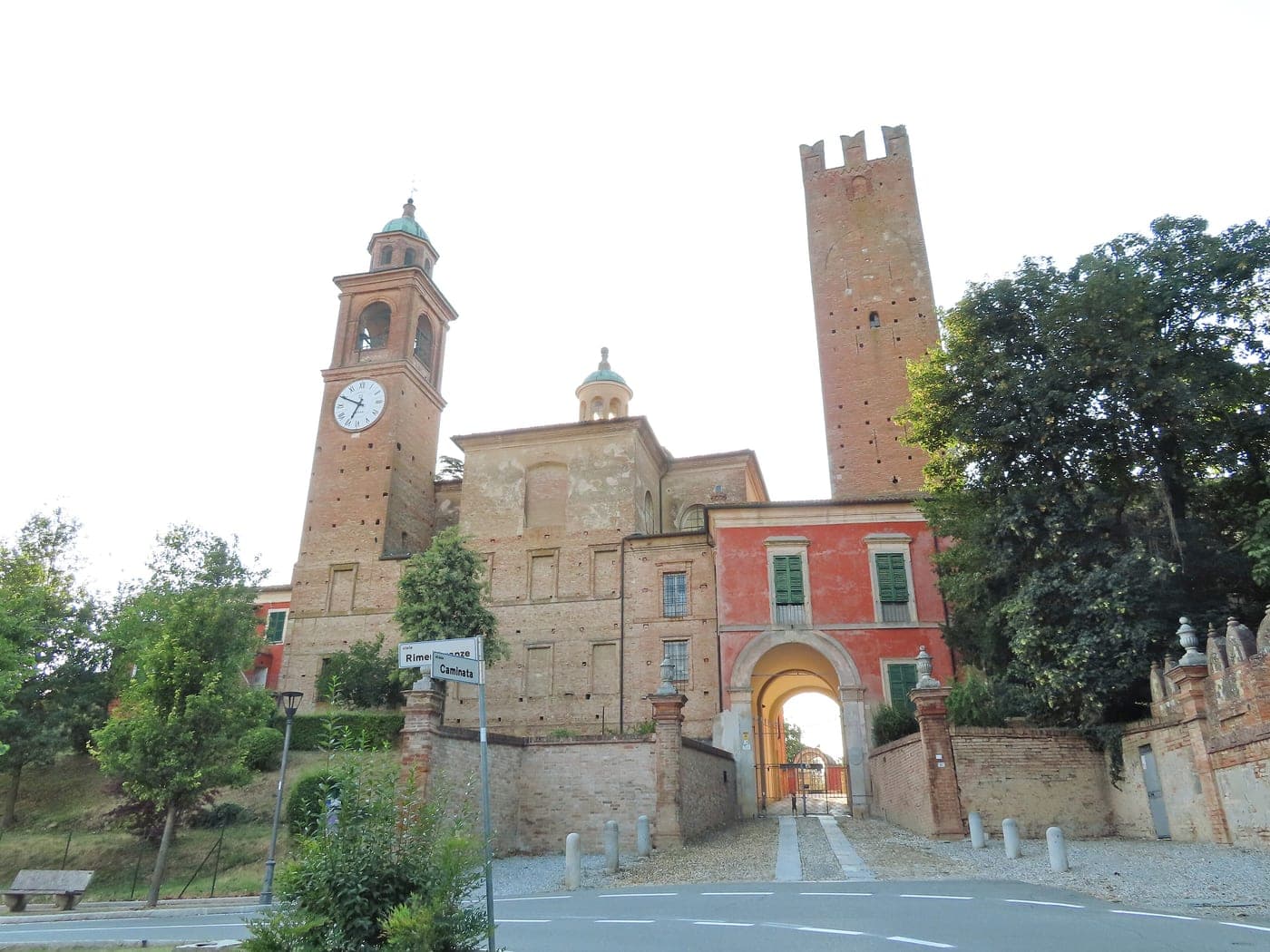 Agritourism
Castelnuovo Fogliani
Po Valley countryside with agriturismo farms producing Grana Padano cheese and cured meats.
Agritourism
1 region
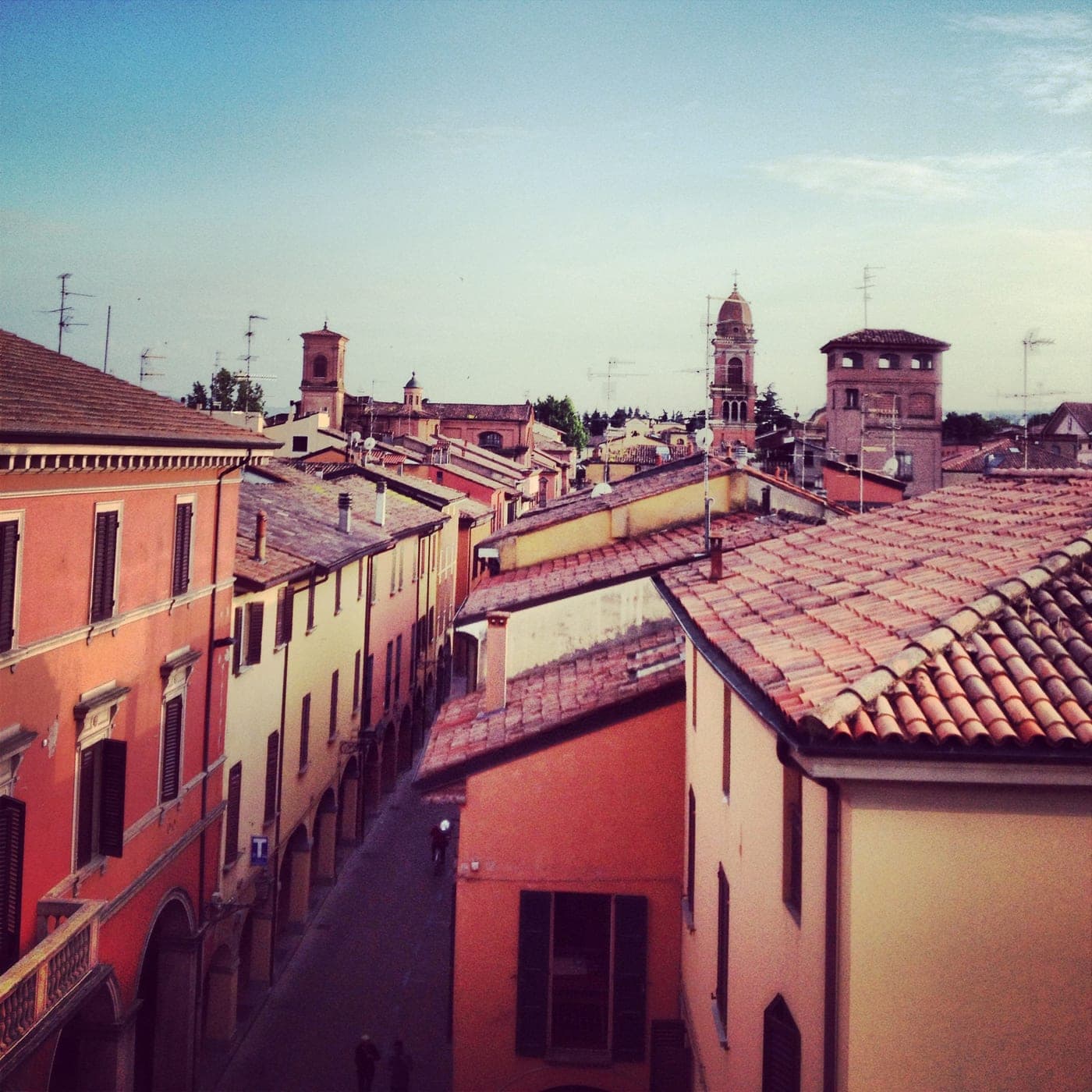 Wine Tasting9 destinations
Emilia-Romagna
This region in Italy is renowned for its diverse landscapes, ranging from the Apennine Mountains to the Adriatic coastline. It is the only Italian region with a significant stretch of coastline, featuring vibrant seaside towns like Rimini. Bologna, the capital, is famous for its medieval architecture and culinary heritage, being the birthplace of tagliatelle al ragù. The region is also known for its rich history, with towns like Modena showcasing UNESCO-listed sites such as its cathedral and the renowned balsamic vinegar. Slow travelers can explore hidden gems like the medieval village of Dozza, known for its painted walls, or the thermal baths in Salsomaggiore Terme. Emilia-Romagna is the largest region in northern Italy, offering a blend of art, culture, and gastronomy that invites deeper exploration.
Wine TastingHikingCamper Van RentalsLocal Cuisine





