Ciauscolo
Soft, spreadable pork salami from the Marche hills
- Local name
- Ciauscolo
- Served with
- Bread
- Best eaten at
- A Marche osteria
- Pairs with
- Rosso Piceno
What it is
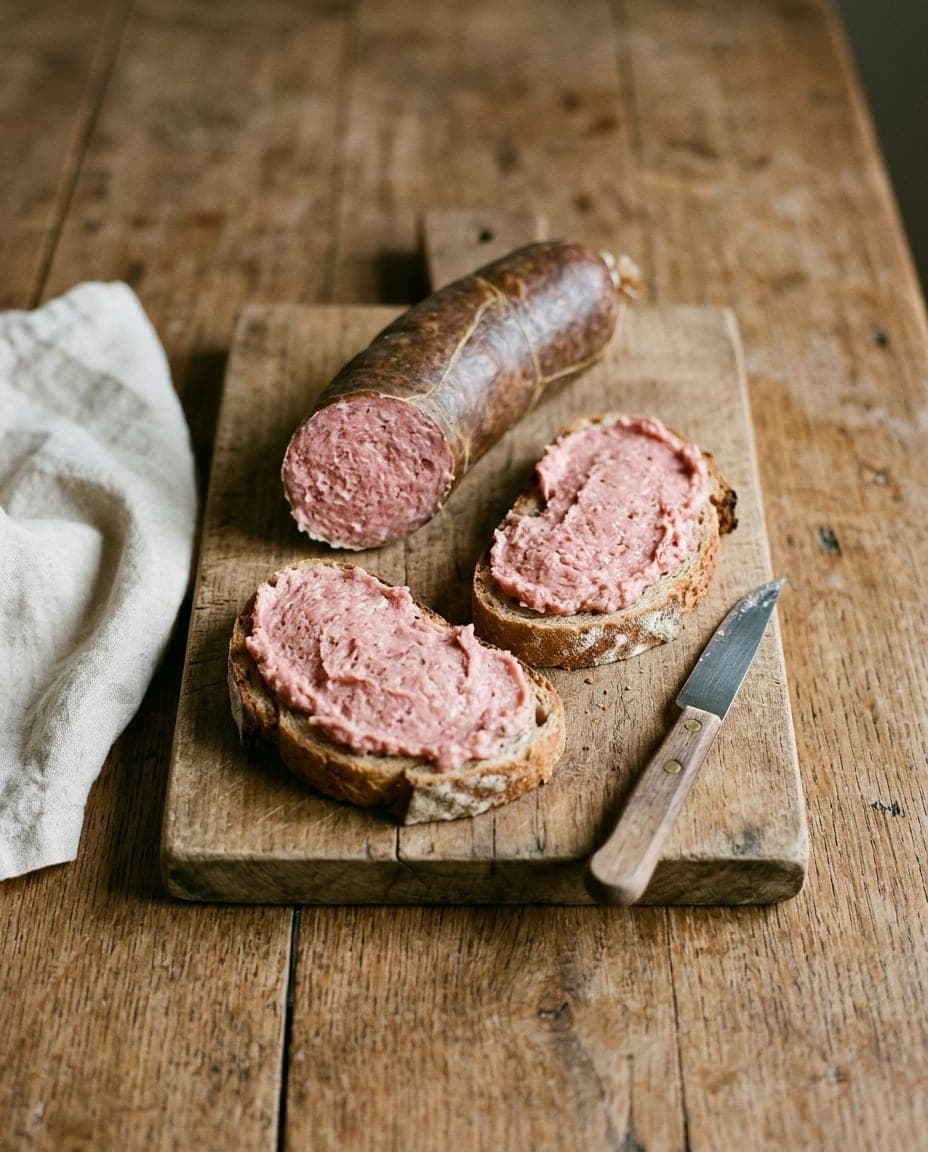
Ciauscolo is a soft, spreadable cured meat from the Italian region of Marche. Unlike most salamis that are sliced into thin rounds to accompany cheese or antipasti, this sausage is meant to be cut open and spread directly onto bread with a knife. It has a pale, creamy texture that yields easily, holding its shape only when chilled. The result is a deeply savoury paste that feels substantial on the tongue, relying on the balance of fat and spice rather than the firm bite of a dry salami.
This dish belongs firmly to the hills surrounding Macerata, Ascoli Piceno and Fermo. It is not a product found in every corner of Italy, but it is a staple in the Marche countryside. Here, it appears at aperitifs, as a quick snack from a farmhouse kitchen, or as part of a simple meal where the focus is on the quality of the meat and the bread rather than elaborate preparation.
The shape of the name
The origin of the word ciauscolo is uncertain. One suggestion traces it to the Latin cibusculum, meaning a little food or a small snack. The idea fits the dish well, as it was traditionally eaten not as a main course but as something quick, often alongside wine during the day or at the start of an evening meal.
In the local dialects of the Marche, the term refers specifically to this style of soft salami. While other parts of Italy produce cured meats that are soft or spreadable, the seasoning and the method of curing in the hill towns give the Marche version its distinct character. It was humble food for the fields and the road, easy to carry and to eat with a hunk of bread.
How it is made
The texture of ciauscolo comes from how it is prepared. It is made from fatty cuts of pork, chiefly belly and shoulder, which are ground very finely until they form a smooth paste. This fine grind is essential; without it, the meat would be too coarse to spread. The mixture is seasoned with salt, black pepper and garlic, with a splash of wine added before the meat is stuffed into natural casings.
Unlike long-aged salamis that dry for months or years, ciauscolo is often lightly smoked and matured only briefly, typically for a few weeks. This short curing time keeps the texture soft and moist. It is a fresh offering rather than a preserved staple meant to last for years on a shelf.
How it is eaten
Ciauscolo is at its best at a Marche osteria or in a rustic farmhouse setting. It is spread on bread that is sliced thick and toasted or left soft, depending on preference, but always sturdy enough to hold the spread without falling apart.
A natural pairing is a glass of Rosso Piceno, a red wine from the same region. The fruity acidity of the wine balances the richness of the salami. The meat is often served as part of an aperitivo, accompanied by other local cheeses or olives, but its primary role remains as a spread on bread.
Curious facts
- A protected status. Ciauscolo has held Protected Geographical Indication (IGP) status since 2009, so only products made to the traditional specification in the designated area can carry the name.
- The fine grind matters. The softness is not accidental; it requires a grinding technique that breaks down the fat and muscle fibres into a paste, distinguishing it from coarser regional salamis.
- A quick cure. Unlike many Italian cured meats that age for over a year, ciauscolo is ready to eat within a few weeks, making it one of the freshest options in the world of cured sausages.
- A liver cousin. A related liver sausage, sometimes called ciauscolo di fegato, swaps some of the fat for pork liver and is flavoured with wild fennel and orange zest.
- A regional identity. Similar soft salamis exist elsewhere, including across the border in Umbria, but the Marche hills are its recognised home.
Where to try it
The best place to taste ciauscolo is in the hill towns around Macerata, Ascoli Piceno or Fermo, where it appears on the menus of local osterie and delis. It turns up at farm stays, at wine bars during the evening aperitivo hour, and in the small shops that specialise in regional cured meats.
Where to try it
1 region
 Agritourism4 destinations
Marche
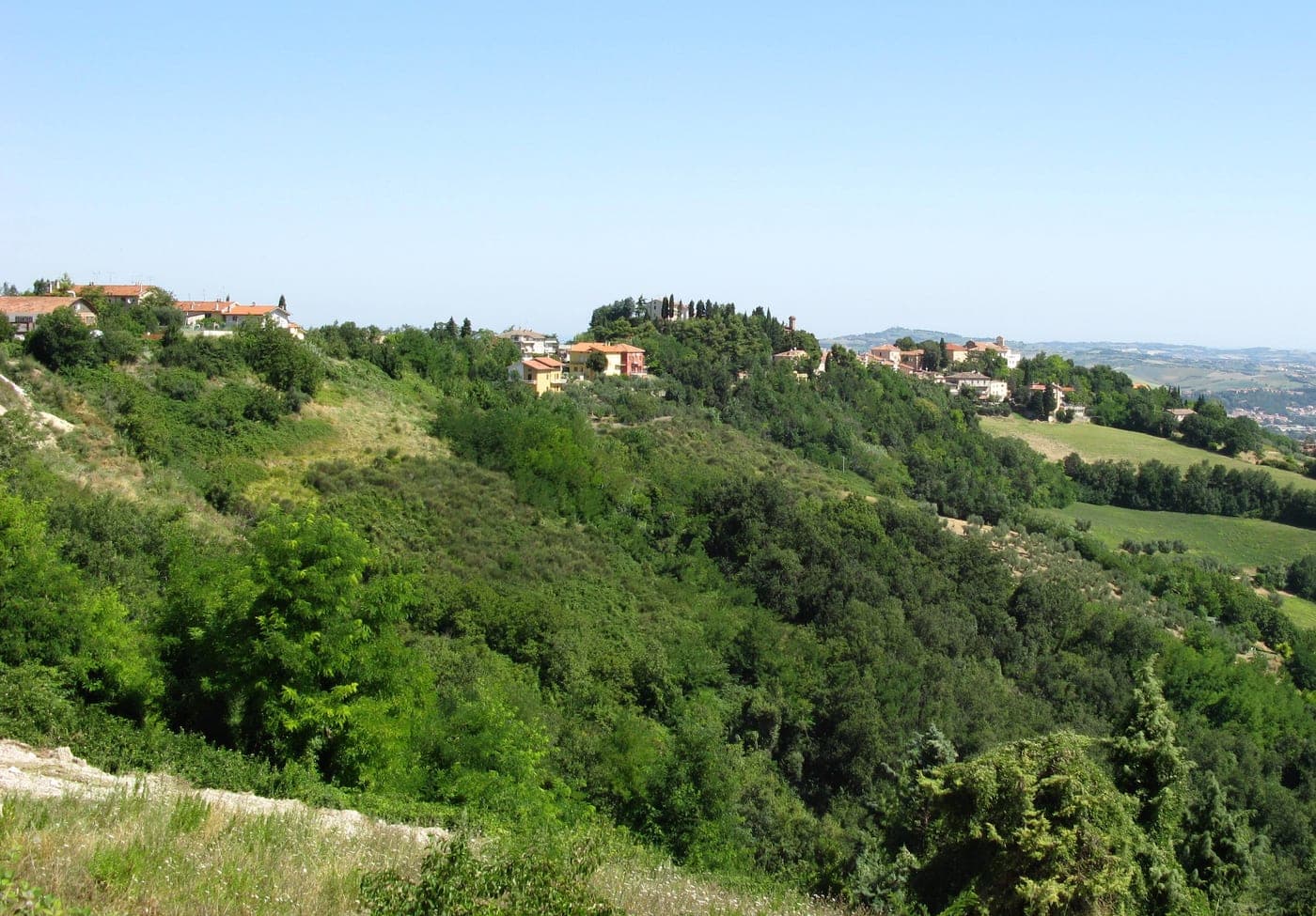
Nestled along the Adriatic Sea, this region boasts a mix of mountains and coastline, making it the only Italian region with a significant maritime presence. As Italy's fourth smallest region, it features historical towns like Urbino, known for its Renaissance heritage and UNESCO status, and Ascoli Piceno, famous for its travertine architecture. The landscape is dotted with rolling hills, vineyards, and olive groves, producing notable wines such as Verdicchio and Rosso Piceno. Culture thrives here through local festivals celebrating traditional crafts and cuisine, particularly the renowned olive all'ascolana. Rich in history, the region invites exploration beyond the typical tourist paths, showcasing authentic village life and regional gastronomy.
AgritourismWine TastingBoat RentalsHiking





