Cavatelli
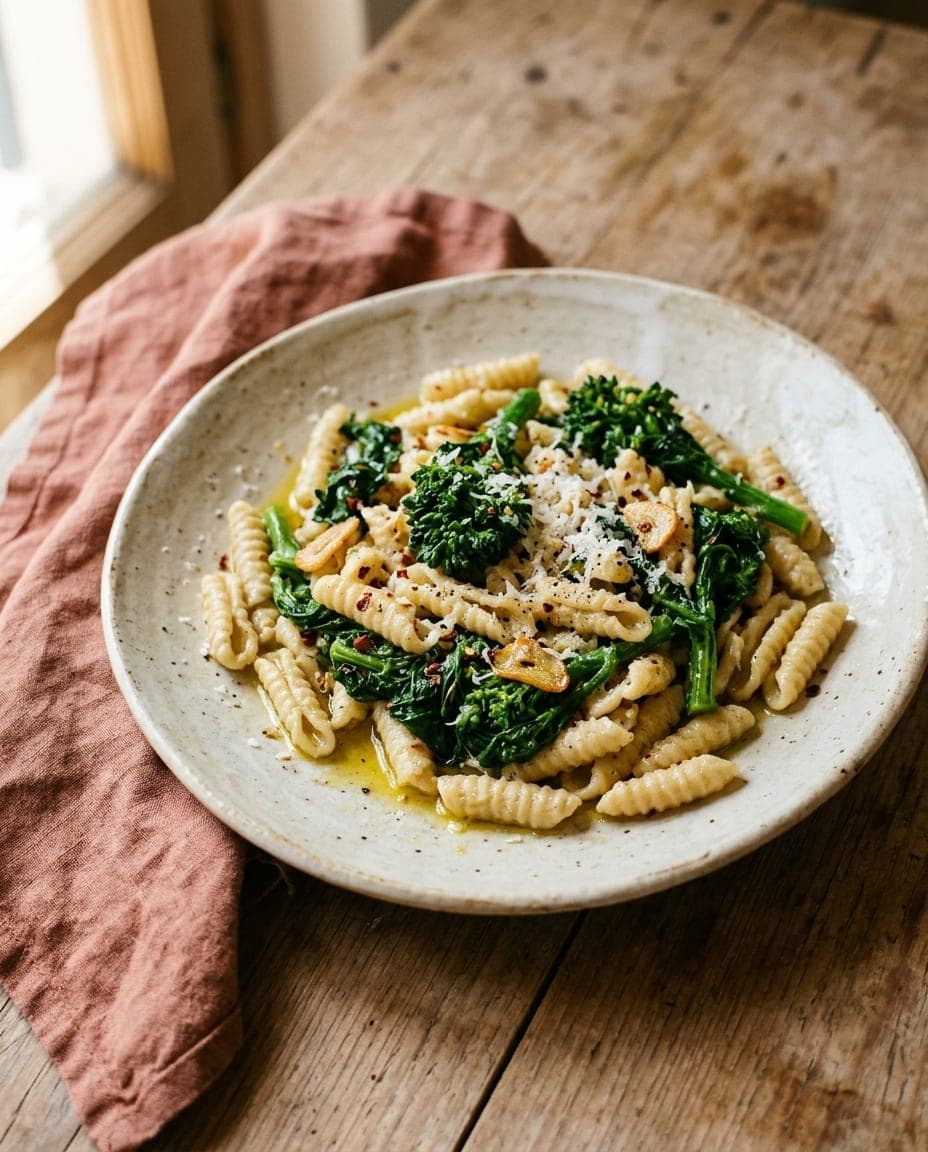
Hand-rolled semolina shells from Molise, served with pork ragù or broccoli rabe
- Local name
- Cavatelli
- Best eaten at
- A Molise trattoria
- Pairs with
- Tintilia del Molise
What it is
Cavatelli are small, hollow pasta shapes made by hand, rooted in the southern Italian regions of Molise and Puglia and found across much of the south. They are defined by their hollow centre, a shape created deliberately to catch and hold sauce. Unlike many northern Italian pastas that rely on eggs for richness, traditional cavatelli contain only durum wheat semolina, water and a pinch of salt. The result is a sturdy, pale pasta with a firm bite that stands up well to robust sauces.
The shape resembles a tiny canoe or a curled shell. Sizes vary with the village and the maker's hand: they are not uniform in the way machine-made pasta is, and slight variations in thickness and curl are expected as part of the craft. In Molise they are a pillar of the regional table, sharing their simple dough with the orecchiette of neighbouring Puglia.
The method of hollowing
The name cavatelli is linked to the Italian cavo or cavare, meaning hollow or to hollow out, which refers directly to the technique used to shape them. A rope of dough is cut into short segments, and the maker presses one, two or three fingertips into each piece and drags it across a wooden board. This single motion curls the segment into a hollow shell. The surface is traditionally smooth, though ridged versions are also made on a grooved board or by machine.
This method requires no complex machinery and no rolling pin. A wooden board and a practised hand are the only tools needed. The technique has been passed down through generations in rural households, where speed and consistency became a marker of skill. Local names and sizes vary, with dialect forms such as cavateddhi in Calabria, though the core method remains the same.
A dish of the south
While cavatelli appear on menus across southern Italy, they are especially closely tied to Molise, where the pasta is considered a regional speciality rather than a national standard and is a fixture of family Sunday lunches.
The classic Molise pairing is a rich pork ragù, slowly cooked with tomato, ribs and sausage and served on Sundays and feast days. Vegetable sauces are just as traditional across the south: broccoli rabe (cime di rapa), sautéed with garlic and chilli, is a favourite in Puglia, and simple tomato sauces are common everywhere. In coastal areas cavatelli are also served with mussels or clams, and with beans in heartier home cooking.
The dish reflects the agricultural history of the area. It relies on ingredients that were readily available to farming families: semolina for the pasta, seasonal greens and whatever meat could be kept in the larder. This simplicity allowed the dish to become a staple without requiring expensive or imported components.
How it is eaten
Cavatelli are typically served as a first course (primo piatto), though they can be substantial enough to serve as a main meal with a generous sauce. In a Molise trattoria the pasta is often made fresh the same day. The texture should remain firm to the bite rather than turning soft in the sauce.
When served with broccoli rabe, the dish is dressed simply with olive oil and garlic, allowing the bitterness of the greens to shine through. With a meat ragù, the sauce settles into the hollows, so that every bite combines pasta and sauce. A glass of Tintilia del Molise, a local red wine with dark fruit notes, complements the earthiness of the dish well.
It is not a pasta for delicate sauces; it calls for something with body and flavour that can cling to it.
Curious facts
- A finger's work. The hollow is created entirely by the drag of fingertips against a board, requiring no moulds or machines.
- No eggs required. Traditional cavatelli are made only with semolina and water, keeping them naturally egg-free.
- Village variations exist. Names, sizes and the number of fingers used to shape them differ from place to place, reflecting local family traditions rather than a single standard.
- Relatives in the south. The shape is related to orecchiette from Puglia and other hand-shaped pastas found throughout the Mezzogiorno.
- A seasonal pairing. While available year-round, the broccoli rabe version is at its best in the cooler months, when the greens are in season.
Where to try it
The most authentic experience of cavatelli is in the small trattorias of Molise, particularly in the provinces of Campobasso and Isernia, where they are still prepared by hand. Near the coast, versions with seafood or beans also appear, while inland the Sunday pork ragù remains the classic.
A simple table in a family-run eatery in the Molise hills offers the best context for this humble yet satisfying dish.
Where to try it
1 region

Molise
Nestled between Abruzzo and Campania, this is Italy's second smallest region, known for its rugged mountains and rolling hills. Termoli, the only coastal city, offers a blend of medieval architecture and beautiful beaches. The region is rich in history, with ancient villages like Campobasso, famous for its castle and local crafts. Molise is also notable for its traditional cuisine, including handmade pasta and local wines such as Trebbiano and Sangiovese. The countryside is dotted with olive groves and vineyards, making it ideal for food and wine enthusiasts. Festivals celebrating local culture, such as the 'Festa di San Basso,' highlight the region's vibrant traditions.





