Castelmagno
A crumbly, sometimes blue-veined cheese from Italy's Grana valley, eaten with honey or melted into gnocchi
- Local name
- Castelmagno
- Served with
- Chestnut honey, polenta
- Best eaten at
- A Cuneo valley osteria
- Pairs with
- Barolo
What it is
Castelmagno is a semi-hard, crumbly cheese made from cow's milk, with a permitted addition of 5 to 20 per cent sheep's or goat's milk, from the Valle Grana in the Piedmontese Alps of the province of Cuneo. It may only be made in three communes: Castelmagno, Pradleves and Monterosso Grana. The cheese has held EU protected designation of origin (PDO) status since 1996 and is one of the rarest and most prized Italian cheeses.
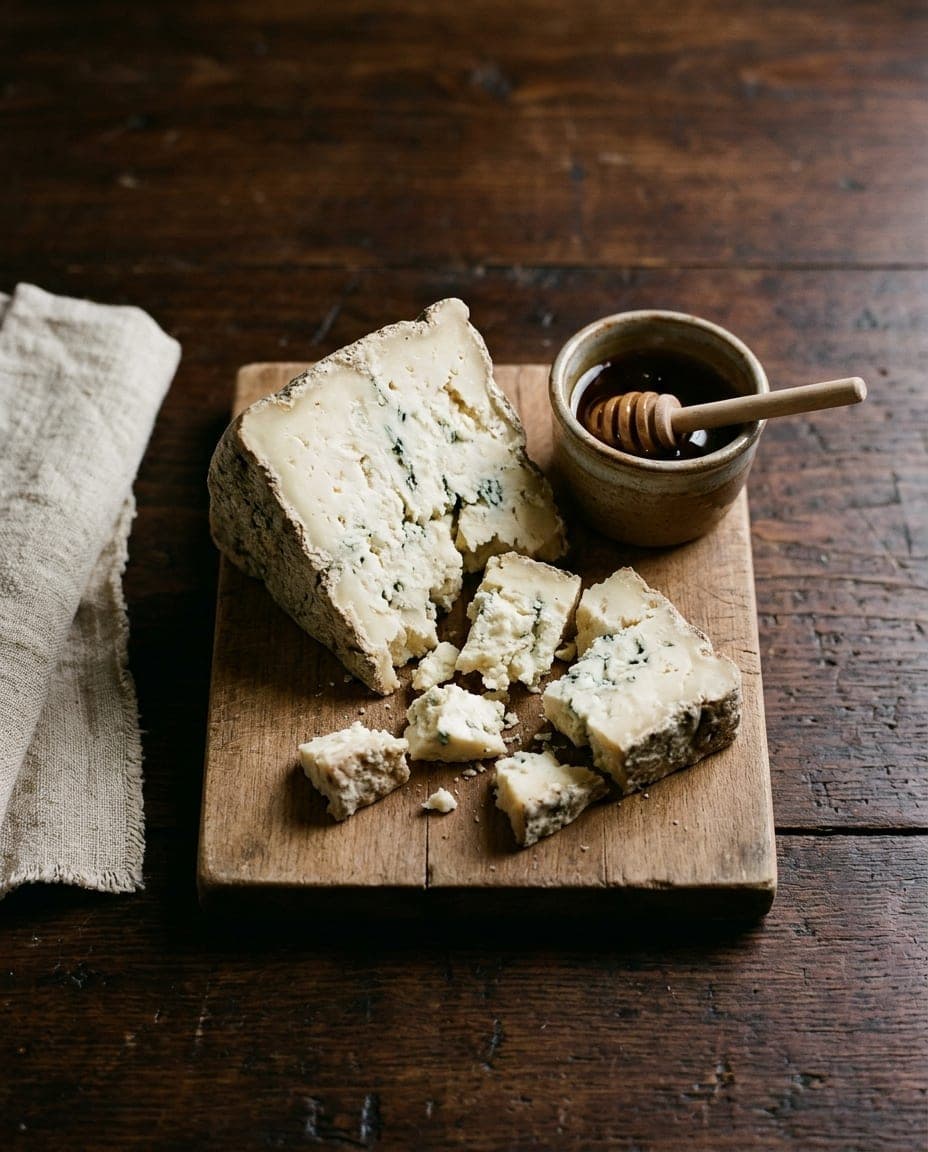
The texture is distinctively crumbly, breaking into irregular chunks rather than slicing smoothly. Its colour ranges from ivory to deeper yellow, and with longer ageing it can develop blue-green veins that form naturally in the cellar rather than from added moulds. When young, the cheese is white and crumbly with a faint tangy note. As it ages, the veining becomes more pronounced and the flavour deepens into something sharp, slightly bitter and intensely savoury.
This is not a mass-produced commodity but a speciality tied to a single small valley. Production is limited, with cheese made by small dairies, some of them working on high mountain pastures in summer.
A history written in feudal dues
The earliest known mention of Castelmagno dates from 1277, when an arbitration set an annual payment to the Marquis of Saluzzo for the use of pastures, a payment that included Castelmagno cheeses. This suggests the cheese was already established and valued by that time.
By the 19th century it was highly prized and reached restaurants as far away as London and Paris. Production nearly died out in the mid-20th century, when wars and rural depopulation emptied the high valleys. It revived in the early 1980s, gaining national designation of origin status in 1982 and EU PDO status in 1996, and a consortium for its protection was recognised in 2002.
The valley and the cellars
The Valle Grana is a narrow, steep-sided valley carved by the Grana stream, with pastures rising above 2,000 metres. The three producing communes lie at different elevations, and the local pastures and microclimate shape the character of the milk. It is a landscape of rugged terrain and isolated villages, where farming has long been a way of life.
The cheese matures for at least two months in natural cellars or in cool, humid ageing rooms. The damp environment encourages the slow development of the natural veining in longer-aged wheels.
Because production is so small, much of what is made is sold within Piedmont, directly by producers or through shops and markets in towns like Cuneo, although it can also be found in speciality cheese shops elsewhere.
What goes into it
Castelmagno is made from raw milk, mainly from cows, coagulated with liquid rennet. Its method is unusual: the curd is broken up, drained in cloth for about a day, cut into slices and left to rest in whey for two to three days. It is then broken up again, salted with coarse salt and pressed into moulds before ageing. This double handling of the curd helps give the cheese its characteristic crumbly texture.
The cheese is sold in cylindrical wheels and is usually broken rather than sliced. When young, it is mild and slightly tangy; with age it becomes drier and develops a sharp, almost spicy flavour with a lingering bitterness.
It is not a cheese meant for melting in large quantities, but rather one to be savoured in small pieces or melted gently into dishes where its character can shine through. Its sharpness also makes it ideal alongside sweet elements.
How to eat it
Castelmagno is often enjoyed as it is, broken into small chunks and eaten slowly. It pairs well with honey, notably chestnut honey, whose sweetness offsets the cheese's sharp, bitter notes, and it is often served with bread or polenta.
The cheese also stars in gnocchi al Castelmagno, where it is melted into a creamy sauce for potato gnocchi; some cooks finish the dish with toasted hazelnuts or walnuts. It is also stirred into risotto and polenta in the valleys around Cuneo.
Local osterie serve Castelmagno alongside Piedmontese reds such as Barolo, which provide a robust counterpoint to the cheese's sharpness.
Curious facts
- Paid as rent in 1277. The earliest known mention records Castelmagno cheeses as part of an annual payment to the Marquis of Saluzzo.
- Natural veining. In longer-aged wheels, blue-green veins can form naturally during maturation, without moulds being added.
- Three communes only. The cheese can only be produced in Castelmagno, Pradleves and Monterosso Grana, making it one of the most geographically restricted Italian cheeses.
- A near-extinction. Production nearly disappeared in the mid-20th century before reviving in the 1980s.
- The honey pairing. Honey, especially chestnut honey, is a classic accompaniment, creating a sweet-and-savoury balance.
Where to try it
The best place to eat Castelmagno is in the Valle Grana itself and in the osterie of Cuneo and its surrounding villages. These small taverns serve the cheese with honey or polenta, or melted over gnocchi, often presented simply to let its character speak for itself.
Outside Piedmont, Castelmagno PDO can be found in good Italian speciality cheese shops.
Where to try it
1 destination
 Wine Tasting
Cuneo
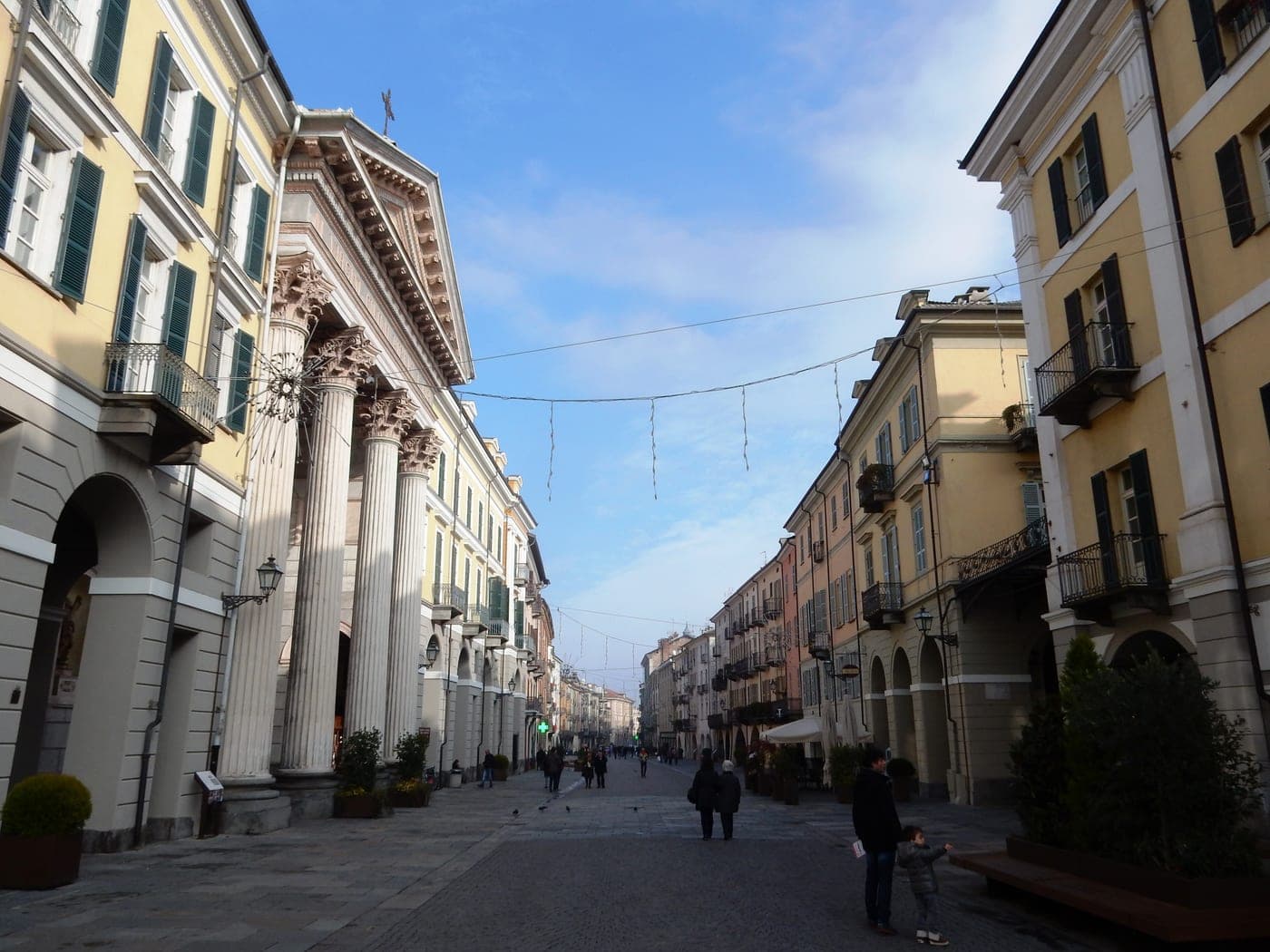
Provincial capital near Langhe and Roero wine regions with access to mountain valleys.
Wine TastingHiking
1 region
 Agritourism31 destinations
Piedmont
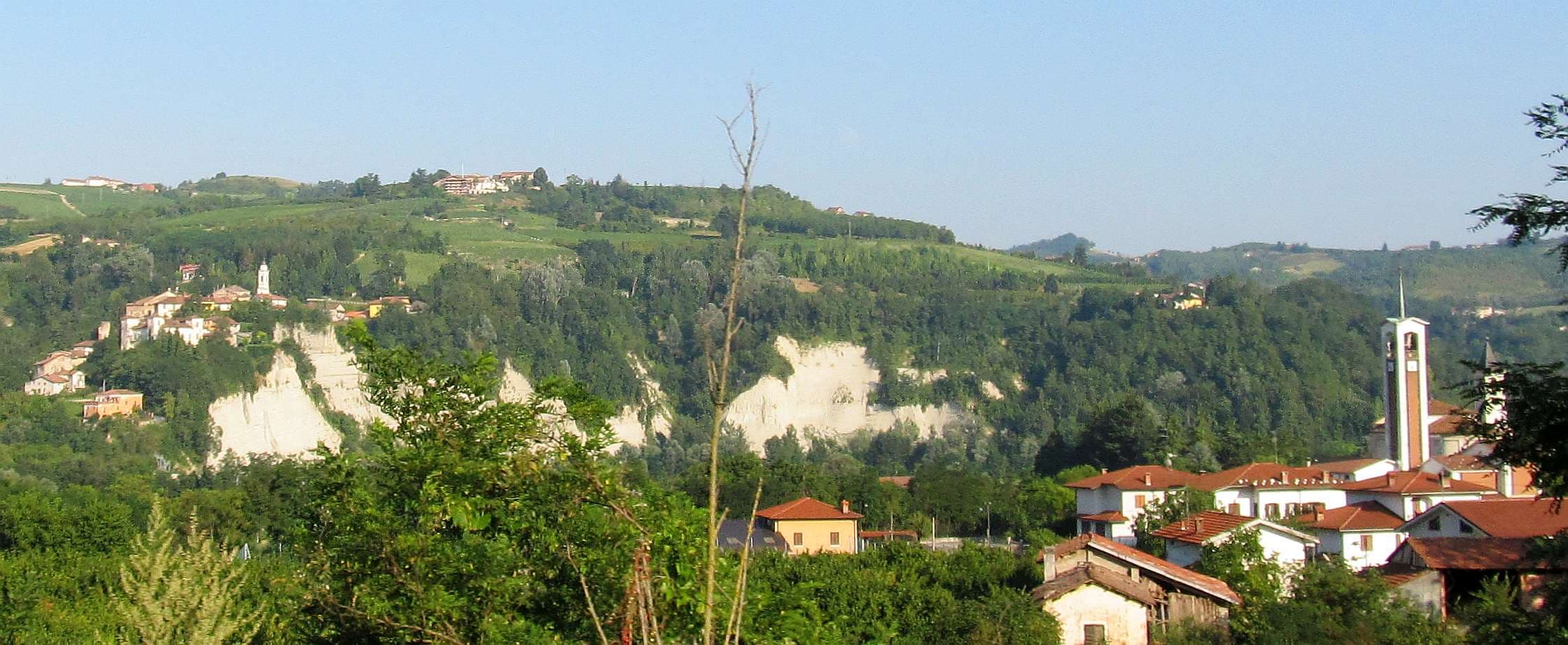
Piedmont is the second-largest region in Italy, bordered by the Alps to the north and characterized by its rich culinary and viticultural heritage. The region is famous for Barolo and Barbaresco wines, produced in the rolling hills of Langhe, a UNESCO World Heritage site. Turin, the capital, is known for its elegant architecture and historical cafes, while smaller towns like Alba and Asti offer vibrant local markets and truffle festivals. The region also boasts stunning landscapes, from the serene lakes of Orta and Maggiore to the majestic mountains. Its historical significance includes being the birthplace of the Italian unification. Authentic experiences can be found in local agriturismos and family-run osterias, away from typical tourist paths.
AgritourismWine TastingCastlesHiking





