Cassata siciliana
A layered Sicilian cake of ricotta, marzipan and candied fruit
- Vegetarian
- Local name
- Cassata siciliana
- Served with
- Coffee
- Best eaten at
- A Palermo pasticceria
- Pairs with
- Marsala or Passito di Pantelleria
What it is
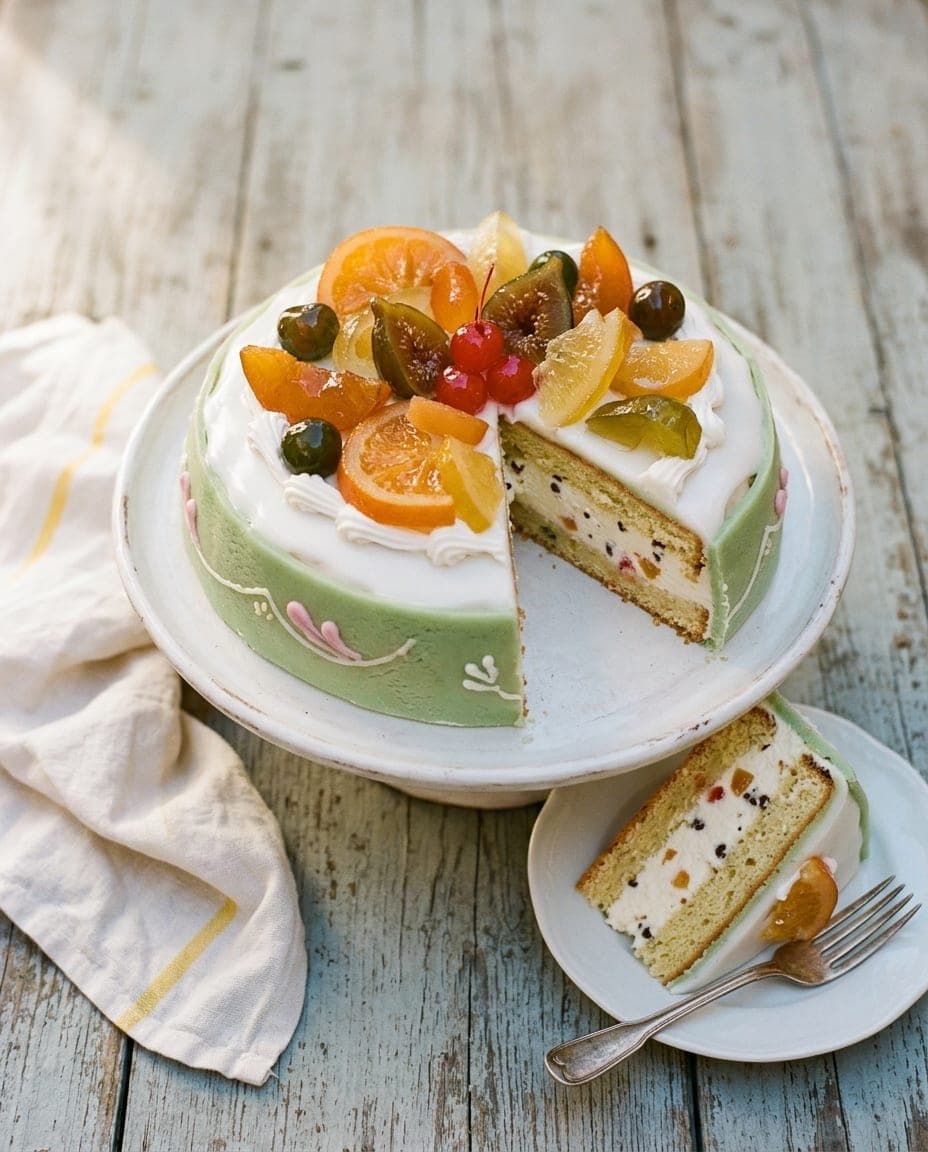
Cassata siciliana is one of the most distinctive confections of Italy, an elaborate cake that stands as a monument to Sicily's layered history. It is built in a mould, typically round and sloping at the sides. The cake consists of sponge soaked in liqueur or syrup, filled with sweetened sheep's ricotta, often studded with chocolate, then encased in a band of green marzipan. The top is glazed with white icing and decorated with candied fruit arranged in a formal, symmetrical pattern.
The cake is bound up with the island of Sicily, particularly the city of Palermo, where it remains a symbol of local pride. It is intensely sweet and is typically served in thin wedges. The combination of textures — the softness of the sponge, the grainy creaminess of the ricotta, the chew of the marzipan and the firm bite of the candied fruit — creates an experience that is as visual as it is flavourful.
The history of layers
The origins of the cassata are rooted in the complex cultural tapestry of Sicily, where Greek, Arab, Norman and Spanish influences have all left a mark. The name is most often traced to the Arabic qas'at, a deep, round bowl, though some link it instead to the Latin caseus, cheese. The word appears in a 14th-century Sicilian glossary, describing a baked mix of dough and cheese sweetened with honey.
The ingredients tell their own story of arrival and adaptation. Sheep's ricotta reflects the island's pastoral traditions. Arab rule, which began in 827, brought sugar cane, citrus fruits, almonds and pistachios to the island. The earliest form was a baked cassata, sweetened ricotta wrapped in pastry. Under Spanish rule, sponge cake (pan di Spagna) replaced the pastry and chocolate entered the filling. The colourful version known today, with icing and candied fruit, was codified in Palermo in the 19th century.
Convents played a central role. Nuns perfected the art of candying fruit and making pasta reale, the almond paste of the marzipan covering, and the Martorana convent in Palermo gave its name to Sicily's famous marzipan fruits. In 1575 the Synod of Mazara del Vallo is said to have forbidden nuns from making cassata during Holy Week, to avoid temptation — a sign of how closely the cake was already tied to Easter.
The craft of the mould
Making a proper cassata siciliana is an exercise in architecture rather than simple baking. The process begins with a round tin with sloping sides. Strips of green marzipan and sponge line the sides and base of the mould, and the sponge is soaked in liqueur or syrup, which adds moisture and flavour.
The filling is the heart of the dish. It consists primarily of sheep's ricotta, drained and sweetened until thick and creamy, often with chocolate pieces folded in. Once the mould is filled and closed with a final layer of sponge, it is chilled to set firmly, then turned out onto a plate.
The marzipan gives the cake its green skin, coloured with pistachio or with food colouring. The top is covered with a white sugar icing that sets slightly, and the confectioner then arranges candied fruit — citrus peel, cherries and the green zuccata, candied squash — in a decorative pattern.
How it is eaten
The cassata is a ceremonial sweet rather than a quick snack, typically served in thin slices to manage its intensity. The sweetness of the ricotta filling, combined with the sugary marzipan and candied fruit, can be overwhelming in large pieces.
It is often eaten with a cup of strong espresso, whose bitterness balances the sweetness. For those who prefer wine with dessert, a glass of Marsala or Passito di Pantelleria is a classic Sicilian accompaniment, echoing the liqueur-soaked sponge and the candied fruit without overpowering the ricotta.
Where it belongs
The cassata siciliana is above all a cake of the Easter season, deeply embedded in the religious and social calendar of Sicily. It is traditionally prepared for Easter Sunday, marking the end of Lent with a celebration of abundance. Today it is available year-round in pasticcerie, but its true significance lies in its role at Easter, when families gather to share it.
In Palermo the cassata is a point of local identity. The city's pasticcerie are its natural home, where skilled confectioners display their mastery of marzipan and candied fruit. It belongs to the island, relying on local sheep's ricotta, almonds and pistachios for its character.
What goes into it
- Sheep's ricotta: The primary filling, drained of whey and sweetened to a thick consistency.
- Sponge cake: Pan di Spagna, which lines the mould and is soaked in liqueur or syrup.
- Marzipan: Almond paste coloured green, used to wrap the sides of the cake.
- Icing: A white sugar glaze over the top.
- Candied fruit: Citrus peel, cherries and zuccata, arranged in a decorative pattern.
- Chocolate: Folded into the ricotta for contrast.
Curious facts
- A green skin. The marzipan band is traditionally green, a nod to the pistachios grown on the island.
- An Easter staple. While available year-round, the cassata is most deeply associated with Easter, marking the end of Lent.
- The baked ancestor. A simpler cassata al forno, sweetened ricotta baked in pastry, is older than the decorated version and is still made today.
- A forbidden sweet. In 1575 a church synod in Mazara del Vallo reportedly barred nuns from making cassata during Holy Week.
- A cultural mosaic. Its ingredients trace Sicily's history, from Arab sugar, citrus and almonds to Spanish sponge and chocolate.
Where to try it
The best place to eat a true cassata siciliana is in a traditional pasticceria in Palermo, where the craft of marzipan and candied fruit remains central to the business. These shops often display whole cakes in glass cases, showcasing the intricate patterns on top. Good versions can be found across Sicily, but the capital remains the cake's spiritual home. A thin slice with a strong coffee or a small glass of Marsala or Passito di Pantelleria lets the palate appreciate the balance between the sweet cake and the bitter or fortified drink.
Where to try it
1 region
 Wine Tasting21 destinations
Sicily
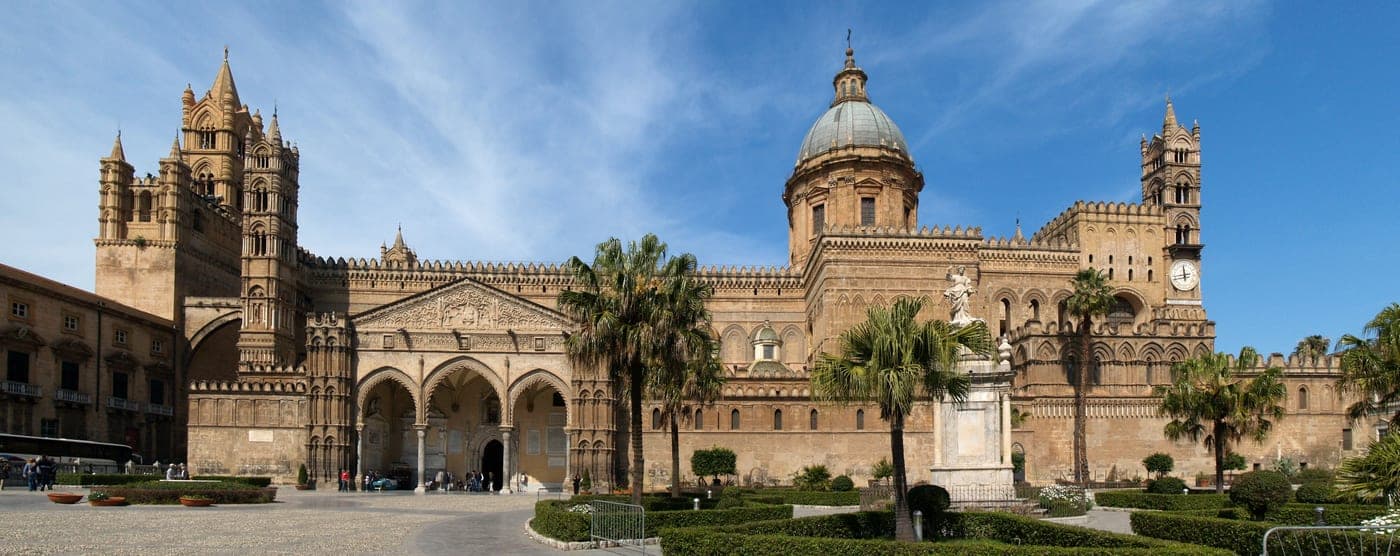
Sicily, the largest island in the Mediterranean, boasts a rich tapestry of history and culture. Its unique position has made it a crossroads of civilizations, evident in the remnants of Greek temples in Agrigento and the Arab-Norman architecture in Palermo. The island features a diverse landscape, from the volcanic Mount Etna to the picturesque coastal towns of Taormina and Cefalù. Sicilian cuisine stands out for its use of fresh ingredients, with specialties like arancini and cannoli. The region is also famous for its local wines, particularly Nero d'Avola. Off the beaten path, discover the ancient ruins of Selinunte or the quaint streets of Erice. With charming villages and vibrant markets, Sicily offers a deep dive into authentic Italian culture and history.
Wine TastingHikingBoat RentalsAgritourism





