Casciotta d'Urbino
A soft sheep-and-cow cheese from the Marche, eaten with honey and crescia bread
- Local name
- Casciotta d'Urbino
- Served with
- Crescia, honey
- Best eaten at
- An Urbino osteria
- Pairs with
- Bianchello del Metauro
What it is
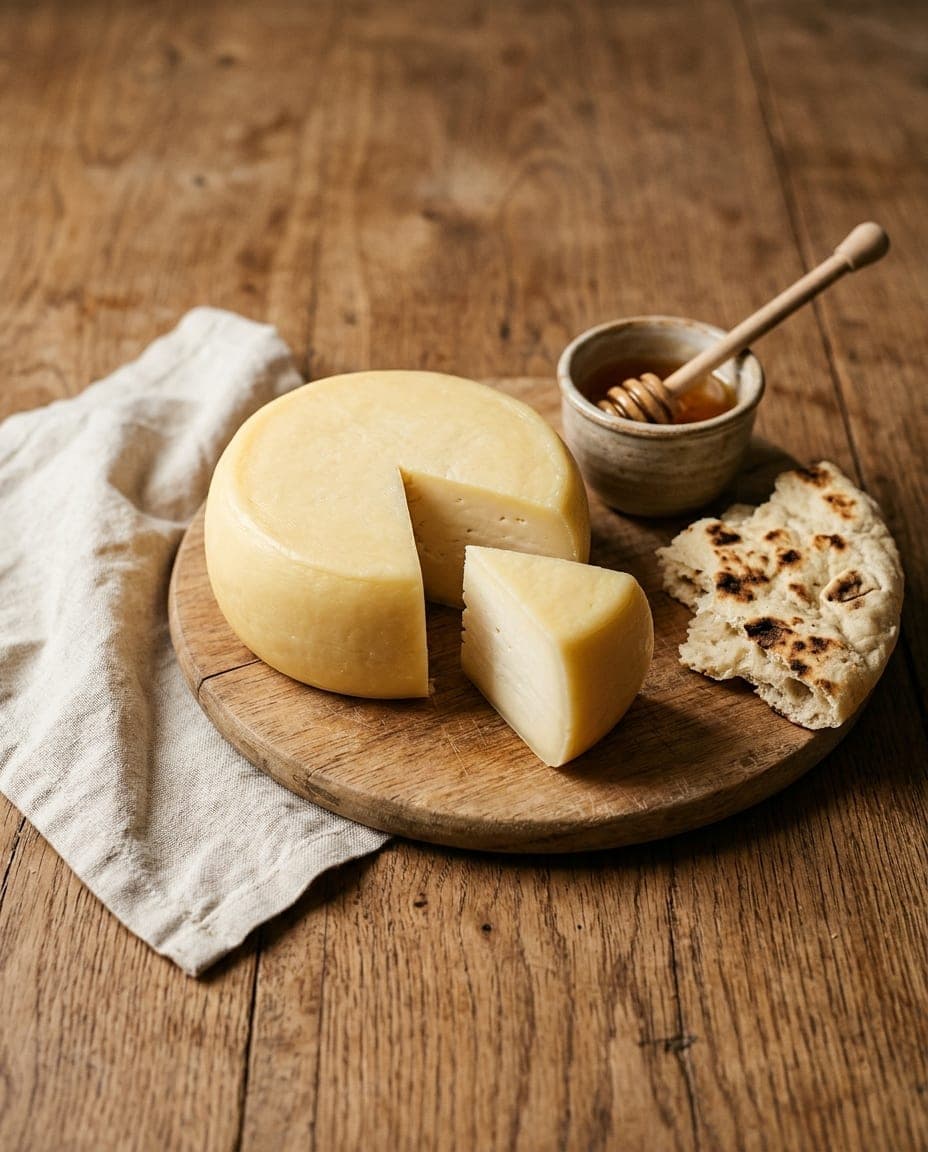
Casciotta d'Urbino is a small, semi-soft cheese from the Marche region on Italy's Adriatic coast. It is made from a blend of whole sheep's milk and cow's milk, with sheep's milk making up 70 to 80 per cent. This ratio gives the cheese a texture that is softer and sweeter than a pure pecorino, with a faintly sour, nutty finish as it matures. The wheels are small and squat, weighing around a kilo, with a thin, pale rind that forms during the brief ripening period of twenty to thirty days.
The result is a supple cheese that remains mild and develops only a gentle savoury character by the time it is ready for sale. It is not an aged cheese meant for long storage; it is best eaten fresh, within weeks of production. The name is a variant of caciotta, from cacio, meaning cheese. According to local tradition, the unusual spelling "Casciotta" arose from a clerk's transcription error centuries ago, an accident that stuck and is now part of the official name.
The history of a small cheese
The cheese has long been associated with the town of Urbino, a UNESCO World Heritage site celebrated for its Renaissance architecture and as the birthplace of Raphael. Michelangelo is said to have been fond of it, a story often repeated locally, although the details are hard to verify.
The province of Pesaro and Urbino has a long tradition of small-scale dairy farming in its hills, where sheep and cattle graze side by side. Many makers work in small batches, which helps the cheese keep its characteristic softness and the subtle balance between the two types of milk.
Casciotta d'Urbino received an Italian designation of origin in 1982 and was registered as an EU Protected Designation of Origin (PDO) in 1996. Only cheese made from milk produced in the province of Pesaro and Urbino, following the official specification, can bear the name. The cheese remains a regional speciality rather than a nationwide staple, found mainly in the markets and osterie of the Marche.
What goes into it
The ingredients are simple and few, relying on the quality of the milk and the skill of the cheesemaker:
- Sheep's milk, making up 70 to 80 per cent of the blend, provides a creamy base and a gentle sweetness.
- Cow's milk, making up the remaining 20 to 30 per cent, adds a lighter texture and softens the overall taste.
- Rennet, to coagulate the milk.
- Salt, to season the cheese as it forms its rind.
The curd is placed in small, round moulds that give the cheese its low, cylindrical shape with rounded edges. After a short period of ripening in cool, humid rooms, the wheels are ready for sale. The process avoids long ageing, keeping the texture supple and the flavour approachable rather than sharp.
How it is eaten
Casciotta d'Urbino is best eaten young, while it is still soft and moist. It is often served with local bread, such as the crescia flatbread of the area, which complements the cheese's mildness. A drizzle of local honey is another popular accompaniment, adding a sweet contrast to the savoury notes of the cheese.
In an Urbino osteria, the cheese may arrive on a wooden board alongside figs or other seasonal fruit. It pairs well with the local white wine Bianchello del Metauro, whose crisp acidity cuts the richness of the cheese.
The cheese is mostly eaten as it is, at the table, to appreciate its fresh, nuanced flavour, in keeping with the unhurried pace of the Marche countryside.
Curious facts
- A clerical accident. Local tradition holds that the spelling "Casciotta" comes from a clerk's transcription error that became the accepted name.
- Michelangelo's favourite. The Renaissance artist is said to have been fond of the cheese, though the story is hard to document.
- Small and supple. The wheels weigh around a kilo and ripen for only twenty to thirty days.
- Protected origin. It is a PDO cheese, and the milk must come from the province of Pesaro and Urbino.
- A sweet partner. Local honey is a popular pairing, balancing the cheese's mild savoury notes with sweetness.
Where to try it
The best place to taste Casciotta d'Urbino is in an Urbino osteria or a local cheese shop in the province of Pesaro and Urbino. Small dairies in the surrounding hills sell it fresh, and a visit in spring or early summer, when sheep's milk is plentiful, is a good time to taste it paired with local bread and honey in a quiet, traditional setting.
Where to try it
1 destination
 Agritourism
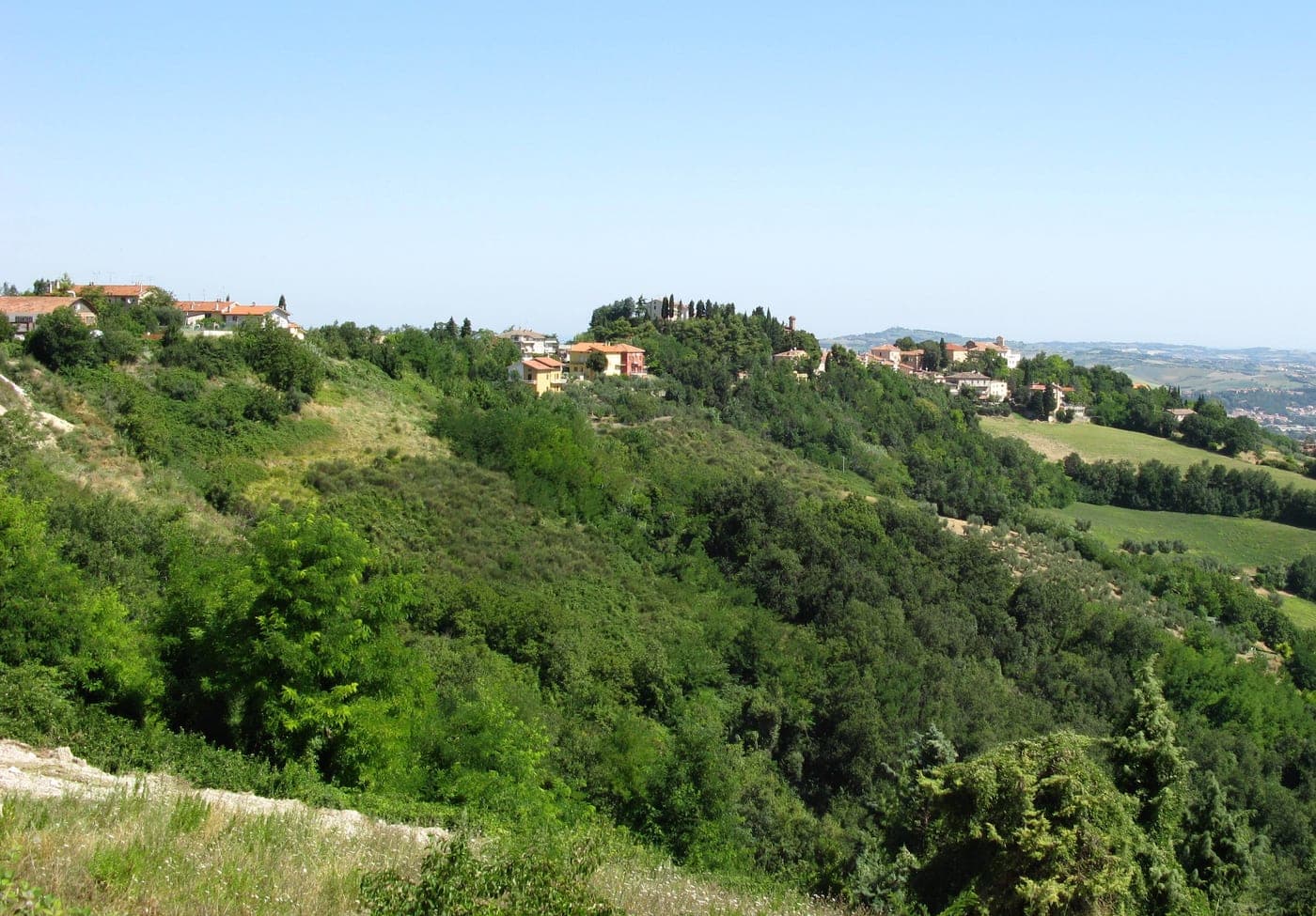
Colbordolo
Marche hills village with family agriturismo offering truffle hunting, wine production, and rural tranquility.
Agritourism
1 region
- Agritourism4 destinations
Marche
Nestled along the Adriatic Sea, this region boasts a mix of mountains and coastline, making it the only Italian region with a significant maritime presence. As Italy's fourth smallest region, it features historical towns like Urbino, known for its Renaissance heritage and UNESCO status, and Ascoli Piceno, famous for its travertine architecture. The landscape is dotted with rolling hills, vineyards, and olive groves, producing notable wines such as Verdicchio and Rosso Piceno. Culture thrives here through local festivals celebrating traditional crafts and cuisine, particularly the renowned olive all'ascolana. Rich in history, the region invites exploration beyond the typical tourist paths, showcasing authentic village life and regional gastronomy.
AgritourismWine TastingBoat RentalsHiking





