Carne cruda all'albese
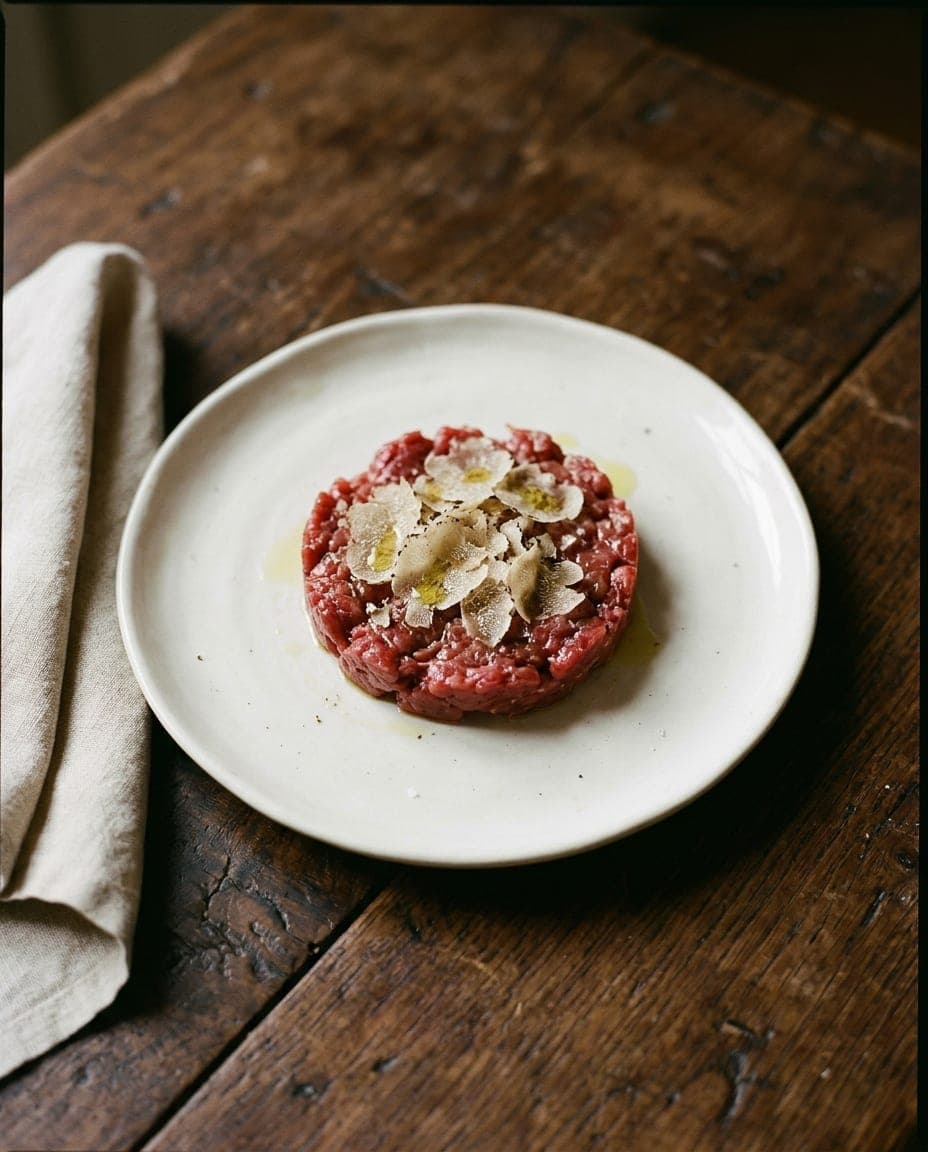
Hand-chopped raw Fassona beef with lemon and truffle from Alba
- Local name
- Carne cruda all'albese
- Served with
- Lemon, shaved truffle in season
- Best eaten at
- An Alba or Langhe osteria
- Pairs with
- Dolcetto or Barbera
What it is
Carne cruda all'albese is a dish of stark simplicity and a fixture of the table in the Langhe hills of Piedmont. It consists of lean raw beef, traditionally from the local Piemontese breed known as Fassona, chopped by hand into fine pieces and dressed with little more than extra virgin olive oil, lemon juice, salt and black pepper. The meat arrives on the plate as a neat mound glistening with oil, sometimes topped with shaved white truffle or a raw egg yolk.
The dish is eaten across Piedmont, where it is also called carne cruda alla piemontese, but its name ties it to Alba, the town at the heart of the Langhe. It relies entirely on the quality of the meat and the precision of the preparation. There are no hidden sauces or complex marinades. The taste is clean and fresh, dominated by the beef itself, which is lifted by the sharp acidity of lemon and, when available, the earthy depth of truffle.
Because the meat is never run through a mincer, it retains its natural grain. The result feels tender yet substantial on the tongue, both cool and rich.
How the meat is prepared
The technique is the defining feature of the dish. In many other traditions, raw beef is processed through a mechanical mincer, which crushes the muscle fibres and can make the texture pasty. For the Piedmont version, this method is avoided.
Instead, the cook takes a sharp knife and chops the meat by hand, slicing the beef into thin strips before dicing it into small, uniform pieces. This keeps the fibres intact and the texture distinct and firm rather than soft. A well-known variation, in which the meat is cut into paper-thin slices and dressed in the same way, is also served in the region.
The meat traditionally comes from the Piemontese, or Fassona, a local breed known for its pronounced muscling, the so-called double muscle. This genetic trait gives a high proportion of lean meat with very little fat. The flesh is fine-grained and tender, which suits it to being eaten raw. Lean cuts from the leg or the fillet are typically used; a fatty cut would not hold the same clean structure when dressed only with oil and lemon.
The truffle connection
The most celebrated version of this dish appears in autumn in Alba, the town famous for its white truffles. During the truffle season, which runs from autumn into early winter, the meat is often served topped with shavings of fresh Tuber magnatum, the white truffle of the Langhe. Its intense aroma complements the clean taste of the beef without overwhelming it.
When truffles are not available, the dish reverts to its plain form: meat, oil, lemon, salt and pepper. Some kitchens add shavings of Parmigiano Reggiano, thinly sliced raw mushrooms or a raw egg yolk to add body, but the simple version is considered the standard. The plain presentation allows the diner to taste the character of the beef and the quality of the olive oil.
The truffle harvest is unpredictable, depending on the weather and soil conditions, which adds a layer of anticipation to the meal. In a good season, the dish with truffle can be considerably more expensive, though the recipe remains unchanged.
How it is eaten
Carne cruda all'albese is typically served as an antipasto in a traditional osteria or trattoria in Alba or the surrounding Langhe villages. The meat is presented on a cold plate to keep it cool, and the lemon is added just before serving so that it does not draw too much moisture from the beef or change its colour.
The dish is often accompanied by local red wines with a light body and good acidity. A Dolcetto or a Barbera from the nearby vineyards is a common pairing. These wines cut the richness of the oil and complement the earthy notes of the truffle without overpowering the delicate flavour of the raw meat.
In the osteria setting, it is ordered as one of several antipasti before moving on to pasta or a main dish of cooked meat. It sets the tone for a meal that values the natural state of ingredients over complex cooking methods.
Curious facts
- Hand-chopping only. Traditional cooks avoid mechanical mincing because it damages the muscle fibres and makes the texture pasty.
- A double-muscled breed. Piemontese (Fassona) cattle carry a genetic trait that produces exceptionally developed, lean muscle, giving fine-grained meat well suited to raw dishes.
- Seasonal truffle topping. While the base dish is available year-round, fresh white truffle appears only during the autumn and early-winter season.
- Alba as the home. The dish is eaten throughout Piedmont, but the Alba name ties it to the Langhe and its truffle tradition.
- No curing required. Unlike raw meat preparations that involve curing or salting for long periods, this dish relies on the immediate freshness of the meat, dressed at the last moment.
Where to try it
The most authentic experience of carne cruda all'albese is found in the osterias of Alba and the surrounding Langhe countryside. These are often local establishments where the focus remains on traditional ingredients and straightforward preparation.
The town of Alba itself is the natural destination, especially during the truffle season, when the dish appears on most menus. Visitors often find it alongside other regional staples such as tajarin pasta or braised beef.
When visiting in autumn, it is wise to ask about truffle availability before ordering. If the harvest has been poor, the kitchen may not have fresh truffles to shave over the meat, but the dish will still be prepared with good local beef and oil.
Where to try it
1 destination
 Wine Tasting
Alba
Capital of Langhe wine region, famous for white truffles, Barolo, and Barbaresco wines.
Wine TastingLocal Cuisine
1 region
 Agritourism31 destinations
Piedmont
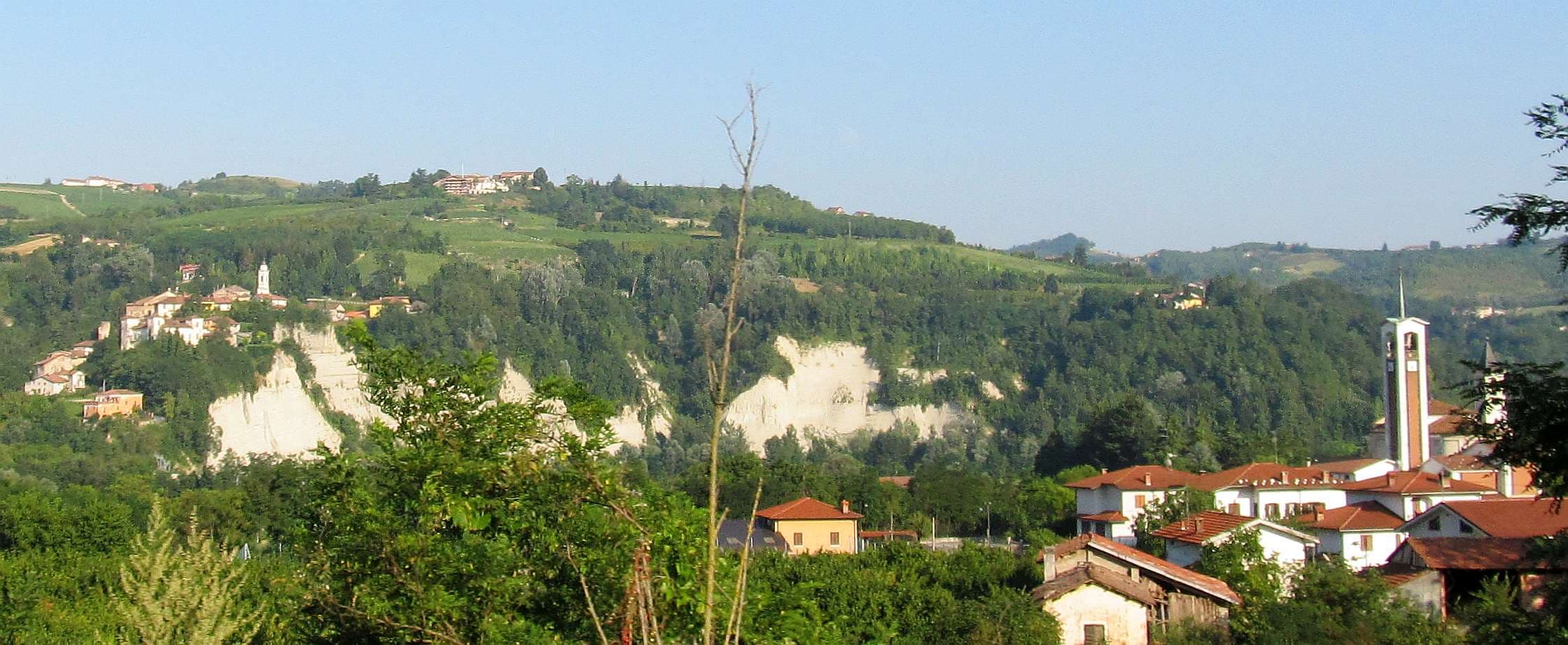
Piedmont is the second-largest region in Italy, bordered by the Alps to the north and characterized by its rich culinary and viticultural heritage. The region is famous for Barolo and Barbaresco wines, produced in the rolling hills of Langhe, a UNESCO World Heritage site. Turin, the capital, is known for its elegant architecture and historical cafes, while smaller towns like Alba and Asti offer vibrant local markets and truffle festivals. The region also boasts stunning landscapes, from the serene lakes of Orta and Maggiore to the majestic mountains. Its historical significance includes being the birthplace of the Italian unification. Authentic experiences can be found in local agriturismos and family-run osterias, away from typical tourist paths.
AgritourismWine TastingCastlesHiking





