Carciofi alla giudia
Crisp golden artichokes from Rome's Jewish Ghetto
- Vegetarian
- Local name
- Carciofi alla giudia
- Best eaten at
- A Roman Ghetto trattoria
- Pairs with
- Frascati
What it is
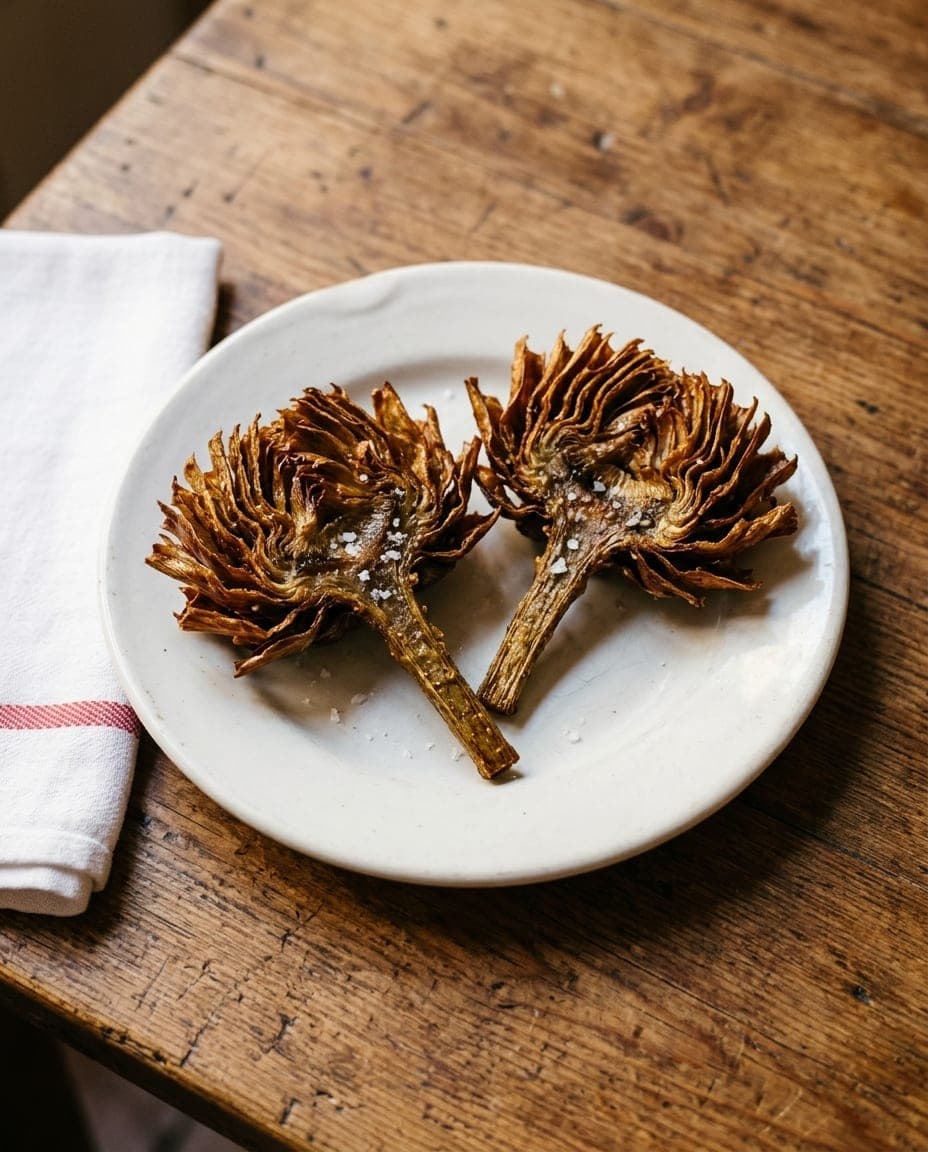
Carciofi alla giudia, or "Jewish-style artichokes", are whole young artichokes that have been opened out and deep-fried in olive oil until they resemble a golden flower. The dish is the most famous creation of the Roman Jewish community and a speciality of the city's historic Ghetto. Rather than being cut into pieces, the trimmed head is fried whole. The result is a crisp, shattering exterior that gives way to a tender, almost melting heart. It is usually served as a starter, but it is a substantial bite that feels like a small meal on its own.
The visual effect is striking. The artichoke is pressed open so that its leaves splay outwards, frying into a round bloom of bronze and gold. Broken apart, the leaves crackle like crisps, yet the inside remains soft and moist. This contrast defines the dish. It is a celebration of the romanesco artichoke, the Roman variety whose prized first heads, known as cimaroli or mammole, are round, compact and almost free of choke. The dish relies entirely on the quality of this vegetable and the patience required to cook it correctly.
The story of the Ghetto kitchen
The roots of carciofi alla giudia lie in the history of Rome's Jewish community. In 1555, Pope Paul IV issued the bull Cum nimis absurdum, which confined Jews to a small, walled quarter on the left bank of the Tiber. The community lived under strict restrictions for more than three centuries: they could not own property outside the Ghetto and were barred from many trades. Compulsory residence ended in 1870, when Rome became part of the Kingdom of Italy, and the walls were demolished in 1888.
Under these conditions, the Roman Jews developed a cuisine based on cheap local vegetables, and the artichoke, grown widely in the countryside around Rome, became one of its stars. Frying in olive oil rather than lard fitted the dietary laws of kashrut, which forbid pork and the mixing of meat with dairy. The method transformed a seasonal field vegetable into a dish that felt celebratory despite its humble origins.
This cuisine became known as cucina giudaico-romanesca, a distinct culinary tradition that has survived for centuries. Rome has other artichoke dishes, notably carciofi alla romana, which are braised with mint and garlic, but the fried version remains the emblem of the Jewish quarter and a symbol of the community's identity.
How it is made
The preparation begins with the selection of young artichokes in season, from late winter through spring. The cook trims away the tough outer leaves with a sharp knife, turning the artichoke to shape it, and peels the stem until only the pale, tender parts remain. The trimmed artichokes rest in water acidulated with lemon to stop them darkening, then are seasoned and beaten or pressed against a surface to open the leaves without separating them.
The cooking happens in two stages in olive oil. First, the artichokes are fried at a moderate temperature until the heart is soft. They are removed and drained, and the leaves are spread open further. Then they are plunged into hotter oil for a short burst, which creates the crisp, golden finish that defines the dish. Some cooks sprinkle a few drops of cold water into the oil at the end to make the leaves crackle. Salt is added before frying or as soon as the artichokes come out of the pan.
What goes into it
The ingredient list is short, but the quality of each item matters:
- Young Roman artichokes of the romanesco type, round and almost free of choke.
- Olive oil, used in large quantities for both stages of frying.
- Salt and pepper, to season.
- Lemon, used only in the soaking water while the artichokes are trimmed.
No herbs or garlic are added. The simplicity is deliberate; it allows the texture and the natural sweetness of the vegetable to stand out.
How to eat it
Carciofi alla giudia are typically served hot as a starter, whole on the plate. They are often eaten with the hands: the diner breaks off the crisp outer leaves, eating them while they are still hot, then moves on to the softer heart, which is often finished with a fork.
The dish pairs naturally with the light, dry white wines of Lazio, particularly Frascati, whose acidity cuts the richness of the oil. It is often eaten alongside other Roman Jewish fried dishes, such as fillets of salt cod, that share the same menus. A trattoria in the Ghetto will serve the artichokes straight from the fryer, when the leaves are at their crispest.
Curious facts
- A seasonal dish. The traditional method relies on young, tender romanesco artichokes, at their best from late winter into spring.
- The double fry. A first, gentler fry softens the heart; a second, hotter one creates the crunch.
- Lemon only in the soak. Lemon keeps the trimmed artichokes from browning, but none is added to the finished dish.
- Kosher debate. In 2018 the Chief Rabbinate of Israel declared the dish not kosher, arguing that insects could hide in the dense leaves. Rome's Jewish community objected, insisting the tightly packed leaves keep insects out and defending the dish's cultural importance.
- A symbol of survival. The dish emerged in a community confined to a small quarter and barred from owning property beyond it.
- Whole only. The artichoke is never cut into pieces for this dish, creating the distinctive flower shape.
Where to try it
The most atmospheric place to taste the dish is the historic Jewish Ghetto in Rome. The streets around the Great Synagogue and Via del Portico d'Ottavia are lined with trattorias that have served it for generations, many of them unpretentious, family-run places focused on cucina giudaico-romanesca.
The Ghetto itself is worth exploring for its history and atmosphere. The best time to visit is during the artichoke season, roughly February to May, when the vegetables are at their peak tenderness. The best-known trattorias can be very busy in spring, so arriving early or booking ahead is advisable.
Where to try it
1 destination
 Camper Van Rentals
Rome
Historic capital featuring ancient ruins, Renaissance art, and vibrant piazzas.
Camper Van RentalsHiking





