Canestrato di Moliterno
Canestrato di Moliterno: Basilicata's cellar-aged sheep cheese
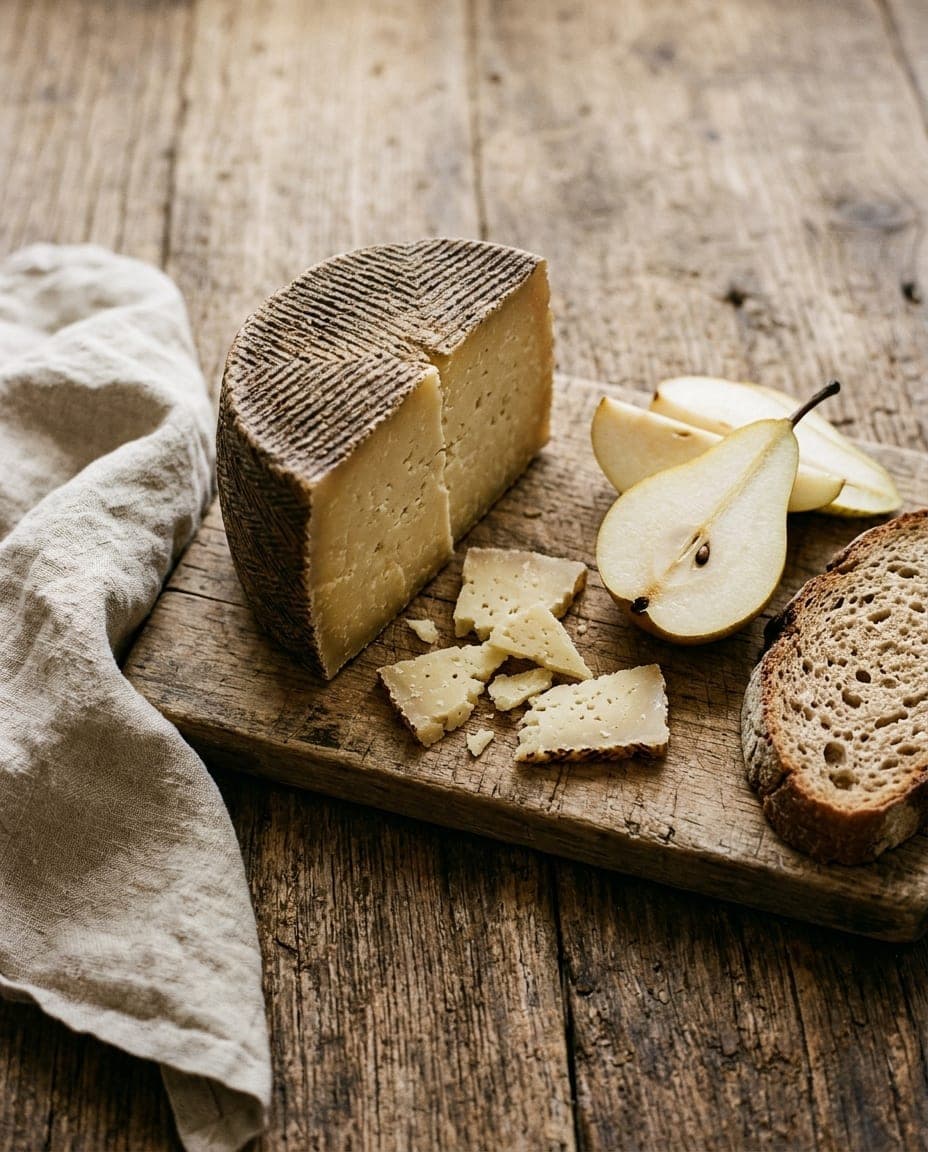
- Local name
- Canestrato di Moliterno
- Served with
- Bread, pears
- Pairs with
- Aglianico del Vulture
What it is
Canestrato di Moliterno is a hard cheese from the small town of Moliterno in the Basilicata region of southern Italy. It is made from sheep's milk (70 to 90 per cent) mixed with goat's milk, coagulated with lamb or kid rennet and then pressed in baskets known as canestri. These moulds, traditionally woven and today also made of wood or plastic, leave a distinctive criss-cross pattern on the rind and give the cheese its name. The result is a dense, firm block that ranges from semi-hard to hard depending on how long it has matured.
The cheese is unusual for its specific ageing location. While the milk comes from farms across a defined area of Basilicata, the cheese must be aged in Moliterno itself. Here, the young cheeses are placed in the fondaci, the traditional ageing cellars of the town. These spaces are naturally cool, dry and well ventilated, conditions that allow the cheese to dry slowly and develop its characteristic sharp, savoury flavour over time.
Where it comes from
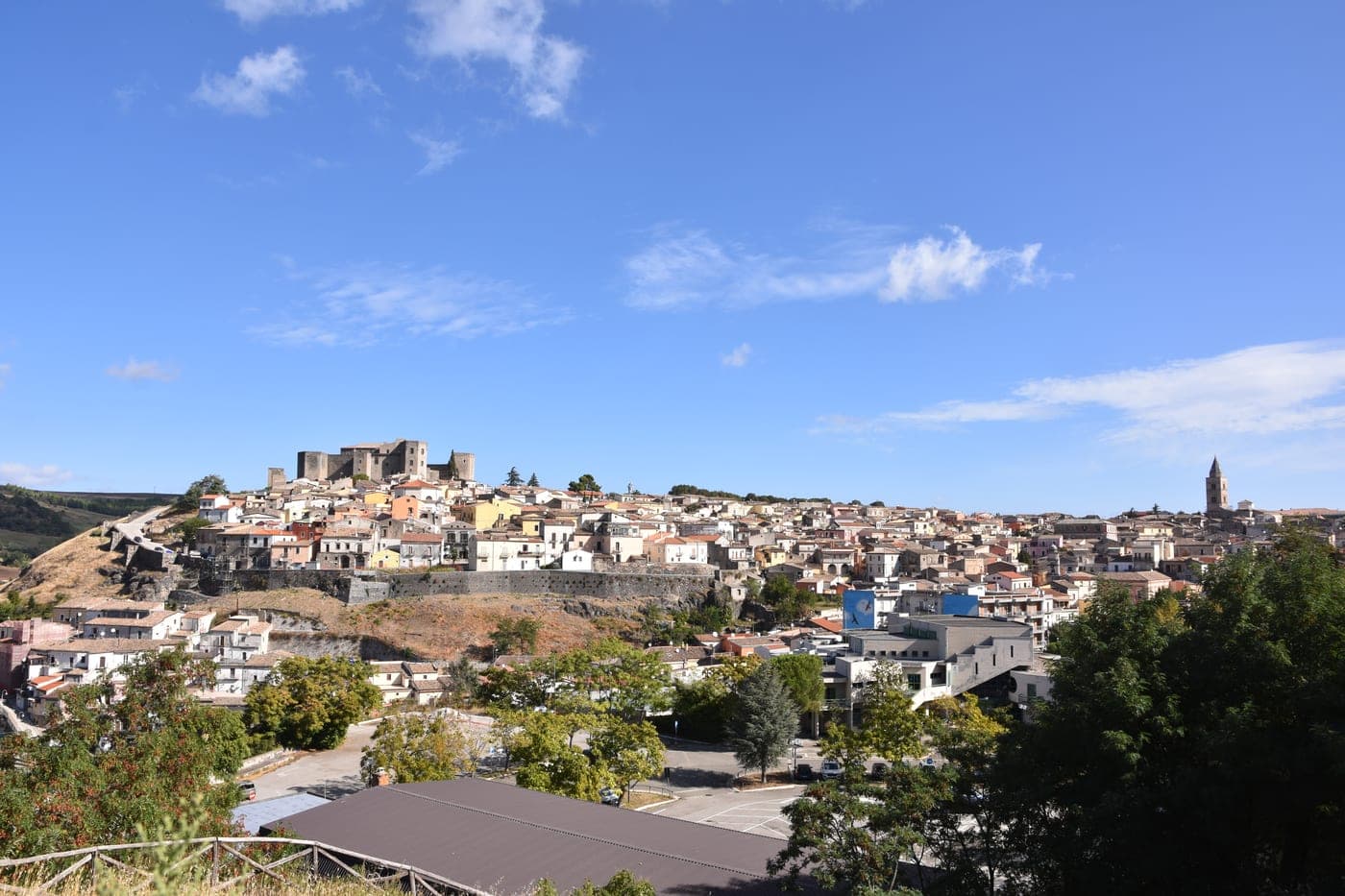
Moliterno sits on a hillside at about 850 metres in the province of Potenza, above the upper Agri valley. The town's history is tied to agriculture and transhumance, the seasonal movement of sheep between summer pastures and winter valleys. This tradition shaped the local diet and the methods used to preserve milk for long periods without refrigeration. Dairying here has deep roots: a terracotta cheese mould and a bronze grater from the fourth century BC are kept in the archaeological museum at nearby Grumento Nova.
The production area covers some sixty municipalities in the provinces of Potenza and Matera, where the flocks graze on wild herbs and grasses. However, the defining step happens only in Moliterno, whose cool, dry, ventilated fondaci provide the microclimate for ageing. Since 2010 the cheese has been a Protected Geographical Indication (PGI, or IGP in Italian), which guarantees that any cheese bearing the name was matured in these local cellars.
What goes into it
The ingredients are simple and reflect the pastoral history of the region. The base is whole milk from local sheep, supplemented with 10 to 30 per cent goat's milk. The milk is set with lamb or kid rennet paste, and the curd is pressed into the canestri to drain the whey; the cheese is then salted, dry or in brine.
No additives are used to speed up the process. The cheese matures in the fondaci for at least 60 days: up to six months it is sold as primitivo, from six to twelve months as stagionato, and beyond a year as extra. During this time, it loses moisture, becoming harder and developing a granular texture. When young, it is semi-hard and mild; when fully matured, it turns hard, sharp and crumbly, suitable for grating.
How it is eaten
Canestrato di Moliterno is typically served as part of an antipasto or cheese board. Younger versions are sliced thinly and eaten alongside local bread, perhaps with a few slices of ripe pear to balance the saltiness. As the cheese ages and becomes harder, it is often grated over pasta dishes or used to finish soups and stews.
The aged cheese is traditionally paired with Aglianico del Vulture, a robust red wine from the Vulture area in the north of Basilicata. The tannins in the wine cut the fat of the aged cheese, while the earthy notes of the wine complement the savoury depth of the milk. In local homes it is often served simply on a wooden board with crusty bread and a glass of wine.
Curious facts
- The basket leaves a mark. The canestro is not just a tool for draining; it imprints a woven pattern on the rind that gives the cheese its name.
- A town-specific rule. Unlike many cheeses where production can happen anywhere, this one must mature in Moliterno's specific cellars to bear the name.
- Two textures in one. The same cheese changes from semi-hard and mild to hard and sharp depending entirely on how long it stays in the cellar.
- Ancient roots. Moliterno's cheesemakers have been ageing and trading this cheese since at least the eighteenth century, and some of it was exported as far as America.
Where to try it
The best place to taste Canestrato di Moliterno is in the town of Moliterno itself, where small producers and family dairies continue to make the cheese in the traditional way. It is sold at local markets and shops, and across Basilicata it appears on cheese boards in trattorias, though the most evocative place to taste it is near the cellars of Moliterno.
Where to try it
1 region
 Wine Tasting3 destinations
Basilicata
Basilicata is Italy's second-smallest region, rich in ancient history and natural beauty. Matera, a UNESCO World Heritage site, is renowned for its Sassi, ancient cave dwellings carved into limestone. The region boasts a rugged landscape, featuring the Pollino National Park with its diverse flora and fauna. Potenza, the capital, offers a glimpse into local life with its medieval architecture and vibrant markets. Basilicata is also known for its unique cuisine, including hearty dishes like pasta with wild boar and spicy peppers. The region's coastline along the Tyrrhenian Sea is less frequented, providing secluded beaches and authentic coastal villages, ideal for a slower pace of travel. Discover the ancient ruins of Grumentum and the beautiful hilltop towns of Montalbano Jonico and Tursi, which showcase the region's cultural heritage away from the crowds.
Wine TastingHiking





