Caciocavallo Silano
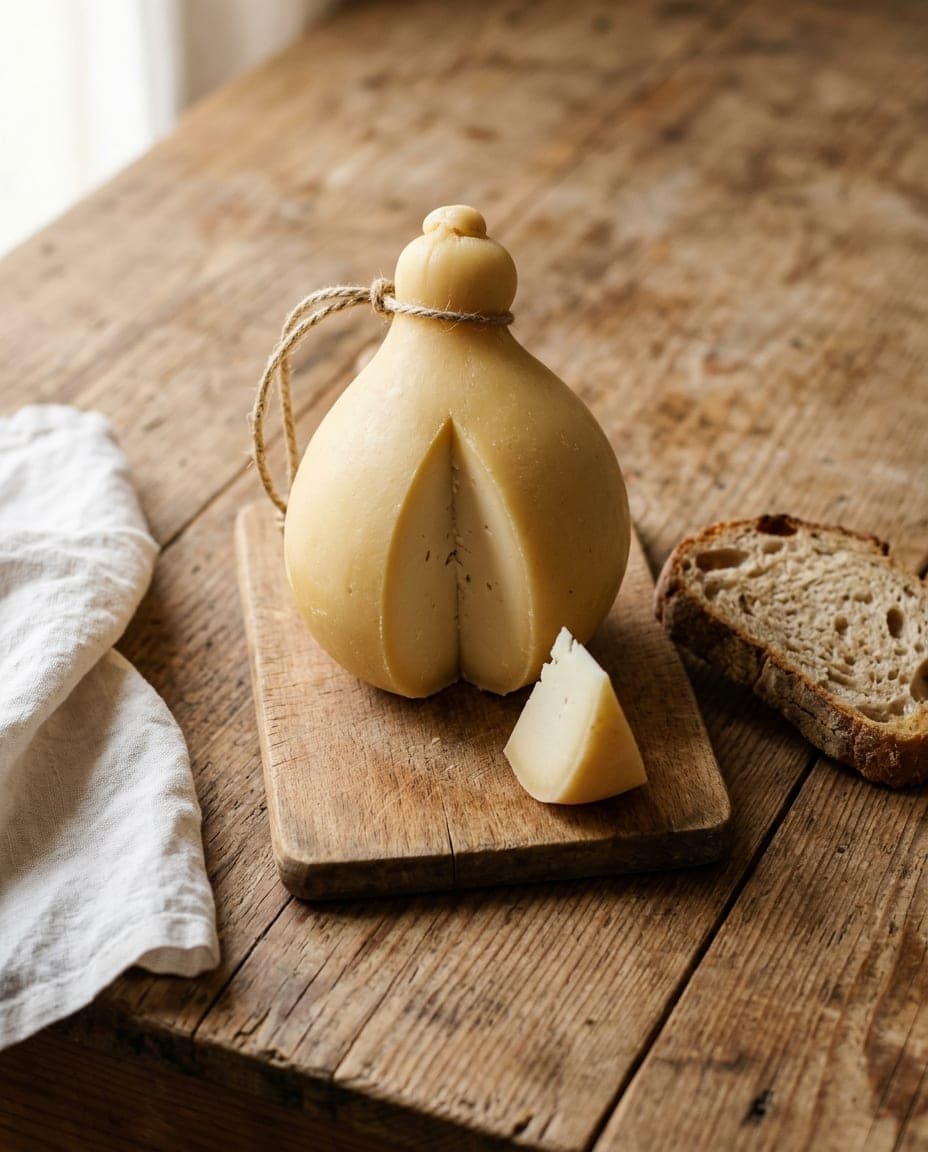
A gourd-shaped cow's milk cheese from Calabria's Sila plateau, hung in pairs to dry
- Local name
- Caciocavallo Silano
- Served with
- Bread, grilled
- Best eaten at
- A Calabrian agriturismo
- Pairs with
- Cirò rosso
What it is
Caciocavallo Silano is a cow's milk cheese shaped like a teardrop or a small gourd, often with a small head at the top where the cord is tied. It comes from the high plateaus of the southern Apennines, specifically the Sila region in Calabria, though its protected designation of origin (DOP, registered in 1996) covers a wider area that also includes parts of Basilicata, Campania, Molise and Puglia. The name describes how the cheeses are traditionally stored: pairs are tied together and hung astride a wooden pole or beam, a cavallo, like a rider on horseback.
This is not a soft, fresh cheese meant to be eaten immediately after making. It is a pasta filata, meaning the curd is stretched in hot water before being shaped and brined. While young versions are mild and elastic, suitable for melting, the true character of Caciocavallo Silano emerges only after months of resting. The texture becomes firm and granular, developing a sharp, nutty, and slightly piquant flavour that deepens with time. It is a cheese built for patience, often served grilled or grated when fully matured.
How the Sila plateau shapes the cheese
The identity of Caciocavallo Silano is inseparable from the landscape of the Sila plateau in Calabria. This high-altitude area of pine and beech forests and upland pastures has a long tradition of dairy farming, and its cool air suits the slow drying that gives the cheese its texture.
The milk comes from local herds, and much Caciocavallo Silano is still made in small dairies or caseifici, where the cheesemaker controls the temperature of the water and the tension of the stretch by hand.
The protected designation requires that the milk come from within the designated area and that the cheese be aged for at least 30 days before sale. This sets it apart from other stretched-curd cheeses such as Provolone or Mozzarella di Bufala.
The story behind the name
The explanation for the name is straightforward and visual. When the cheese has been shaped and brined, it is hung to dry in a well-ventilated room. The cheeses are tied in pairs by a cord around the neck and slung over a pole, one on each side, like a rider astride a horse; hence caciocavallo, literally "cheese on horseback".
This method of hanging is not merely decorative; it facilitates even drying and prevents the cheeses from touching each other or the walls, which could lead to uneven maturation or spoilage. The cord often remains on the cheese when it is sold.
What goes into it
The ingredients are simple and local, reflecting the pastoral tradition of the region. The primary component is cow's milk from herds within the production area. The milk is coagulated with calf or kid rennet, then the resulting curd is cut, heated in hot water, and stretched until it reaches a smooth, elastic consistency. This stretching process aligns the protein fibres, giving the cheese its characteristic texture.
Once stretched, the curd is shaped into the gourd form and salted. The brine bath adds the necessary salt content for preservation and flavour development. No other ingredients are added during this initial phase. The transformation happens over time in the drying room, where the cheese loses moisture and concentrates its flavour.
- Cow's milk: Sourced from herds within the production area.
- Calf or kid rennet: Used, in paste form, to coagulate the milk.
- Salt: Added via a brine bath to season the curd and aid preservation.
- Time: The essential ingredient, allowing the cheese to mature from mild to sharp.
How it is eaten
Caciocavallo Silano offers different experiences depending on its age. A young cheese, aged only a few months, is soft enough to melt easily but retains a chewy elasticity. It is often served grilled or pan-seared, where the heat brings out a creamy interior and a slightly crispy, caramelised exterior. In this state, it pairs well with rustic breads or is used as a topping for warm polenta or roasted vegetables.
As the cheese matures over many months, the texture hardens significantly. The flavour becomes intense, sharp, and nutty, with a lingering savoury finish. At this stage, it is frequently grated over pasta dishes or soups. It can also be sliced thinly and eaten on its own as part of an antipasto platter.
The most traditional way to enjoy it in Calabria is at a local agriturismo, a working farm that offers meals made from its own produce. Here the cheese is often served warm with fresh bread, perhaps alongside local cured meats. A natural pairing is Cirò rosso, a red wine from Calabria's Ionian coast, whose tannins cut the fat of the aged cheese.
Curious facts
- The shape is defined. The DOP rules call for an oval or truncated-cone shape, with or without a small head according to local custom, weighing 1 to 2.5 kg.
- Named after one plateau, made in five regions. The name honours the Sila, where the cheese is said to originate, but the DOP area stretches across Calabria, Campania, Molise, Puglia and Basilicata.
- Versatile texture. The same cheese can be melted when young or grated when old, making it a staple that adapts to different cooking styles throughout the year.
- Farm-to-table tradition. Some Calabrian agriturismi make the cheese on site, so visitors can see the hanging racks and taste it at the source.
Where to try it
The most authentic experience of Caciocavallo Silano awaits in Calabria, particularly in the highlands around the Sila plateau, where the cheese is made on working farms and sold at local markets or directly from the dairy.
Caciocavallo Silano is sold across Italy, but small-dairy cheeses from its home area are the most rewarding.
Where to try it
1 destination
 Wine Tasting
Altomonte
Medieval hilltop town in Calabria with local wine production and historic center.
Wine Tasting
1 region
 Boat Rentals3 destinations
Calabria
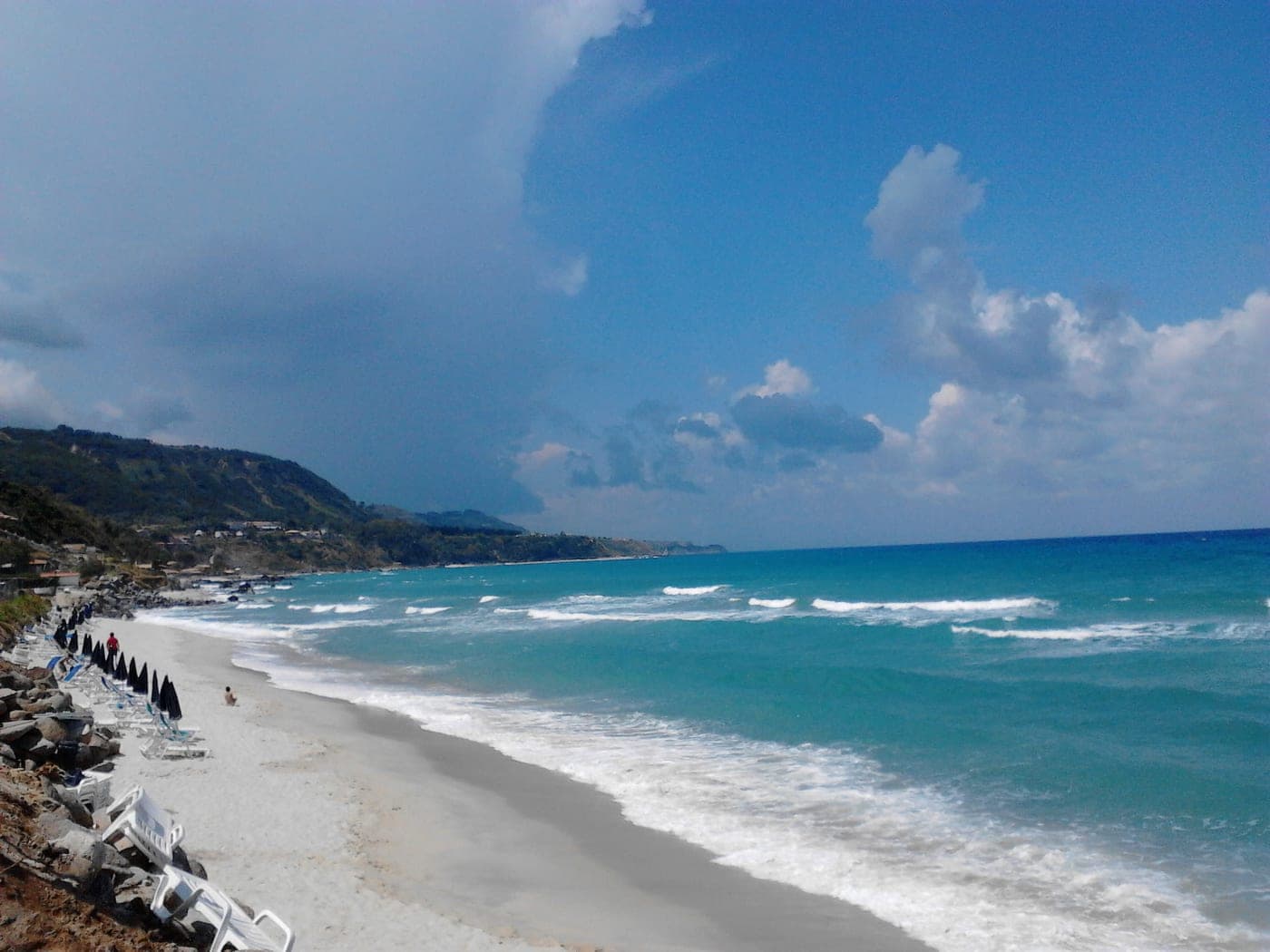
Calabria forms the toe of Italy, a narrow strip of land pinched between two seas and lifted into three mountain ranges. This shape is what makes it a region built for slow travel: an hour's drive from a fishing harbour on the Tyrrhenian coast leads into chestnut forests and mountain pastures; another hour reaches olive terraces above the Ionian Sea. Nothing here rewards rushing. A Calabria itinerary works best as a loop through a handful of towns, with two or three nights in each, rather than a checklist of day trips. Food sets the pace as much as geography does. Calabria is one of Italy's strongholds of Slow Food, the movement that began by defending exactly this kind of small-scale, tied-to-the-land cooking. 'Nduja, the spreadable spicy salami, and the sweet red onion of Tropea are both eaten the way they always have been — with bread, in a kitchen, at a pace nobody is timing. The region's wine road runs through the hills around Cirò, where Gaglioppo grapes have long been grown. Agriturismo stays are the natural base for exploring it: working farms with rooms attached, where dinner is whatever came out of the garden or off the hillside that day. The hill towns are where Calabria's unhurried character is easiest to feel. Gerace sits on a limestone outcrop above the Ionian coast, its medieval streets largely unbothered by modern building. Stilo, tucked into the Serre mountains, is known for the Cattolica, a small Byzantine church that has watched over the town for centuries. Bova, high in the Aspromonte massif, is one of the last places where Greko, an ancient Greek dialect, is still spoken by older residents — a reminder that Calabria was part of Magna Graecia long before it was part of Italy. Pentedattilo, built into a rock formation shaped like a hand, was largely abandoned and is now slowly being resettled by artists and craftspeople. The coast has its own rhythm. Tropea, perched on a cliff above the Tyrrhenian, is Calabria's best-known seaside town, its old centre a tangle of stone alleys leading to a clifftop view over the water and, on clear days, the Aeolian Islands. Scilla, further south, is a fishing village split between a castle-topped headland and a beach lined with pastel houses. On the Ionian side, the Aragonese castle at Le Castella stands on its own small island, connected to shore by a narrow strip of sand. History here goes back further than most of Italy. The Riace Bronzes, two full-size Greek statues pulled from the sea off the Ionian coast, are held in Reggio Calabria's archaeological museum and remain among the finest survivals of classical bronze casting. Locri, nearby, preserves the ruins of an ancient Greek city, its temple foundations and theatre still visible among the olive groves. Inland, three national parks give Calabria a green, cool counterpoint to its coastline. The Sila plateau, with its pine and beech forests and glacial lakes, is grazing land for the black pigs that go into the region's cured meats. Aspromonte, the mountain massif at the very tip of the peninsula, holds waterfalls, chestnut woods and the Greek-speaking villages of the Bovesìa. Pollino, shared with neighbouring Basilicata, is wilder still, home to some of the oldest pine trees in Europe. A week to ten days is enough to move through Calabria properly: a few days on one coast, a few in the hills, a few on the other coast, without ever needing to rush the return. Longer stays simply mean slower mornings and more time in each village square.
Boat RentalsWine Tasting





