Busiate al pesto trapanese
Corkscrew pasta with tomato, almonds and basil from Trapani
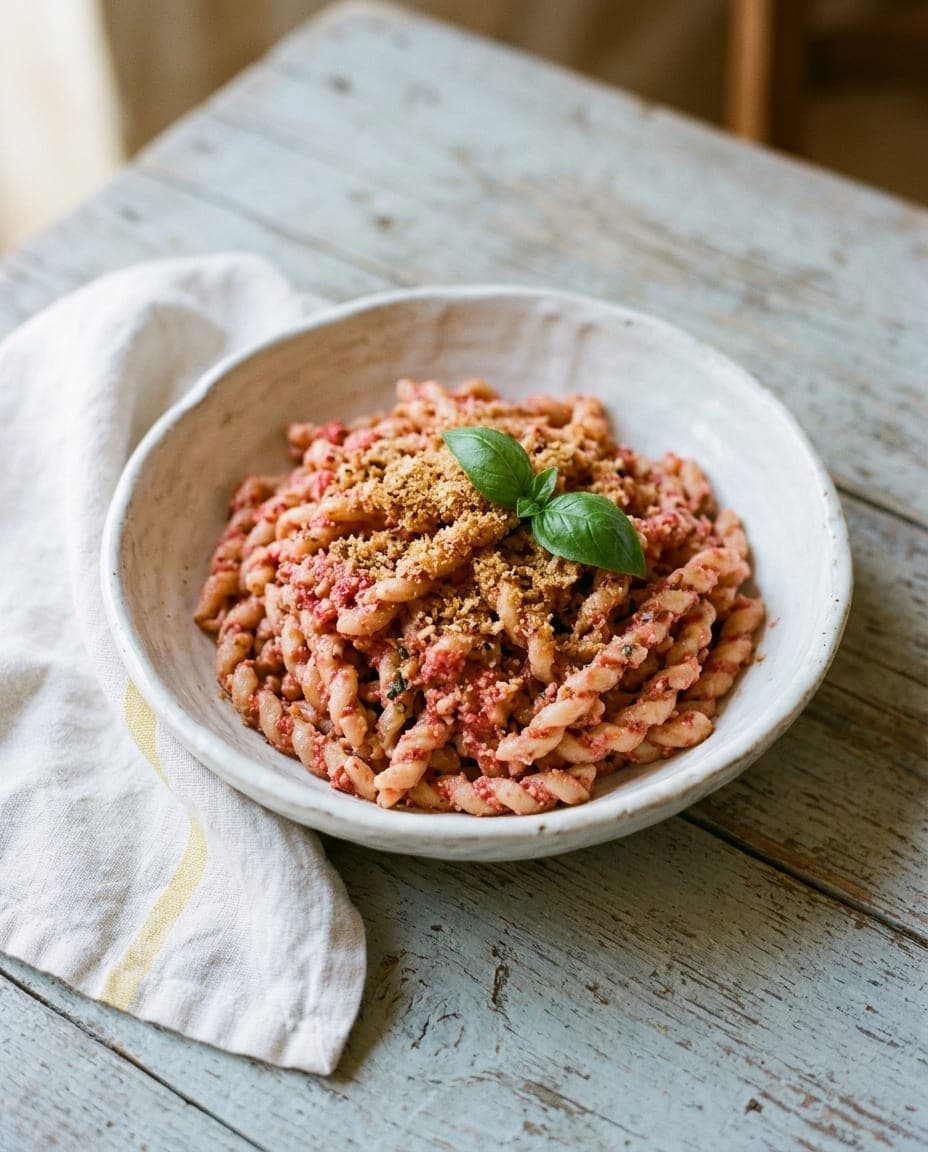
- Local name
- Busiate al pesto trapanese
- Served with
- Grated pecorino or toasted breadcrumbs
- Best eaten at
- A Trapani trattoria
- Pairs with
- Grillo or Zibibbo dry white
What it is
Busiate al pesto trapanese is the distinctive pasta dish of the western tip of Sicily, specifically the province of Trapani. It consists of long, loose corkscrews of pasta known as busiate, tossed with a raw sauce of fresh tomatoes, basil, garlic, almonds and olive oil, usually finished with grated pecorino. Unlike the green pesto of Genoa, this sauce is pink or red, owing to the use of ripe tomatoes rather than just herbs. The dish is a regional speciality, celebrated in Trapani, Marsala and the surrounding province, and it is far more common there than anywhere else in Italy.
The busiate itself is defined by its shape. Each piece is a loose spiral, made by coiling a strand of durum wheat dough diagonally around a thin rod and then sliding it off. Traditionally, this rod was the dried stem of a local wild grass, Ampelodesmos mauritanicus, whose stem is called busa in Sicilian and gives the pasta its name. The open spiral traps the sauce inside and outside the coil, creating a texture that is both chewy and well coated.
Where it comes from
The origins of the dish are tied to the maritime history of Trapani, a city that has long served as a gateway between Sicily and the wider Mediterranean. The most commonly told account suggests that Genoese ships calling at the port of Trapani, probably from the late Middle Ages, brought the idea of pesto with them. The Genoese method involved crushing herbs and nuts in a mortar, and when the recipe arrived in western Sicily, local cooks adapted it to what was available on the island.
Instead of pine nuts, they used almonds, a long-established Sicilian crop. The addition of fresh tomatoes transformed the green sauce into the pink-red pesto trapanese seen today. Pecorino is a common addition, though cooks vary in how much they use, letting the nutty depth of the almonds and the sweetness of the tomatoes take centre stage.
How it is made
The preparation of the sauce traditionally begins with a mortar and pestle, though many modern kitchens now use a food processor. Fresh basil leaves are crushed with peeled garlic and almonds until they form a coarse paste. Ripe tomatoes are then added, peeled and crushed, and the mixture is loosened with extra virgin olive oil, creating a sauce thick enough to coat the pasta but fluid enough to flow between the spirals. The sauce is not cooked.
The busiate are cooked in salted water until they are tender but still offer a slight resistance to the bite. Once drained, they are tossed directly with the sauce, often with a splash of the starchy cooking water to help it bind. The dish is a substantial first course, designed to be eaten as soon as it is dressed.
How it is eaten
Busiate al pesto trapanese is typically served in shallow bowls or wide plates that allow the spirals to spread out, so that every piece is coated in the pink sauce.
A common finishing touch is a sprinkling of grated pecorino, or toasted breadcrumbs (pangrattato) in place of cheese. These additions provide saltiness or crunch, a contrast to the soft pasta and the smooth almond sauce.
To drink, a dry white wine from the region pairs well with the nutty and herbal notes of the dish. A glass of Grillo or a dry Zibibbo, both grown in western Sicily, cuts through the oil of the sauce and highlights the freshness of the basil. The combination is light enough for a warm afternoon yet filling enough after a day of walking the coastal paths.
The story of the busa
The name busiate comes from the traditional tool used to shape the pasta: the busa, the stem of a tough wild grass that grows in the dry fields of western Sicily. Before metal rods became common, local cooks would take these dried stems and roll strips of dough around them to create the corkscrew shape.
This method is now rare, as most pasta makers use thin metal rods, knitting needles or machines that replicate the spiral. In some homes and small workshops in the Trapani province, however, busiate are still shaped by hand. The name remains as a reminder of this rural past and of the relationship between the land and the food.
Curious facts
- The colour is tomato. Unlike Genoese pesto, which is green from basil, pesto trapanese is pink or red because ripe tomatoes are a primary ingredient.
- Almonds over pine nuts. The sauce uses almonds instead of pine nuts, giving it a distinctively nutty, slightly sweeter taste.
- A spiral shape. Busiate are made by coiling dough around a thin rod, traditionally a dried grass stem, which leaves an open spiral that holds the sauce.
- A raw sauce. Like its Genoese cousin, pesto trapanese is pounded, not cooked.
- A Genoese connection. The dish is widely believed to have evolved from pesto brought by Genoese ships to Trapani and adapted with local ingredients.
Where to try it
The best place to eat busiate al pesto trapanese is a traditional trattoria in the city of Trapani itself, or in the nearby towns of the province such as Marsala and Alcamo. Across the area, variations use slightly different proportions of almonds, tomatoes and cheese, but the core elements remain the same.
Where to try it
3 destinations
 Wine Tasting
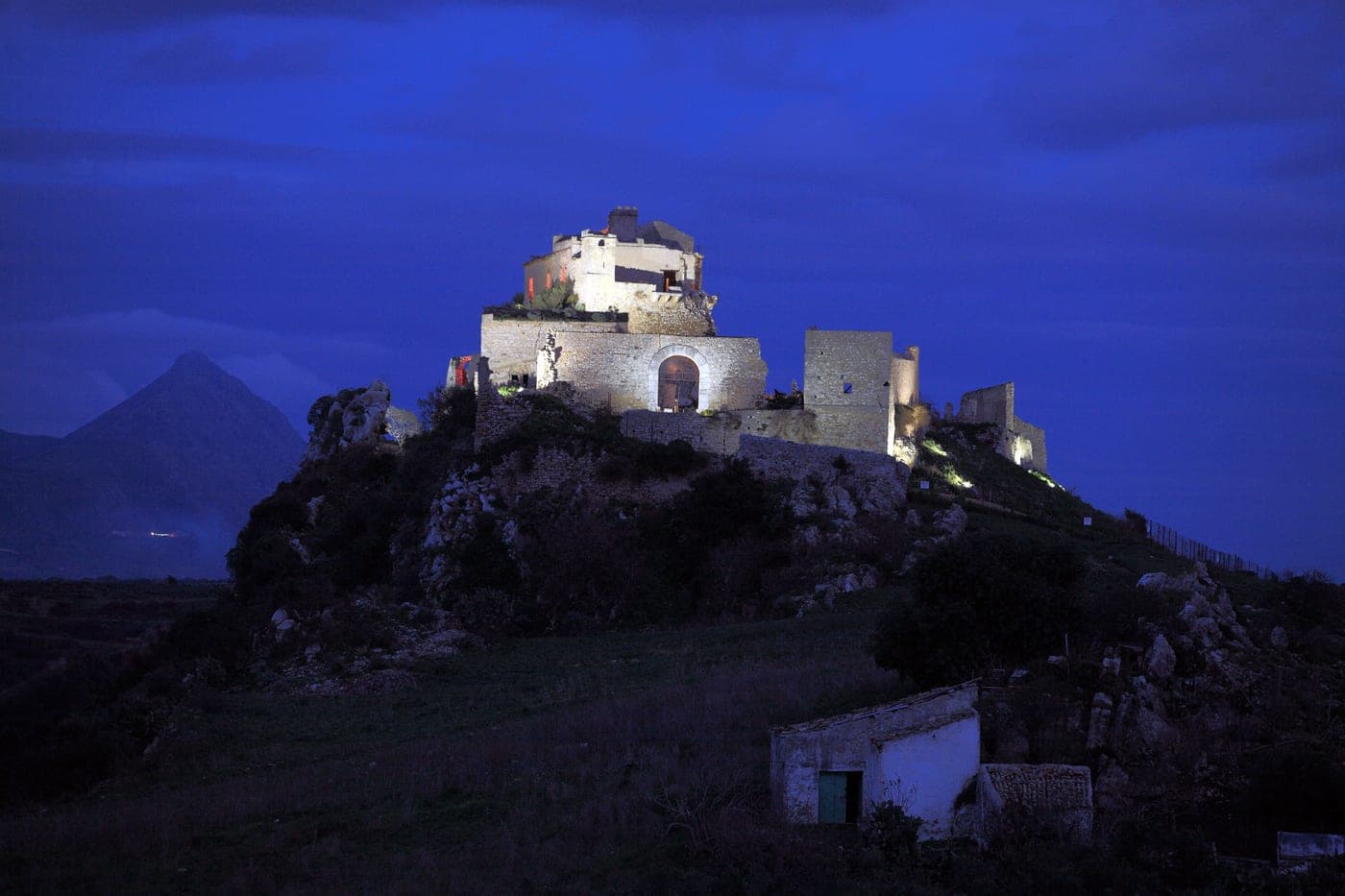
Alcamo
Sicilian town famous for Alcamo DOC white wine production and medieval architecture.
Wine TastingHiking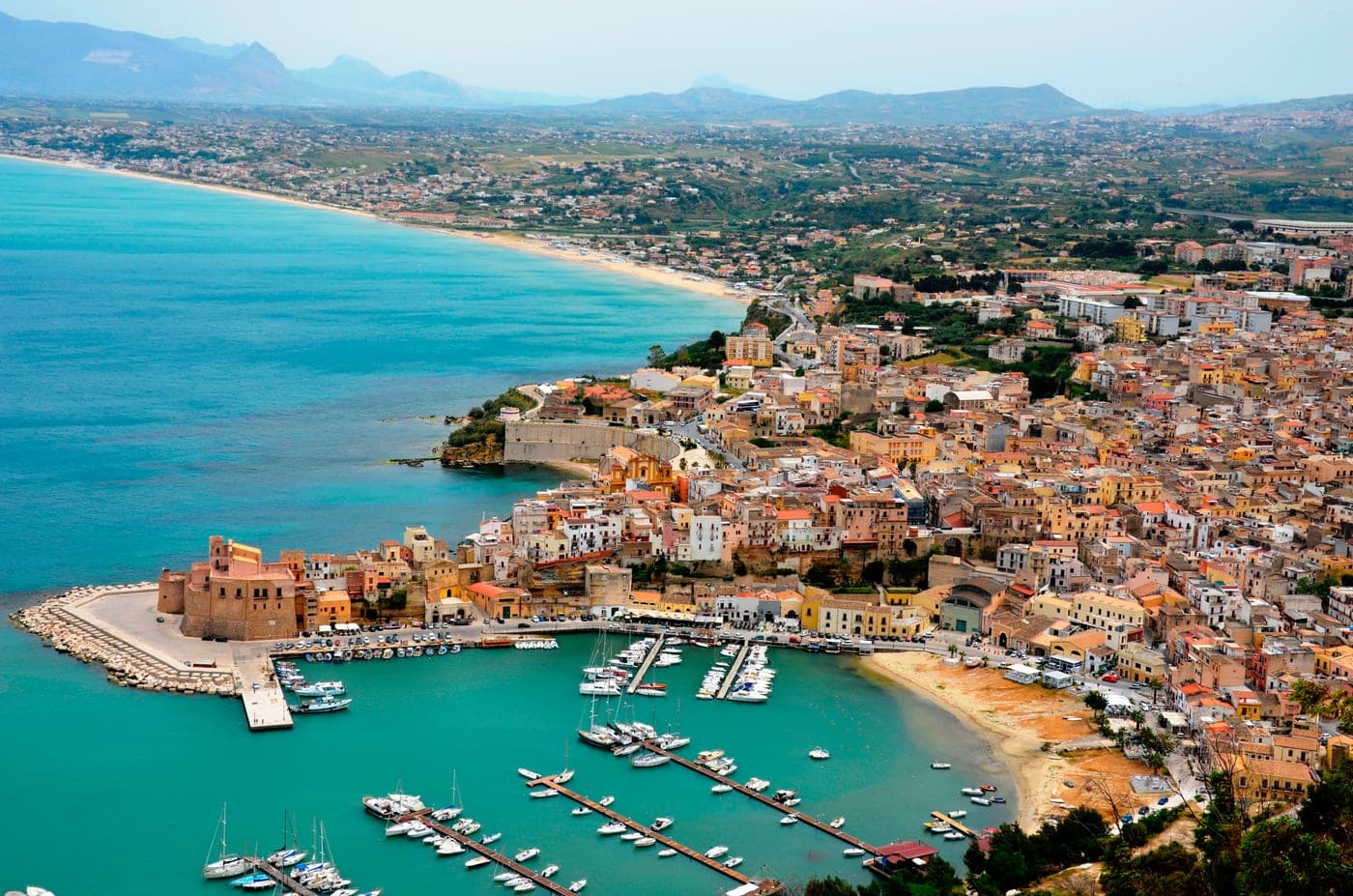 Boat Rentals
Castellammare del Golfo
Sicilian fishing village with marina and boat rentals for exploring the Gulf of Castellammare.
Boat RentalsHiking Wine Tasting
Marsala
Coastal city world-famous for Marsala fortified wine and historic wine cellars.
Wine TastingHiking





