Brodetto alla termolese
Termoli's layered fish stew cooked in a clay pot with green peppers
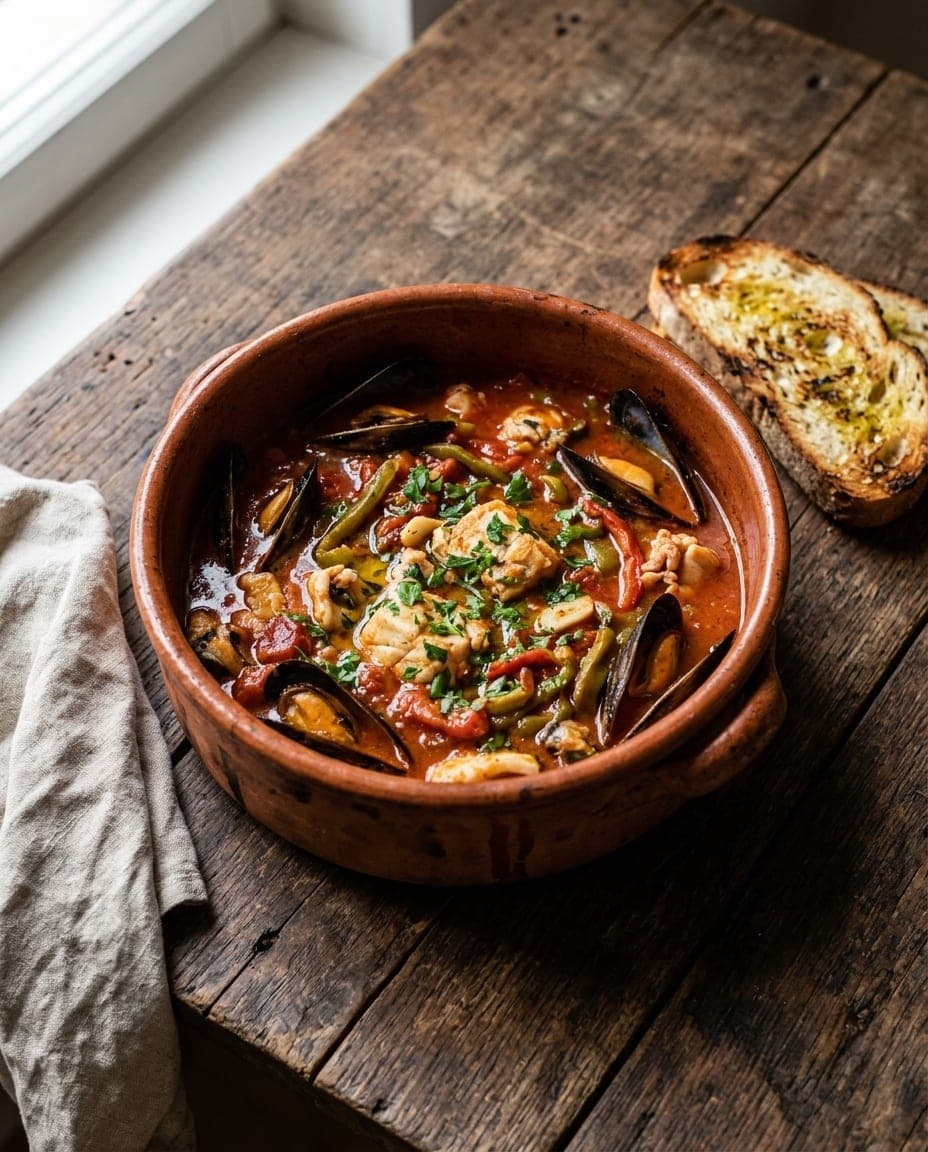
- Local name
- Brodetto alla termolese
- Served with
- Toasted bread
- Best eaten at
- A Termoli harbour trattoria
- Pairs with
- Molise Trebbiano
What it is
Brodetto alla termolese is the specific version of the Italian fish stew tradition found along the Adriatic coast, centred on the town of Termoli in the region of Molise. While similar stews appear all along the Adriatic, this dish is defined by its cooking vessel and its layered construction. It is a thick, aromatic broth where layers of fresh seafood and vegetables simmer slowly in a wide earthenware pot, the coccio.
The defining characteristic is the method of preparation. The cook arranges the ingredients in strict horizontal layers rather than mixing them together. Once the pot is on the heat, cooks traditionally avoid stirring, which would break the delicate fish; the clay pot is often said to be shaken gently instead. This approach preserves the texture of the catch, allowing each layer to cook in its own juices while absorbing the flavours of the oil, garlic, tomatoes and peppers beneath it.
The clay pot and the green pepper
The identity of this brodetto rests on two specific elements: the clay pot and the use of sweet green peppers. The coccio is a terracotta pot that retains heat well and lends the broth a faintly earthy note; the stew is both cooked and served in it.
In contrast to other Adriatic brodetti that rely on vinegar for their acidity, the Termoli version leans on the sweetness of green peppers (peperone verde dolce), with peeled tomatoes for acidity. The peppers are cooked down until they are soft and sweet, forming a distinct base that sets this stew apart from its neighbours in the Marche and Abruzzo. This reliance on fresh vegetables rather than sharp acids gives the broth a mellow, almost vegetable-forward character that complements the briny sea ingredients.
The fish used are not expensive cuts but the daily catch of the local fleet. The pot varies with the day's catch but typically contains cuttlefish, squid, scampi, mussels and clams alongside small rock fish. The result is a stew that feels substantial and earthy, with the seafood tasting intensely of the sea rather than just being boiled in it.
How it is eaten
Brodetto alla termolese is not eaten with a fork and knife alone. It is traditionally served piping hot in the coccio itself, often accompanied by thick slices of toasted bread placed directly into the pot or on the side. The bread is essential for soaking up the rich, oily broth. Some cooks also add broken pasta, cooked al dente, to the leftover broth as a second course.
The eating method reflects the rustic origins of the dish, which began as a fishermen's meal made from small, unsold fish. It is most at home in a bustling harbour trattoria in Termoli. A glass of local Molise Trebbiano wine, crisp and dry, is the standard companion to cut the fat of the oil and peppers.
Where it is eaten
To experience this dish properly, one must go to Termoli itself, a fishing port on Molise's short Adriatic coast. The best versions are found in traditional trattorie near the harbour, where the kitchen staff are accustomed to managing the delicate balance of the layered pot. The stew arrives at the table in the pot it was cooked in.
The setting is often framed by the unique landscape of the Molise coast, where trabucchi stand as wooden fishing platforms on stilts above the water. While these structures are not part of the cooking process, they define the visual and cultural backdrop for the meal. Eating a bowl of brodetto in a harbour-side tavern while watching the sea offers a direct connection to the local way of life that has sustained this dish for generations.
Curious facts
- Hands off the spoon. Cooks traditionally leave the layers undisturbed rather than stirring, so the fish keeps its shape.
- Green peppers define the flavour. Termoli's version relies on sweet green peppers rather than the vinegar used in some other Adriatic versions.
- Layered cooking. Fish and vegetables are arranged in horizontal layers, ensuring each ingredient cooks in its own juices.
- A vessel for sharing. The dish is served in the same clay pot it was cooked in, encouraging diners to share directly from the coccio.
- A local staple. While similar stews exist elsewhere, the sweet green peppers are characteristic of Termoli.
Where to try it
1 region

Molise
Nestled between Abruzzo and Campania, this is Italy's second smallest region, known for its rugged mountains and rolling hills. Termoli, the only coastal city, offers a blend of medieval architecture and beautiful beaches. The region is rich in history, with ancient villages like Campobasso, famous for its castle and local crafts. Molise is also notable for its traditional cuisine, including handmade pasta and local wines such as Trebbiano and Sangiovese. The countryside is dotted with olive groves and vineyards, making it ideal for food and wine enthusiasts. Festivals celebrating local culture, such as the 'Festa di San Basso,' highlight the region's vibrant traditions.





