Brasato al Barolo
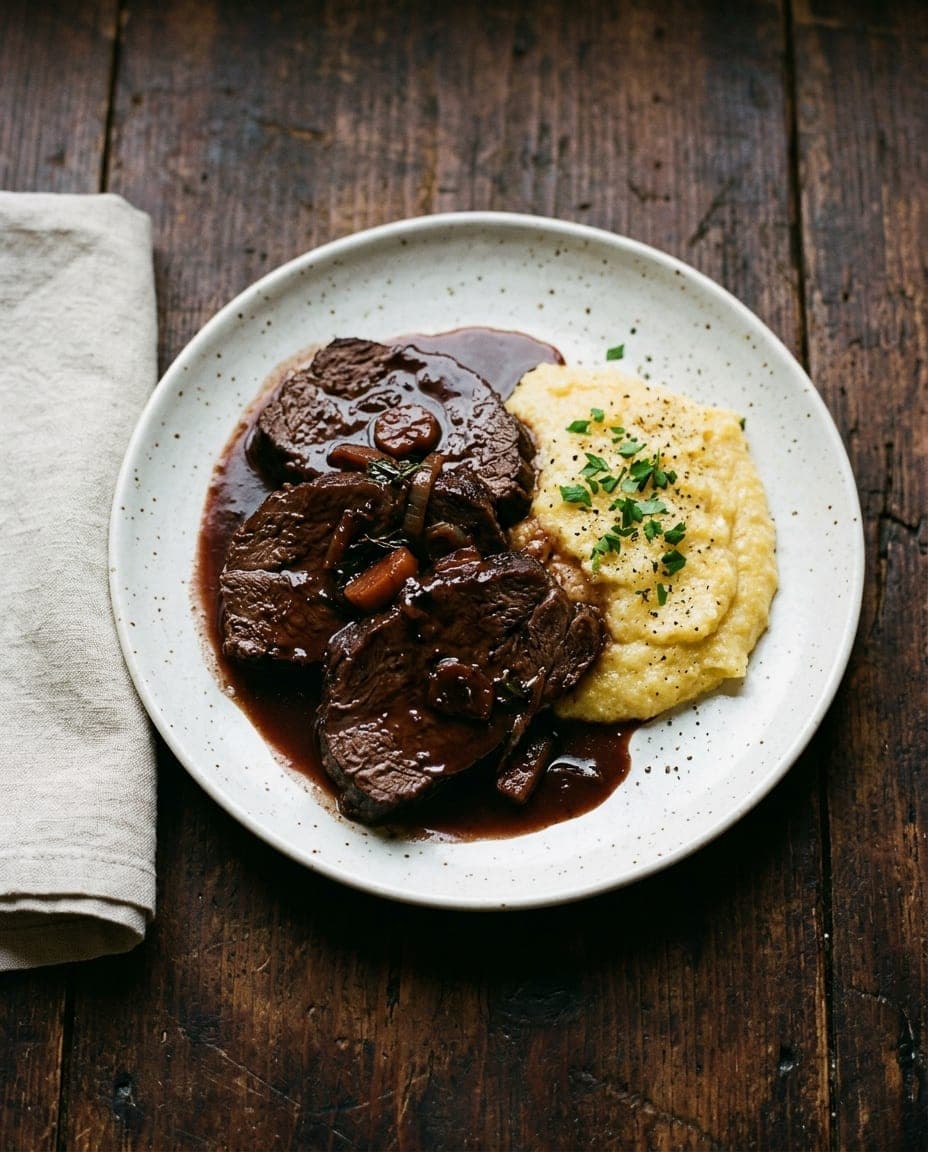
Beef braised slowly in Barolo wine, served with polenta
- Local name
- Brasato al Barolo
- Served with
- Polenta or mashed potatoes
- Best eaten at
- A Langhe trattoria
- Pairs with
- Barolo
What it is
Brasato al Barolo is one of the great winter dishes of Piedmont, closely associated with the rolling hills of the Langhe in north-west Italy. It is not merely a stew but a slow braise in which a large piece of beef is cooked for hours in Barolo wine until it is tender enough to cut with a fork. The meat is then sliced and served in a dark, glossy sauce that carries the deep, savoury character of the region's most famous red wine.
The dish belongs to the colder months, roughly from October through March, when the grape harvest has ended and the landscape turns brown and quiet. It is a meal designed for warmth, born from a farmhouse tradition of turning tougher cuts into something tender and flavourful. Braised beef appears across Italy, but the use of Barolo as both marinade and braising liquid marks this dish as a Piedmontese speciality.
The history of the Langhe braise
The origins of brasato al Barolo lie in the practical cooking of Piedmontese homes and trattorias. In the Langhe, where Nebbiolo grapes are grown to make Barolo, wine has long been a cooking ingredient as well as a drink. Marinating the beef in wine before cooking and then braising it slowly in the same liquid turns tougher, connective-tissue-rich cuts into something soft and rich.
The exact date of its first appearance in a cookbook is not recorded, but the method has been standard practice in Piedmontese households for generations. It reflects the agricultural rhythm of the area: heavy, sustaining food prepared when the weather turns cold.
Piedmontese cooks also debate the wine itself. Some insist on Barolo, the dish's namesake, while others braise with a younger, less expensive Nebbiolo from the same area and save the Barolo for the glass. Either way, the wine's acidity and tannins give the final sauce its distinctive body.
What goes into it
The preparation relies on a few key ingredients, with the quality of the beef and the wine determining the outcome. The meat is a single large cut suited to long cooking, often from the shoulder or the leg.
- Beef: A substantial cut with enough connective tissue to become soft while holding its shape.
- Barolo wine: The primary liquid, used for both the marinade and the braise. Some versions use a younger Nebbiolo instead.
- Aromatic vegetables: Onions, carrots and celery are chopped and added to the marinade.
- Herbs and spices: Bay leaves, rosemary and other herbs, with cloves, cinnamon, nutmeg or pepper used sparingly to add warmth.
- Fat: Butter or lard is used to brown the meat before it goes back into the liquid.
The meat is usually marinated for many hours or overnight, then browned and braised for several hours in the wine and vegetables. At the end, the vegetables are either blended into the cooking liquid or strained out, and the sauce is reduced until it becomes thick, dark and glossy. This reduction concentrates the flavours of the wine and the meat, creating a sauce that clings to the beef.
How it is eaten
Brasato al Barolo is served as a main course (secondo) at lunch or dinner, particularly on cold days. The meat is sliced thickly and arranged on a plate with the sauce poured generously over the top, and it is tender enough to be cut with a fork.
The dish is almost always accompanied by polenta or mashed potatoes. Polenta, the cornmeal porridge of northern Italy, provides a neutral, creamy base that absorbs the rich sauce, while mashed potatoes offer a similarly mild contrast to the intensity of the wine. A glass of Barolo is the natural companion, creating a harmony between the food and the drink.
In a Langhe trattoria, the portion is substantial, and the taste is deep and lingering, with notes of dark fruit, earth and spice.
Curious facts
- The colour of the sauce. The reduced sauce is so dark it can look almost black, the result of concentrating the wine and the browned meat juices.
- A debate on the wine. While named for Barolo, many cooks braise with a younger Nebbiolo and keep the Barolo for drinking.
- Served with polenta. Polenta or mashed potatoes act as a neutral base to absorb the wine-heavy sauce.
- A seasonal staple. It is above all an autumn and winter dish, most common on menus when the weather turns cold in the Langhe.
- Marinade time varies. The meat is marinated for anything from several hours to a day or more, depending on the cook and the cut.
Where to try it
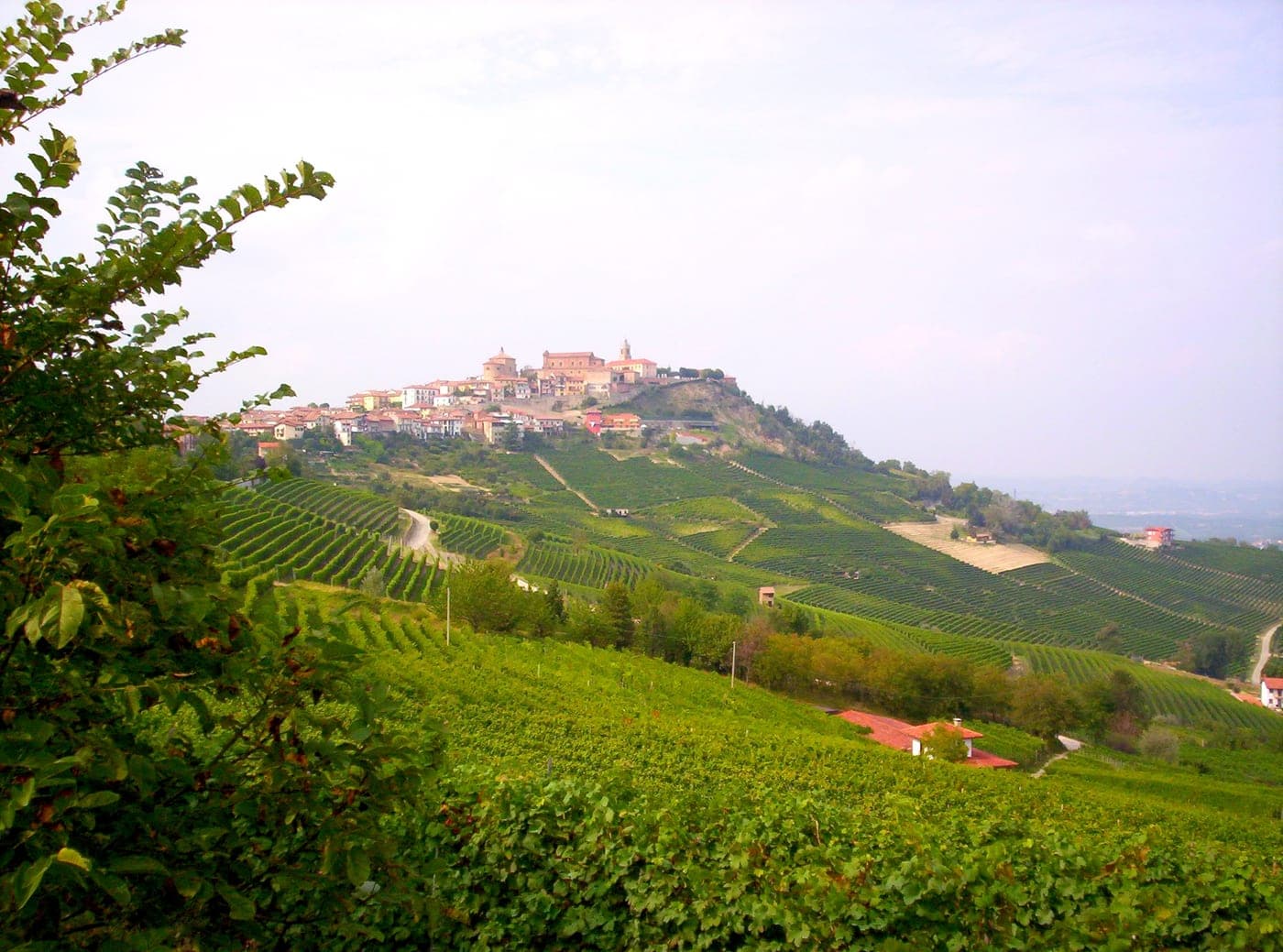
The best place to experience brasato al Barolo is a traditional trattoria in the Langhe, in villages such as La Morra, Barolo or Neive, where the wine is made locally and the dish is a fixture of autumn and winter menus. It also appears in trattorias in Alba, Turin and across Piedmont. To enjoy it properly, the colder months are the time to go, when the dish is at its peak and the atmosphere of the trattoria matches the warmth of the food.
Where to try it
1 destination
 Wine Tasting
La Morra
Panoramic Barolo village with stunning vineyard views and numerous wine cellars.
Wine TastingHiking





