Bicerin
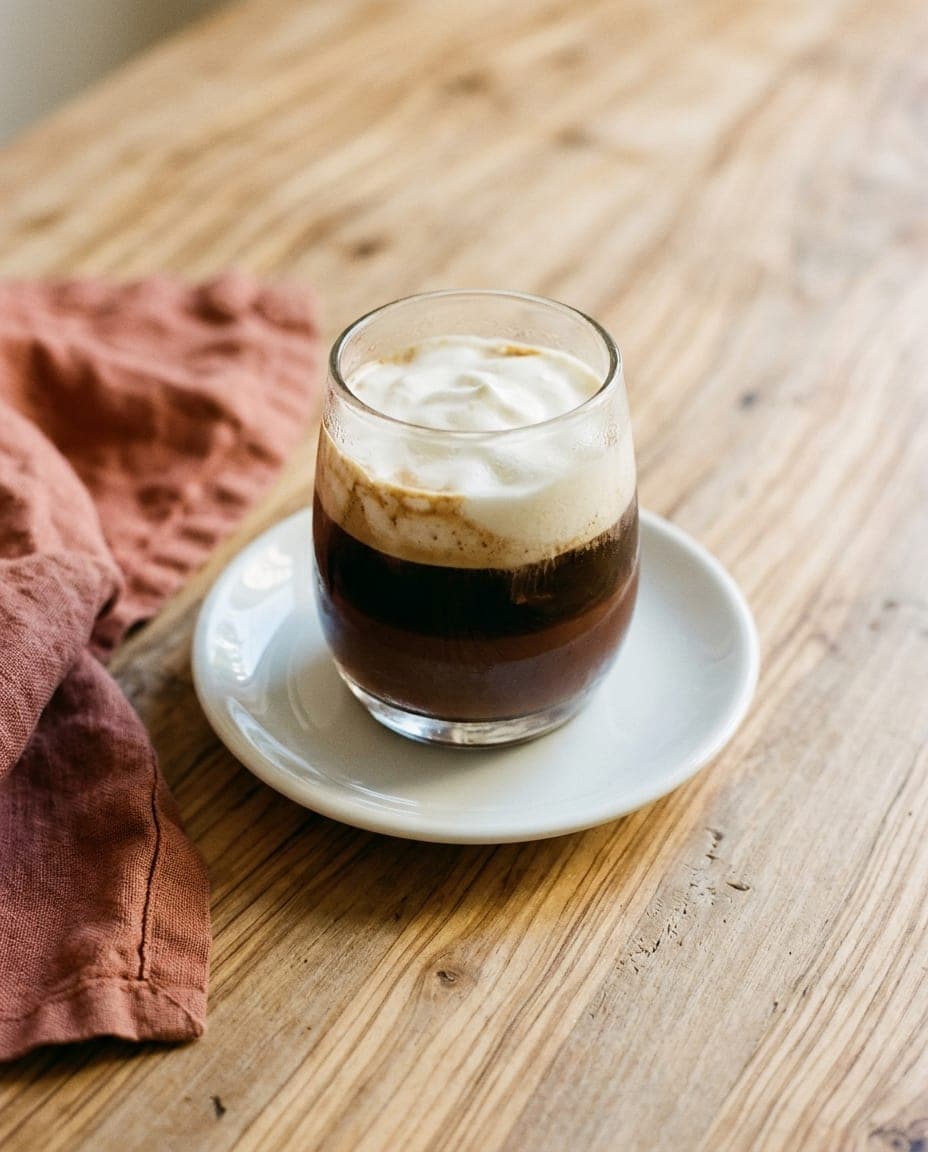
Turin's layered coffee-chocolate-cream drink served in a small glass
- Non-alcoholic
- Local name
- Bicerin
- Served
- Hot, in a small glass
- Best eaten at
- A historic Turin café
- Pairs with
- Gianduiotti chocolates
What it is
The bicerin is one of the most distinctive drinks of Turin, a layered creation of espresso, hot chocolate and milk cream that is served unstirred. It comes in a small, clear glass—the Piedmontese word bicerin means "little glass" (Italian bicchierino), and the drink takes its name from it. The differences in density and temperature keep the colours distinct: dark coffee and chocolate below, pale cream floating on top.
It is not a stirred mixture like a latte or a mocha. The point of the bicerin is that the layers hold their form until the drinker chooses to blend them, so that each sip moves from the cool, milky cream through to the warm, bitter-sweet coffee and chocolate beneath. It is a drink designed for slow consumption, usually taken while seated in a historic café during the cooler months.
While the ingredients are simple—coffee, chocolate and cream—the execution requires precision. The proportions are treated as a house secret by the cafés that serve it, and in a well-made bicerin the layers remain visible until the drinker decides to stir.
The history of Turin's layered coffee
The roots of the bicerin lie in the 18th century, when Turin was already a centre of chocolate making and café culture. It descends from the bavareisa, a drink of coffee, chocolate and cream that was served mixed. The bicerin presented the same three ingredients separately in a single small glass.
Tradition links the drink to the café Al Bicerin, opposite the Santuario della Consolata, which dates back to 1763 and still guards its recipe. The city's cafés became places where Turin's chocolate culture met the rising popularity of coffee, and it was there that the drink evolved into a ritual.
The bicerin also gained famous admirers. Camillo Benso, Count of Cavour, is said to have been fond of it, and Alexandre Dumas praised it as "an excellent drink consisting of coffee, milk and chocolate". In 2001 the Piedmont Region recognised it as a traditional Piedmontese drink. While other Italian cities have their own coffee traditions, the bicerin remains uniquely tied to the capital of Piedmont.
How it is made and served
The construction of a proper bicerin depends on the order in which the ingredients are poured. Freshly made espresso and thick hot chocolate go in first, and a layer of cold milk cream is added last, floating atop the denser liquids. Some cafés use whipped cream, but the original calls for liquid crema di latte.
The drink is served immediately after assembly, often with a small spoon for those who wish to blend the ingredients later. It is never presented pre-stirred, as that would defeat the purpose of the layered experience.
The glass itself is part of the tradition. It is typically a clear, small vessel that allows the drinker to see the distinct bands of colour, and its size keeps the drink warm throughout and encourages a leisurely pace.
How to drink it
The bicerin is meant to be drunk slowly, ideally while seated at a table in a historic café during the winter or on a cool autumn day. Traditionally the first sips are taken without touching the spoon, letting the cream give way to the chocolate and coffee below; the remainder can be stirred together at the end.
Many cafés serve the drink alongside something sweet, such as gianduiotti—Turin's small chocolates made from cocoa and hazelnut paste. The nutty sweetness of the gianduiotti sits well with the intensity of the coffee and the depth of the cocoa.
It is a drink for conversation, not for rushing through on the way to a meeting. In the coldest months it is common to see groups gathered around small tables in Turin's historic cafés, sipping bicerins.
Curious facts
- The glass defines the drink. The term bicerin literally means "little glass" in Piedmontese, so the vessel is as much part of the identity of the beverage as the ingredients themselves.
- An 18th-century ancestor. The bavareisa, a mixed drink of coffee, chocolate and cream, preceded the layered bicerin.
- Famous admirers. Cavour and Alexandre Dumas are both remembered as fans of the drink.
- Not the bottled liqueur. The "Bicerin" sold in bottles in shops is a different product, a gianduia cream liqueur.
- No stirring until the end. The traditional way to consume a bicerin involves tasting the layers before mixing them together.
Where to try it
The best place to experience an authentic bicerin is one of Turin's historic cafés, particularly those that have served the drink for generations. The café Al Bicerin, which shares its name with the beverage and is traditionally credited with it, is the classic address, and other traditional cafés in the city centre also serve their own versions.
These historic venues are typically located near the main squares or along the arcaded streets that define Turin's centre. They provide the appropriate atmosphere for the drink: quiet corners with velvet seating, high ceilings and a sense of timelessness, surrounded by the chatter of locals and the clinking of small glasses. A slow afternoon with a bicerin in hand, watching the layers before finally blending them, is one of the city's quieter pleasures.
Where to try it
1 destination
 Camper Van Rentals
Turin
Architectural gem with historic cafes, elegant squares, and rich chocolate tradition.
Camper Van RentalsThermal Spas





