Baccalà alla vicentina
Slow-cooked stockfish in milk, the signature dish of Vicenza
- Local name
- Bacalà alla vicentina
- Served with
- Polenta
- Best eaten at
- A Vicenza trattoria
- Pairs with
- Breganze white
What it is
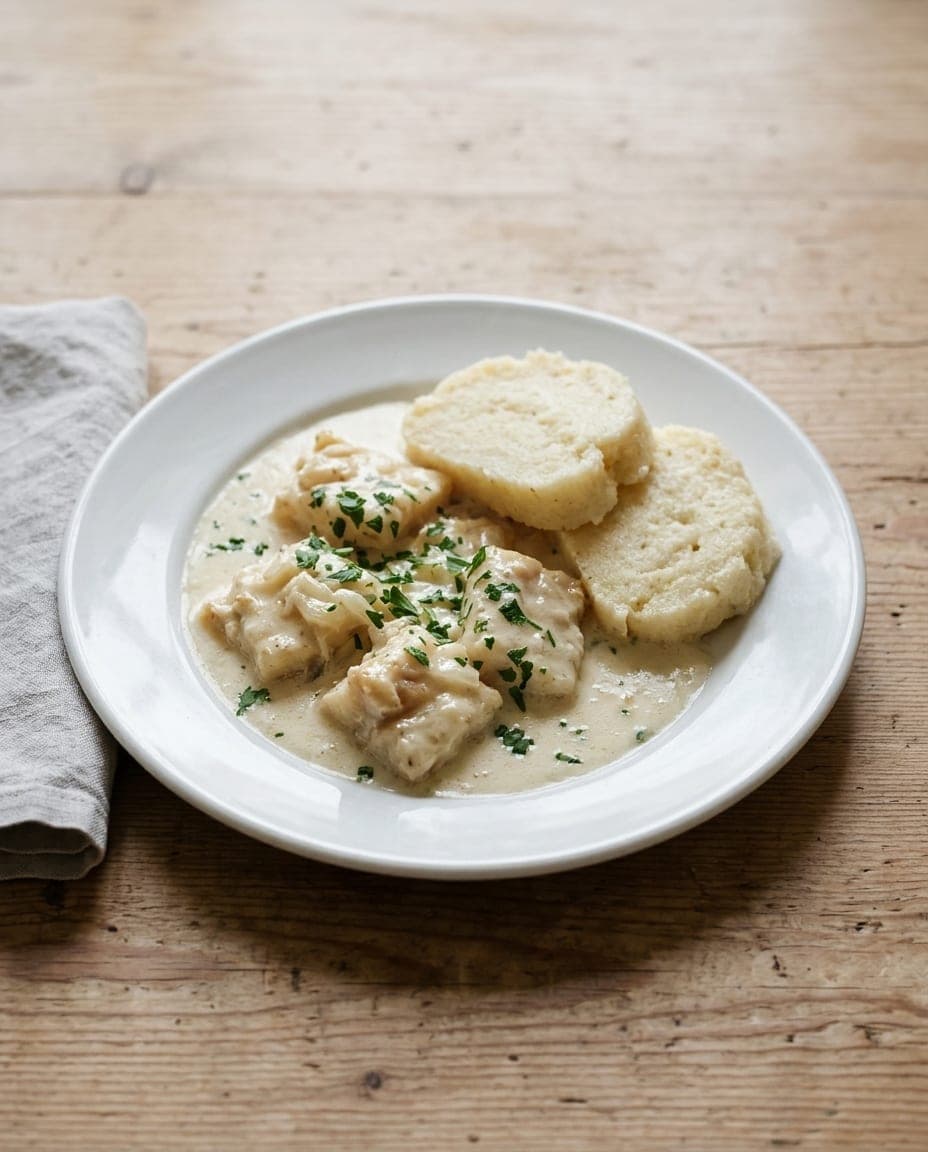
Baccalà alla vicentina, written bacalà in the local dialect, is a dish of striking simplicity that defines the culinary identity of Vicenza in the Veneto region. It is made from air-dried cod, known in the rest of Italy as stoccafisso, which is cooked slowly with milk, onions and anchovies until it turns soft and creamy. The fish is never fried or grilled; instead, it is beaten, soaked for days to rehydrate it, and then layered in a pot where it simmers very gently for hours.
The result is a thick, velvety dish in which the fish flakes apart into a pale, creamy sauce. The bones are removed before cooking, and the cod melts into the milk and oil, creating a rich sauce that coats the fish completely. It is traditionally served with polenta, which acts as a neutral base to absorb the delicate flavour of the fish and the creamy liquid.
The Norwegian connection
The story of this dish begins far from the Veneto, in the cold waters off Norway. In 1432, the Venetian merchant captain Pietro Querini was shipwrecked and, with the survivors of his crew, reached the island of Røst in the Lofoten archipelago. The local fishermen took them in for several months. The islanders caught cod and dried it in the cold, clean air on wooden racks. When Querini eventually made the long journey home, he brought some of this dried fish back to Venice, along with an account of how it was made.
Dried cod had become part of Venetian tables by the 15th century, and its popularity grew after the Council of Trent confirmed it as suitable food for Lent. The word stoccafisso comes from the Norse and Dutch words for "stick fish", referring to the wooden poles on which the fish is hung to dry. Over time, this imported dried cod became a staple in the Veneto, particularly in the inland city of Vicenza. While elsewhere in Italy baccalà means salted cod, in the Veneto the word is used for the air-dried, unsalted stockfish. This distinction often confuses outsiders, but in Vicenza the dish has always been made with stockfish from Norway.
How it is made without a recipe
The preparation of baccalà alla vicentina follows a method that local cooks guard closely. The process begins with the dried fish, which is beaten with a wooden mallet to break down its fibres and then soaked in cold water for several days, with the water changed regularly, until the flesh swells and softens. Once rehydrated, it is opened, boned and cut into pieces.
The cooking is a long, very gentle simmer, known locally as pipare, in which the liquid barely moves. The pieces of fish are coated in flour and layered in a pot with onions softened slowly in olive oil, anchovies for depth and a sprinkling of grated cheese. Milk and oil are then poured over everything, covering the fish completely. The pot is placed on a very low heat and the cook does not stir it, only turning the pot now and then, so that the pieces stay intact. The dish cooks for several hours in this way, allowing the liquid to reduce and the fish to turn tender and creamy.
What goes into it
The ingredients are few, but each plays a specific role in creating the final result:
- Stockfish, the air-dried cod from Norway, which provides the base flavour and texture.
- Onions, cooked slowly in olive oil until soft and sweet, forming the foundation of the sauce.
- Anchovies, which dissolve into the mixture to add a savoury depth without overwhelming the fish.
- Milk, the primary liquid that creates the creamy, white consistency of the dish.
- Olive oil, used to soften the onions and enrich the final sauce.
- A little flour, used to coat the fish and give the sauce body.
- Grated Grana Padano or Parmigiano, scattered over the layers in the classic version.
- Parsley, sometimes added for a touch of freshness, though it is not present in every version.
The dish is not spicy, nor is it heavy with herbs. Its flavour is subtle, relying on the sweetness of the onions and the richness of the milk and oil to carry the taste of the cod. The anchovies provide a hint of saltiness that balances the creaminess without dominating the palate.
How to eat it
Baccalà alla vicentina is almost always served as a main course, at lunch or dinner in a traditional trattoria in Vicenza or the surrounding countryside. The fish and its creamy sauce are served with polenta, either soft or grilled in slices, which soaks up the sauce while providing a mild, earthy contrast to the rich fish.
A glass of local white wine, for instance from the nearby Breganze area, suits it well, with enough acidity to cut through the creaminess of the dish without clashing with its delicate flavour. The combination of warm polenta, creamy cod and crisp white wine makes a meal that feels both rustic and refined.
Curious facts
- The fish is beaten. Before soaking, the dried cod is struck repeatedly with a wooden mallet to break down its fibres.
- No stirring allowed. Once the milk is added, the pot is turned rather than stirred, so that the pieces of fish stay intact.
- The word bacalà means stockfish here. In Vicenza and the Veneto, the term refers to air-dried cod from Norway, not the salted cod meant by baccalà elsewhere in Italy.
- A recipe guardian exists. The Confraternita del Bacalà alla Vicentina, based in Sandrigo, a small town near Vicenza, promotes the traditional method and organises an annual festival there each September.
- A shipwreck story. The Veneto's love for dried cod is traced back to the 1432 shipwreck of Pietro Querini, who reached Røst in the Lofoten Islands.
Where to try it
The best place to eat baccalà alla vicentina is in a traditional trattoria in Vicenza itself, where the dish is a point of local pride. It appears on menus across the Veneto, but the version from Vicenza remains the benchmark. Sandrigo, north of the city, celebrates the dish with its September festival, and the hills around Gambellara and Breganze produce white wines that suit it well. The experience is simple: a warm plate of polenta and creamy cod, a glass of local wine, and a story that stretches back to a shipwreck in Norway.






