Babà al rum
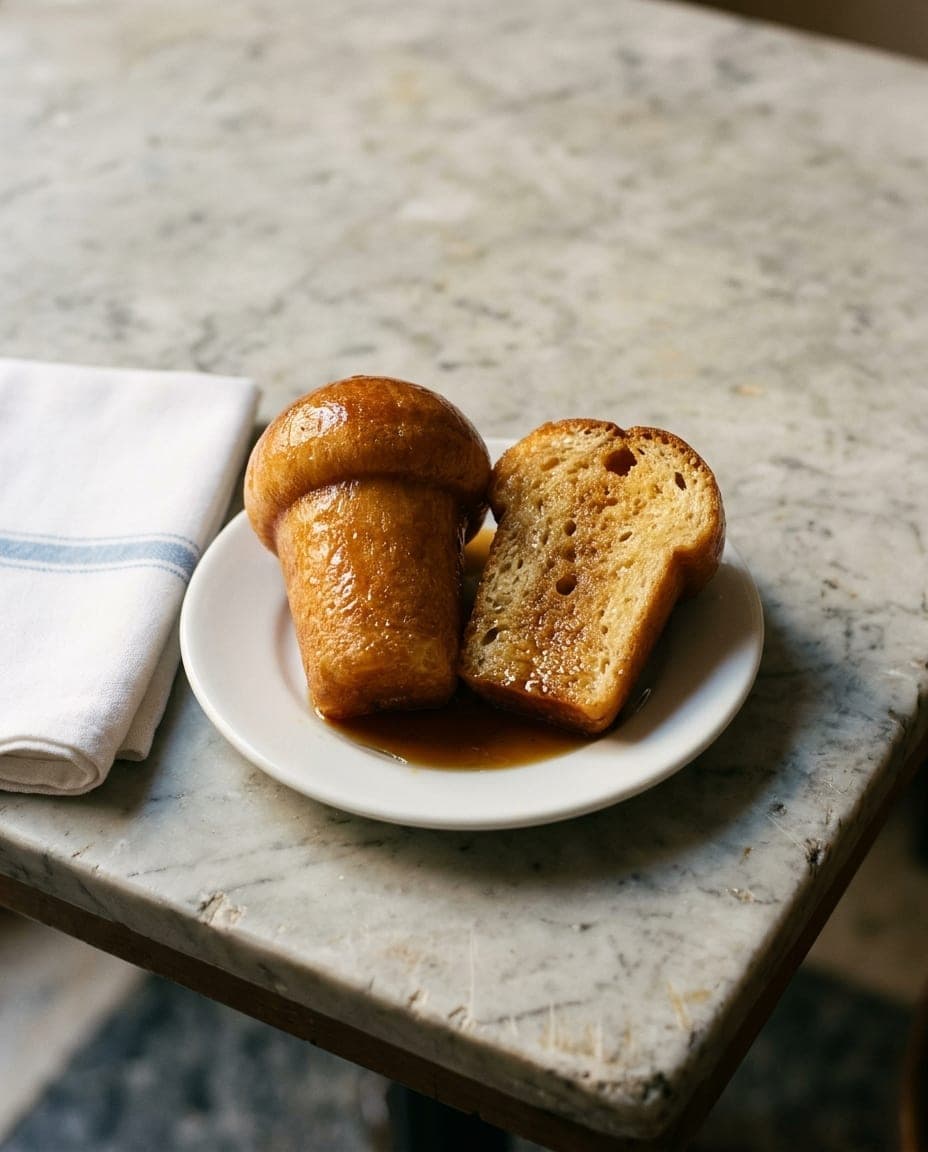
The tall, mushroom-shaped yeast cake soaked in dark rum syrup from Naples
- Vegetarian
- Local name
- Babà
- Best eaten at
- A Neapolitan pasticceria
- Pairs with
- Espresso
What it is
Babà al rum, usually known simply as babà, is a small, tall pastry that has become one of the most recognisable symbols of Naples' sweet tradition. The cake takes the shape of a mushroom or a short tower, its domed top rising above a narrower base. It is made from a very rich yeast dough that is worked until it becomes soft and elastic, then baked until dry and golden before being drenched in a syrup of sugar, water and rum.
The defining feature of the dish is the way the cake absorbs liquid. The sponge must be porous enough to drink up the syrup without falling apart, yet sturdy enough to hold its shape. When ready, the babà glistens with moisture, heavy with the alcohol and sugar it has soaked up. The classic version is served plain to let the rum flavour dominate; purists frown on toppings such as chocolate, jam or whipped cream.
In Naples the babà is a statement piece on the counter of a pasticceria, sold in its classic small size as well as in large ring-shaped cakes for sharing. The name also carries weight in local speech: to tell someone si' nu babbà, "you're a babà", is a compliment.
The journey from Lorraine to Naples
The history of the babà is a clear example of how food travels along political and cultural lines. While it is now firmly associated with Naples, its roots are usually traced to Poland and France. The story begins with King Stanisław Leszczyński, the exiled Polish king who spent his later years as Duke of Lorraine, in eastern France. As the legend goes, he found the local kugelhopf too dry and had it soaked in a syrup flavoured with Madeira wine, naming the result after Ali Baba of The Thousand and One Nights.
The pastry cook Nicolas Stohrer, who worked for Stanisław and later followed the king's daughter Marie to Versailles when she married Louis XV, is credited with bringing the cake to Paris, where he opened his own pastry shop. In France the cake came to be soaked in rum and took on its familiar domed form, and baba au rhum became a staple of Parisian patisseries.
The path from France to Naples ran through the kitchens of the aristocracy. Neapolitan noble families employed French or French-trained chefs, known locally as monsù (from monsieur), and these cooks are credited with introducing the babà to the city in the late 18th or early 19th century. It appears in Italian cookbooks of the 19th century as a Neapolitan sweet, and by the end of that century it had become popular with the city's middle classes. Local bakers adapted it to Neapolitan taste, and over time the cake became a true Neapolitan icon.
Today babà can be found in pastry shops across Italy, but Naples and its surroundings, from the city centre to the Sorrento coast, remain its spiritual home.
The making of a sponge
The structure of the cake relies on a dough that requires patience and skill. A babà dough is a very rich yeast mixture of flour, eggs, butter, sugar and salt. The high proportion of eggs and butter makes the dough slack and sticky, and it must be worked for a long time to develop the gluten network that will eventually hold the syrup.
The dough is left to rise in small cylindrical metal moulds until it swells over the rim, forming the characteristic mushroom cap. The cakes are then baked until fully cooked and golden brown, and left to dry. This dryness is essential because it allows the cake to act like a blotter when it meets the syrup.
Once baked, the cakes are soaked in warm syrup made from sugar and water flavoured with a generous amount of rum, sometimes with citrus peel. They are left in the liquid until fully saturated, then drained. They do not collapse; instead, they swell slightly as they absorb the liquid, keeping their tall, mushroom shape.
How it is eaten
In Naples, the babà is eaten as a dessert or as a sweet treat in the afternoon or after a meal. The most traditional way to have it is at a pasticceria or café bar, often with an espresso.
The ritual is simple. A single babà, usually one per person, arrives on a small plate or in its own paper cup. The cake is heavy and moist, so it is eaten with a spoon or a small fork, or simply by hand on the go, taking care not to let the syrup drip too much. The rum flavour is distinct, cutting through the sweetness of the sugar and the richness of the butter.
Many locals prefer it with a strong black coffee. Common variants are split and filled with crema pasticcera or decorated with fruit, but the plain babà remains the reference.
The story behind the saying
The connection between the pastry and the Neapolitan language is one of the most enduring aspects of the dish. The phrase si' nu babbà translates as "you are a babà". In everyday conversation, it does not refer to the cake itself but to the qualities it represents: it praises a sweet, kind and helpful person, and can also be said of a charming object or a lovely view.
Curious facts
- A royal legend. The cake's story is traditionally traced to Stanisław Leszczyński in Lorraine, who is said to have soaked a dry kugelhopf in syrup.
- Named after Ali Baba. According to the same legend, the name comes from the hero of The Thousand and One Nights.
- The monsù connection. French-trained chefs in the kitchens of Neapolitan noble families are credited with bringing the babà to Naples.
- A compliment. In Neapolitan, si' nu babbà is said of someone sweet and kind-hearted.
Where to try it
The best place to eat a babà is in a traditional pasticceria in Naples itself.
Many of the historic bakeries in the city centre have been serving babà for generations, in the streets around Via Toledo, Piazza del Plebiscito and the historic centre. The cakes are usually displayed on trays behind glass, ready to be eaten at the counter or wrapped to take away.
Outside Naples, good versions are found in other parts of Campania, including Sorrento and the Amalfi Coast. However, the authentic experience is best found in the city that made the dish its own.
Where to try it
1 region
 Wine Tasting3 destinations
Campania
Campania, a coastal region in southern Italy, is renowned for its rich history and diverse landscapes. It is home to Naples, the largest city, famous for its historic center, a UNESCO World Heritage site. The region boasts the stunning Amalfi Coast, characterized by picturesque cliffs and traditional fishing villages. Historic sites like Pompeii and Herculaneum provide a glimpse into ancient Roman life, while the islands of Capri and Ischia offer natural beauty and thermal springs. Campania is also known for its culinary treasures, including authentic Neapolitan pizza and local wines such as Aglianico. Explore lesser-known towns like Caserta, with its grand Royal Palace, or the charming village of Ravello, known for its gardens and music festival. This region blends cultural heritage with breathtaking scenery, making it a unique destination for those who wish to travel at a leisurely pace.
Wine TastingHiking





