Arrosticini
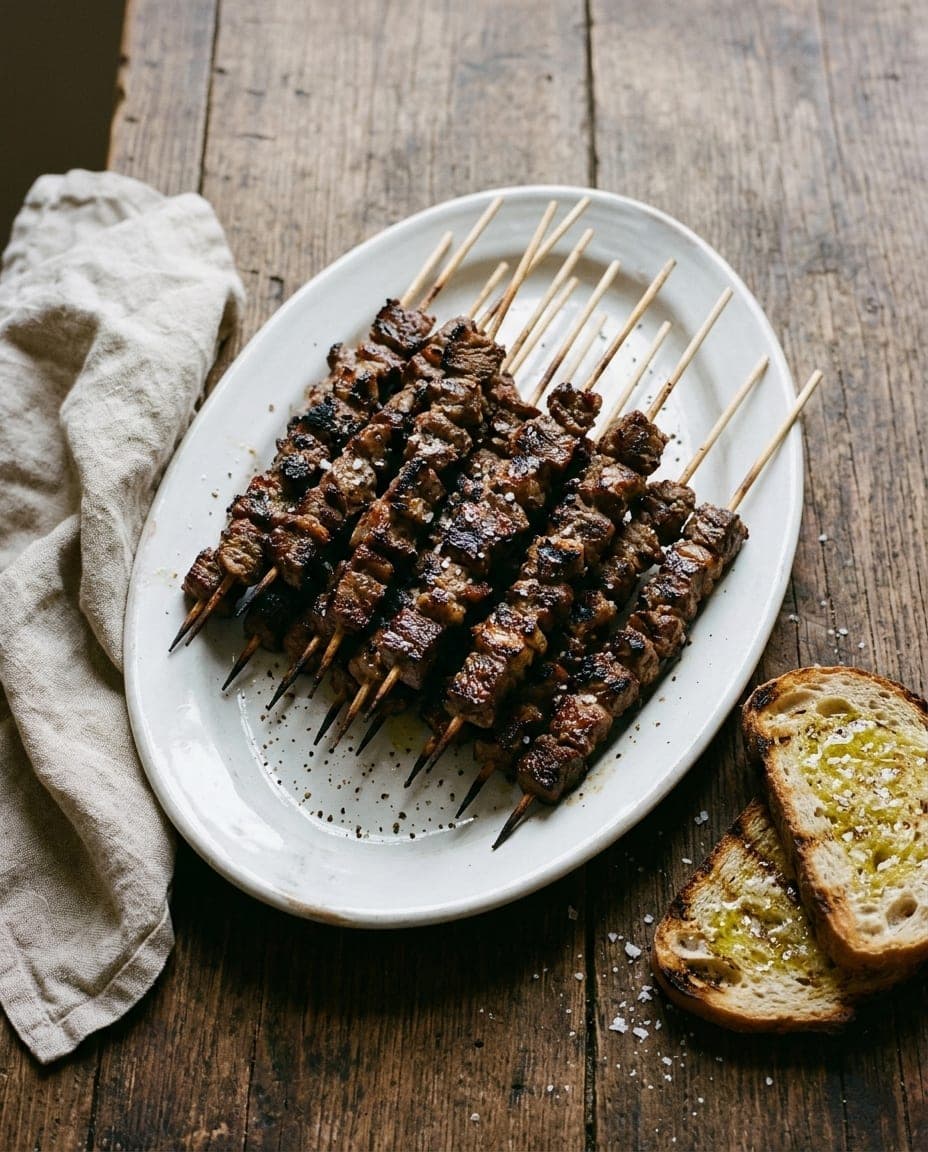
Thin skewers of mutton grilled over embers in Abruzzo's roadside bracerie
- Local name
- Arrosticini (rustelle, arrustelle)
- Served with
- Bread with olive oil, salt
- Best eaten at
- An Abruzzo roadside braceria
- Pairs with
- Montepulciano d'Abruzzo
What they are
Arrosticini are thin skewers of mutton, small cubes of meat threaded onto wooden sticks and grilled over embers. They are a speciality of Abruzzo, the mountainous region on the Adriatic side of central Italy, and are probably its best-known food. In dialect they are also called rustelle or arrustelle. The dish is rooted in the shepherding culture of the Gran Sasso area, and today it is a symbol of the region, served in countless bracerie, simple grill houses, as well as at home and at village festivals. Arrosticini are recognised as a traditional food product (PAT) of Abruzzo.
The skewers themselves are simple: cubes of lean meat and fat threaded onto thin wooden sticks. The traditional meat is not lamb but mutton or castrated sheep, with a good proportion of fat, which gives a stronger flavour. The fat bastes the meat as it cooks, keeping it moist while creating a crisp exterior. They are cooked fast over charcoal in a long, narrow trough-shaped grill called a canala, from its resemblance to a gutter, also known as a fornacella in some areas. It is designed so that the skewers rest across its width with the meat directly over the embers.
The skewers are rarely served in portions; instead they are counted. A typical order might be a dozen, two dozen or more, depending on how hungry the group is.
The history of the shepherd's fire
The origins of arrosticini lie in the shepherding life of the Abruzzo uplands, where flocks moved between mountain pastures and lower ground. Both the provinces of Teramo and Pescara claim the dish, and it is generally placed on the slopes of the Gran Sasso, from the Piana del Voltigno near Villa Celiera towards the borders of the provinces of L'Aquila, Teramo and Pescara. A local account credits two shepherds of the Voltigno with first cooking meat this way around 1830, though such stories are hard to verify.
Shepherds needed a way to make tough meat from older animals tasty and quick to cook over an open fire with minimal equipment. Cutting it into small pieces and threading it on sticks solved the problem. Over time, what was once humble shepherd food became a celebrated regional dish, cooked at family gatherings, festivals and in grill houses across Abruzzo.
The style of cooking remains largely unchanged. The skewers are placed on the canala over glowing embers and turned constantly to ensure even cooking. Seasoning is simple, usually just salt, which preserves the natural flavour of the mutton without heavy sauces or marinades. The simplicity is what defines the dish.
Where they come from
Arrosticini are a regional speciality of Abruzzo and, although they can be found elsewhere in Italy today, they remain strongly tied to their home region. The tradition is linked to the sheep that graze the high pastures of the Gran Sasso and the Maiella mountains. The region's mountainous terrain and pastoral traditions have kept the dish rooted in its local context.
The bracerie that serve them are often family-run and offer little beyond arrosticini, bread and perhaps a few other local grilled meats. They are not fancy restaurants but simple, functional spaces where the focus is entirely on the food.
What goes into it
The ingredients are minimal:
- Mutton: Meat from older or castrated sheep rather than young lambs, chosen for its stronger flavour, with plenty of fat.
- Wooden skewers: Thin sticks that rest across the canala, allowing the meat to cook evenly over the embers.
- Charcoal: The fuel source that provides the intense heat needed for quick grilling.
- Salt: The main seasoning, sprinkled over the meat as it cooks or just after.
- Bread with olive oil and salt: Served alongside the skewers.
The fat between the meat cubes is essential to the dish. As the skewers cook, the fat renders and bastes the lean meat, keeping it moist while creating a crisp outer layer. The bread served with the dish is traditionally pane 'onde, toasted bread dressed with extra virgin olive oil and salt.
How to eat them
Arrosticini are at their best outdoors, where the smell of charcoal and the sound of sizzling meat set the scene. The skewers arrive hot from the grill, often still smoking, and are counted rather than portioned. A single order might feed one person or a whole group, depending on appetite.
They are eaten by hand: the cubes are pulled off the stick with the teeth, leaving the charred wood behind, and knives and forks are not needed. The oil-dressed bread is eaten alongside. A glass of Montepulciano d'Abruzzo pairs naturally with the dish, the wine's body matching the fat of the mutton.
The experience is social and informal. Groups gather around the grill, often standing or sitting on simple benches, sharing the skewers as they come off the fire. The pace is relaxed, with time to watch the meat cook and talk. It is a meal designed for conversation and shared enjoyment rather than formal dining.
Curious facts
- The canala takes its name from guttering. The long, narrow trough-shaped grill holds the skewers across its width so that only the meat sits over the embers.
- Many names. Besides arrosticini, the skewers are called rustelle or arrustelle in dialect.
- Counted, not portioned. Arrosticini are ordered by the number of skewers, often a dozen or more per person.
- Shepherd origins. The dish is traditionally attributed to shepherds of the Gran Sasso area, around the Piana del Voltigno.
- Variations exist. Besides mutton, there are versions with liver, interspersed with bay leaf or onion, and modern ones with other meats.
Where to try them
Family-run bracerie across Abruzzo, particularly in the hills and mountains of the provinces of Pescara, Teramo and L'Aquila, are the classic places to eat arrosticini, and many butchers sell them ready to grill at home.
The experience is best in the summer months or on a cool autumn evening, when the outdoor setting feels natural and the charcoal smoke adds to the atmosphere.
Where to try it
1 destination
 Wine Tasting
Pianella
Abruzzo town with Montepulciano d'Abruzzo wine production and olive oil.
Wine Tasting
1 region
- Wine Tasting1 destination
Abruzzo
Nestled between the Apennine mountains and the Adriatic Sea, this region is known for its diverse landscapes, ranging from rugged mountains to sandy beaches. It is the only region in Italy with access to both mountains and coastline, making it a unique destination. L'Aquila, the capital, features stunning medieval architecture and is surrounded by natural parks. The region is famous for its truffles, Montepulciano d'Abruzzo wine, and the ancient practices of shepherding. Explore off-the-beaten-path towns like Sulmona, known for confetti (sugar-coated almonds), and the remote Gran Sasso National Park, home to Italy's highest peak. Local festivals celebrate traditional crafts and culinary delights, providing a deep cultural connection to the land.
Wine Tasting





