Arancini
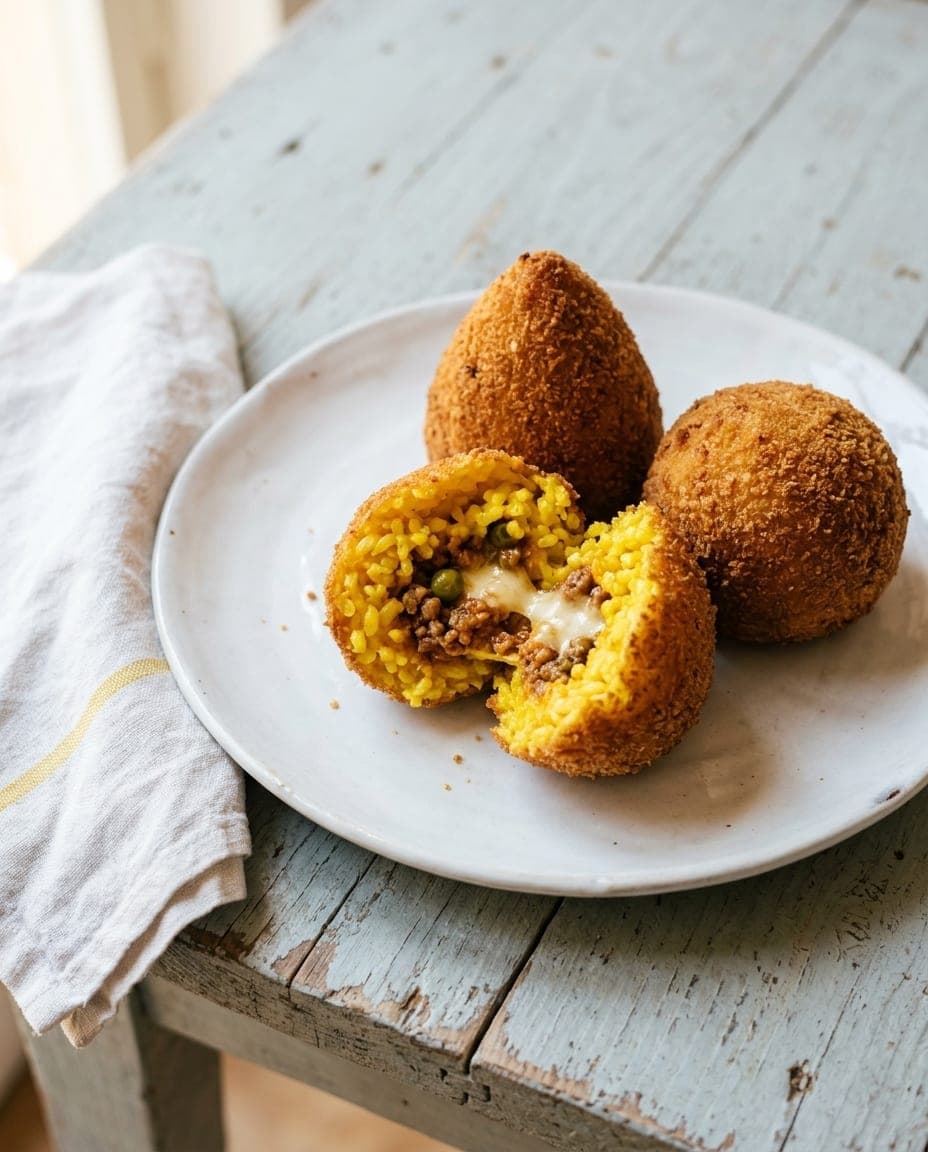
Sicilian saffron rice balls, fried until crisp and filled with ragù or ham
- Local name
- Arancine (Palermo), arancini (Catania)
- Best eaten at
- A Sicilian rosticceria
- Pairs with
- Etna rosso or Sicilian beer
What they are
Arancini are the most recognised fried street food of Sicily. They are balls or cones of saffron-tinted rice, moulded around a filling, coated in breadcrumbs and deep-fried until the exterior is golden and crisp while the inside remains soft and molten. The name translates literally as "little oranges", a reference to the golden hue of the fried rice and the round shape of the classic version.
While similar fried rice dishes appear elsewhere in Italy, such as the Roman supplì, the Sicilian version is distinct in its use of saffron and its generous fillings. They are not merely a snack but a substantial meal, sold from rosticcerie, traditional shops for hot savoury food, and bars, where they are often eaten standing up, wrapped in paper to hold the heat.
The dish is bound up with the island's daily rhythm. It is a food of the people, often linked to the use of leftover rice, yet made rich with meat sauces and cheese. Its ingredients echo the layers of the island's history, from the Arabs, traditionally credited with bringing rice and saffron, to later Norman and Spanish rule.
The legend of the Arab roots
The origins of arancini are traditionally traced back to the period of Arab rule in Sicily, from the 9th to the 11th century, when rice and saffron are thought to have arrived on the island. A popular account holds that saffron rice balls were eaten then, perhaps alongside lamb, and that these were the ancestors of the modern dish.
The written record is much more recent. The Accademia della Crusca, Italy's language academy, found no trace of the preparation in written sources before the second half of the 19th century, and one hypothesis is that it began as a sweet rice dish before becoming savoury. Whatever the exact path, arancini became a staple of street food culture, particularly in the cities of Palermo and Catania.
The name is simple to explain. The word arancia means orange in Italian, and aranciu in Sicilian; the golden, round fried ball reminded locals of the fruit.
The grammar of the island
One of the most persistent debates in Sicily concerns the very name and shape of the dish. In Palermo and the western part of the island, it is called arancina, a feminine noun, plural arancine. These are typically round, like an orange, and the classic fillings are accarne, with meat ragù and peas, and abburro, with ham, mozzarella and béchamel.
In Catania and eastern Sicily, the rules change. Here the dish is arancino, a masculine noun (arancinu in Sicilian), plural arancini. The shape is usually conical, often said to recall Mount Etna, which dominates the skyline.
Both versions have a logical basis. The Accademia della Crusca has noted that the masculine form follows the Sicilian dialect, where the fruit is aranciu, while the feminine form follows standard Italian arancia. A visitor in Palermo ordering arancini may well be corrected with a smile and offered arancine.
How they are made
The construction of an arancina begins with rice cooked with saffron and stock, often enriched with butter and cheese, then spread out to cool. A short-grain rice that holds its shape is used, giving the rice its signature golden colour and subtle floral aroma.
Once the rice has cooled, it is moulded by hand around a filling. The classic filling al ragù consists of a slow-cooked meat sauce, often with peas and a piece of cheese that melts into the hot rice. The other classic, al burro, combines ham, mozzarella and béchamel, creating a simple yet rich taste.
The moulded rice balls are then dipped in a batter of flour and water, or in beaten egg, and rolled in breadcrumbs. This coating gives a thick, crisp crust when deep-fried in hot oil. The result is a contrast between the crunchy exterior and the soft, warm interior.
The Santa Lucia tradition
Arancine hold a special place in the Palermo calendar on 13 December, the feast day of Saint Lucy (Santa Lucia). On this day tradition forbids bread, pasta and other flour-based foods. The custom recalls a famine in 1646, when a ship loaded with grain reached the port of Palermo; the starving population is said to have boiled the grain and eaten it seasoned with a little oil rather than wait to mill it.
The boiled grain survives as cuccìa, today often sweetened with ricotta. Alongside it, Palermitans turn to rice and chickpeas: arancine, panelle (chickpea fritters) and rice or potato dishes. On 13 December, rosticcerie across the city prepare huge quantities of arancine, and long queues outside shops are common.
How to eat them
Arancini are designed to be eaten as street food, often standing up from a paper wrapper at the counter of a rosticceria or bar. They are hot, heavy and filling, making them suitable as a quick lunch or a substantial snack rather than a delicate starter. The crisp exterior gives way to a molten centre, so care is needed when biting into one.
They pair naturally with the wines of Sicily. An Etna rosso, with its earthy notes and firm tannins, cuts the fat of the fried rice and meat sauce. A cold Sicilian beer is also a common companion, especially in the warmer months.
Curious facts
- The gender debate. In Palermo the dish is feminine and round (arancina), while in Catania it is masculine and usually conical (arancino), a shape often compared to Mount Etna.
- A saint's day staple. On 13 December, Palermitans traditionally avoid bread and pasta, turning instead to arancine and cuccìa in memory of the 1646 grain ship.
- A late paper trail. Despite the popular story of Arab origins, written records of the dish only appear in the second half of the 19th century.
- Street food status. Arancini are usually eaten standing up from paper wrappers at counters, or sold by the piece in trays for takeaway.
- Two classic fillings. Accarne means meat ragù, often with peas; abburro means ham, mozzarella and béchamel.
Where to try them
Rosticcerie are small, unpretentious establishments where the focus is entirely on the quality of the fried rice and the freshness of the fillings. In Palermo, shops that have been operating for decades fill the street with the aroma of frying oil and saffron.
In Catania, the conical arancini are a staple, sold from counters near the fish market and in the historic centre, with many locals making them a quick daily lunch.
Where to try it
1 region
 Wine Tasting21 destinations
Sicily
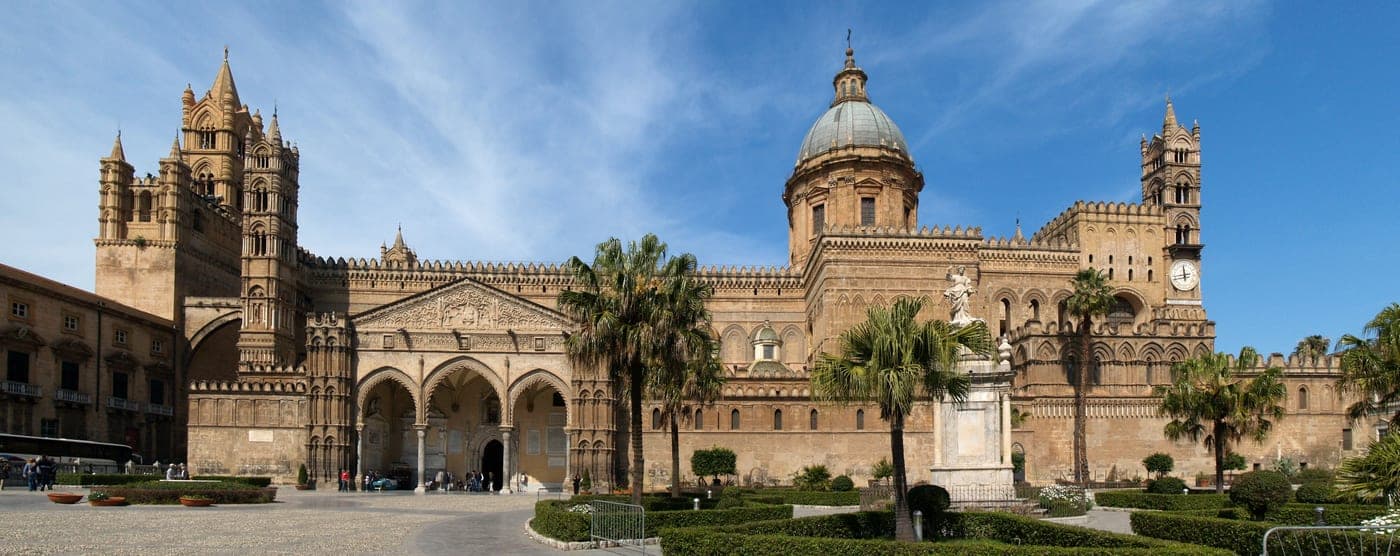
Sicily, the largest island in the Mediterranean, boasts a rich tapestry of history and culture. Its unique position has made it a crossroads of civilizations, evident in the remnants of Greek temples in Agrigento and the Arab-Norman architecture in Palermo. The island features a diverse landscape, from the volcanic Mount Etna to the picturesque coastal towns of Taormina and Cefalù. Sicilian cuisine stands out for its use of fresh ingredients, with specialties like arancini and cannoli. The region is also famous for its local wines, particularly Nero d'Avola. Off the beaten path, discover the ancient ruins of Selinunte or the quaint streets of Erice. With charming villages and vibrant markets, Sicily offers a deep dive into authentic Italian culture and history.
Wine TastingHikingBoat RentalsAgritourism





