Unicum
The dark, bitter herbal liqueur of Budapest
- Alcoholic
- Local name
- Unicum
- Served
- Neat, chilled, as a digestif
What it is
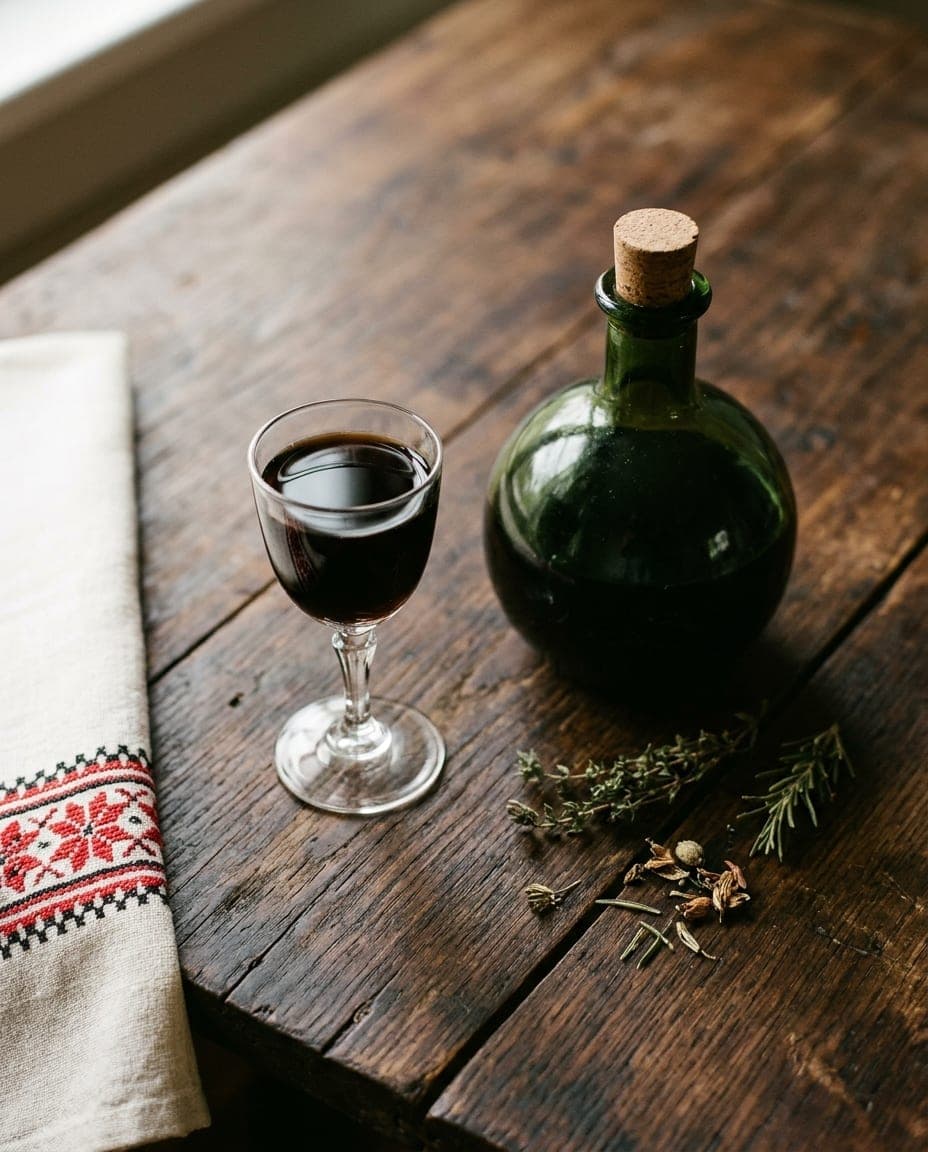
Unicum is a dark, intensely bitter herbal liqueur made by the Zwack company in Budapest since 1840. It is not a general-purpose drink: it is usually served neat and chilled, in a small glass, most often at the end of a meal. The liquid is close to black in colour, thick on the tongue, and carries an intensely bitter flavour from a secret blend of more than forty herbs and spices. To many visitors, the first sip is a shock; to Hungarians, it is a familiar comfort that signals the end of a meal.
The bottle itself is as distinct as the liquid inside: a round, dark glass bottle with a label featuring a red-and-white cross. The bottle was already in use when the name was registered in 1883. Unicum can be drunk as an aperitif, but in Hungary it most often appears at the end of dining, after the plates have gone.
The history of the cross and the herbs
According to company legend, the recipe was created in 1790 by Dr Zwack, a physician to the Habsburg court, for Emperor Joseph II, who is said to have exclaimed "Das ist ein Unikum!" ("This is unique!"). That detail belongs to the brand's lore rather than to the record. Commercial production began when József Zwack founded his liqueur company in Pest in 1840. The business was nationalised under communism and the family reclaimed it after 1988, which makes the run long but not unbroken.
The path of the drink took a difficult turn during the twentieth century. The factory was bombed in the Second World War, and in 1948 the communist state confiscated it. János Zwack and his son Péter left for the United States, taking the real recipe with them; the family is said to have handed the authorities a fake one. The state went on producing its own Unicum in Budapest, while the original was made abroad, from Milan, under the family's control. For decades, two versions of Unicum existed: one made in Hungary by the state, and another made elsewhere by the Zwack family.
As communism collapsed, Péter Zwack returned to Hungary in 1988 and bought the business back from the state in 1989, restoring the original recipe. The original Unicum was back on the Hungarian market in 1990 and became the standard once again. This period of division is a notable chapter in Hungarian industrial history, reflecting the broader political shifts of the era.
Where it comes from
Unicum has been made in Budapest for more than 180 years, today at the company's distillery on Soroksári út. While similar herbal bitters exist across Central Europe, Unicum is specifically associated with the city and the Habsburg court tradition. It has no regional variations: there is one producer, though it has added flavoured versions such as Unicum Szilva, aged on plums.
The drink fits the Hungarian appetite for strong, aromatic substances. In a country where meals often involve heavy soups, rich stews and fatty meats, the intense bitterness of Unicum provides a sharp counterpoint. It is not a drink for casual sipping by the window; it is a functional beverage, consumed with purpose after eating. Despite its association with the capital, it is sold in shops and bars throughout the country.
What goes into it
The exact composition of Unicum remains a closely guarded secret, known only to a small group of people within the distillery. However, the general profile is clear: it is built around bitter herbs and spices rather than sweet fruits or grains. The full list is not published, but bitter roots and herbs dominate, balanced by warm spices and citrus.
The blend is aged in oak casks in the Budapest cellars for more than six months. This maturation allows the harsh edges of the herbs to soften slightly while retaining their intensity. The result is a thick, dark liquid that coats the tongue, with only a faint sweetness under the bitterness.
How it is served
Unicum is usually served chilled, often straight from the fridge or freezer. The cold makes the liqueur slightly more viscous and rounds out the sharp edges of the bitterness. It is poured into a small glass, typically no larger than a shot measure, and is as often knocked back in one go as sipped.
The timing is specific: it appears after the main course has been finished and before dessert or coffee. It can open a meal as an aperitif, but Hungarians most often pour it at the end. In traditional Hungarian restaurants, waiters may bring the small glass of dark liquid without being asked, recognising the pattern of a meal that has just concluded. It is rare to see Unicum mixed with other ingredients; its power lies in its purity as a bitter herbal extract.
Curious facts
- The cross on the bottle. The label features a red-and-white cross, often read as a nod to the drink's origins as a physician's remedy.
- Two versions existed. For decades after World War II, Unicum was produced in two different forms: one by the state in Hungary and one, from the original recipe, by the Zwack family abroad.
- A national symbol. The drink is so strongly associated with Hungarian identity that it often appears on souvenir plates, keychains and postcards alongside other national icons.
- The recipe secret. The exact list of herbs and their proportions remains a family secret, known to only a very few people.
- A bitter tradition. Visitors are often offered a glass as a friendly test; the intense flavour works as a rite of passage.
Where to try it
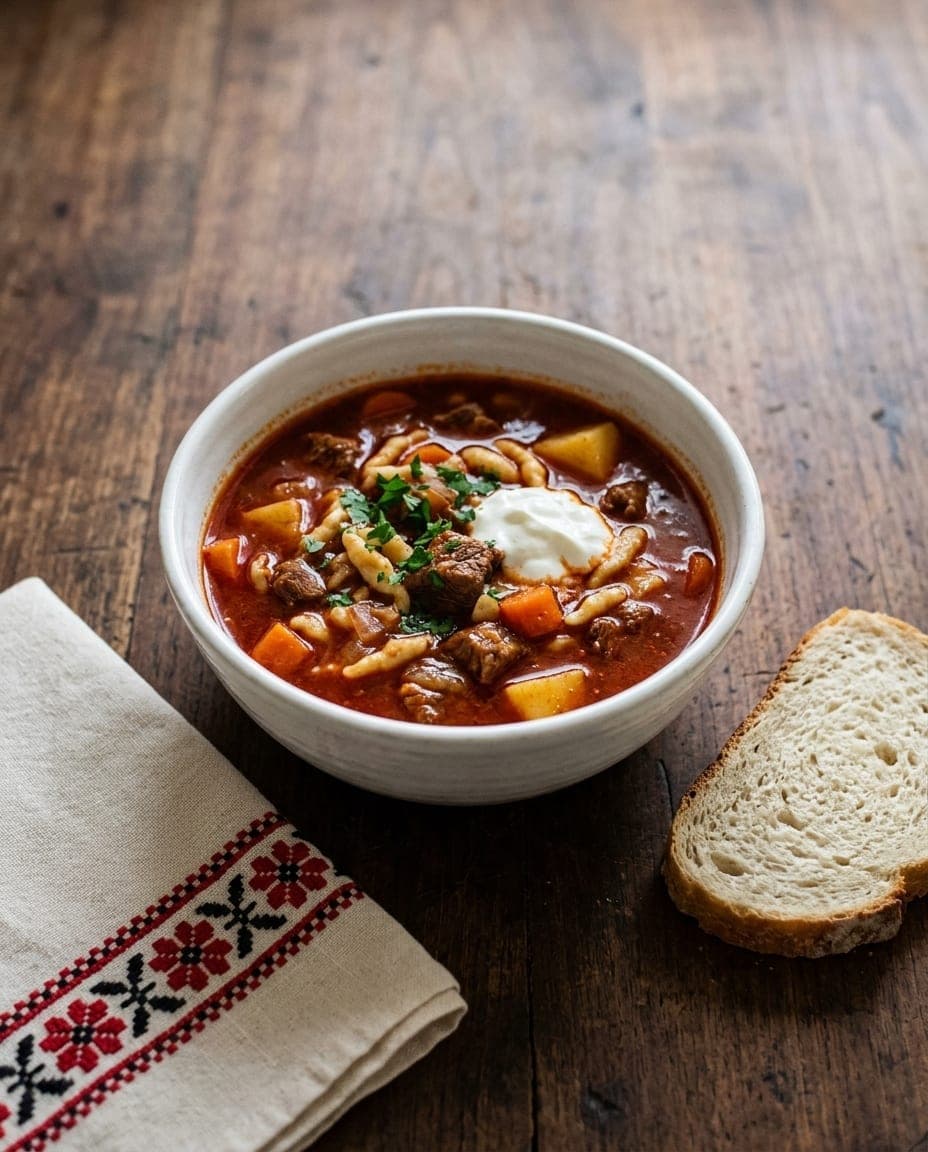
The most authentic experience of Unicum is found in Budapest, where the distillery still operates and the tradition remains strong. Traditional restaurants serving classic Hungarian cuisine often offer it at the end of the meal, sometimes without prompting. It is poured where the food is heavy: after goulash, after pörkölt, at the end of a long meal.
Visitors to the capital may also find Unicum in liquor stores throughout the city, where it is displayed prominently alongside other Hungarian spirits. The round bottle with its red cross makes it easy to identify on any shelf. While the drink is available internationally, the version served in Budapest remains the reference point for the original taste and history.
Where to try it
1 region
Budapest
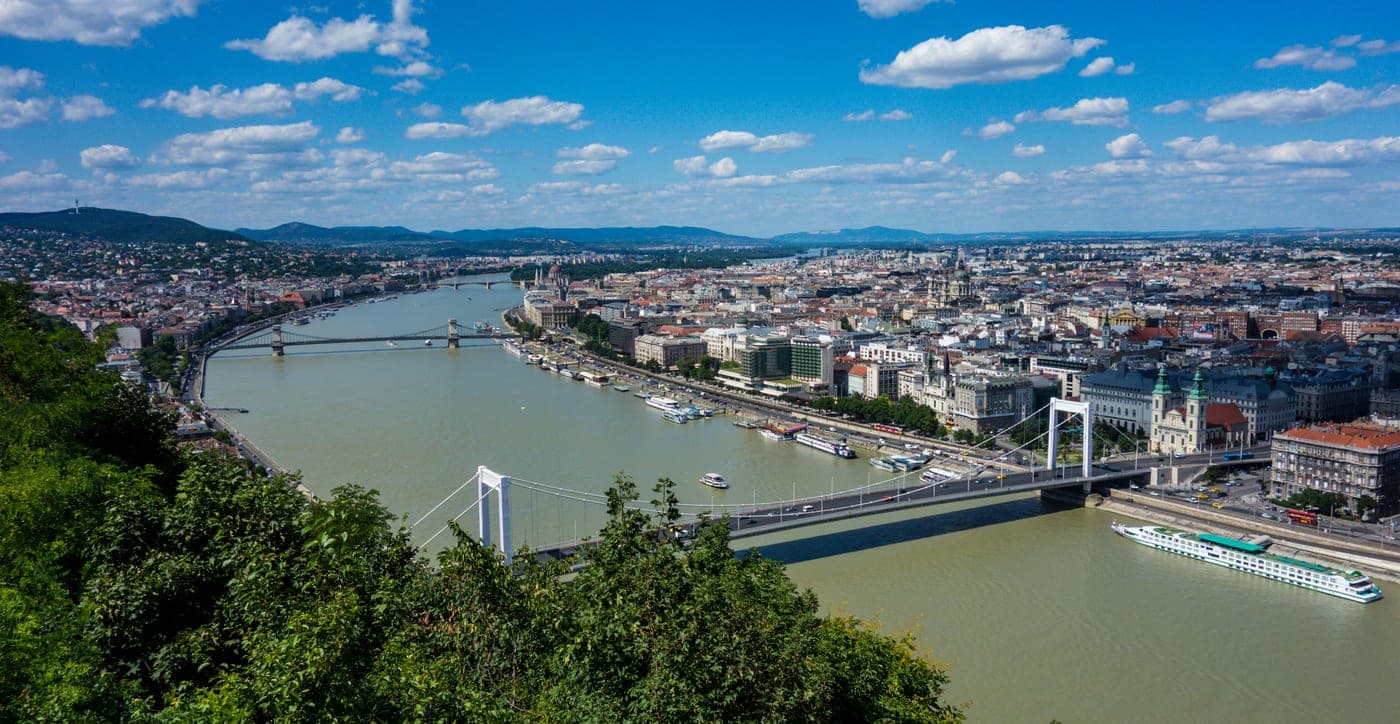
Hungary's capital, Budapest, is divided by the Danube River into Buda and Pest, each offering distinct experiences. Buda is home to historic sites like the Castle District, featuring medieval architecture and the Matthias Church. Pest is known for vibrant cultural life, including the famous ruin bars and the Hungarian State Opera. The city is renowned for its thermal baths, such as Gellért and Széchenyi, which have been used for centuries. Explore the nearby towns of Szentendre, known for its artists, and Visegrád, with its medieval castle. Budapest is also a center for traditional Hungarian cuisine, featuring dishes like goulash and chimney cake. Its rich history, combined with modern culture, makes it a fascinating destination for deeper exploration.