Dobos torta
Budapest's layered sponge sealed with caramel
- Vegetarian
- Local name
- Dobos torta
- Served with
- Coffee
- Best eaten at
- A Budapest coffee house
- Pairs with
- Tokaji Aszú
What it is
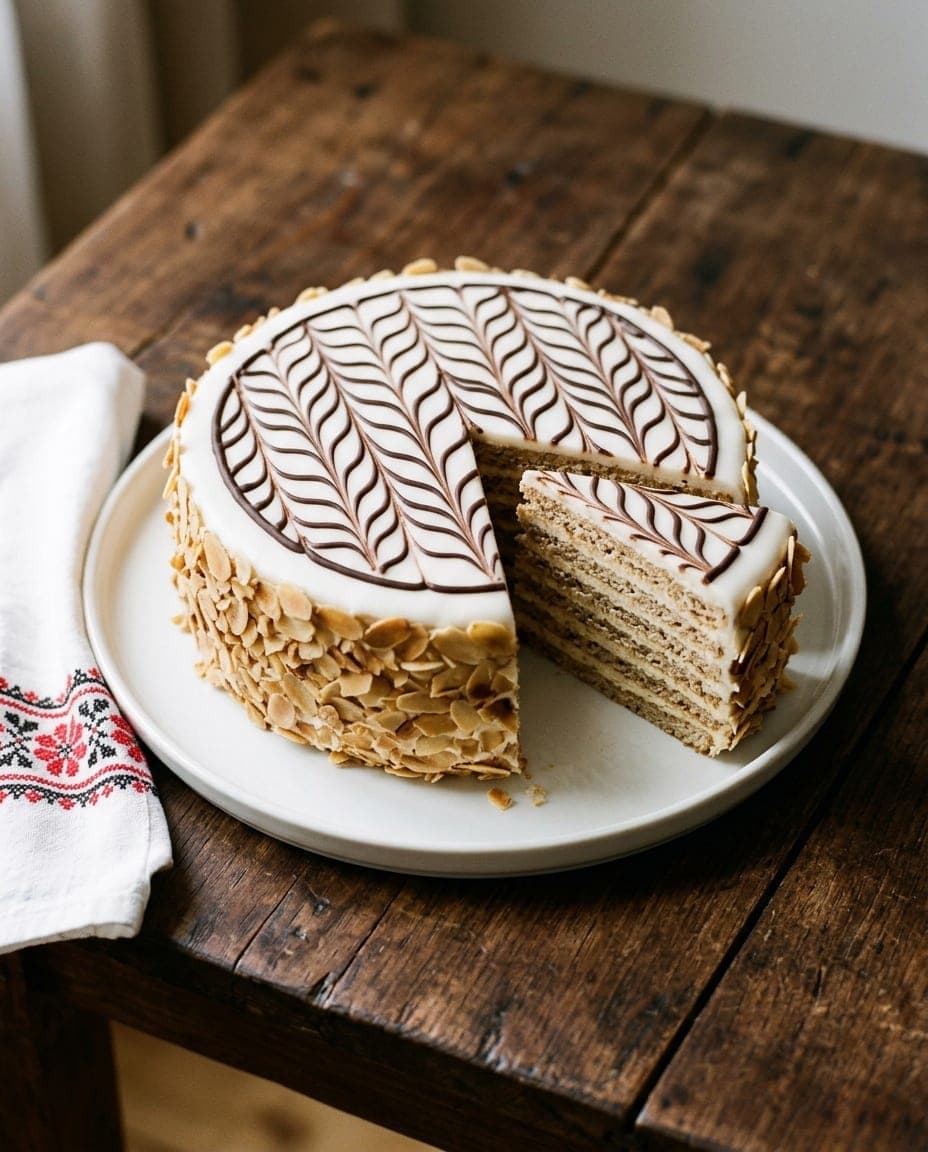
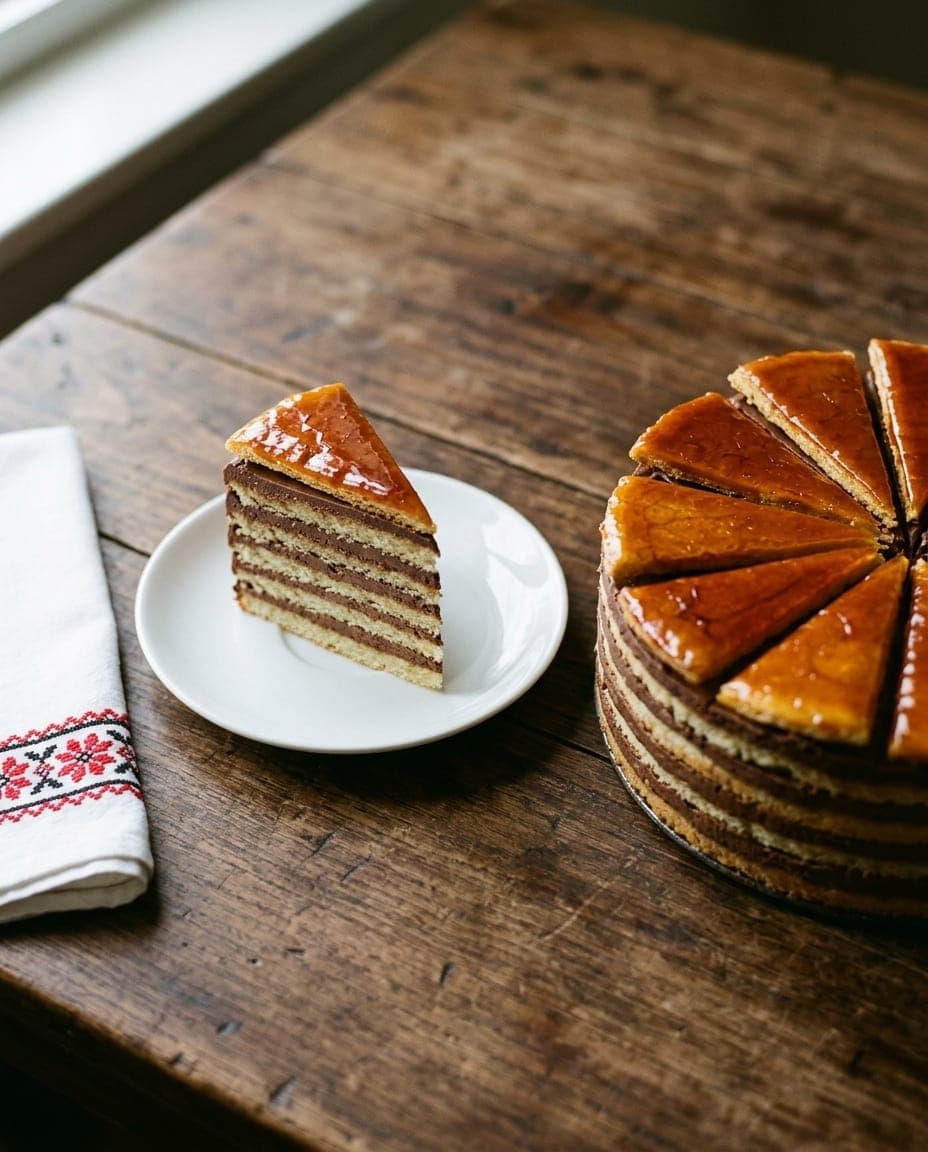
Dobos torta is a layered cake from the Hungarian capital, created by the confectioner József C. Dobos in 1884. It stands apart from other sweet treats of its time through its structure and preservation method. The cake consists of five (in later versions often six or more) wafer-thin layers of sponge cake, with a rich chocolate buttercream filling sandwiched between each layer. The top layer is coated in a hard, golden caramel shell that is scored into wedges before it sets, while the sides are spread with buttercream and, in many versions, pressed with ground nuts.
The name of the dish comes directly from its creator. Unlike many cakes that rely on soft frostings which spoil quickly, the caramel top acts as a seal. This helped the cake keep for longer without drying out, and Dobos even had a special wooden box made so it could be shipped to other European cities. Today it is listed as a Hungarikum, one of the country's officially recognised national treasures, though it originated specifically in the capital.
The invention at the 1885 Exhibition
The history of the cake is tied to a specific moment in Budapest's cultural life. József Dobos presented his creation at the National General Exhibition in 1885, a major event that drew crowds from across the Austro-Hungarian Empire. He wanted a cake that would keep longer than the cream-filled cakes of the day. The solution was the caramel seal. In an era before electric cooling, delicate creams were a problem for storage and transport.
The practical purpose of the caramel extended beyond preservation. It provided a crisp contrast to the soft sponge and creamy filling, creating a unique textural experience that defined the cake's character. The idea was so successful that the cake was widely copied, and in 1906, when he retired, Dobos handed his recipe to the Budapest confectioners' and gingerbread makers' guild so that any member could use it. This helped cement the dish as a symbol of Hungarian confectionery skill, ensuring its place in the national culinary memory long after its creator had died.
What goes into it
The structure of the cake relies on precise layers rather than complex ingredients. The sponge itself is light and airy, baked in thin sheets that are stacked to create height without heaviness. Between these layers lies a chocolate buttercream made from butter, eggs, and sugar, often enriched with cocoa or chocolate. Buttercream was barely known in Hungary at the time, and it was more stable than the cooked and whipped creams common in other cakes.
The top is the defining feature. A sheet of caramel is poured over the uppermost sponge layer and allowed to harden until it becomes a glass-like shell. Before it sets completely, it is scored into wedges so that it can be broken cleanly by hand. The sides of the cake are covered with buttercream and are often pressed with ground nuts, which add a crunchy edge to the soft interior. Bakers differ in the details, but the core is fixed: sponge, chocolate buttercream and the caramel top.
How to eat it
Dobos torta is traditionally served at room temperature in a Budapest coffee house, often alongside a cup of black coffee or an espresso. It is usually served by the slice, so the layers show at the cut. Because the caramel shell is hard, the cake is typically cut with a hot knife to ensure clean slices that do not crack the top layer unevenly.
The texture changes from the first bite to the last. The initial bite offers the snap of the caramel, followed by the soft sponge and the creamy chocolate filling. Where the sides are coated in ground nuts, they add a final note of crunch. It is a substantial sweet treat, often shared among a small group rather than eaten alone. A glass of Tokaji Aszú, the sweet wine from the Tokaj region in the north-east, pairs well with the fat of the cake, its acidity cutting through the sweetness.
The legacy of a single inventor
While many dishes evolve over centuries through collective tradition, Dobos torta bears the mark of one man's ingenuity. József Dobos did not just create a recipe; he solved a logistical problem for the city. The cake became a standard offering in the city's coffee houses, which are central to Hungarian social life.
The name of the dish serves as a reminder of this origin story. In Hungary it is written as one word, dobostorta, using the creator's surname as the title, a convention shared by other Budapest cakes named after people, such as the Esterházy torta and Rigó Jancsi. Dobos's grave in Farkasréti Cemetery carries a stone carving of the cake.
Curious facts
- A seal against drying out. The caramel top was designed to help the cake keep longer, a practical advantage in 19th-century Budapest.
- Cut with heat. To slice through the hard caramel shell cleanly, bakers traditionally use a hot knife that melts the edge slightly before cutting.
- A recipe given away. In 1906 Dobos donated his recipe to the Budapest confectioners' guild so any member could bake it freely.
- Five layers of sponge. The original cake had five wafer-thin sponge layers, stacked with chocolate buttercream between each one.
- Coffee house staple. It remains a standard offering in traditional Budapest coffee houses, often served alongside black coffee or Tokaji Aszú wine.
Where to try it
The best place to eat Dobos torta is in a traditional Budapest coffee house, where the cake has been a fixture for over a century. These establishments, known as kávéház, maintain the atmosphere of the city's golden age and serve the cake in its classic form. It is eaten throughout Hungary, though the cake belongs to the capital. The best versions are usually found in a cukrászda, a traditional pastry shop.
Where to try it
1 region
Budapest
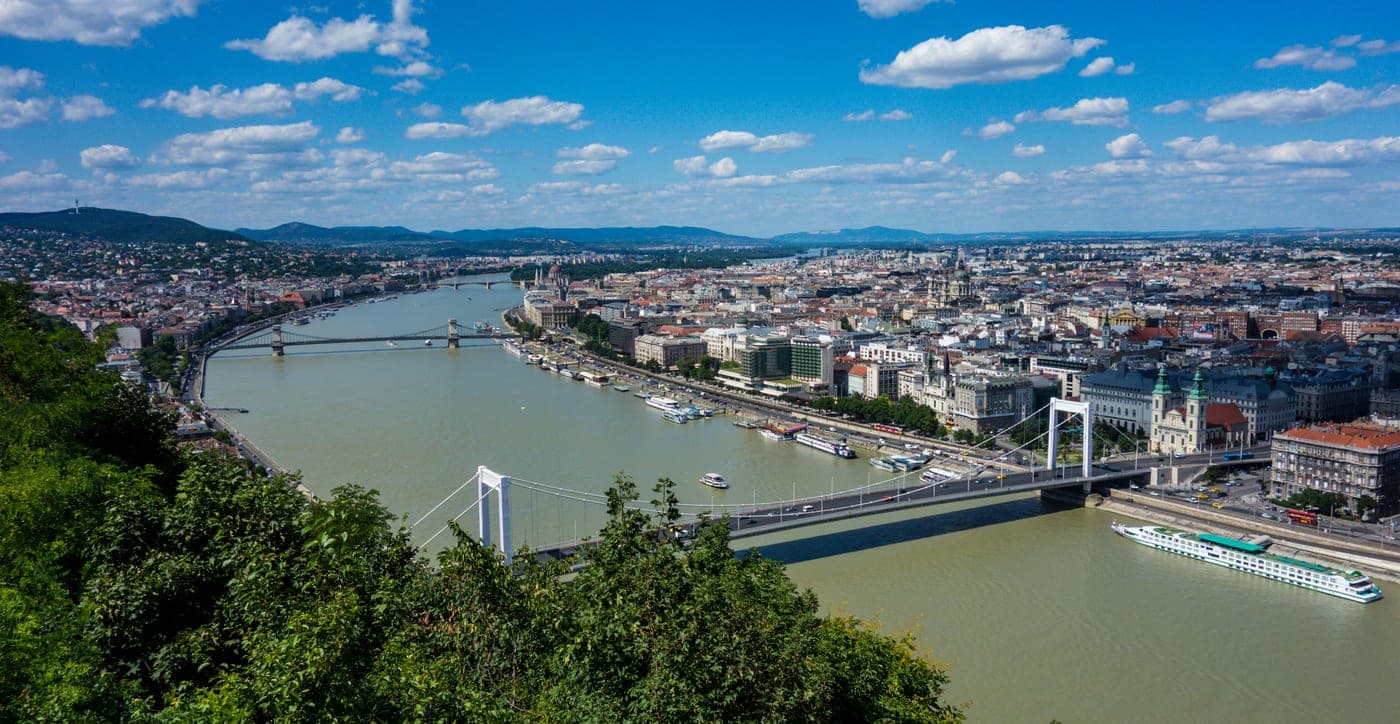
Hungary's capital, Budapest, is divided by the Danube River into Buda and Pest, each offering distinct experiences. Buda is home to historic sites like the Castle District, featuring medieval architecture and the Matthias Church. Pest is known for vibrant cultural life, including the famous ruin bars and the Hungarian State Opera. The city is renowned for its thermal baths, such as Gellért and Széchenyi, which have been used for centuries. Explore the nearby towns of Szentendre, known for its artists, and Visegrád, with its medieval castle. Budapest is also a center for traditional Hungarian cuisine, featuring dishes like goulash and chimney cake. Its rich history, combined with modern culture, makes it a fascinating destination for deeper exploration.