Gulyás (goulash)
Paprika beef soup with bread or csipetke
- Local name
- Gulyás
- Served with
- Bread, csipetke noodles
- Best eaten at
- A Hungarian csárda
- Pairs with
- Bikavér (Egri red)
What it is
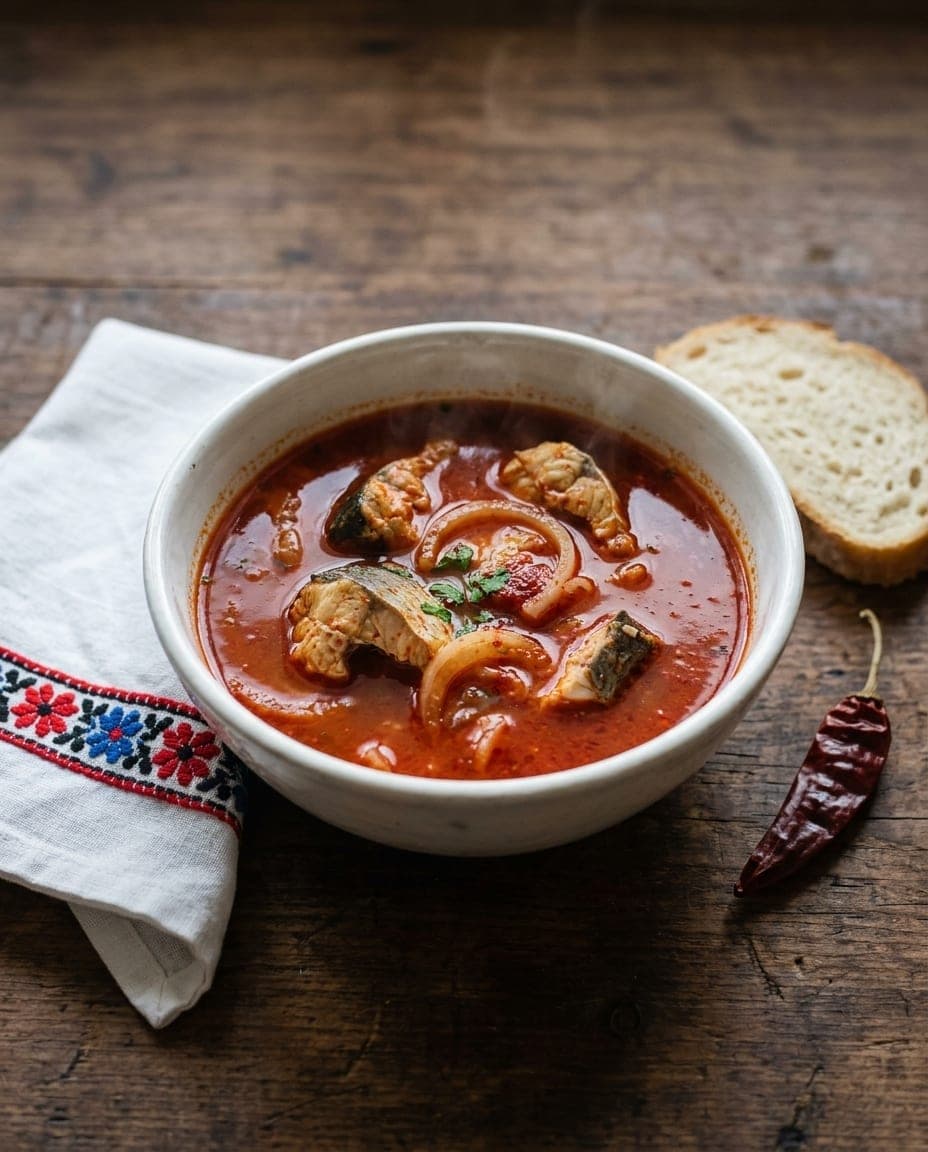
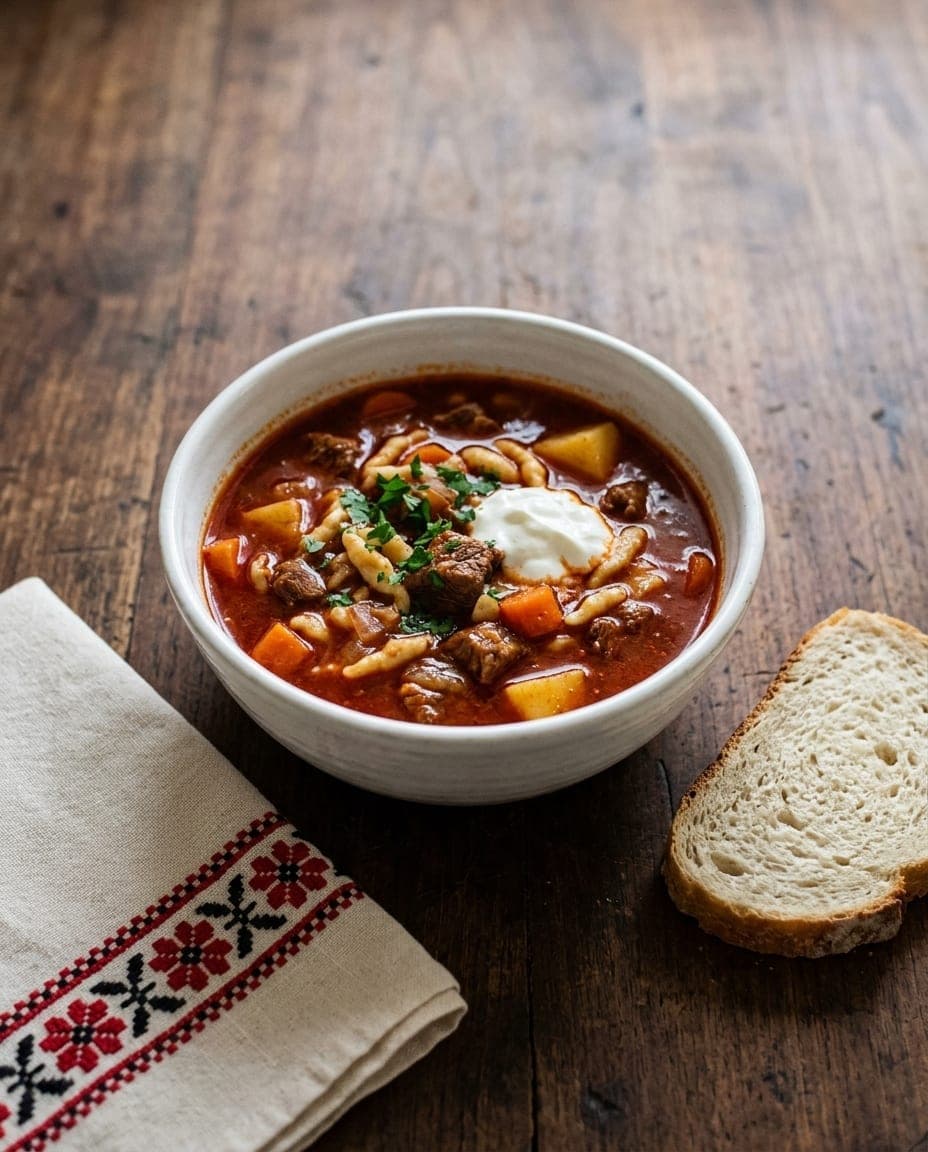
Gulyás is one of the national dishes of Hungary, listed as a Hungarikum, and one of the most recognisable soups in Europe. It is a brothy, deeply flavoured soup made from beef, onions, potatoes, carrots, parsnips, caraway and sweet paprika, often finished with csipetke, small pinched pieces of pasta dough. The word itself comes from the gulyás, the cattle drovers who herded livestock across the Hungarian Great Plain. These herdsmen cooked the dish in a large cauldron called a bogrács over an open fire, creating a meal that could feed a group of drovers for a day of work on the plain.
There is a persistent confusion about this dish outside Hungary, where the term "goulash" is often used to describe a thick, meat-heavy stew. In Hungary, that stew is called pörkölt, and it is quite different from the soup known as gulyás. While pörkölt is a ragout with little liquid, gulyás remains a soup, though its broth can be substantial enough to serve as a main course. The defining characteristic of the dish is not just the beef, but the generous use of sweet paprika, which gives the broth its golden-red colour and distinct aroma.
The soup is eaten across the whole country, from the bustling streets of Budapest to the rural villages of the countryside. It is a year-round staple, appearing on menus in winter as a warming meal and in summer as a hearty lunch before the heat of the day sets in.
The herdsman and the cauldron
The story of gulyás is tied to the gulyás, the professional cattle drovers who managed the vast herds of the Great Plain. For centuries, these men travelled with their animals, moving them between grazing grounds and markets. They needed a way to cook a meal that was portable, durable and capable of feeding many people at once. The solution was the bogrács, a heavy cast-iron cauldron suspended over a fire on a tripod or a stone base.
Cooking in this vessel allowed the herdsmen to simmer meat and vegetables slowly, rendering the fat and developing deep flavours without the need for complex equipment. The open fire also meant the dish could be prepared outdoors, often while the cattle grazed nearby. Over time, the method became so central to the herdsmen's life that the dish took their name.
The ingredients were chosen for what they could carry or preserve. Meat was cooked with onions, dried in the sun and stored in bags made from sheep's stomachs, then brought back to life with water over the fire. Potatoes were a later addition. Paprika also arrived later, brought from the Ottoman south, but it quickly became essential to the taste. By the 18th and 19th centuries, the soup had evolved into the form recognised today, with paprika as the dominant spice.
How it is made in the kitchen
The preparation of gulyás follows a few simple rules that distinguish it from other beef stews. The onion is used in large quantities, often at least equal to the weight of the meat, providing the base for the soup's sweetness and body. The beef is cut into chunks and simmered until tender, but never turned into a paste. Vegetables are added in chunks that remain distinct in the broth rather than dissolving completely.
Paprika is the critical element, and its handling requires care. It is added off the heat to prevent burning, which would make the dish bitter. No flour or cream is used to thicken the soup, and tomato appears, if at all, only in small amounts; the texture comes from the slow cooking of the meat and vegetables. The result is a clear, rich broth with a deep colour and a warm, earthy flavour that is neither acidic nor overly heavy.
In many traditional kitchens, the dish is finished with csipetke, small bits of dough pinched by hand and dropped into the simmering soup. These noodles absorb the broth and add a soft texture that complements the tender beef. The soup is seasoned simply, with caraway, garlic and salt, relying on the quality of the paprika and the freshness of the vegetables for its character.
What goes into it
The ingredients are straightforward, but their proportions and quality define the dish:
- Beef: Usually tougher cuts from the shoulder or shank, cut into chunks and simmered until tender.
- Onions: Used in large amounts, often sautéed until soft to form the base of the soup.
- Sweet paprika: The defining spice, added off the heat to preserve its colour and flavour.
- Root vegetables: Potatoes, carrots and parsnips cut into chunks that hold their shape during cooking.
- Csipetke: Small pinched pieces of pasta dough, dropped into the soup to add substance.
- Caraway: Ground or whole, a quiet but traditional seasoning.
- Water or stock: The liquid base, often just water if the meat provides enough fat and flavour.
The soup is not a vegetarian dish, as the beef is central to its identity. The broth is savoury and warming, with a gentle sweetness from the onions and a subtle earthiness from the root vegetables. It is a dish that feels substantial without being heavy, perfect for a meal that needs to sustain energy.
How it is eaten
Gulyás is often served as a main course, at lunch or dinner. It is usually presented in a deep bowl or a tureen, with the broth and ingredients ladled out together. The csipetke noodles float among the beef and vegetables, making each spoonful varied in texture. A slice of crusty Hungarian bread is essential for dipping into the broth, soaking up the paprika-infused liquid.
In a traditional setting, such as a csárda, a small rural tavern, the soup might be served with a side of pickles or a simple salad to cut the richness. The bread is often torn by hand and dipped directly into the bowl, a gesture of comfort and ease. A glass of Egri red wine, known as Bikavér, is a common pairing, as its bold tannins complement the paprika without overpowering it.
A smaller bowl can open a meal, but a full one is a meal in itself. It is meant to be savoured slowly, often with a companion or a group of friends. The act of eating it is casual and communal, reflecting its origins as a meal shared by herdsmen around the fire.
Curious facts
- A name for a person. The word gulyás refers to the cattle drover, not just the dish. The herdsman's role was vital to the economy of the Great Plain for centuries.
- The paprika arrived late. Sweet paprika came from the Ottoman south and became central to Hungarian cooking only in the 18th and 19th centuries, transforming earlier versions of the soup.
- No flour or cream. Traditional gulyás relies on the natural thickening of meat and vegetables; no flour or cream is used in the authentic version.
- The bogrács is still used. At village festivals and folk gatherings, the soup is often cooked outdoors in a cauldron over an open fire, just as the herdsmen did.
- A national symbol. Gulyás was added to the Hungarikum list of national treasures in 2017 and appears on menus across the country, from city restaurants to rural taverns.
- Bread is essential. The soup is rarely eaten without bread, which is used to soak up the broth and complete the meal.
Where to try it
The best place to eat gulyás is in a csárda, a traditional Hungarian tavern often found in rural areas or on the edge of towns. These establishments specialise in country cooking and serve the dish in its most authentic form. In Budapest, many restaurants offer excellent versions, but the true spirit of the dish is found in the countryside, particularly on the Great Plain, in places like the Hortobágy, where the herding tradition is still kept alive.
City restaurants in Budapest all have it; a csárda out of town is where the cauldron version is more likely. In Eger and the rest of Heves county, it comes with a glass of the local Bikavér.
For a visitor, the dish is a gateway to understanding Hungarian cooking. It is simple, honest and deeply flavoured, reflecting the history of the Great Plain and the people who lived there. A bowl of gulyás in a csárda offers a taste of that heritage, served with the warmth of a local welcome.
Where to try it
2 regions
Budapest
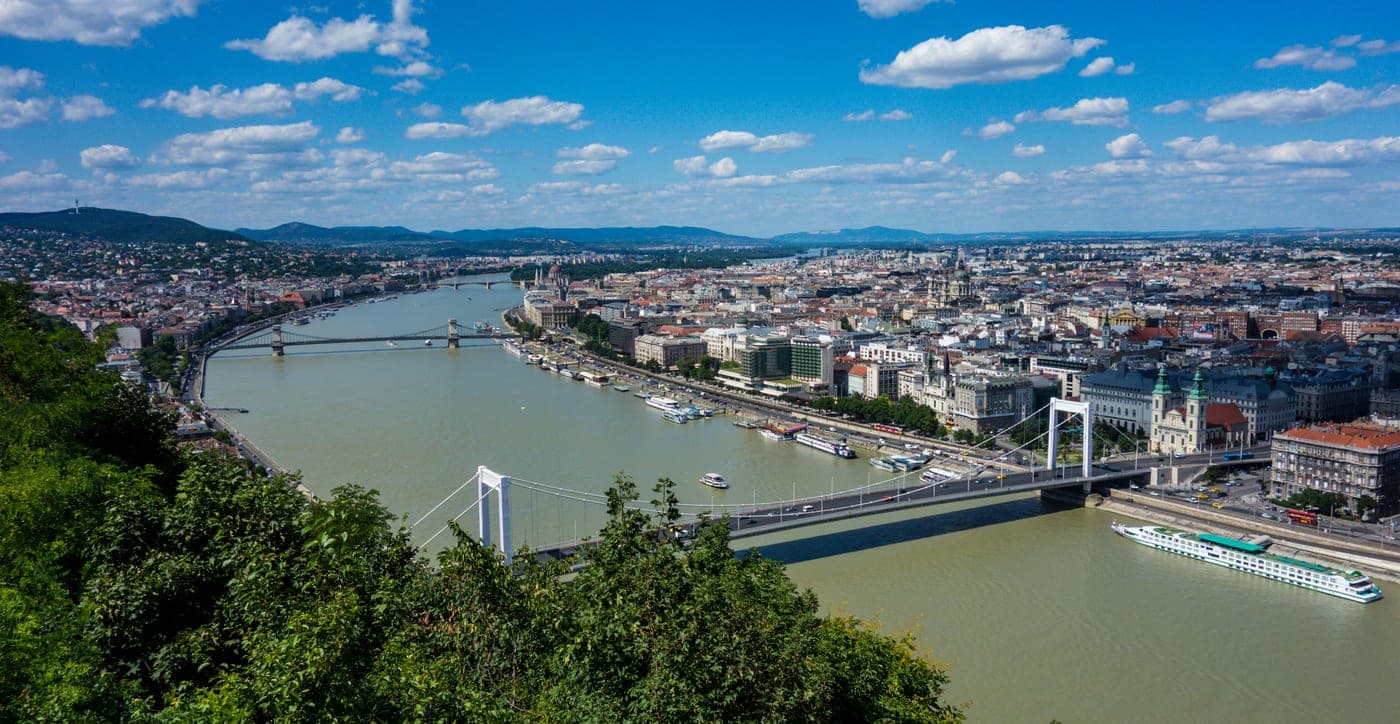
Hungary's capital, Budapest, is divided by the Danube River into Buda and Pest, each offering distinct experiences. Buda is home to historic sites like the Castle District, featuring medieval architecture and the Matthias Church. Pest is known for vibrant cultural life, including the famous ruin bars and the Hungarian State Opera. The city is renowned for its thermal baths, such as Gellért and Széchenyi, which have been used for centuries. Explore the nearby towns of Szentendre, known for its artists, and Visegrád, with its medieval castle. Budapest is also a center for traditional Hungarian cuisine, featuring dishes like goulash and chimney cake. Its rich history, combined with modern culture, makes it a fascinating destination for deeper exploration.

Heves
Heves is a notable region in Hungary, recognized for its diverse landscapes and historical significance. The largest city, Eger, is famed for its Baroque architecture and the historic Eger Castle, site of a famous 1552 siege. This region is also known for its thermal baths, particularly in Egerszalók, where unique travertine formations can be found. Heves is rich in wine production, especially the renowned Egri Bikavér, or Bull's Blood, which reflects the area's viticultural heritage. Lesser-known towns like Felsőtárkány offer hiking trails and access to the Bükk National Park, ideal for exploring local flora and fauna. The region's cultural festivals, such as the Eger Wine Festival, celebrate local traditions and crafts, providing a deeper understanding of Hungarian culture.