Lángos
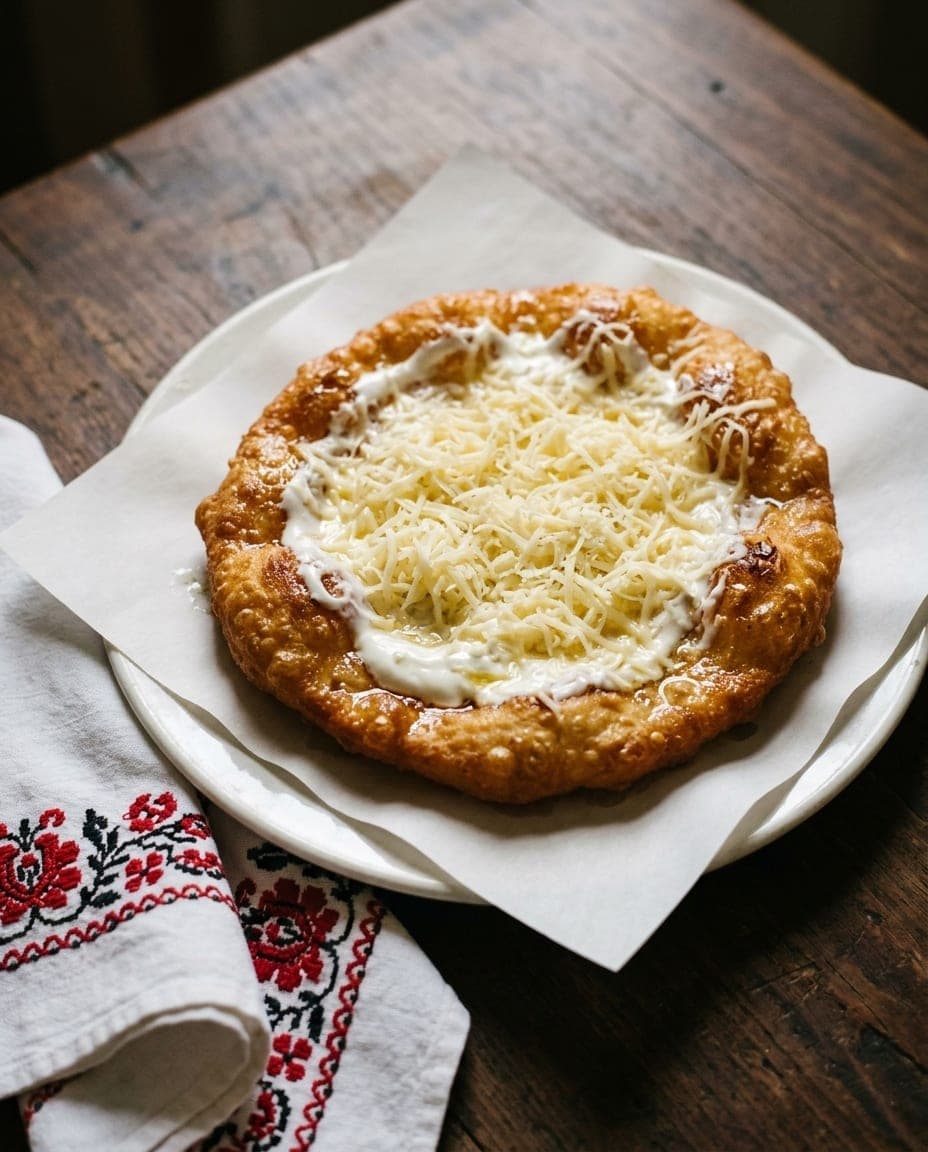
A fried dough disc with garlic, sour cream, cheese
- Local name
- Lángos
- Served with
- Garlic, sour cream, grated cheese
- Best eaten at
- A Lake Balaton beach stand
- Pairs with
- Fröccs (wine spritzer)
What it is
Lángos is a large, disc-shaped bread made from yeast dough, deep-fried in oil until the surface blisters into a golden crust while the interior stays soft and airy. It is one of the most ubiquitous snacks in Hungary, appearing on the menus of casual eateries, market stalls, and fairgrounds from the capital to the rural edges of the country. The dish is defined by its simplicity: a heavy, warm circle of dough that is rubbed with raw garlic or garlic-infused water before being smothered in sour cream and a generous layer of grated cheese, usually a semi-hard variety like trappista.
The texture is the primary reason for its enduring popularity. A properly made lángos has a crisp, shatteringly thin edge that gives way to a chewy, cloud-like centre. It is a substantial meal rather than a light appetiser, often serving as a full lunch. The dish is eaten with the hands, torn into pieces or folded to hold the toppings together, and it is best consumed while still hot. Once it cools, the crust softens and the bread turns leathery and tough.
The origin of the name
The word lángos derives from láng, meaning flame in Hungarian, referring to the traditional method of cooking the dough. In the past, this flatbread was not deep-fried as it is today. Instead, on bread-baking day a piece of the dough was stretched thin and baked at the front of the wood-fired oven while it was still heating up, close to the flames (láng), before the main loaves went in. It cooked quickly and was eaten as breakfast, with a smoky flavour and a blistered surface.
Over time, the technique shifted from the oven to deep-frying in oil, which allowed for faster production and a different texture, but the name remained attached to the dish. The fried version is thought to have developed later in the towns, where it became a staple of street food. The transition from oven-baked to oil-fried marks the evolution of the dish from a humble bakery by-product to the well-known snack found today at market stands across Budapest and the Lake Balaton region.
Where it comes from
Lángos is not tied to a single village or a specific noble family, but rather to the public spaces where people gather: the markets, the fairs, and the beaches. In Budapest, it is a fixture of the Great Market Hall and the smaller neighbourhood markets, often sold near stalls with sausages and pickles. However, its spiritual home is widely considered to be the shores of Lake Balaton during the summer months. Here, the lángos stand is as permanent a feature of the landscape as the water itself.
The dish thrives in this setting because it offers immediate warmth and high energy to visitors walking along the promenade or swimming in the lake. The large size of the bread makes it suitable for sharing among groups, and the oil and the sour cream together make it filling for its price. While sweet variations exist, featuring toppings like jam, cinnamon, or chocolate, the savoury version with garlic, sour cream and cheese remains the standard everywhere. The dish is eaten year-round, but its presence is most prominent when the weather allows for outdoor seating and beachside strolls.
What goes into it
The ingredients of a traditional lángos are minimal, relying on the quality of the few components rather than complexity. The dough is made from flour, water, yeast, salt, and often a little sugar, milk or mashed potato. Once proofed, the dough is stretched by hand until it is thin in the centre, then deep-fried in vegetable oil until golden brown.
After frying, the surface is brushed with a mixture of crushed garlic and water, or sometimes just raw garlic cloves, to infuse the bread with a sharp, aromatic bite. This step is crucial; without it, the dish lacks its characteristic pungency. The toppings are then applied while the bread is still hot: a thick layer of sour cream and a heavy sprinkling of grated cheese that begins to soften in the heat. Some vendors add a thin slice of sausage or bacon on top, but the classic version relies solely on the dairy and garlic combination. The result is salty and creamy against the fried dough.
How to eat it
Lángos is designed to be eaten immediately after frying, standing up at a counter or sitting on a bench near the vendor. It is hot and oily, so many people tear it into pieces or fold it to keep the toppings from sliding off. The aim is to take large bites, ensuring that every mouthful contains some of the crispy edge, the soft centre, the garlic rub, the sour cream and the cheese.
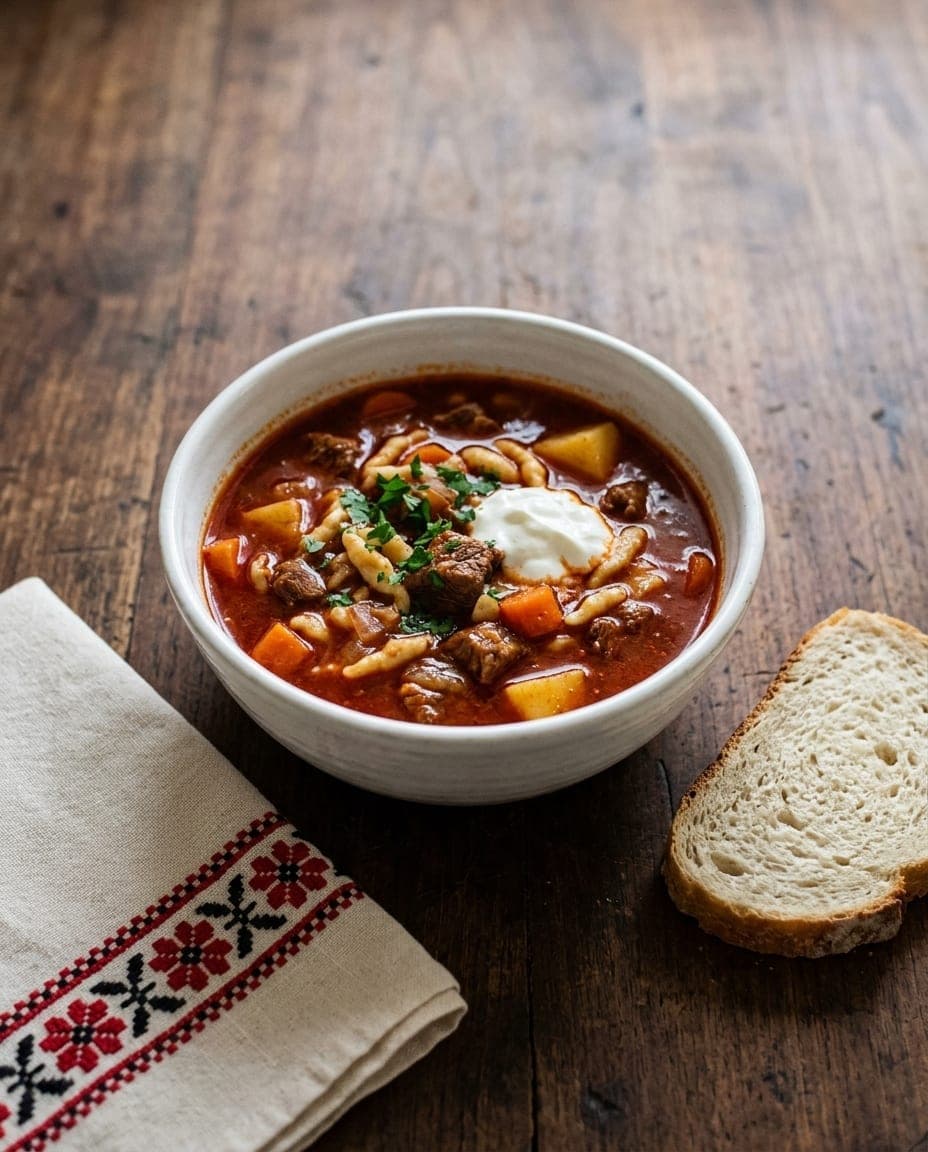
The dish pairs naturally with a cold beer or a glass of fröccs, a Hungarian wine spritzer made by mixing white wine with sparkling water. The acidity of the wine or beer cuts through the heaviness of the fried dough and the fat of the dairy, cleansing the palate for the next bite. In Budapest it is sometimes ordered alongside a bowl of goulash, though it is a meal on its own. At Lake Balaton it is a classic beach lunch, eaten in swimwear between dips.
Curious facts
- The oven connection. The name lángos comes from láng (flame): the dough was once baked at the front of the wood-fired oven, close to the flames, before the bread went in.
- A fleeting window. A lángos is at its peak straight from the fryer; once it cools, the bread becomes tough and leathery.
- The garlic rub. The raw garlic or garlic water is brushed onto the hot dough immediately after frying, ensuring the aroma permeates the bread rather than just sitting on top.
- Sweet alternatives. While the garlic and sour cream version is the standard, sweet lángos topped with jam, cinnamon sugar, or chocolate is a common variation found at fairs and markets.
- A beachside staple. The stands along Lake Balaton are well-known summer destinations where the dish is sold in such volume that it defines the culinary landscape of the region during the tourist season.
- Hand-held heritage. Lángos is a hand-held food, torn or folded to contain its generous toppings and eaten standing or on the move.
Where to try it
The best place to eat a lángos is at a dedicated market stall or a beach stand rather than in a formal restaurant. In Budapest, the Great Market Hall offers numerous vendors where the quality is consistent and the atmosphere is lively. For a more authentic experience, head to the smaller neighbourhood markets in the outer districts.
The true test of the dish, however, happens at Lake Balaton during the summer. The beachside stands along the shore serve lángos that are often fresher and hotter than those found in the city, as the vendors fry them continuously for the passing crowds. A steady queue at a stand usually means a fresh batch is coming out of the oil. The standard order is garlic, sour cream and cheese, with a fröccs beside it. Frozen dough reheated in an oven is the common shortcut; the real thing is stretched by hand and fried to order.
Where to try it
1 region

Budapest
Hungary's capital, Budapest, is divided by the Danube River into Buda and Pest, each offering distinct experiences. Buda is home to historic sites like the Castle District, featuring medieval architecture and the Matthias Church. Pest is known for vibrant cultural life, including the famous ruin bars and the Hungarian State Opera. The city is renowned for its thermal baths, such as Gellért and Széchenyi, which have been used for centuries. Explore the nearby towns of Szentendre, known for its artists, and Visegrád, with its medieval castle. Budapest is also a center for traditional Hungarian cuisine, featuring dishes like goulash and chimney cake. Its rich history, combined with modern culture, makes it a fascinating destination for deeper exploration.