Halászlé (fisherman's soup)
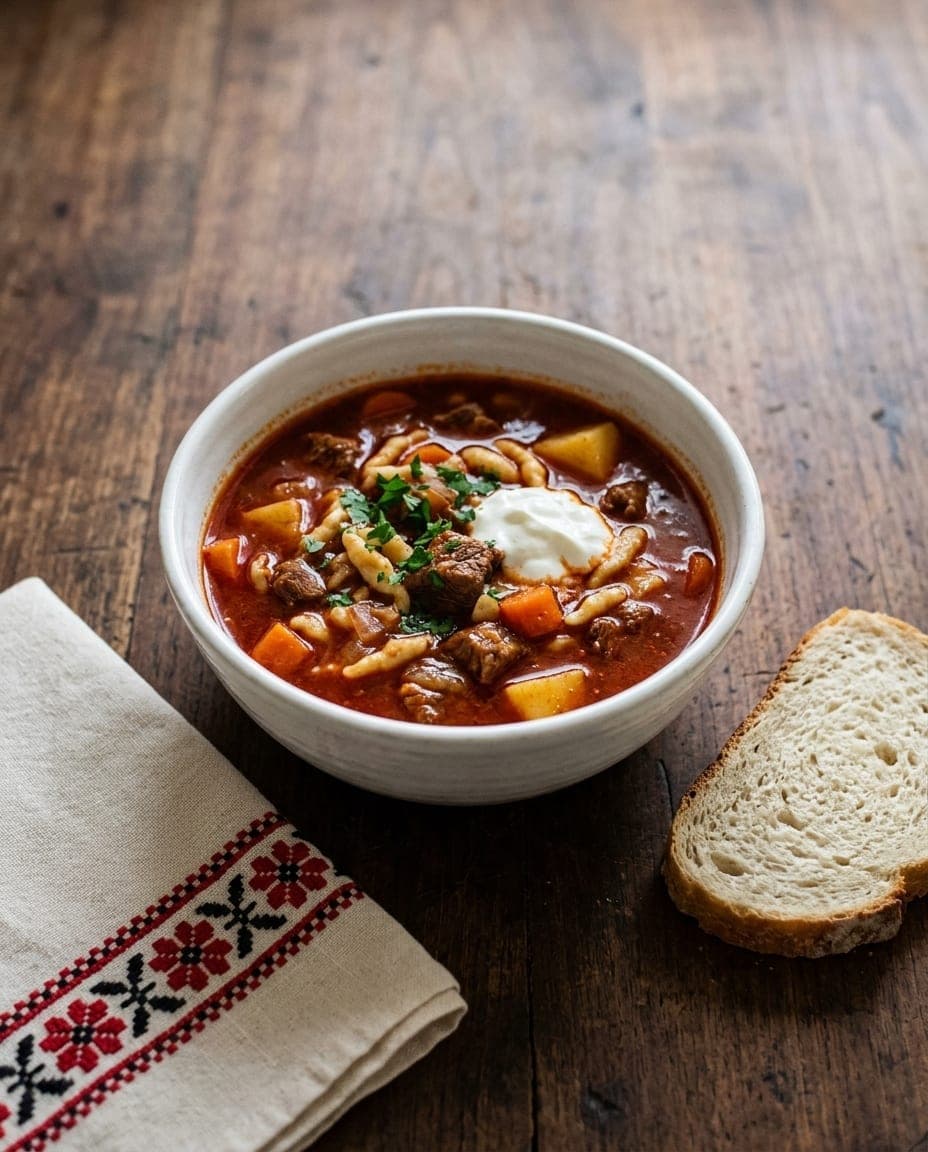
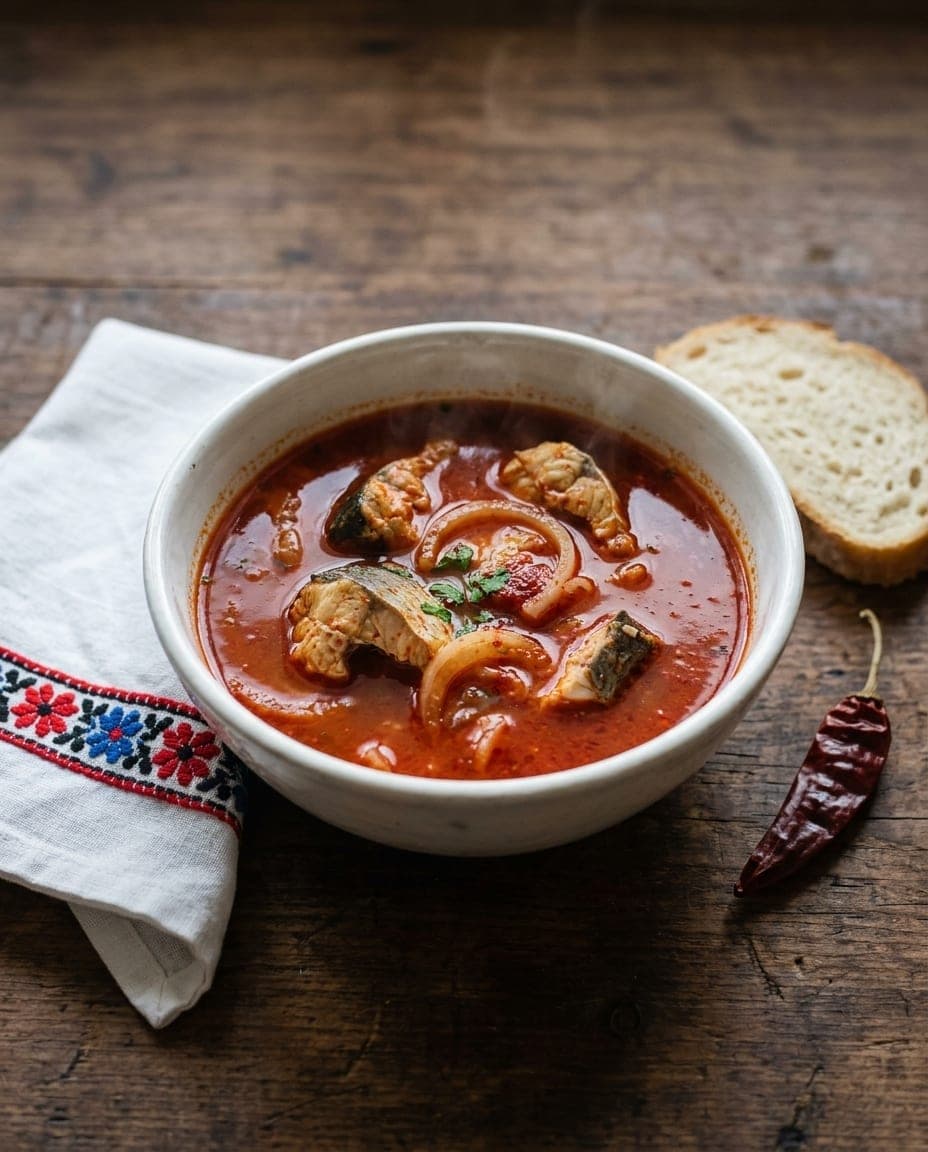
Fiery Danube fish soup served with white bread and paprika
- Local name
- Halászlé
- Served with
- White bread, hot paprika
- Best eaten at
- A Danube-side csárda
- Pairs with
- Dry Hungarian white
What it is
Halászlé, or fisherman's soup, is one of Hungary's best-known dishes, a thick, intensely flavoured broth made from river fish, onions and a heavy hand of paprika. It originates from the fishing communities along the Danube and Tisza rivers, where the dish was traditionally prepared in large iron cauldrons over open fires. The result is a deep crimson soup that is both rustic and sophisticated, far richer than a simple broth.
The soup is defined by its colour and heat. The red hue comes from the generous use of paprika powder, which can range from sweet varieties to intensely spicy ones. The fish base typically includes carp, catfish, pike-perch or whatever catch the river provided that day. In many versions, notably along the Tisza and in Szeged, the heads, bones and smaller fish are first boiled to create a rich stock, which is then strained through a sieve before the thick slices of fish are gently poached in the liquid. In Baja, by contrast, straining is considered a sin, and the fish is cooked in the pot from the start.
The cooking tradition
The preparation of halászlé is as much about the setting as the ingredients. Historically, it was cooked by groups of fishermen working along the riverbanks. The large cauldrons, known as bogrács, were suspended over open fires, allowing the cooks to stir the mixture continuously while managing the heat.
The process requires patience and skill. The onions form the base, and the paprika must be handled carefully to avoid burning the spice. Once the stock is ready, the fish is added gently to prevent them from breaking apart. The soup simmers slowly, allowing the flavours to meld together into a cohesive whole. This method of cooking over an open fire remains central to the dish's identity, even when it is now prepared in modern kitchens.
Regional variations
While the core ingredients remain consistent, regional differences create distinct versions of halászlé across Hungary. In the southern town of Baja, the soup is made mainly from carp, is not strained, and is served with thick homemade noodles known as gyufatészta (matchstick pasta). The broth is often eaten first, before the fish.
In Szeged, another river city, the soup follows a different tradition. Here, several types of fish are used, and the base is carefully sieved to give a thicker, smoother soup. Both the Baja and the Tisza styles are listed as Hungarikums, and the rivalry between them reflects the pride local communities take in their culinary heritage.
When it is eaten
Halászlé holds a special place in Hungarian culture, appearing on menus year-round but taking on particular significance during certain times. It is traditionally served as a Christmas Eve dish in many parts of the country, where families gather to share the warm, spicy soup at the Christmas Eve dinner. This festive association has made it a symbol of home and community.
Beyond the holidays, halászlé is enjoyed throughout the summer months, particularly along the Danube riverbanks. Locals and visitors alike seek out the soup in open-air restaurants or csárda, traditional country taverns that often feature large cauldrons as part of their decor. The dish suits both the cold winter air and the warm summer evenings, making it a versatile choice for diners.
What goes into it
The ingredients of halászlé are simple but require careful selection to achieve the right balance. The fish forms the foundation, with carp the most common choice, often joined by catfish, pike-perch or pike. Some versions include carp roe or milt, prized additions that add a unique texture and depth to the soup.
Onions provide the aromatic base, while paprika in various forms delivers the signature heat and colour. The stock is often made from fish heads and bones, which are strained to create a clear, flavourful liquid. Green pepper and tomato are common additions, though these vary by cook.
How to eat it
Halászlé is typically served as a main course, often in large bowls or tureens that encourage sharing. It is traditionally accompanied by slices of white bread and a small dish of hot paprika for those who wish to add extra spice. The bread is used to mop up the remaining broth, ensuring no flavour is wasted.
A glass of dry Hungarian white wine pairs well with the soup's intensity, cutting through the fat of the fish and paprika. A cold beer or a shot of pálinka may also be offered as an alternative. The key is to enjoy the dish slowly, sipping the broth and savouring the complex flavours that develop in each spoonful.
Curious facts
- The colour comes from the spice. The deep red hue of halászlé is entirely due to the quality and quantity of paprika used, with no artificial colourants added.
- A communal tradition. The soup was historically cooked in large cauldrons by groups of fishermen working together along the riverbanks.
- Regional pride. Baja and Szeged each claim their own version as the most authentic; the Baja and Tisza styles are both on the Hungarikum list.
- Christmas Eve staple. Many Hungarians serve halászlé on Christmas Eve, making it a central part of the holiday meal.
- To strain or not to strain. In Szeged the fish heads and bones are boiled first and strained before the fish slices go in; in Baja, sieving the soup is frowned upon.
- A river connection. The dish remains closely tied to the Danube and Tisza rivers, where fresh fish are still caught for traditional preparations.
Where to try it
The best place to experience halászlé is along the Danube or Tisza rivers, particularly in towns like Baja and Szeged. Traditional csárda establishments near the water often serve the soup in large cauldrons, preserving the rustic atmosphere of its origins. An open fire in sight of the tables is the sign of a kitchen cooking it the old way.
Where to try it
2 regions
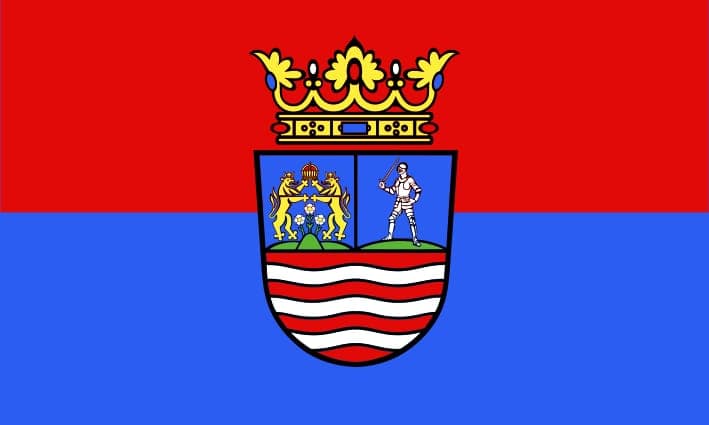
Győr-Moson-Sopron
This region is known for its diverse landscapes, including the scenic Danube River and the fertile plains of the Great Hungarian Plain. Győr, the largest city, boasts a rich history with well-preserved baroque architecture and the impressive Basilica of Győr. The region is also famous for its thermal baths, particularly in the town of Héviz. Wine enthusiasts can explore the vineyards producing quality white wines, especially from the Sopron area. Unique local festivals celebrate traditional crafts and gastronomy, offering a glimpse into authentic Hungarian culture. Lesser-known towns like Sopron and Mosonmagyaróvár reveal medieval heritage and local artisans, inviting a deeper understanding of the region's past and present.

Komárom-Esztergom
Komárom-Esztergom is a prominent region in Hungary, known for its historical significance and rich cultural heritage. The region features Esztergom, home to Hungary's largest basilica, and a stunning fortress overlooking the Danube River. The area is also renowned for its wine production, particularly the white wines from the local vineyards. Visitors can explore the scenic Danube Bend, where charming towns like Visegrád and Szentendre offer insights into local traditions. Hiking trails through the Pilis Mountains provide opportunities to connect with nature. This region, with its blend of history, culture, and natural beauty, encourages travelers to discover its hidden gems at a leisurely pace.