Kürtőskalács (chimney cake)
Spit-baked sugar-coated pastry from Transylvanian roots
- Vegetarian
- Local name
- Kürtőskalács
- Best eaten at
- Christmas markets
- Pairs with
- Mulled wine (forralt bor)
What it is
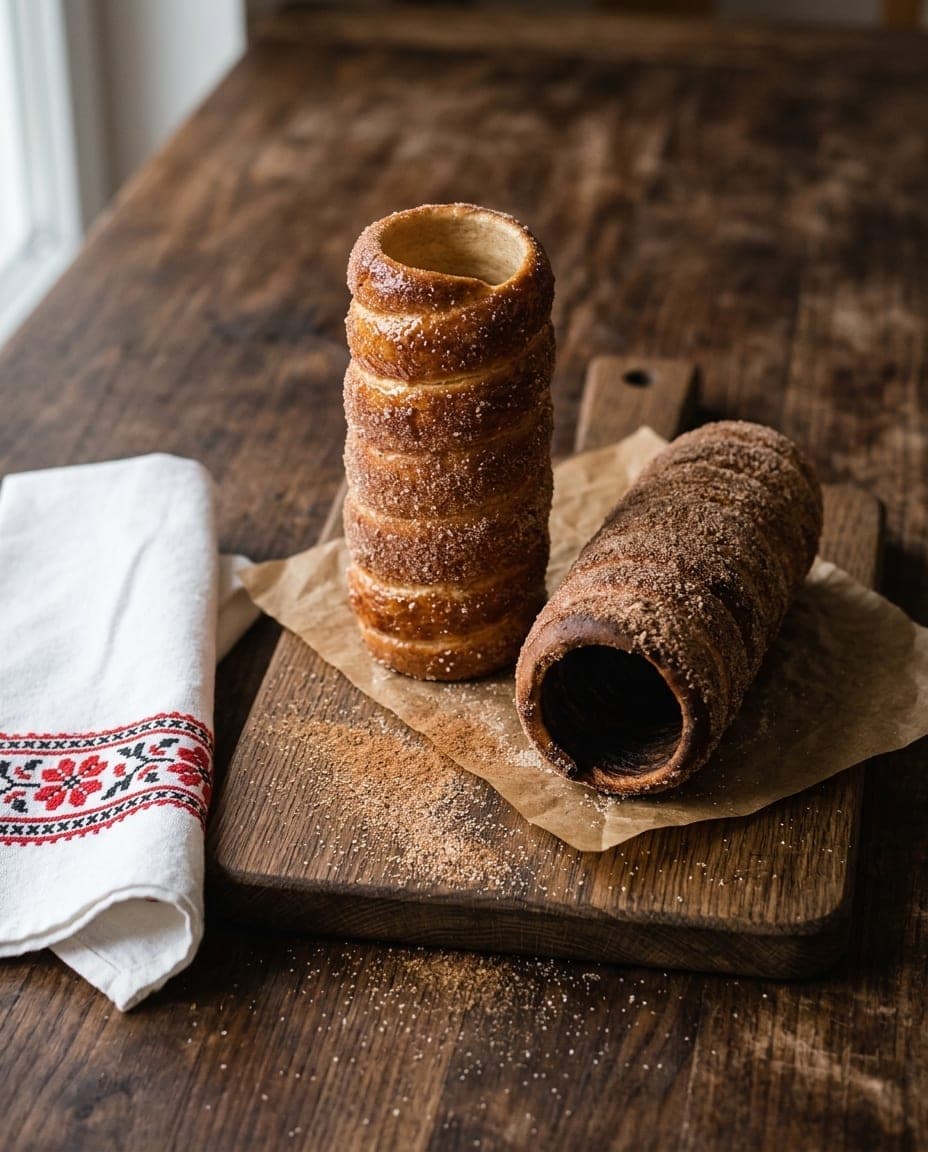
Kürtőskalács, a name that translates to "chimney cake" (kürtő is a chimney or flue), is one of the most recognisable sights at any gathering in Hungary. It is a sweet pastry made from a soft yeast dough, rolled into a long strip and wound tightly around a tapered wooden spit and rolled in sugar. The spit rotates slowly over hot embers, cooking the dough while it turns. As it bakes, the outer layer of sugar caramelises into a golden, crackling shell that encases the soft interior.
The result is a hollow cylinder, resembling the flue of a chimney, which is why the name fits so well. When the pastry is finished, the spit is removed and the cake is pulled away in one piece. It is often served warm, sometimes split open or torn apart by hand to reveal the steamy, spiral layers inside. The texture is a study in contrasts: a crisp, sugary crust that shatters at first bite, giving way to a tender, bread-like centre.
It is not a dish found in a kitchen oven in the traditional sense. The preparation requires a specific rotisserie setup, with the spits turning horizontally above the embers, often set up on the street or in a market square. The smell of caramelising sugar and toasted yeast is distinct and powerful, usually preceding the sight of the pastry itself. While it is available year-round in many cities, its peak season is the winter months, when it becomes a defining feature of the Christmas markets in Budapest and other towns.
Where it comes from
The origins of the dish are rooted in Transylvania, the region now part of Romania but historically home to a large Hungarian-speaking population known as the Székely people. It is closely associated with the Székelys of eastern Transylvania, and the first written mention comes from 1679, in a village now in Romania. It is listed as a Hungarikum. The pastry likely evolved from similar spit-baked breads found across Eastern Europe, where cooking dough over an open fire was a practical method for those without ovens.
Both Hungary and Romania claim it, and both have a case built on geography and tradition. In Transylvania it has long been a fixture at weddings, village fairs and church festivals. By the end of the 18th century it was known across the Hungarian-speaking lands, but it became an everyday street food in Budapest and most Hungarian cities only from the 1990s, helped along by tourism.
The spread of the pastry is tied to the movement of people and trade routes through the Carpathian basin. It is possible that similar versions existed in other parts of Europe, but the specific form known as Kürtőskalács, baked on a spit and coated in sugar, became most closely associated with the Hungarian-speaking communities. It is now eaten across the whole country, from the capital to small villages.
How it is made
The process begins with a simple yeast dough, often enriched with eggs, milk and a little sugar to give it a slight sweetness before baking. The dough is rolled out thin and wound around a conical wooden spit, which is then placed over a heat source of hot coals or embers. The spit rotates continuously, ensuring the dough cooks evenly on all sides without burning in one spot.
As the dough bakes, the sugar coating (usually granulated white sugar) melts and caramelises into a hard, golden crust. This shell forms a seal around the pastry, trapping steam inside and keeping the interior soft. The baking time is short, but it requires constant attention to ensure the colour remains even and the sugar does not burn.
Once cooked, the spit is removed from the heat. The cake is often dusted with additional toppings while still hot. While the plain sugar version is the baseline, coatings of chopped walnuts, cinnamon and vanilla sugar are long-standing, and cocoa, coconut and almond have become common in recent decades. The sugar crust itself is a 19th-century development; the earliest recipes were unsweetened. Some vendors now offer versions filled with ice cream or whipped cream, a development that caters to tourists seeking a dessert rather than a snack. This filled variation is a clear departure from the original plain form, which was meant to be eaten as a warm treat on its own.
How to eat it
Kürtőskalács is best enjoyed immediately after it comes off the spit. The contrast between the hot, crisp sugar shell and the soft interior is at its peak when the pastry is fresh. It is usually served whole, allowing the eater to tear off pieces or bite into the end of the cylinder. Some vendors cut the cake into rings for easier handling, but the traditional experience involves holding the long tube by one end and taking bites from the other.
The warmth of the pastry makes it a natural companion for cold winter days. It is rarely eaten as a dessert at a formal meal; instead, it is a street food or market snack, often consumed while standing or walking. The texture can be messy due to the sticky sugar coating, so it is common to see people eating it with care or using napkins to catch the crumbs.
The pairing of choice is a warm glass of mulled wine, known locally as forralt bor. The sweetness of the pastry balances the spice and acidity of the wine, while the warmth of both creates a comforting effect against the winter chill. In Budapest's Christmas markets, this combination is ubiquitous, with stalls selling the pastry often located near those serving the wine.
Curious facts
- The spit is essential. The conical shape of the wooden rod is crucial; it creates the hollow chimney form that defines the dish. Without the spit, the dough would bake into a flat or round loaf rather than a tube.
- A shared regional story. The pastry is credited to the Székely people of Transylvania, Hungarian speakers living in today's Romania, where it is known as cozonac secuiesc. Attempts at EU protection have stalled over the question of who owns it.
- The ice cream twist is new. The version filled with vanilla or fruit ice cream is a modern invention, likely developed in the last few decades to appeal to tourists seeking a sweet treat rather than a traditional snack.
- It started unsweetened. The earliest known Transylvanian recipe, from 1784, has no sugar at all; the caramelised crust appears in Hungarian cookbooks only in the 19th century.
- A market tradition. The pastry is inextricably linked to fairs and markets, particularly the Christmas markets of Budapest. It is rarely found in a standard bakery or restaurant menu outside these settings.
Where to try it
The best place to find an authentic Kürtőskalács is at a traditional market, especially during the winter months. In Budapest, the Christmas markets in front of St Stephen's Basilica and Vörösmarty Square are the most famous locations, where dozens of stalls offer the pastry alongside other local treats. These markets draw large crowds, and the smell of the baking dough often guides visitors to the source.
Outside the capital, any town holding a winter market will likely have a vendor selling the pastry. In smaller villages across Hungary, it is common to see the spits set up in the town square during festivals or religious celebrations. The key is to look for the rotating spits and the smell of caramelising sugar, which indicates a fresh batch is ready.
For the most traditional experience, seek out a stall that sells the plain sugar version without fillings. While the filled versions are popular with visitors, the plain cake offers a more authentic taste of the original Transylvanian tradition. It is at its best straight off the spit; one that has been standing in a rack has gone leathery.
Where to try it
1 region

Budapest
Hungary's capital, Budapest, is divided by the Danube River into Buda and Pest, each offering distinct experiences. Buda is home to historic sites like the Castle District, featuring medieval architecture and the Matthias Church. Pest is known for vibrant cultural life, including the famous ruin bars and the Hungarian State Opera. The city is renowned for its thermal baths, such as Gellért and Széchenyi, which have been used for centuries. Explore the nearby towns of Szentendre, known for its artists, and Visegrád, with its medieval castle. Budapest is also a center for traditional Hungarian cuisine, featuring dishes like goulash and chimney cake. Its rich history, combined with modern culture, makes it a fascinating destination for deeper exploration.