Esterházy torta
The feathered walnut meringue cake of Budapest
- Vegetarian
- Local name
- Esterházy torta
- Served with
- Coffee
- Best eaten at
- A Budapest cukrászda
- Pairs with
- Tokaji Aszú
What it is
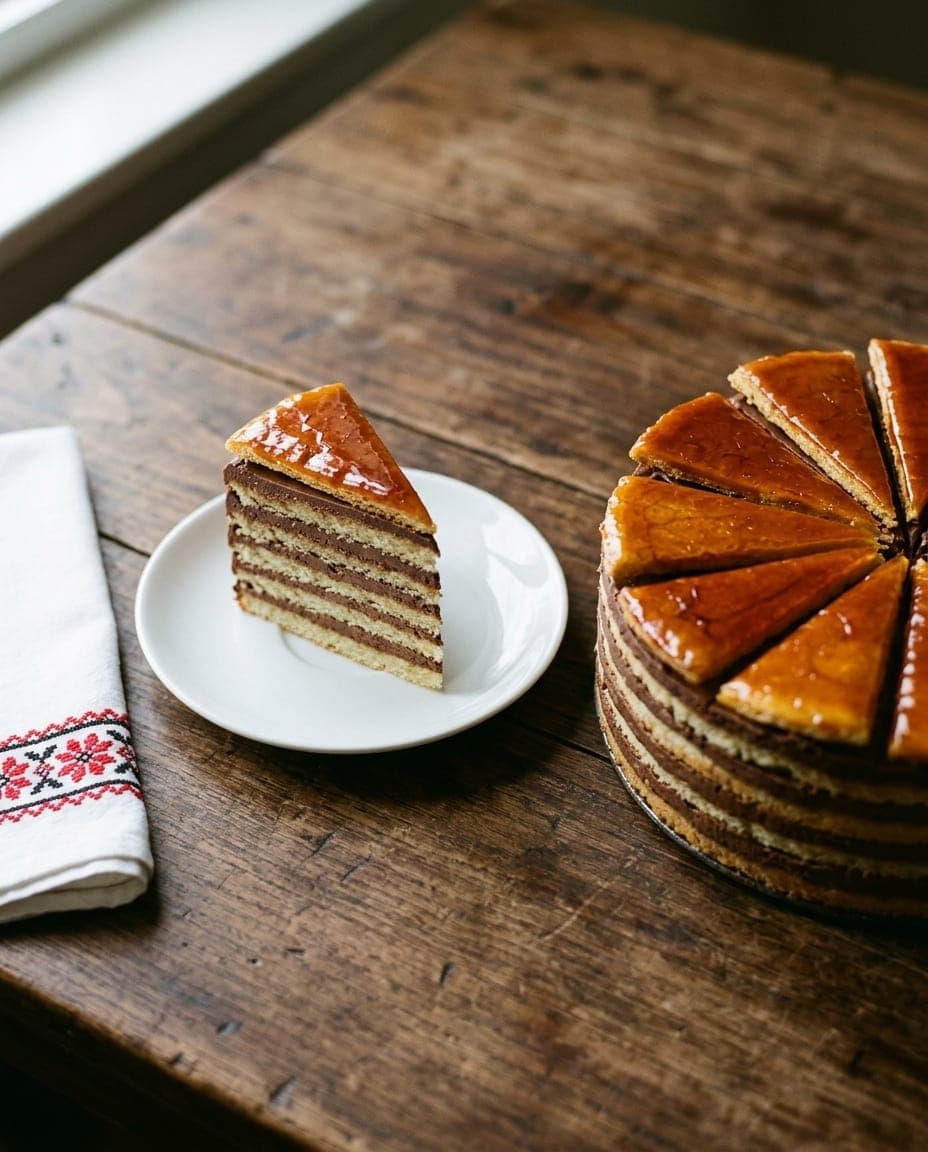
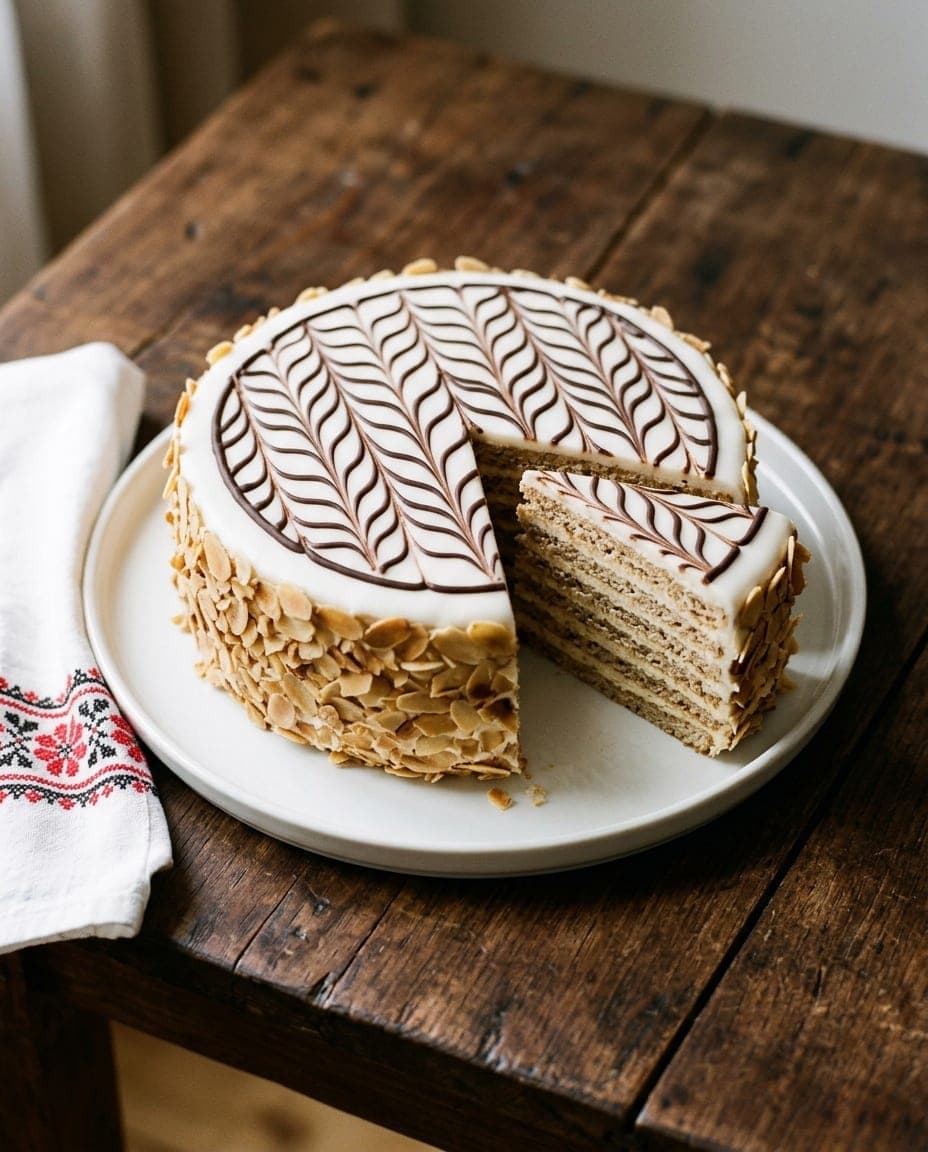
The Esterházy torta is one of the most recognisable cakes to emerge from the Hungarian capital, defined by its striking appearance and a dense, nutty texture that belies its delicate look. It consists of four or five thin layers of nut meringue (walnut in today's Hungarian versions, almond in the original), separated by a buttercream flavoured with vanilla or cognac, and capped with a smooth white glaze of fondant. The top is decorated with a distinctive pattern of chocolate feathers, created by dragging a skewer through lines of melted chocolate while the glaze is still soft.
Despite its ornate appearance, the cake is not cloyingly sweet. The meringue layers are crisp yet chewy, absorbing the moisture from the buttercream to create a deep, moist interior. It is a pastry that belongs to the tradition of the cukrászda, the traditional Hungarian cake shop, where it remains a staple on the menu alongside other cakes of the Austro-Hungarian tradition. The feather pattern serves as an immediate identifier; a true Esterházy torta cannot be mistaken for another cake once seen.
The noble name and its origins
The cake takes its name from the Esterházy family, one of the most prominent Hungarian noble houses with deep ties to the Habsburg court. The specific attribution of the recipe is not settled in historical records. It is generally accepted that a confectioner in Budapest created the cake in the late 19th century, usually said to honour Prince Pál Antal Esterházy (1786–1866), the Habsburg diplomat.
The exact date of its creation and the precise identity of the chef remain matters of debate among food historians. The story of its invention is not as dramatic as that of some other European pastries; no original recipe or named creator has come down to us to confirm the details. What remains clear is that the cake became associated with the family name and eventually gained fame across the Austro-Hungarian Empire.
How it is made
The structure of the Esterházy torta relies on the balance between the dry meringue layers and the soft buttercream filling. The base consists of several thin discs of meringue made from egg whites, sugar and ground nuts, baked until they are firm but retain a slight chewiness. These layers are stacked with generous amounts of buttercream, which is traditionally flavoured with vanilla or a touch of cognac.
The final touch is the fondant glaze, a smooth white coating that covers the top and sides of the cake. While still soft, lines of melted chocolate are drizzled across the surface. A skewer is then dragged across these lines to create the signature feathered effect. This technique requires speed and precision, as the pattern must be set before the fondant hardens completely. The result is a white canvas with dark, fan-like streaks that resemble the plumage of a bird.
How to eat it
The Esterházy torta is best enjoyed as a dessert at the end of a meal or as an afternoon treat alongside coffee. In Budapest, it is customary to order it from a cukrászda, where it is served by the slice. The texture requires a steady hand to cut through the layers without crumbling the meringue, though the buttercream helps hold it together.
A cup of strong black coffee is the traditional companion, as the bitterness balances the sweetness of the fondant and the nuttiness of the walnuts. A glass of Tokaji Aszú, the sweet wine from Tokaj, is the other pairing, with its apricot and honey running alongside the walnut. Slices are small; the cake is heavier than it looks.
Curious facts
- The feather pattern is essential. A cake without the chocolate fanning is not considered a true Esterházy torta, as the design is the primary visual identifier of the dish.
- Almonds came first. The original recipe used almond meringue; in Hungary today walnuts have almost entirely replaced the almonds.
- A courtly connection. The cake is linked to the Esterházy family, a noble house that was historically significant in Hungarian politics and as patrons of music (Haydn worked for them), though the link between the family and the specific recipe remains unproven.
- Dense but light. Despite the heavy layers of meringue and buttercream, the cake feels lighter than it looks due to the air incorporated into the baked meringue.
- A citywide standard. The Esterházy torta is a fixture in Budapest's pastry shops, often displayed in glass cases alongside other classic cakes like the Dobos torta.
Where to try it
A traditional cukrászda in Budapest is where to find it. These establishments range from historic cafes that have served the city for over a century to smaller neighbourhood shops that maintain the classic recipe. There is no single shop that claims ownership of the dish; rather, it is a shared heritage of the city's pastry culture.
The shops that have it are the ones with layered cakes and meringues in the window, in the centre and in the quieter districts alike.
Where to try it
1 region

Budapest
Hungary's capital, Budapest, is divided by the Danube River into Buda and Pest, each offering distinct experiences. Buda is home to historic sites like the Castle District, featuring medieval architecture and the Matthias Church. Pest is known for vibrant cultural life, including the famous ruin bars and the Hungarian State Opera. The city is renowned for its thermal baths, such as Gellért and Széchenyi, which have been used for centuries. Explore the nearby towns of Szentendre, known for its artists, and Visegrád, with its medieval castle. Budapest is also a center for traditional Hungarian cuisine, featuring dishes like goulash and chimney cake. Its rich history, combined with modern culture, makes it a fascinating destination for deeper exploration.